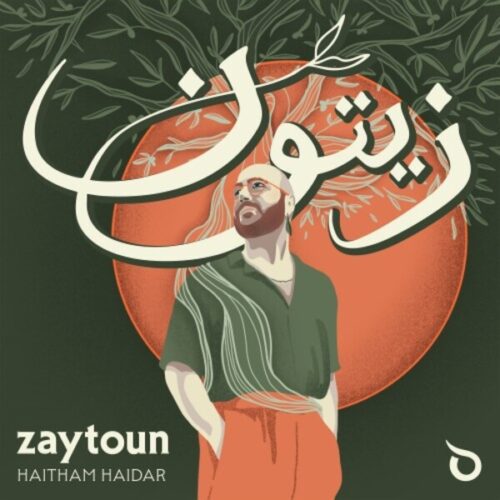
Zaytoun is an album of exquisite beauty, in addition to offering an original and coherent vision of the principle of musical crossovers. The kind of release all our competitors should be talking about, but ultimately, we’re the only ones to recognise its genius. The tenor Haitham Haidar is from Montreal, and of Lebanese-Palestinian origin. In Zaytoun (which means olive), he subtly and refinedly merges his Arab origins and his education in baroque lyrical singing. Bach’s Erbarme dich (from the St. Matthew Passion) in Arabic, probably a first, some oud in Purcell, Rodrigo’s Aranjuez in Arab-Andalusian attire, or even harpsichord in a popular Egyptian hit, these are the kind of surprising but finely constructed encounters that manage to convince even the most die-hard purists, so well-done are they.
The secret? Haidar applies meticulous attention to the delicacy of gestures and the sobriety of the created affects in his arrangements (because he is the one who signs them, and they are superb). He thus avoids the trap of the commercial and often forced, even ostentatious, “crossover.”
It’s magnificent and probably one of the most beautiful and intimate proposals of its kind in recent years. Moreover, Haidar possesses a warm tenor timbre that offers pleasant ease in the high notes, but also surprising abilities in the low notes. This allows him to cover a vast panorama of effects, both lyrical and expressive. He is accompanied by magnificent musicians: Sylvain Bergeron on the lute, Abdul-Wahab Kayyali on the oud, Amanda Keesmaat on the cello, Tanya Laperrière on the baroque violin (who performs fantastic Arab-Baroque ornaments in Bach!), and Abraham Ross on the harpsichord.
While some in this world strive to perpetuate hatred among peoples, others, more numerous and stronger, I believe, work tirelessly to create a fertile and inspiring dialogue. Trust PanM360 to listen to and talk about them!
Zaytoun is a publication that leaves a mark on the mind and especially on the heart.