Additional Information
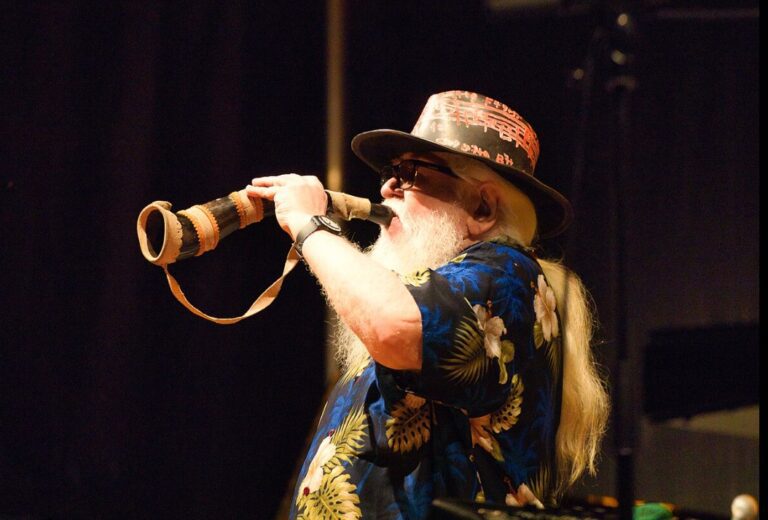
Hermeto Pascoal, who passed away on Saturday, September 13, at the age of 89, is now considered an absolute genius of Brazilian music, with the Montreal National Jazz Orchestra (ONJ) dedicating a full program for big band jazz to him on Thursday, September 18, under the direction of his former collaborator Jovino Santos Neto. Paradoxically, his passing could help to make him better known and introduce him to the pantheon of the greatest musicians of our time. In any case, PAN M 360 is working on it!
From a compositional point of view, his body of work is so vast that it surpasses all of his most famous Brazilian contemporaries, predecessors, and successors, with the possible exception of composer Heitor Villa-Lobos (1887–1959). Let us state here that Hermeto Pascoal is musically superior to Tom Jobim, Joao Gilberto, Caetano Veloso, Marcos Valle, Gilberto Gil, Chico Buarque, Elis Regina, Chico Science, Tom Zé, Edu Lobo, Eumir Deodato, Joao Donato, Suba, Joyce Moreno, and others.
Frowning? Good for you! Listen to his music instead, an immersion that could last for months. Let’s make it even thicker: this body of work is as considerable, diverse, and substantial as those of Frank Zappa, John Zorn, Wayne Shorter, Sun Ra, Miles Davis, and Duke Ellington.
Absolutely unclassifiable, Hermeto was mistakenly associated with jazz fusion because he was once invited, along with his frontline musicians, percussionist Airto Moreira and singer Flora Purim, to participate in the recording sessions for Miles Davis’ album Live-Evil. After that, Flora and Airto were recruited to the famous American group Return to Forever, led by the late Chick Corea, and Hermeto Pascoal returned to his laboratory.
Listening to his music over time, we conclude that he is not exactly a jazz musician, but nevertheless one of the most astute improvisers, coupled with one of the most brilliant contemporary composers in the southern hemisphere.
His creative materials were countless: modern jazz, traditional indigenous or Afro-Brazilian music, samba, bossa nova, musica popular brasileira, noise music, early beatboxing, instrument invention, free improvisation, tonal, modal, atonal, serial, acoustic, electric, and electronic music, to name a few. Nothing escaped him since his modest beginnings as a quasi-traditional accordionist.
An unparalleled multi-instrumentalist, this super-virtuoso has never sought fame, but rather the total freedom of exuberant, downright brilliant expression.
This Thursday at the Cinquième Salle at the PdA, we will be treated to just a tiny fragment of his mind-blowing repertoire, this time composed for big band under the direction of Jovino Santos Neto, whom we contacted as soon as he arrived in Montreal.
PAN M 360: Jovino, you are from Rio de Janeiro, but you have lived in Montreal. Tell us about your journey from Brazil to North America.
Jovino: Before devoting myself entirely to music, I was a biologist. I first studied biology at university in Rio when I was 18, and then I ended up in Sainte-Anne-de-Bellevue at McDonald College, where a friend’s brother was studying. So I was in Quebec from 1974 to 1977. That was 50 years ago!
PAN M 360: You subsequently became a musician. In fact, you were already a musician at the same time and you chose music.
Jovino: Even in Montreal, I played keyboards in a local band with whom I played keyboards during my stay. We were influenced by Weather Report, Gentle Giant, jazz rock, and prog.
PAN M 360: How did you join Hermeto Pascoal’s group after leaving Quebec?
Jovino: I returned to Rio to continue my biology studies and my research on the forest. I was supposed to join the Amazon Research Institute in Manaus. So I was in Rio to obtain financial support for my scientific work. That’s when I met Hermeto because he was my parents’ neighbor in the Jabour neighborhood—he had moved there after living in the Northeast, originally from Lagoa da Canoa, then residing in Recife.
One day, I took a chance and knocked on his door to say hello and tell him how much I admired his work. His wife answered and introduced me to him. He was alone in his rehearsal room, playing the electric piano. Without hearing me play, he invited me to play with him the following Friday because he needed a keyboardist so he could play more flute and saxophone. I said okay, but I couldn’t always be there because I had to continue my biology studies. He said, “No problem, you play with me for the next concert, then you can leave…” Fifteen years later, I was still there! Yes, I had passed my exam, I had been offered a job in Manaus, and I had said no, thank you, I’d rather stay and play with this crazy albino!
PAN M 360: What was it like working with him?
Jovino: It was a daily rehearsal routine: five days a week, six hours a day. We were always there rehearsing at Hermeto’s house, and he never stopped writing for us. He was an inexhaustible source; the water never stopped flowing from the rock. It was like that for a good ten years. Hermeto didn’t rehearse with us during rehearsals, it must be said.
He composed constantly, sometimes while watching a soccer game on TV, with a cavaquinho slung over his shoulder. We toured all over the world with this group, a lot in Brazil. I was in the group from 1977 to 1992, after which I worked with him occasionally on special projects. When he came to Montreal in 1987 for the jazz festival, I was in the group and accompanied him to his interviews to serve as his interpreter.
PAN M 360: Oh, really?!! I interviewed Hermeto back then, so you were the one translating!!!
Jovino: That’s right!
PAN M 360: Wow! And what did you do after your long stint with Hermeto?
Jovino: I composed and played for Airto Moreira and Flora Purim, among others, as well as for American musicians. Thirty-two years ago, I moved to Seattle in the United States, where I still live. I spent a good part of my career teaching there, in addition to playing and composing. Today, I am a freelance musician. I have nevertheless remained the archivist of Hermeto’s work, which is so considerable and yet still little known. We only know a fraction of it!
In a generation or two, the music world will recognize his genius. He has worked in all kinds of orchestral configurations, instrumentations, and stylistic contexts. Everything Hermeto has accomplished will survive the ages. Today, we are still too close to the mountain; we will need distance to grasp its magnitude.
PAN M 360: How do you explain the relative obscurity of such a giant in the music world?
Jovino: Hermeto never stopped being creative. He gave us the example of Herbie Hancock, who, according to him, was a fantastic musician who had had a lot of success with certain songs, but then became a prisoner to them. Because his audience still keeps asking for them. Hermeto used to say that he would never have those big hits that would become his prison. He dreaded the obligation to play his hits over and over again and stop innovating. And this was always in connection with nature. Hermeto was the most fervent environmentalist of all the musicians I have known.
PAN M 360: So in Montreal this Thursday, we’ll have some very jazzy lighting from the master.
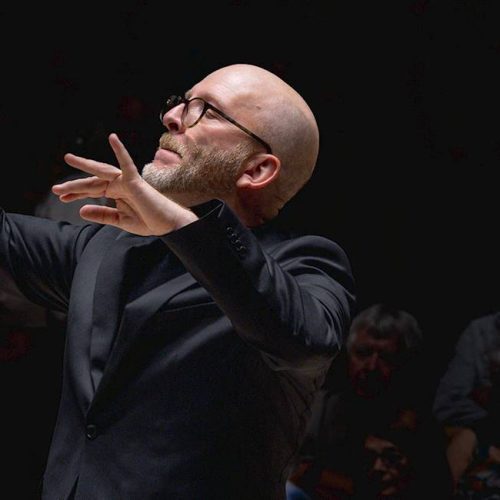
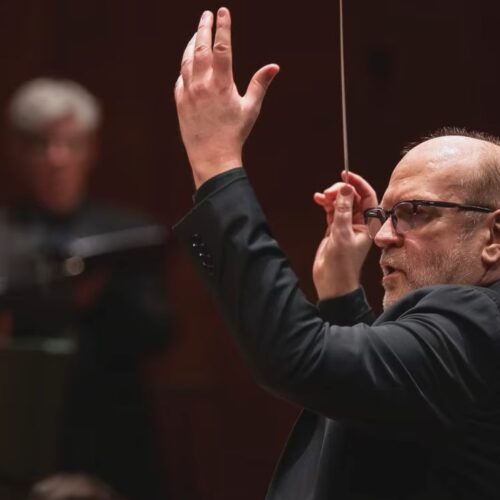
Jovino: Yes. What we are going to do with the ONJ at the Cinquième Salle at Place des Arts is only a tiny part of his work. I don’t think he was a jazz musician; he himself described his music as universal. That said, we will be working with five saxophones, five trumpets, five trombones, piano, bass, drums, percussion, guitar, and keyboard. I will be the conductor and may also play a solo piano piece in tribute to the master who has just left us.
PAN M 360: This synchronicity is incredible. The first time we play Hermeto’s music in Montreal in ages, and he dies just before the concert.
Jovino: Yes! And everywhere Hermeto Pascoal is known, people do the wave in his memory. We need his music so much in this terrible global context, to correct the vibration.