Additional Information
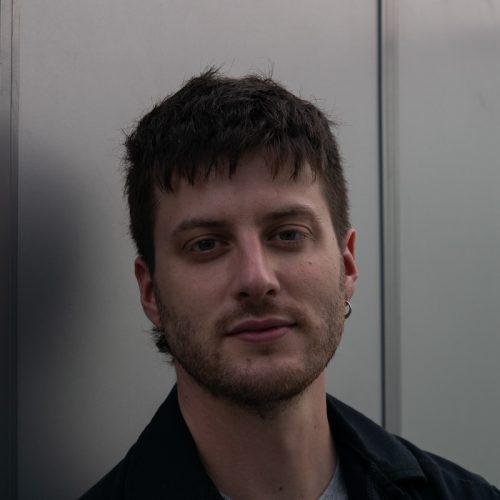
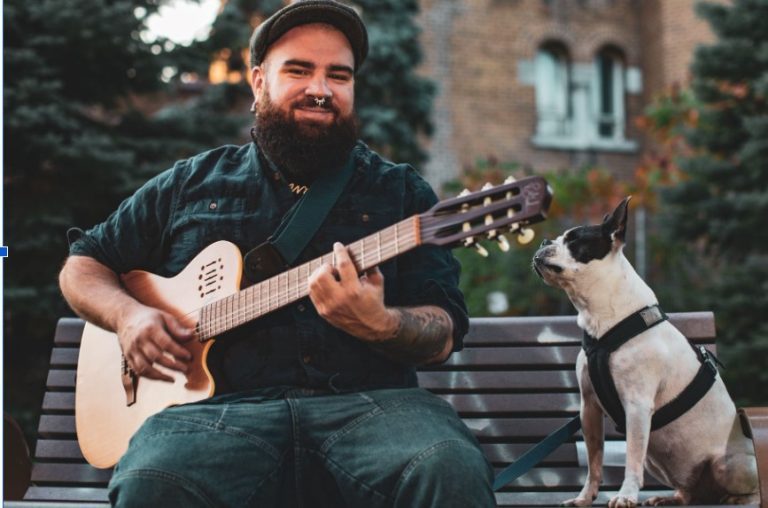
With the arrival of beautiful spring weather, it was the perfect time to meet Alex Paquette, an artist who loves to get crowds dancing to upbeat, sun-inspired rhythms. For residents of the Greater Montreal area, you can purchase tickets for the launch of *Et J’ai pris la route*, his third album, scheduled for this Saturday, May 2, at Le Petit Campus.
Tickets and info here or social media
PAN M 360: In addition to your latest project, you’re also one of the singers in Francbâtards. I’d like to understand, in terms of your songwriting process, how you distinguish between material for Francbâtards and your solo project. Because musically, there is still a similarity in the styles.
Alex Paquette : Actually, there’s a similarity only in ska, and maybe a little bit in the reggae that I bring to Francbâtards, so to speak. It’s about 30% of Francbâtards; in Francbâtards, I bring in reggae-ska elements. The others bring in all the other styles that I’m less familiar with. When it comes to writing with Francbâtards, it’s unique because we often approach it by theme. That means the other singer and I might decide to listen to documentaries on food sovereignty—about Monsanto, for example—we’ll listen to everything being said on the topic, we’ll listen to podcasts, we’ll discuss it, and then we’ll write together. Or sometimes, one of us will come up with a theme and ask, “Hey, do you want to write about that?”
But we might have a song about love, or things like that, since we’re two singers who take turns singing. There are some topics that are harder to tackle, I find, as a group. Then, with my solo project, it actually lets me talk about things that don’t fit with Francbâtards. Sure, there are common themes—it’s pretty political, a lot about the environment, against inequality, all that.
Having my solo project means that the vast majority of the music is mainly me, and the lyrics are mine. My solo project is really a bit like writing poetry. That’s really the big difference—I mostly write while on tour, while traveling, or just for fun when I can’t sleep at night. When it comes time to write songs, maybe 10% of my lyrics end up in them. For some lyrics, I think they could work with Francbâtards, but honestly, that almost never happens.
PAN M 360: Okay, okay, okay. Interesting. Along the same lines, you can sense that there’s still a shift or evolution between Reggae de Verdun, your previous album, and Et J’ai pris La Route by Alex Paquette and Les Insulaires. The melancholic side seems to have disappeared, giving way to introspection about the journey taken. Does that stem from the musicians, Les Insulaires, or has the songwriting evolved in that direction?
Alex Paquette: Yes. You got it right. I wrote “Reggae de Verdun” during the pandemic. I don’t know if you can tell, but I was often all alone. I really wrote everything myself, just with vocals and guitar, without thinking about the band that might join in. It was only later that beatmakers added sounds, and then musicians worked on the finishing touches. It was really a time when I’d go for walks in the evening—it was the pandemic, and I was in my neighborhood.
As for the new album, I approached it as if it were my last. I’m nearing forty, I’ll soon have played 500 shows and done 10 international tours—I’m feeling a bit worn out—so I told myself, “Okay, this time I’m going to make something I’ll be 100% satisfied with.” I stopped thinking, “Oh, for the next album, I’ll do it this way,” and was much more focused on, “I want it to sound exactly the way I want it to sound.” I’ve been touring for 15 years; for the past 2–3 years, I’ve been away from home most of the time because I’m on tour. I needed to reflect on how I felt about all of that, and then put it into music.
With *Reggae de Verdun*, I was more focused on thinking, “If I do this, it’ll work better (commercially).” With this one, I really went with things I love, even though some styles—like French ska, for example—aren’t exactly popular, but I’m doing it more for myself.
PAN M 360: You’re releasing your album this time with Les Insulaires. What matters most to you when you launch a project like this? Is it having that sense of teamwork and community?
Alex Paquette: Actually, with *Reggae de Verdun*, maybe that’s what I was missing a bit. I really did it all on my own, and the collaborators did a lot of the work from home. Whereas for this one, I wanted an island sound, a tropical sound, so I showed up with my lyrics without having any finished songs, strictly speaking.
There are two people who helped me the most: Axel, who’s from Guadeloupe, and Skarkbone 14, who’s from Mauritius. Then there’s the chemistry we have in the studio with these two guys—even though there are eight of us on the album, I really created most of it with them so they could bring their own sound to it. There are musicians who are part of my other project, but I didn’t want to involve them until the songs were well underway or finished. Because I knew exactly what they would offer me; even though I like that, it risked sounding too much like Francbâtards, so I wanted to keep the two projects separate.
PAN M 360: Several languages are featured on this album. Why is that?
Alex Paquette: Actually, since I approached it as if it were my last album, all the singers are people I already know. If I’d thought, “I’m going to make lots of other albums; I’m going to branch out,” I would have invited new people, figuring I’d work with my collaborators again later.
So the two people I’ve enjoyed working with the most in the past—on my first and second albums—are back. Tchoomin Daddy is a guy from southwestern France. I see him every time I go back to Europe; I’ve even visited him as a tourist, and we’ve become really good friends. Even if it was just for a few bars, I wanted him to be there. Maru Tribu—I loved working with her on C’est Pas Normal. Back then, we barely knew each other. Since then, we’ve traveled to Chile together, and we hang out pretty often. My favorite song I’ve made to date was with her. So I wanted to do another one, and actually, the idea came from her too, because she sent me some lyrics. That’s why she’s the one singing most of that song. It was originally a collaboration with a French artist that didn’t pan out, so the song was never released. So we took the theme, changed some chords, and evolved it from a reggae-hip-hop track to a ska/reggae one as a little nod to that style. I tweaked the lyrics a bit to make the song my own again; she’d been dreaming of releasing it, and I just told her, “Well, now’s the time. Let’s do it.”
As for the collaboration with Noé, it was the other way around. Noé came to me, and I was like, “Oh, I want to try something.” Basically, Noé and I would get together to write songs. Then we’d write lyrics while going for walks. We share a file where we edit the lyrics. We’d never done reggae before—I really like Tryo. Eventually, we started from there and made a song. But I’d say that the process… I think I wanted to surround myself with my friends. Noé plays hockey with me; he’s a friend in real life, so it’s important to have an album with as many friends as possible.
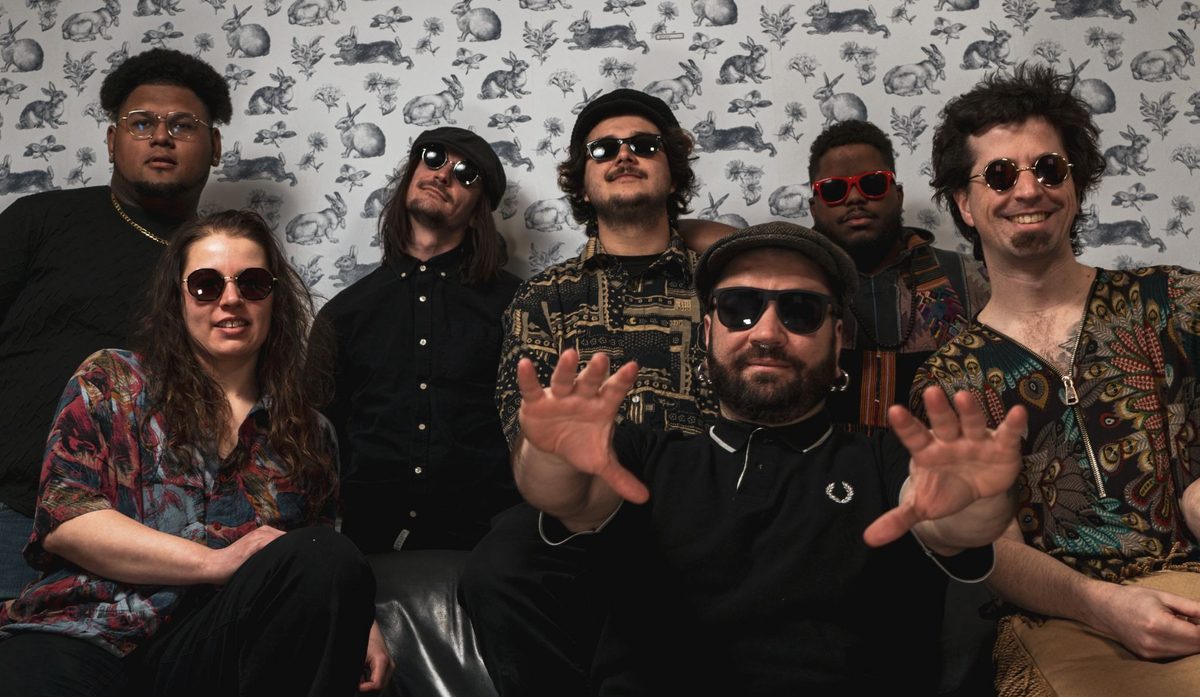
PAN M 360: What’s the reasoning behind the artistic decision to title this one Alex Paquette and the Insulaires, when the first two were simply Alex Paquette?
Alex Paquette: Actually, when I started this project, it was really in response to Francbâtards; I thought I was going to perform solo, as a duo, or even with backing tracks. With “Reggae de Verdun,” for example, that could have worked out—I did it a few times on the sound system and stuff like that. It was mostly the thought, “I tour with eight people in Francbâtards; I want the option to tour with just two of us in a car.”
I did that for a bit, then I realized that, actually, I like making music with a group. So over the last 2–3 years, when I tour as a group with the project, people often say, “Oh, okay, that’s Alex Paquette, but who are the others?”
There were several musicians—maybe about fifteen—who would often come and go in groups of four or five. But over the past year, things have become much more stable, and with Axel, the drummer I mentioned earlier, I felt he brought something special to the table. That’s where the idea for the band’s name came from, and since I wrote the songs mainly with the guy from Guadeloupe and the guy from Mauritius, and in one of my old songs I say, “We live on an island, Call us the Insulaires,” referring to Montreal, it was a no-brainer. I said “Call us the Insulaires” on the previous album, so we tossed around several ideas before finally deciding, “Actually, I think that’s it.” It also fits better with what I’m doing. When the show is Alex Paquette and the Insulaires, it’ll be a full-band show. Whereas if I want to go with a smaller lineup, it’ll be Alex Paquette as a duo or solo.
PAN M 360: Where does your love of ska come from, considering it’s been out of fashion for at least 25 years?
Alex Paquette : It’s really weird—I got into it pretty late in the game. I come from the hardcore, metal, and a bit of punk rock scene. Until I was 20, I listened almost exclusively to hardcore, and it wasn’t until I moved to Montreal that I started having roommates from all over the place. Cadet introduced me to music from the islands; he listened to more modern reggae and played Manu Chao songs on the guitar, and I started to really love it.
When I played with other bands, the ones I really liked and the people I got along with were mostly from the ska scene. That led me to listen to other genres, and I realized that European ska is really what I prefer. The bands are more politically charged; there’s sometimes a bit of a Latin vibe in their music. When I discovered the Skarfaces, the 86 Crew, and Skarbone 14, I was like, “Ah, this is totally my thing!” It’s positive music, but still angry. And let’s be honest, the musicians are still bums, they’re still rude boys, whereas the ska in Quebec, I found it more aligned with American ska, with skaters and all that. It’s great live, but for listening, European ska remains my favorite.
PAN M 360: Off the top of your head, are you more of a Pisco Sour in Valparaíso or a Gin and Tonic at La Société Secrète in Gaspésie kind of person?
Alex Paquette : Oh my gosh! Seriously, it’s pretty great—I keep telling everyone—but these are my two favorite spots. The comparison really works because they’re the two places where I feel most at home. Taste-wise, I prefer the gin, but for relaxing, I’d say Valparaiso because the water’s easier to swim in. The scenery is beautiful at both places, but I have to admit that swimming in Valparaiso with the waves is pretty cool. But the gin from La Société Secrète is pretty much unbeatable. Big up to La Société Secrète—the best gin in Quebec.
PAN M 360: Is there a movie you would have liked to compose the soundtrack for?
Alex Paquette: Good question… I have a bachelor’s degree in film! It’s just that my favorite movies are darker; I don’t see ska or rocksteady in a Spike Lee film or in La Haine. It would have to be a happier movie. When I think of my favorite movies, they’re mostly films about revolution, rebellion, and stuff like that. Recently, I know I couldn’t have done better, but Steve Rodney McQueen’s film series, Small Axe? He made four or five films about the arrival of calypso and reggae in England from different perspectives; it came out in 2020. I recommend it to everyone—it’s about immigration to London, in particular, and its musical contribution.