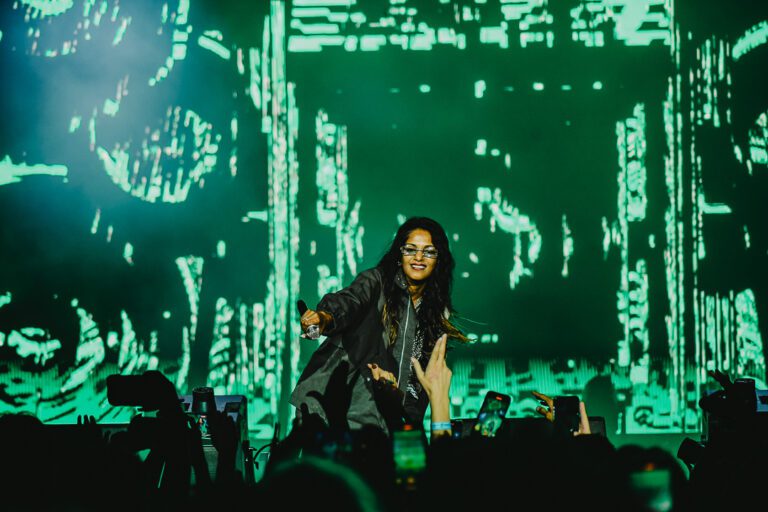
30 minutes before the show even started, people packed themselves to the front, and in the back of my mind was the question of how such a notorious figure could live up to the hype. Suddenly everything went dark and out came M.I.A., effortlessly bold, with a stern look in her eyes as if she was about to shake up a revolution. My question was answered.
Smoke machines exploded to the beat of “Boyz” and she started rapping in her classic tone, a slight grin across her face. Her performance was as if you’d taken her right out of her music videos from 2005. She danced with swagger, a shameless sensuality and a confrontational presence that made us realize just how much she meant what she was saying.
There was not one dull moment. Playing her early classics, she had the whole crowd singing her lyrics in superstar fashion. From her albums Arular and Kala to the edgier “Born Free” song, sampled from a Suicide’s Ghost Rider. She chronologically covered her entire early discography,
*even playing an alternate version of Galang from the Piracy Funds Terrorism tape. It refreshed the crowd and proved the timeliness of her work as she passionately delivered songs from an album dated 20 years ago.
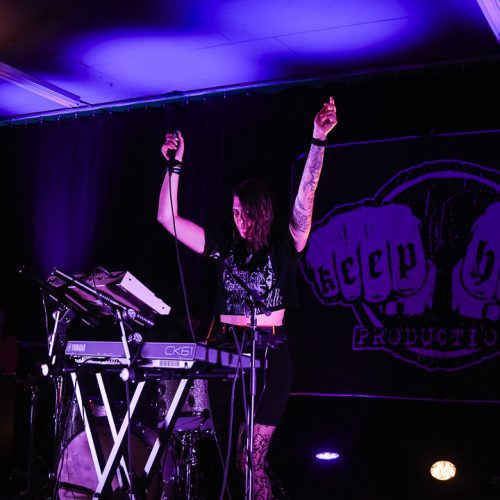
Between this, the dancers, the smoke and the all-out silver attire, it was “pop” at its best and existed apart from everything we had just seen. While the previous acts like The Hellp and MGNA Crrrta referenced 2000s American pop music in hyperpop fashion, M.I.A. was the real deal. It felt like going back to the source, and solidified the idea that her career had, in fact, been a cataclysm leading us all to this point.
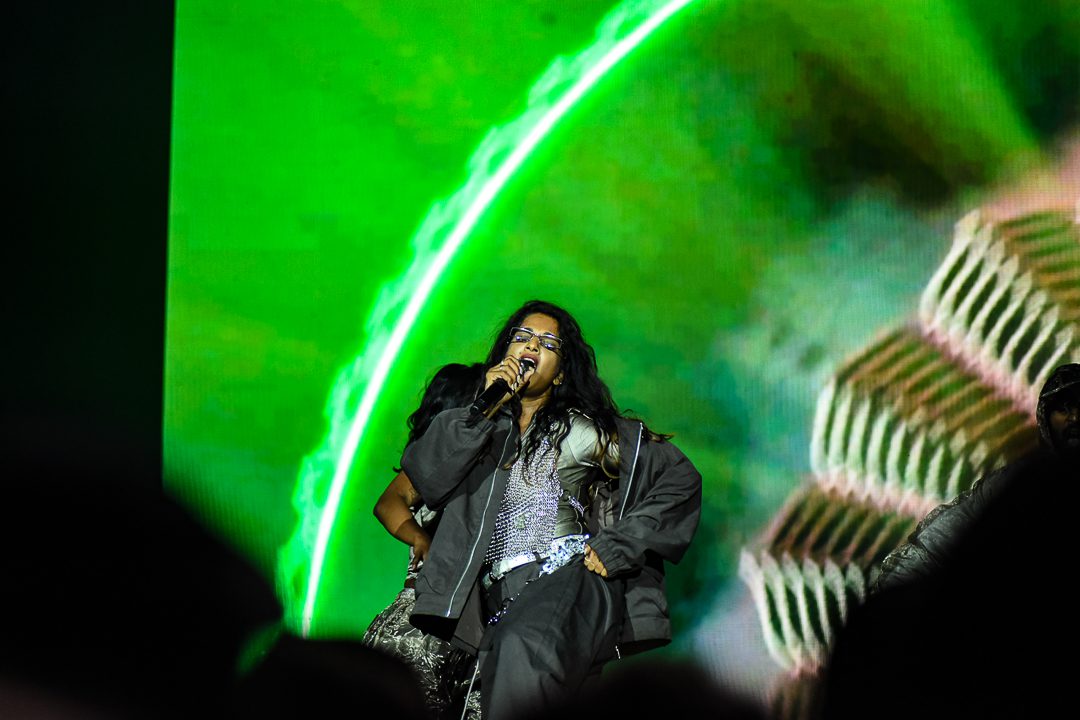
As an outspoken Sri Lankan-born refugee, her identity intrinsically challenged stereotypes and conventions amid post 9-11 United States. She was an underdog, a rebel, and an inspiration to the youth like me for a change in the culture. This is why her intervention, nearing the end of the show, still reverberates strongly and sparked heated conversations, though not in the way we would have expected.
While most other artists held complete silence about global issues, the controversies surrounding M.I.A. are too blatant to ignore, and the crowd pressed her regarding the genocide happening in Palestine. If anyone was going to address this ongoing crisis, it was her.
As the music stopped briefly, she jumped into the conversation and told the DJ to pause: “I was cancelled five times” she replied. We were on the edge of our seats.
“Last year they cancelled me for supporting Trump.” What?
This began a somewhat confusing debate with the crowd, and after chants saying “Fuck Donald Trump,” she retracted her statement, saying she never supported any politicians.
Perplexed, we listened and she performed the next song wearing a Keffiyeh in solidarity with the Palestinian cause.
In the end, her message was positive, explaining that envisioning a liberated future was the first step to achieving it. But in the ensuing conversations after the show, there was still a general confusion about her position and engaging in her vague rhetoric about serious issues just caused further suspicion and debate, which might just be her objective. Who knows.
But the real question is, what happened to M.I.A.?
Throughout the show, she herself alluded to this change. “I’m not the same M.I.A. you knew” and “It’s harder for a bad bitch to be good than a good bitch to be bad.”
She mentioned how talking about some things was “dangerous,” alluding to a form of censorship which she has extensively dealt with in the past, having been accused of supporting terrorists when talking about the Tamil people’s struggle in Sri Lanka. Because of this and other controversies, her social accounts were being blocked, for years her albums were not being released, and she was refused access to the US to see her child, the reason for which she claims was calling for a cease-fire in 2024.