Transforming Hiroshima mon amour into contemporary opera: Christian Lapointe and Rosa Lind tell the story

Interview by Marilyn Bouchard
Genres and styles : Contemporary Opera

Additional Information

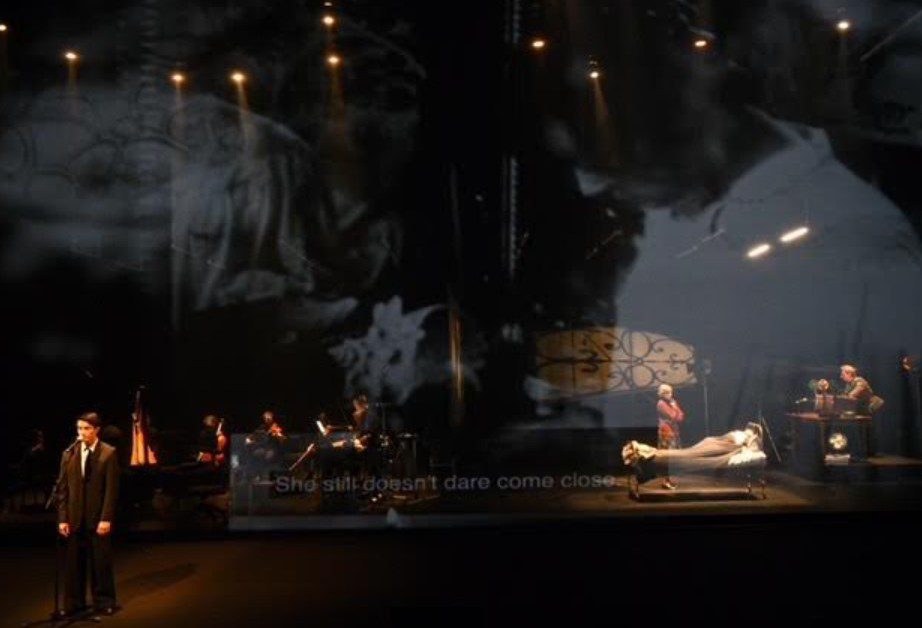
As part of the Festival TransAmériques (FTA) , the companies Carte Blanche and Chants Libres have teamed up with the Quatuor Bozzini to present the world premiere of a contemporary opera adaptation of the great movie Hiroshima, mon amour at Usine C. A creative lyrical tribute that revives our memories of the film, its events and our memories. Following the form of a film production, the show features Yamato Brault-Hori, Marie-Annick Béliveau and Ellen Wieser, who, on a stage clad in oversized projection tulles, deliver Marguerite Duras’s poetry of love and death, blurring codes and boundaries between media, as well as between past and present. Rosa Lind’s delicately dissonant score sets the eight musicians and their timeless love story to music. We had the chance to ask Christian Lapointe and Rosa Lind a few questions.

PAN M 360: How did you come up with the musical direction for the opera?

Rosa Lind : Text provides me with the musical inspiration. The emotion of the words, of the lines, guide me through the process.
PAN M 360: Was it special for you to compose an opera for a film adaptation?
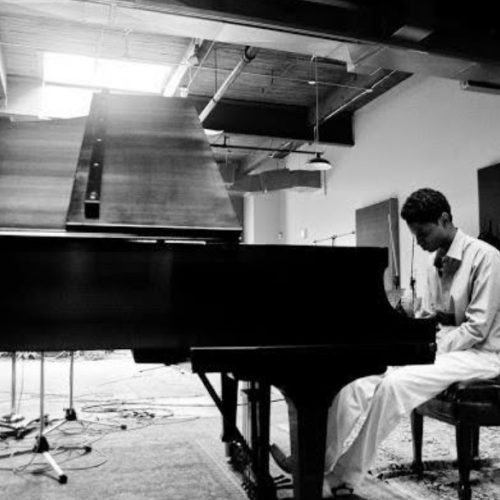
Rosa Lind
: I LOVE films! I had already delved into the adaption of « Wings of Desire » for a string quartet but an opera is so much fun because you can also work with human voice, which is totally appropriated for this very human story It felt natural for me to write in the direction of the story, mainly because I love the film so much.
PAN M 360: Did the film’s original soundtrack influence the way you heard the story?
Rosa Lind : Actually, when I work on something, I need to isolate myself completely, and so I do not listen to other composers in the process. When I watched the movie again for the opera, I watched it without sound to really be impregnated by the text and the magnificence of the images for my own definition and feelings can emerge.
PAN M 360: Alongside the magnificent Bozzini quartet, what guided your choice of instruments?

Rosa Lind : I went with the harp because of it’s range (6 octaves), crystal clear on the highest notes and the depth of it’s bass. As a pianist, I often think as music pianistically. (laughs) I went with the clarinet because of the richness of the sound, like honey liquor. Finally, I opted for the flute because of it’s strong japanese connotation.

PAN M 360: Why did you decide to adapt Hiroshima mon amour into an opera set in 2025?

Christian Lapointe: I wanted to show the forgotten events, those recounted by the film and the film itself, in a context of unprecedented nuclearization of the world.
PAN M 360: Where did you get the idea to add the character of Marguerite Duras and have her live alongside her own protagonists?
Christian Lapointe:
At the FTA in 2013, I presented a montage of Marguerite Duras’s texts “L’homme atlantique” and “La maladie de la mort” in which I had already begun to explore this. So I wanted to stage the writing itself, while at the same time winking at it.

PAN M 360: How did you come to choose the composer and the Bozzini quartet?

Christian Lapointe: Rosa is a good friend of mine and we wanted to do an opera together, so she suggested the film to me and it was an obvious choice. Secondly, the Bozzini Quartet is known all over the world, and we know that it can be “flown”, and they were already familiar with Rosa’s work too, so it gave us an opportunity to put all these fine people together.

PAN M 360: Why did you choose oversized projections to bring the images to life?

Christian Lapointe: I wanted to play on memory and forgetting, to play at remembering the film. The German soldier burning the film, the process of creating the film on stage, Marguerite Duras embodied – these are all representations of the film’s oblivion, which the giant projections serve to recall.

Latest 360 Content

Mundial MTL 2026 | Melafrique: Africa for Everyone and by Everyone

Mundial MTL 2026 | Melafrique: Africa for Everyone and by Everyone

Mundial MTL 2026 | Orbital Ensemble : steeped into vintage, but with an ear in the present

Mundial MTL 2026 | Orbital Ensemble : steeped into vintage, but with an ear in the present

FMA 2026 | Al Qahwa: The Coffee of Cultures, The Rhythm of Encounters

FMA 2026 | Al Qahwa: The Coffee of Cultures, The Rhythm of Encounters

Mundial MTL 2026 | Where We Come From, Who We Become: An Interview with Tara Moneka

Mundial MTL 2026 | Where We Come From, Who We Become: An Interview with Tara Moneka

Caprice Ensemble at the 9th Floor : Hallelujah or the Jewish Colours of Baroque Music

Caprice Ensemble at the 9th Floor : Hallelujah or the Jewish Colours of Baroque Music

FMA 2026 | Le Livre des Reines : Dialogues between Inspiring Women from Europe and Persia, from Yesterday till Today

FMA 2026 | Le Livre des Reines : Dialogues between Inspiring Women from Europe and Persia, from Yesterday till Today

Salle Bourgie | Mike Bruzzese, inspired by his grandfather’s poetry

Salle Bourgie | Mike Bruzzese, inspired by his grandfather’s poetry

Salle Bourgie | Jordan Bak : ”I wish to be excited on stage and with the audience”

Salle Bourgie | Jordan Bak : ”I wish to be excited on stage and with the audience”

FMA 2026 | Walaa Al Jundi’s Beautiful Voice, Craft And Refinement… Despite Deep Suffering In Her Region

FMA 2026 | Walaa Al Jundi’s Beautiful Voice, Craft And Refinement… Despite Deep Suffering In Her Region

Palais Montcalm | Harry Manx about “Falling Upwards”, contemplation, humility, wisdom

Palais Montcalm | Harry Manx about “Falling Upwards”, contemplation, humility, wisdom

Voces Boreales | Tempus Fugit, “to experience time differently”

Voces Boreales | Tempus Fugit, “to experience time differently”

Trio Helios and the aesthetics of ugliness

Trio Helios and the aesthetics of ugliness

Festival du Monde Arabe 2026 | MaqaMorphose, or the dream of an oriental chamber music

Festival du Monde Arabe 2026 | MaqaMorphose, or the dream of an oriental chamber music

FMA 2026 | Amin Reihani: Making Music a Language of Peace

FMA 2026 | Amin Reihani: Making Music a Language of Peace

Can You Hear the Birds ? The art of the trio according to Gentiane MG

Can You Hear the Birds ? The art of the trio according to Gentiane MG

Judith Fliedl, invited by Le Vivier: I love producing sounds that are not “normal.”

Judith Fliedl, invited by Le Vivier: I love producing sounds that are not “normal.”

Guillaume Côté’s A Midsummer Night’s Dreams: the choreographer talks about his intimate relationship with music

Guillaume Côté’s A Midsummer Night’s Dreams: the choreographer talks about his intimate relationship with music

Akousma| Felix Deufel introduces us to the uncharted sonic richness of the Arctic

Akousma| Felix Deufel introduces us to the uncharted sonic richness of the Arctic

Akousma | Les Artefacts sonores de Roxanne Turcotte

Akousma | Les Artefacts sonores de Roxanne Turcotte

Akousma | The Audréanne Filion and Myriam Bleau Duo: Where Reality and the Virtual Merge

Akousma | The Audréanne Filion and Myriam Bleau Duo: Where Reality and the Virtual Merge

Akousma | Exzald S, la violence du calme

Akousma | Exzald S, la violence du calme

Akousma | Melanie Zhou: Shaping Sound, Expressing Emotion

Akousma | Melanie Zhou: Shaping Sound, Expressing Emotion

Akousma | Alex Brisson et l’exploration musicale du feedback

Akousma | Alex Brisson et l’exploration musicale du feedback

Mois du Créole 2026 | David Bontemps: Between the Piano and Dessalines’ Legacy

Mois du Créole 2026 | David Bontemps: Between the Piano and Dessalines’ Legacy

Subscribe to our newsletter

Inscription
Infolettre

"*" indicates required fields

Type of Suscribers