Additional Information
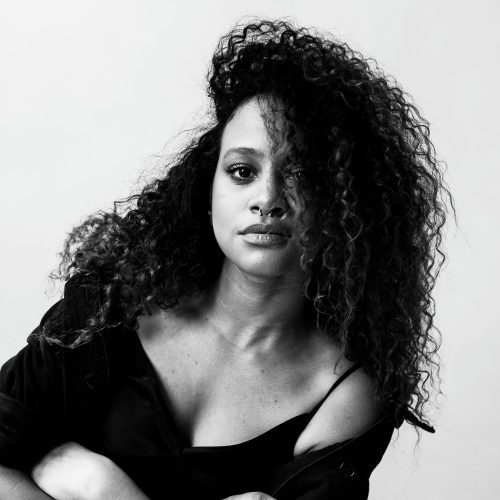
I don’t know if you have a prefabricated image in your head when you hear the word “organist”, but if you do, it probably doesn’t match the physical look of Montrealer Maria Gajraj. The young Ottawa-born lady with Trinidadian roots, in her twenties, slim and ultra-smiling, stands out in the usual professional corpus of artists who master the ‘King of instruments’. Maria is preparing to release her debut album, Exhale (aptly titled in the case of the organ), on which she offers a journey between soaring bliss and bewitching repetitive minimalism, guided by contemporary compositions from female and non-binary composers. In other words, a musical UFO that gently (and usefully) overturns the a-priori of organ music.
The repertoire features young up-and-comer composers such as George Rahi, Hania Rani and Esther-Ruth Teel, as well as a sure thing, Ann Southam, whose excerpt from her piano masterpiece Glass Houses, here transposed to the pipes, is very convincing.
READ MY REVIEW OF THE ALBUM EXHALE
In her interview with me, Maria Gajraj revealed that this album and its repertoire represented a turning point in her musical life, a kind of rediscovery of the pleasure of the instrument after a period of emptiness.
this music reminded me why i first fell in love with the organ
But she hadn’t been at it for very long! Since the age of 19. Only 19? A bit late, isn’t it? Yes and no. Let me recap her story.
Maria grew up in a family of Trinidadian origin in the Ottawa region. She learned to play the piano for several years. The ultra-competitive side of the discipline didn’t appeal to her, so she set her sights on a career in engineering. Then a chance offer gave her the opportunity to try her hand at the organ in an Ottawa church. She hadn’t mastered all the details of the pedals, valves and cranks of the great Gargantua engine, but she could play music, and a keyboard! So she took the plunge, and one day when, she says, the sun was shining through the magnificent stained-glass windows, she felt so good that she decided this was what she wanted to do for a living! No surprise there; that’s often how it goes with musical instruments.
She ends up at McGill, but goes through a moment of uncertainty. ‘’I love the music of the great composers’’, says she, but there’s something missing, an intimate connection that isn’t there. ‘’I don’t recognize myself in the life narrative of these white men from another time.’’ Again, not a qualitative criticism, but a sense of cultural proximity that means the experience is not 100% authentic for the young woman.
Comes McGill’s Chabe Castillo who invites her to record something on the Wolff organ in Redpath Hall, a beautiful instrument in the French classical style. He asks her what she wants to play. And so it goes, the names keep coming up and lead to Exhale, which is based on her personal musical loves and values : favouring female composers, non-binary artists and non-European composers. On that last note, she is currently in the final stages of a doctorate on the Caribbean organ repertoire, a whole area that remains largely unknown.
One composer who particularly fascinates her is Edward Margetson, from St Kitts, who emigrated to the United States in 1919 and became part of the Harlem Renaissance movement! Although this repertoire is hard to find and especially hard to listen to, Maria would love to record a few pearls in the near future.
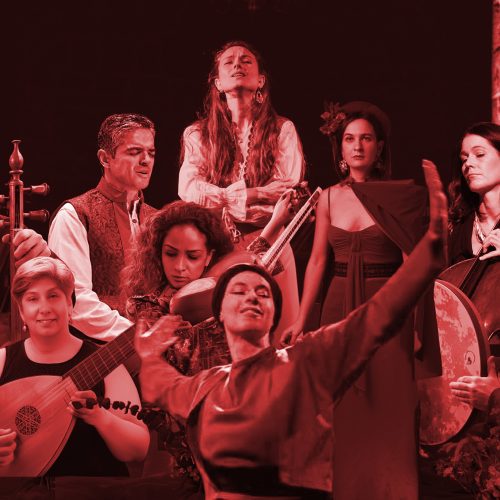
But I ask her which “traditional” (white, European) composer touches her more than others? ‘’Just one? Messiaen! Such fantastic colours and rhythms!’’ Maria is certainly not detached from the European world of music, as last January she took over the co-direction of the early music ensemble Comtessa here in Montreal, in which she handles the organetto, a portable medieval version of the big brother of churches. She says she has a great love of the music of the Middle Ages.
If you look up her name in a search engine, you’re also likely to see it associated with the Chapelle Notre-Dame-du-Bon-Secours in Old Montreal, where she is currently the organist, and perhaps also with Sapphonix Collective, a project she is running with her friend Esther-Ruth Teel, which is an unusual proposal for events presenting music (two organs!) in combination with other arts (visual, performance, tattooing, etc.).
For all these reasons, for the breath of fresh air that she brings to the ordinary practice and listening of the organ as a musical instrument, and for the inclusive values that never limit the fundamental quality of the aesthetic experiences on offer, Maria Gajraj is a name you should remember, because it is likely to resonate more and more on the Montreal scene (and eventually in Canada, North America and beyond), and above all to enrich substantially the already plethoric musical ambiance of our cultural metropolis.