renseignements supplémentaires
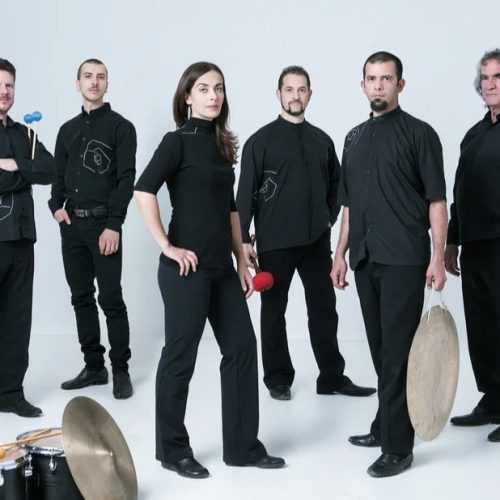
“re:mplacé est un concert de musique débutant par un ensemble de jazz contemporain, suivi d’un quatuor de saxophones dont le jeu se mêle à la projection vidéo, et terminant par un collectif de percussions utilisant le corps comme outils de création. Cette expérience guidera le public à travers un concert où les instruments traditionnels sont progressivement remplacés par des moyens d’expression musicale de plus en plus diverses.”
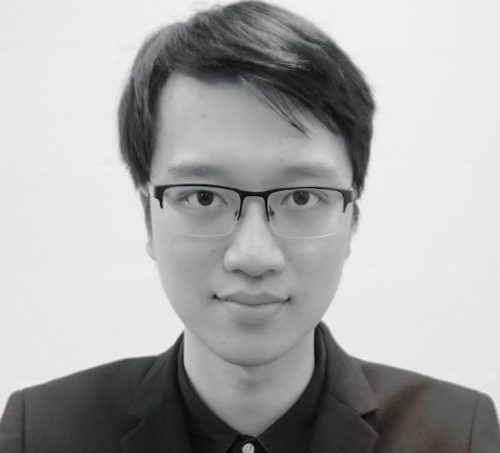
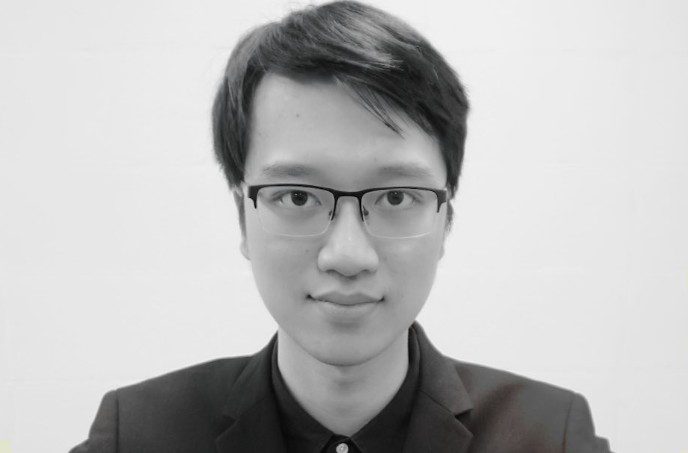
PAN M 360 est partenaire contenu de Codes d’Accès, question de faire rayonner la composition émergente tous azimuts en bonifiant l’expérience via interviews et recensions. Pour ce programme re:mplacé, présenté ce lundi 30 novembre à la Sala Rossa, nous avons causé avec les protagonistes de la soirée. Voici l’interview de Nicholas Ma.
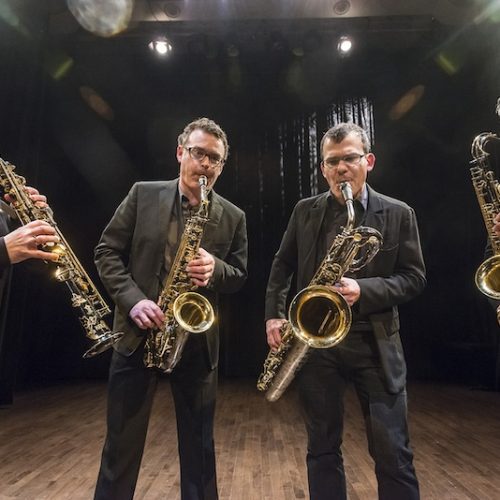
Nicholas Ma, *For You (but not really for You)*, for saxophone quartet and multimedia, 19′ 2026
PAN M 360 : Thank you, Nicholas, for summarizing your career as a composer: Academic or other training / Achievements / Projects
Nicholas Ma: I am a composer and pianist currently completing a Master’s degree in Composition at McGill University, where I also completed my undergraduate studies as a double major in Piano Performance and Composition with a minor in Music Theory. I have received four SOCAN Foundation Young Composer Awards and my work has been performed by ensembles such as Esprit Orchestra. My current work focuses on the intersection of contemporary classical music, play, internet culture, and digital media. Recent projects include Beaver Drop, a piece about parachuting beavers for mezzo-soprano, bassoon, and electronics, and Assembly Line Apparitions for cello and electronics. Alongside composing, I have been involved in various new music communities, including serving as President of the McGill Association of Student Composers, as a member of the Vivier InterUniversitaire Committee, and co-founding the Off-Topic Ensemble Mentorship Program.
“For You (but not really for You)” is a multimedia work for saxophone quartet, electronics, video, and theatrical staging that explores “doomscrolling” and attention in digital life.
PAN M 360: As a composer, how can one explore doomscrolling and analyze the attention wasted on the web?
Nicholas Ma : I was interested in doomscrolling both as a subject and as a way to construct a narrative that has a fun and entertaining surface while saying something deeper about society. I wanted the piece to initially feel playful and almost ridiculous, while gradually revealing a more serious question about how our attention is captured and directed by the digital environments around us.
What interests me about doomscrolling is how the tiny moments of checking one’s phone for notifications or opening up a social media app can snowball into occupying a huge amount of our time and energy. I therefore wanted to explore what happens when this behaviour is brought into a concert setting.
Taking its title from the “For You” page on social media, the piece explores how algorithmic feeds shape perception and engagement.
PAN M 360: Can you explain how you translate your observations of the algorithmic feeds that shape perception and engagement into music?
Nicholas Ma: I began by looking at the way algorithmic feeds constantly redirect or capture our attention. A feed can move from a serious news story to a meme, then be interrupted by an advertisement, then to a video of a cat falling off a couch. There can be a lack of continuity yet the feed constantly creates new reasons for us to keep paying attention.
The piece therefore uses fragmented musical material, abrupt changes of focus, repetition, interruption, and absurdity. The video and electronics are also important because they create another stream of information competing for the performers’ attention. The performers are simultaneously dealing with their instruments, the score, the projected material, and the electronic environment. Not only that but on a purely theatrical level, but the performers are fighting against the projector for the audience’s attention (as the projector is filled increasingly fast-paced, chaotic but attention-grabbing visual material).
Through fragmented musical material, a theatrical performance, and cat memes, the quartet finds itself increasingly absorbed by the flow before finally attempting to break free from it.
PAN M 360 :
- How does this work?
- How do you stage this theatrical performance and the cat memes (chat logs), as briefly described above?
- How is the piece structured for the saxophone quartet?
- Is it divided into movements?
- Do the performers read sheet music?
- Do they improvise?
Nicholas Ma: The answer to these questions are related, so I’ll reply to them together:
* The piece is divided into five continuous movements:
I. A 20-Second Engaging Hook to Maximize Viewer Retention
II. funny_cat_vids_LOL.mp4
III. Cat vs. Dog
IV. Cat with a Laser Pointer
V. Touch Grass
Each movement has its own set of aesthetics that are simultaneously connected with an aspect of attention and internet culture while together forming a complete narrative. There are multiple layers, including the both the audio and the projected visual imagery which contribute to this storyline, as well as the gradually escalating types of theatrics and electronics.
The first movement is filled with dread, negative imagery, unease as social media and news often highlight dramatic or alarming stories because humans have an evolutionary bias to pay more attention to negative stimuli or threats.
The second movement is a completely jarring contrast, starting with a rick roll and spectrally frozen cat meows. The players perform very virtuosic and rhythmically coordinated playing while synchronized to cat videos. It’s simultaneously surreal and absurd, but cats are also such a staple of internet culture and memes that they provide an immediately recognizable entry point into this world.
The third movement takes a game show format where Team Cat (Soprano and Alto Saxophones) competes against Team Dog (Tenor and Baritone). The players now navigate through mini “games” such as a sight reading battle (where the players turn around and read from the screen) or rounds of trivia questions while being interrupted by ringtones or sponsored ads. Unfortunately, the game show’s narrator is a dog and thus is biased, giving Team Dog easier prompts and Team Cat near-impossible objectives to complete. Narratively, this creates a competition that gives the audience a reason to remain invested in the outcome. Structurally, the players gradually increase the theatrics, turning away from the audience to focus on the screen behind them, while continuing to perform highly virtuosic material.
The fourth movement is an interactive, semi-improvised, multimedia game split into five “levels”. The quartet reads from the projector screen, where each corner contains a different word (eg. LOUDER, SOFTER, FASTER, SLOWER). The soprano saxophone shines a laser pointer on the screen and “controls” the other players. The closer the laser gets to a corner, the more the selected saxophonist has to play in that instruction. Suggested notes are given in the middle of the screen, and the player has to simultaneously improvise with those guidelines while following the laser pointer’s additional directions. As the members successfully complete various “levels”, each level and their respective words become more corrupted (OUTRAGE, FEAR, etc.) The electronics also begin processing the players’ live sound according to the position of the laser pointer. Eventually in the final level, the electronics take over as even the soprano saxophone loses agency and the full quartet is subject to the screen. Of course, cats are also drawn to laser pointers and there is a connection to be made of the shortened attention spans of humans with cats and laser pointers, which was the inspiration of this movement.
The fifth movement has the members, who are still facing the projector screen, gradually unfreeze. One by one, they grab their phones and play an audio file while walking to different corners of the audience. They leave their phones there, still playing, spatializing the sounds around the audience in a quadraphonic setup as the electronics fade from the main stage speakers. The movement gradually gets filled with hope as images pass by of warmth, vast landscapes, friendship, human connection, and the beauty of nature. The final electronics in the phones fade out as the quartet continues to the final climax, completely acoustically. Narrative wise the quartet has broken free, but also on multiple levels (with the quartet literally putting their phones away while also serving as a spatialization purpose). Ultimately, while the piece explores doomscrolling and the nature of our attention, it concludes that genuine human connection and being present in the moment are what truly matter.
PAN M 360: What musical references are involved? Tonal music? Modal music? Atonal music? Textural music?
Nicholas Ma: This piece draws on a mixture of tonal, atonal, timbral, rhythmic, and electronic materials. A major idea wanted to focus on was recognition. I use musical gestures that can feel immediately recognizable, alongside sounds that are more ambiguous or difficult to identify. This is connected to my broader interest in how listeners recognize and interpret sounds, especially in the context of internet culture.
Rhythmically, the music often has a strong sense of groove and physicality, but this is interrupted by more fragmented and unstable material. Different movements also draw on different musical aesthetics, ranging from highly coordinated and virtuosic passages to more textural, electronically processed, and improvisatory sections. There is also a deliberate tension between highly controlled musical writing and moments that feel playful or absurdly chaotic. That contrast between rigor and play is an important part of my compositional language.
PAN M 360: How did you work with KASL (Kirby Leitz, Liz Andresen, Sylvan Wilkinson, Ayari Kasukawa)?
Nicholas Ma : It was wonderful working with the KASL Quartet! I would drop by rehearsals where we would run sections over and go over what would feel comfortable for them. I’m very open to any suggestions and love working with performers on this collaborative aspect. It was also a highlight bringing them some unusual ideas such as the sight-reading battle or taking a selfie in the middle of a concert, and then seeing the performers try them in rehearsal bringing it to life. There is something very satisfying about having a slightly crazy idea on paper, trying it out, and seeing that works because everyone is on the same page.
PAN M 360: How does your presentation relate to the theme of the re:mplacé program?
Nicholas Ma: For me, re:mplacé connects strongly with the idea of displacement, where one may ask what happens when something familiar is removed from its original context and placed somewhere else.
For You (but not really for You) plays with this idea throughout. Familiar elements of internet culture, such as memes, attention-catching strategies, cat videos, and recognizable online sounds, are displaced into the setting of a contemporary classical concert, performed by a saxophone quartet.
There is also a more literal displacement of attention. The performers begin with a clear relationship to the concert, but their attention is gradually displaced toward the digital world projected behind them. By the end of the piece, this relationship is reversed when the performers physically move away from the screen and into the space of the audience, and finally conclude back on stage in the acoustic world of the quartet, reclaiming the concert space and reconnecting with one another through the act of making music.