Avant-Garde / Contemporary / expérimental / contemporain / Free Jazz

Suoni 2025 | Farida Amadou ++: an apotheosis of adrenaline discharge

by Frédéric Cardin

I didn’t go to all the concerts at Suoni 2025 (I’d need the gift of ubiquity for that), but my respectable experience of shows of all kinds leads me to think that last night was probably one of the most memorable of this edition of the avant-garde and experimental music festival.

The Alberta-based duo of Jairus Sharif and Mustafa Rafiq, the Montreal quartet Egyptian Cotton Arkestra and Brussels bassist Farida Amadou followed each other on stage. The intensity of the different musics on offer brought a broad smile to the faces of the many music lovers at the Casa del Popolo.
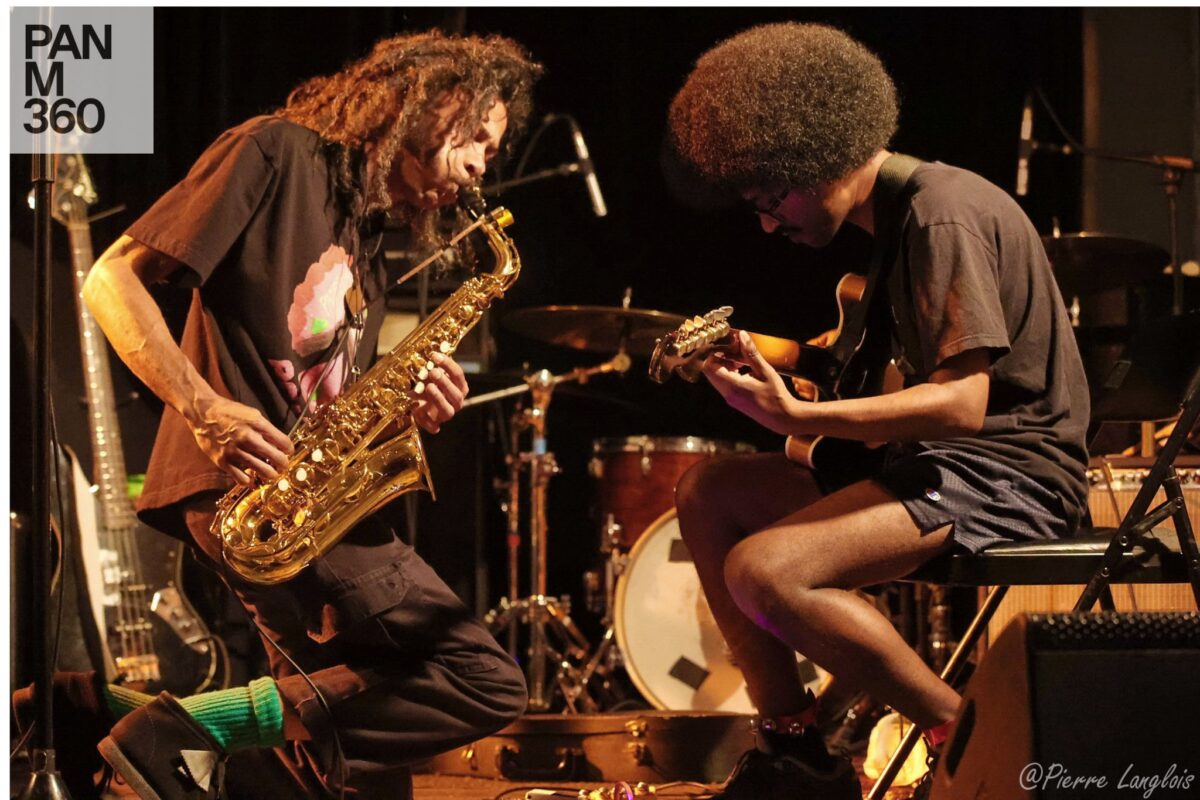
Jairus Sharif et Mustafa Rafiq Suoni 2025 cr.: Pierre Langlois

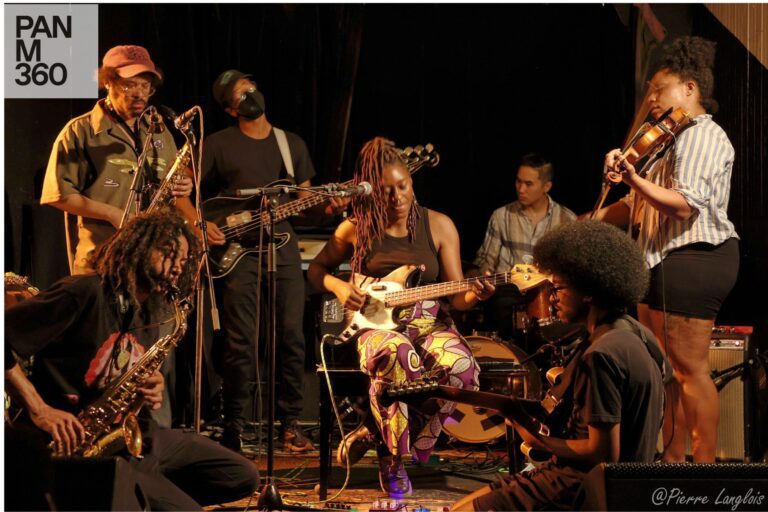
Sharif and Rafiq (sax and guitar + electronic) kicked off the evening with their waves of molecular abstraction, building to an enveloping tide of timbral saturation. This was followed by the four members of the Egyptian Cotton Arkestra (James Goddard, saxophone, Lucas Huang, percussion, Markus Lake, bass, and Ari Swan, violin) and their slow but irremediable, and above all irresistibly exciting, constructions, like an imposing crescendo from almost nothing to an unleashing of free power. This band is to jazz what Godspeed is to rock.

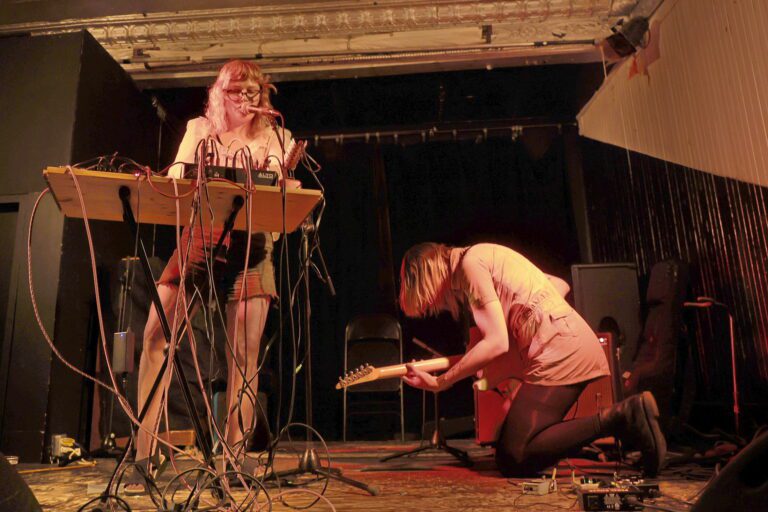
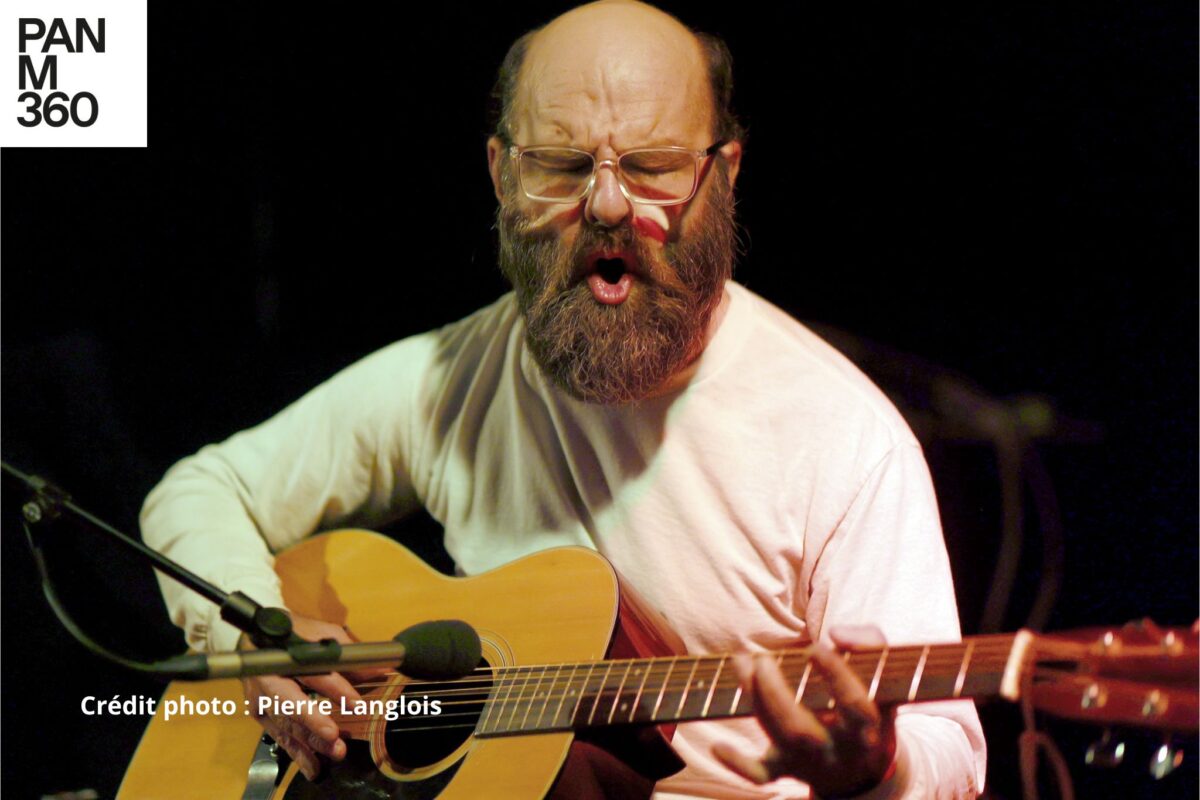
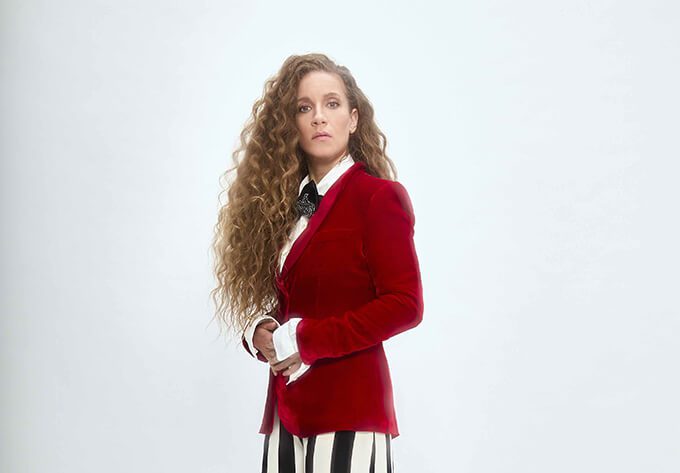
Farida Amadou, alone with her bass, did not let herself be imposed upon. She extracted a remarkable sonic punch from her instrument, which she plays both traditionally and as a percussion instrument (laid flat on her knees, and struck in all sorts of ways and with all sorts of sticks). Her musical architectures are made up of rhythmic drones through which a few thematic motifs thread their way. Pulsating noise that’s both inspiring and addictive!

LISTEN TO THE ALBUM WHEN IT RAINS IT POURS BY FARIDA AMADOU, ON BANDCAMP

And then, as a big bonus for the attentive and participative audience, Jairus, Mustafa and the four acolytes of the Egyptian Cotton Arkestra hopped on stage with Farida and jammed together two thrilling adrenalin discharges, veritable sonic tsunamis of musical freedom and creative incandescence. We would have taken another hour of this, easily. I’d even go so far as to suggest that Jairus, Mustafa and Farida move to Montreal just to hear them regularly offer us this kind of holistic and liberating catharsis. It wouldn’t be kind to Alberta or Brussels, but when it’s as good as this, being selfish is justifiable.

More! More!
Alternative / Pop-Rock

Festival International de Jazz de Montréal : Amanda Marshall au Théâtre Maisonneuve

by Rédaction PAN M 360

Amanda Marshall, autrice-compositrice-interprète, est reconnue pour avoir assuré la première partie de Whitney Houston lors d’une tournée mondiale.  Elle a sorti trois albums multi-platines depuis 1995.
Son premier album éponyme est l’un des 18 albums canadiens à avoir atteint le statut de Diamant au Canada et, à ce jour, il s’est vendu à plus de 6 millions d’exemplaires dans le monde.
En 1999, elle a sorti Tuesday’s Child, produit par Don Was (B-52’s, Joe Cocker, Bob Dylan, Elton John, Michael McDonald, Iggy Pop, Bonnie Raitt, The Rolling Stones), et comprenant des collaborations avec des poids lourds de l’écriture de chansons, Carole King et Eric Bazilian.
En 2001, Everybody’s Got A Story marque un changement de style et de son pour Marshall, avec une orientation R&B plus marquée. Produit par le légendaire Peter Asher (James Taylor, Linda Ronstadt, Carole King), l’album a produit trois singles classés dans le Top 10 et a été certifié quadruple disque de platine dans les dix semaines qui ont suivi sa sortie.

Amanda Marshall, singer-songwriter, is known for opening for Whitney Houston on a world tour.  She has released three multi-platinum albums since 1995.
Her eponymous debut is one of only 18 Canadian albums to ever achieve Diamond status in Canada, and to date it has sold more than 6 million copies worldwide.
In 1999, Marshall released Tuesday’s Child, produced by Don Was (B-52’s, Joe Cocker, Bob Dylan, Elton John, Michael McDonald, Iggy Pop, Bonnie Raitt, The Rolling Stones), and featuring collaborations with song writing heavyweights Carole King and Eric Bazilian. 
2001’s Everybody’s Got A Story marked a change in style and sound for Marshall, with a more noticeable R&B direction. Produced by the legendary Peter Asher (James Taylor, Linda Ronstadt, Carole King), the album produced 3 Top 10 hit singles and was certified quadruple platinum within 10 weeks of its’ release.

POUR ACHETER VOTRE BILLET, C’EST ICI!

Ce contenu provient de Place des Arts et est adapté par PAN M 360

Avant-Garde / expérimental / contemporain / Post-Minimalist

Suoni 2025 | Bozzini + Sarah Hennies: contrasts in post-minimalism

by Frédéric Cardin

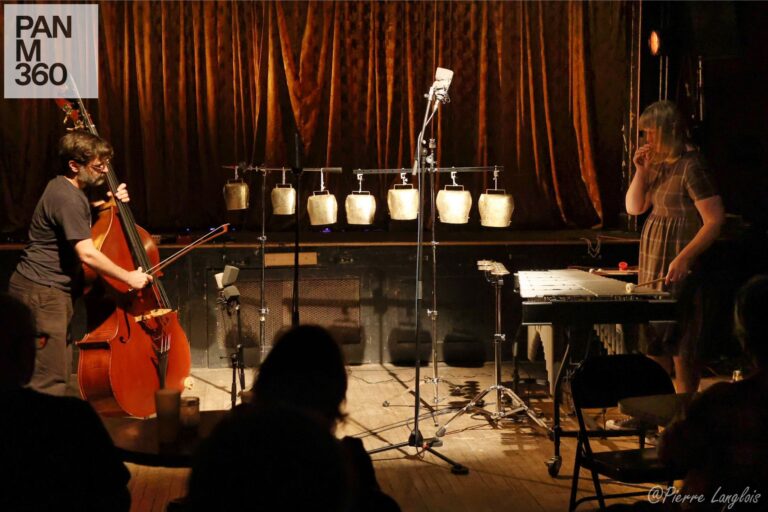
Sarah Hennies is an American percussionist and composer who currently teaches at Bard College in New York State. Suoni per il popolo welcomed her last night in a two-part performance strongly marked by contrasting post-minimalisms.

In the first part, she was accompanied by her colleague Tristan Kasten-Krause on double bass, in a piece that unfolded slowly and built like a dynamic arch. Frictional drones on both double bass and vibraphone (Hennies rubs the keys of the instrument with the bow) open the piece, which is eventually disrupted by the use of objects such as a metal bar, cowbells and other resonant instruments. Then it’s back to the high-pitched rubbing, plunging the Sala Rossa into a bath of intense tinnitus. If Kitty and Puppy had been there, they would have had epileptic fits. That said, I really enjoyed this offering, a kind of study of timbres that are as much fusional as they are clashing.

In the second half, Hennies made way for the Quatuor Bozzini, who performed her score Borrowed Light, a Canadian premiere. A substantial and demanding work lasting an hour, it requires sustained concentration to grasp the subtleties of the transformations created in the endlessly repeated motifs.

To me, the first half seemed to lack breath and discursive purpose. Seduction too. I would have cut a good part of it. In this genre, Morton Feldman does it better, and more poetically. I was just about to give up when the second half-hour gathered momentum and became more interesting, with more dynamic architectural constructions that held the attention better. A friend present at the venue, who is used to the avant-garde and has seasoned ears, thought the opposite: she enjoyed the first half more, the second much less. Of course, I make no claim to the truth.

All in all, an evening of music of mixed quality and pleasure, but of impressive quality nonetheless.

Classical

Montreal Chamber Music Festival | But it was a nice concert…

by Frédéric Cardin

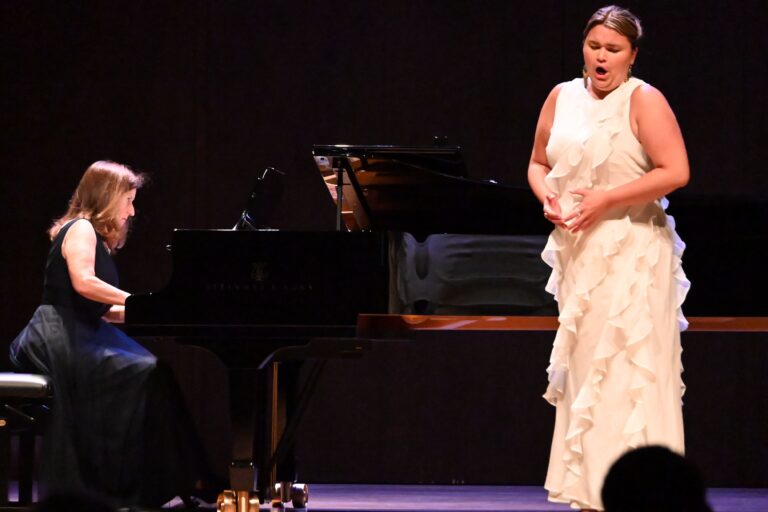
The next-to-last concert of the Montreal Chamber Music Festival, last Saturday, marked two days associated with June 21: the 40th anniversary of the Ordre national du Québec and National Aboriginal Peoples’ Day. After a blessing by spiritual leader Kevin Deer, the “official” theme of the Order, a neo-romantic miniature composed by Steve Barakatt, was played by a string quartet, followed by a number of arias sung by Elisabeth St-Gelais, in exquisite form. Two melodies by Métis-born composer Ian Cusson, bathed in post-French melodie writing, were logically followed by two (melodically superior) examples by Cécile Chaminade, Villanelle and Infini, which the Innu soprano recorded on her album released last year (a gem, which you can READ THE REVIEW of here). A short but lovely piece for violin and piano by Andrew Balfour followed (Karakett Nitotem), before moving on to the evening’s “classical” repertoire: Debussy’s Sonata for violin and piano in G minor, L. 140 and Dvorak’s Serenade for strings. Mohawk violinist Tara-Louise Montour gave a distinctive performance of Debussy, and the Festival strings played Dvorak with élan.

It was a lovely concert, even if the coherence of the program left one dubious. Your humble servant had the impression that the “native” had been artificially “glued on”, as if to check the item off a “to-do list”. But above all, this concert was bathed in a feeling of infinite sadness, as the Bourgie Hall audience was famishing, and I weigh the word. About 50 people were there (and how many of them had received free tickets?). Bourgie can accommodate 450. That’s 10% of the hall. 10%. I asked around: the 2025 season was “difficult”, attendance-wise. Not as bad as this 10%, which was the worst performance, but averaging around 50%, which is disappointing. The following day’s final concert at the Maison symphonique did better, with violinist Kerson Leong exerting his strong pull, of course, but in a special, reduced gauge (audience on stage and in the back bleachers).

What’s happening with the Montreal Chamber Music Festival? Marketing? Event branding? Personality? Programming? Compared with the Montreal Baroque Festival, which took place (and ended, as it was much shorter) on the same weekend, the difference is striking: the latter gives an impression of dynamism, youth and community involvement. Several concerts are sold out (albeit in smaller venues), and most are filled to appreciable levels (READ MY REVIEWS OF TWO MONTREAL BAROQUE FEST CONCERTS HERE and HERE). One has energy, the other seems out of fuel.

In short, it’s time to think about the future of the Chamber Music Festival. A city like Montreal can’t afford not to have a large-scale, unifying chamber music event – it would be a disgrace. But right now, we’re wondering how long it can last like this.

Baroque

Montréal Baroque 2025 | 4 seasons: welcome to the 21st century and the climate crisis, Mr. Vivaldi

by Frédéric Cardin

From Vivaldi’s Four Seasons, it seems that all manner of expressive concepts and contemporary symbolism can be drawn. It is indeed the mark of a living masterpiece that so many artists draw on it for multiple meanings, constipated purists be damned.

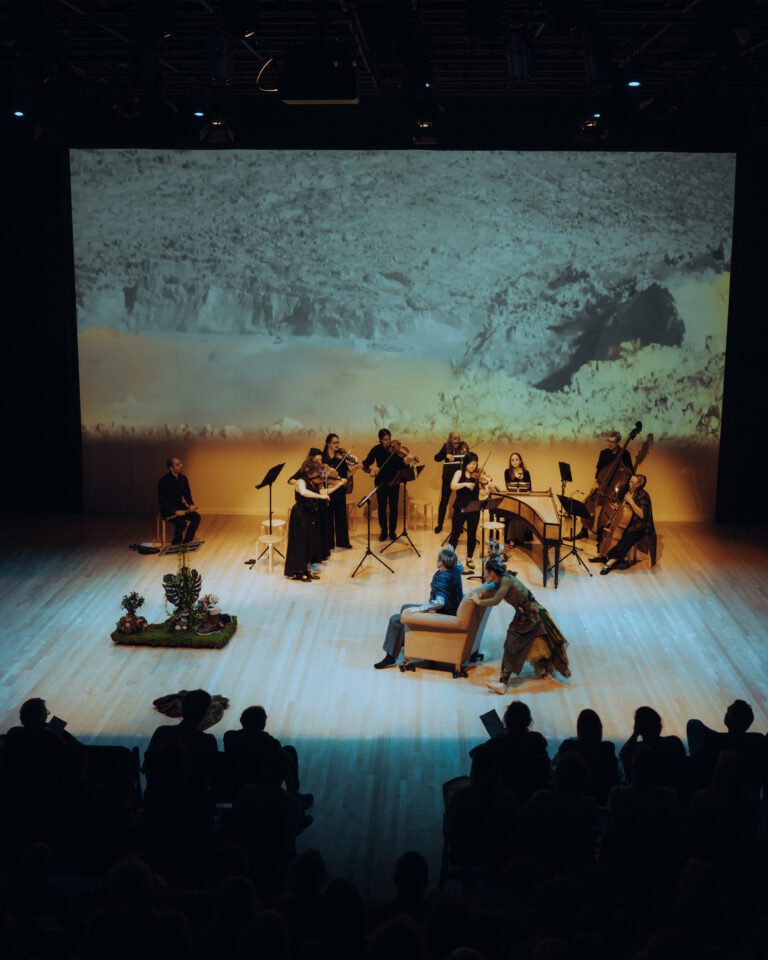
The final concert of the Festival Montréal Baroque 2025 presented a Climatic Crisis-linked modern version of the famous Four Seasons. On stage, in addition to the Pallade Musica ensemble, were characters evoking Nature and the humans who foul it. Between each of the seasons, a composition by Mathias Maute recalled the themes of the Four Seasons, but reworked to underline the current disruption of nature. The four solo recorder scores, often of formidable virtuosity, were impeccably rendered by Vincent Lauzer.

The choreography/staging had the good idea of not abusing the presence of the characters. Indeed, the problem I sometimes see with “collages” of choreography to existing classical music is the lack of ideas to accompany the music all concert-long. Here, the appearances were occasional, though numerous, leaving enough pauses to return to the music alone. The character of Mother Nature was continually present, but often in the background or hidden, like an observer. In short, the balance was right.

As for the music, Pallade Musica’s rough, even violent playing is to be underlined, as they built Seasons characterized by a rare emotional and physical intensity, often deviating from the principle of “beautiful sound” to get to the heart of their incendiary vision. On some notes, accuracy was sometimes lost, and this should not be overlooked completely, but transcending this fact, we were treated to a 21st-century post-punk vision, and an approach that, in truth, is not at all out of keeping with the current climate crisis.

Of course, this kind of attitude can be highly displeasing to self-proclaimed professors of good taste, such as those in a well-known Montreal daily. That’s to be expected. A recent review of the journalist in question drew a comparison with the same Four Seasons presented the same day by the Montreal Chamber Music Festival at the Maison symphonique, with the brilliant Kerson Leong as soloist (link to the article at bottom of the page). There’s no need to put the two versions back to back: their nature is totally different.

Leong is sovereign as soloist throughout (at Pallade Musica, a different soloist was featured in each season). He is one of the most dazzling violinists of his generation. He and his ensemble have indeed built a luminous and perfectly balanced edifice, tonally ideal and technically flawless. Pure, inspiring seasons.

But the underlying argument of this well-known critic is that this is the only way to conceive this masterpiece. Once again, I underline the mediocrity of his argument, as I did previously on another subject (READ THE COMMENT Diversity and inclusion are not punching-bags).

A masterpiece that couldn’t stimulate a variety of interpretations, and precisely the most extreme ones, would be condemned to gather dust. Everyone is free to appreciate or not, of course, but the insinuation that one way is justified and the other not is ridiculous.

Ultimately, these Four Seasons of Climate Crisis offer an original and distinctive commentary on the Vivaldi monument, trading “plastic perfection” for a provocative and memorable symbolic embodiment.

Link to the article mentioned above :

https://www.ledevoir.com/culture/musique/894091/critique-concert-deux-fois-quatre-saisons-cloture-festivals

Baroque

Montréal Baroque 2025 | Zarzuela, my love

by Frédéric Cardin

This was my very first concert in the atrium of Les Grands Ballets canadiens. As I settled in, a doubt assailed me: concrete, a brick wall, what kind of acoustics would result? Well, like an exhilarating little miracle, the result was thrilling. Perfect acoustics for low-resonance instruments such as a harpsichord and gut strings, but above all for voices, in this case a superb duo of soprano and mezzo.

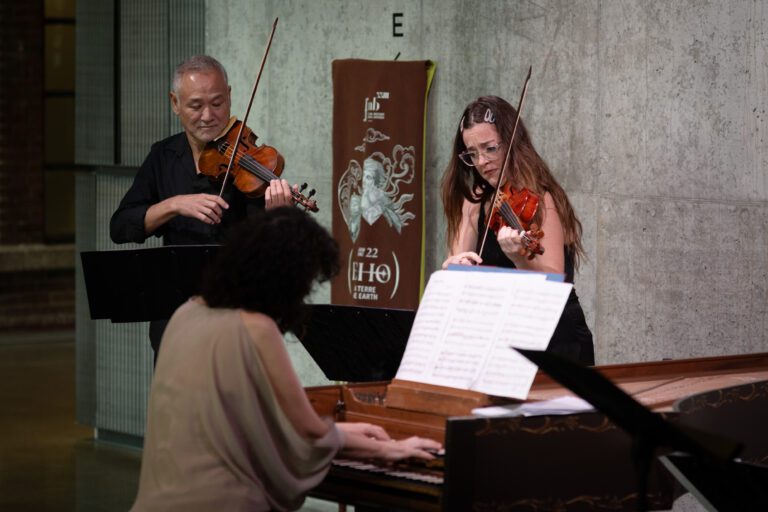
The Spanish ensemble Harmonia del Parnàs, reduced in size to two Baroque violins and cello, and a harpsichord, offered a program devoted to the early lyric art of the Iberian peninsula. On the menu, then, were excerpts from zarzuelas (Spanish operettas), operas and cantatas by composers as little-known as Castro, Corradini, Duron, de Nebra, Hernández y Llana and Castel, but so commendable for their mastery of catchy melodies and lively rhythms. Nothing to envy from Vivaldi, Corelli or Handel, these gentlemen!

It would have been a pleasant moment even with a decent set of music. But fortunately, it was much more than that. A lesson in precision, participatory energy and tonal quality was offered by the Spaniards (and Argentinians, we were told), who supported outstanding vocal performances by soprano Ruth Rosique and mezzo Marta Infante. These two were clearly relishing this repertoire, at times sparkling, at others steeped in poignant melancholy. Committed, even truculent embodiments of the characters evoked (jealous wife, grieving lover, etc.) completed an experience that will remain imprinted in the memory of the spectators present.

We can only hope that these singers and this instrumental ensemble will return someday very soon.

Ruth Rosique, soprano

Marta Infante, mezzo-soprano

Hiro Kurosaki and Lucía Luque, Baroque violins

Hermann Schreiner, Baroque cello

Marian Rosa Montagut, harpsichord and direction

Hip Hop / rap / Rap français

Francos | Back in Time With Saïan Supa Celebration

by Sandra Gasana

Although the Fête de la Musique is not officially celebrated on June 21 in Montreal, as it is in France, the timing for Saïan Supa Celebration was just on point. Although they weren’t complete, two of the collective’s members having left the group, they still managed to recreate the festive atmosphere to which they had accustomed us 20 years ago.

A drummer and a keyboard was all they needed in terms of musicians, since the rest was done through singing, rapping and beat boxing. Recordings of vocals could be heard at times, as at the very start of the concert, but that’s all it took for the crowd to start screaming. They opened with Raz de marée, one of their biggest hits from their debut album KLR, released in 1999, a classic of French rap.

Their on-stage energy was unchanged, with some of them looking a little older, while others remained in top shape. In fact, they wanted to see if their fans were just as fit by making them dance, but above all by asking them to get up and down on one of their songs. The average age in the room was around 45-50, but I was surprised to see so many young people in their twenties and thirties.

Short choreographies, breakdancing, jerky dance steps, and total mastery of the stage. With four members, it’s not always easy to find your place and occupy it without it looking too chaotic. Sometimes, one of them was alone on stage, then in a duo, then in a trio, then back to the full band. In short, we were treated to every possible scenario, but each time, the complicity between the artists was palpable, especially in Soldat, when one sings, the other continues with rap.

They challenged the crowd to “see if we have a voice in Montreal”, a challenge they took on proudly. They had fun on stage, teasing each other, interacting with humor, but it was clearly Sly Johnson who stole the show that night. With his chilling soul voice, he performed a short cover of Marvin Gaye’s Sexual Healing, which left no one indifferent. He also masters the art of beatboxing and uses humor on stage.

Of course, they didn’t just play their biggest hits, but also some lesser-known tracks, as well as the previously unreleased Étranger, which they wanted to test on the Montreal audience. We were even treated to a dialogue between beat box and drums, while on À demi-nue, from the album x raisons, they received a very warm welcome from the audience.

We had to wait until the encore to hear THE song I’d been waiting for all evening: Angela, which made this band legendary. Why was Crew replaced by Celebration? It’s a question we’d have liked to ask the band, but the interview request didn’t go through. Perhaps next time? In the meantime, we’ll be content to take a musical trip back in time to our youth.

Photo: Frédérique Ménard-Aubin

Publicité panam


Poetry / Slam

Francos | Honoring Slam With Grand Corps Malade

by Sandra Gasana

Who said slam had no place on THE biggest outdoor stage at the Francos? Grand Corps Malade proved on Friday night that it’s possible to do slam, poetry, even singing at times, and still deliver a concert worthy of a rock star.

On the same stage as Tiken Jah Fakoly a few days earlier, the man who made his home in our metropolis last year charmed his audience with his words, bringing together tens of thousands of lovers of the French language. Accompanied for the occasion by several instruments: trombone, trumpet, cello, guitar, piano and drums, the 2-meter-tall man towered over the Place des Arts, appearing under a variety of lighting effects. He opened his concert with “J’ai vu la lumière”, followed by “La sagesse” and “Saint-Denis”.

At times, nothing could be heard in the crowd, a dead silence, with only GCM’s voice resounding. The audience was hanging on his every word.

Each track was unique and the orchestration impeccable: on some, the trumpet served as an introduction, while on others, all the musicians started at the same time, giving a festive atmosphere to what was to follow. The lighting effects were in their element, enveloping each song in an original way.

I particularly liked “Roméo Kiff Juliette”, where we can clearly see the artist’s storytelling talent. He knows how to tell stories, and depending on the verse, the music follows fluidly, more intense when the action is in the foreground, and softer at the beginning and end of the piece.

He takes the time to speak to the audience, without hurrying, especially when he talks about his children and their reaction after listening to his latest album.

After “2083”, which is a little intense in terms of rhythm, he returns to gentleness with “Retiens tes rêves”, where slam and song cohabit, against a cello background. Shadows of dancers can even be glimpsed during the track, adding another dimension to the show. These shadows were also used for the Aznavour tribute song “A chacun sa Bohème”, which he covered in his own way.

But the highlight for me was during her duet with Camille Lellouche, who only appeared on screen, “Mais je t’aime”. I discovered her recently thanks to my son. In fact, a French festival-goer standing right next to me and my sons knew all the lyrics by heart, and seemed delighted to see her compatriot perform.

There were two surprises: the first came when Emma Peters took to the stage to sing “Sauf quand je pense à toi”, having just finished her own concert at Club Soda. Another surprise was MCO, the youngest of the rappers, who took to the stage for “C’est moi qui écris mes textes”, and who bears a striking resemblance to Grand Corps Malade. Is he his son? We suspect so, but he won’t confirm it.

The audience appreciated “Montréal”, as everyone around me had a smile on their face during this song written in 2009, in a café in Montreal.

He couldn’t have finished without playing “Mesdames”, a song in which he pays tribute to women. But it was with “Deauville” that the Francos 2025 special events concert came to an end, leaving us with a glimmer of hope in this crazy world, where poetry and slam still have their place.

Photo Credit: Victor Diaz Lamich

Publicité panam
Alt-Pop / Emo / Indie Rock

Sub Urban au Ritz PDB

by Rédaction PAN M 360

Les instrumentaux inquiétants et les voix fantomatiques et vaporeuses sont des éléments clés du pop sombre teinté d’EDM de Sub Urban. L’artiste solo originaire du New Jersey a exploré des thèmes d’isolement et des images cauchemardesques sur des singles comme “Cradles” (2019), qui a atteint les sommets des charts, et “Freak” (2020) feat. Rei Ami, ce dernier apparaissant sur son premier EP Thrill Seeker. Son premier album complet, Hive, est sorti en 2022, suivi de son deuxième album, If Nevermore, en 2025.

Eerie instrumentals and haunted, vaporous vocals serve as key ingredients for Sub Urban’s dour, EDM-tinged pop. The New Jersey-based solo artist explored themes of isolation and nightmarish imagery on singles like 2019’s chart-topping “Cradles” and 2020’s “Freak” (feat. Rei Ami), the latter of which appeared on his debut EP Thrill Seeker. His first full-length effort, Hive, appeared in 2022, and his sophomore effort, If Nevermore, followed in 2025.

POUR ACHETER VOTRE BILLET, C’EST ICI!

Ce contenu provient d’AllMusic et est adapté par PAN M 360

indietronica / Jazz Fusion / Jazz-Funk

Festival International de Jazz de Montréal : ClownC0re au MTeLus

by Rédaction PAN M 360

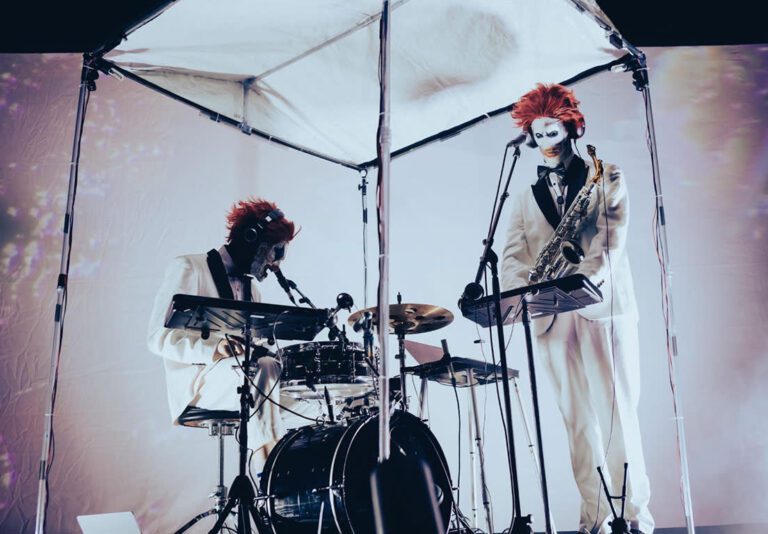
Clown Core est un duo musical américain composé de deux artistes anonymes portant des masques de clown. Il est largement supposé qu’il s’agit du batteur Louis Cole, membre du groupe indietronica/jazz-funk Knower, et du saxophoniste Sam Gendel, collaborateur fréquent de Cole.
Leur premier album éponyme, Clown Core, est sorti en 2010. Huit ans plus tard, ils ont sorti l’album Toilet, suivi de Van en 2020, puis de l’EP 1234 en 2021. Tous leurs projets sont autoproduits.

Clown Core is an American musical duo. It is composed of two anonymous artists who wear clown masks, speculated to be drummer Louis Cole of the indietronica/jazzfunk band Knower and Sam Gendel, a saxophonist and frequent Cole collaborator. Their eponymous album Clown Core was released in 2010. The album Toilet followed eight years later. Their album Van was released in 2020. The EP 1234 released in 2021. Their projects are all self-released.

POUR ACHETER VOTRE BILLET, C’EST ICI!

Ce contenu provient de Wikipédia et est adapté par PAN M 360

expérimental / contemporain

Suoni | Chik White and Ky Brooks raise their voices (but not Jessica Ackerley)

by Frédéric Cardin

Three vastly different performances took place last night at Casa del popolo for the concert featuring Chik White, Ky Brook/Robyn Gray and Jessica Ackerley. Two of them plunged us into Noise with their screams and vocal outbursts, which were at times strange and disconcerting.

The first was the performance of Chik White, Darcy Spidle in civilian life, whom conservative ears (and even liberal ones) would describe as an oddball, or a schizophrenic in hallucinatory crisis. White plays the Jew’s harp and the guitar, but let’s just say that he violates them to bring out improbable sounds, which he accompanies with borborygms and improvised screams. Aunt Karen would have said he sounds like the animated character from La Linea (google that) drowning. Or vomiting. Or both at the same time. I’d like to say that I don’t have an aunt named Karen, that I have nothing against aunts, nor against anyone named Karen. It’s just to say that this kind of show is anything but mainstream. That said, the Nova Scotia-based artist’s candidness helped me enjoy watching (and hearing) him go, fascinated as I was by what he’d come up with the next second. Abnormal and astonishing. Long live Suoni!

Chik White

The second performance was the slightly more “conventional” (don’t say that to aunt Karen) duo of vocalist and sound designer Ky Brooks and guitarist Robin Gray. These Montrealers are into drone-driven noise. They rip the drones to shreds and build up a construction that leads to a pulsating finale, on which Brooks lets loose with heartfelt but controlled cries of rage. Unforgettable, intense and downright cathartic. Your humble servant loved it.

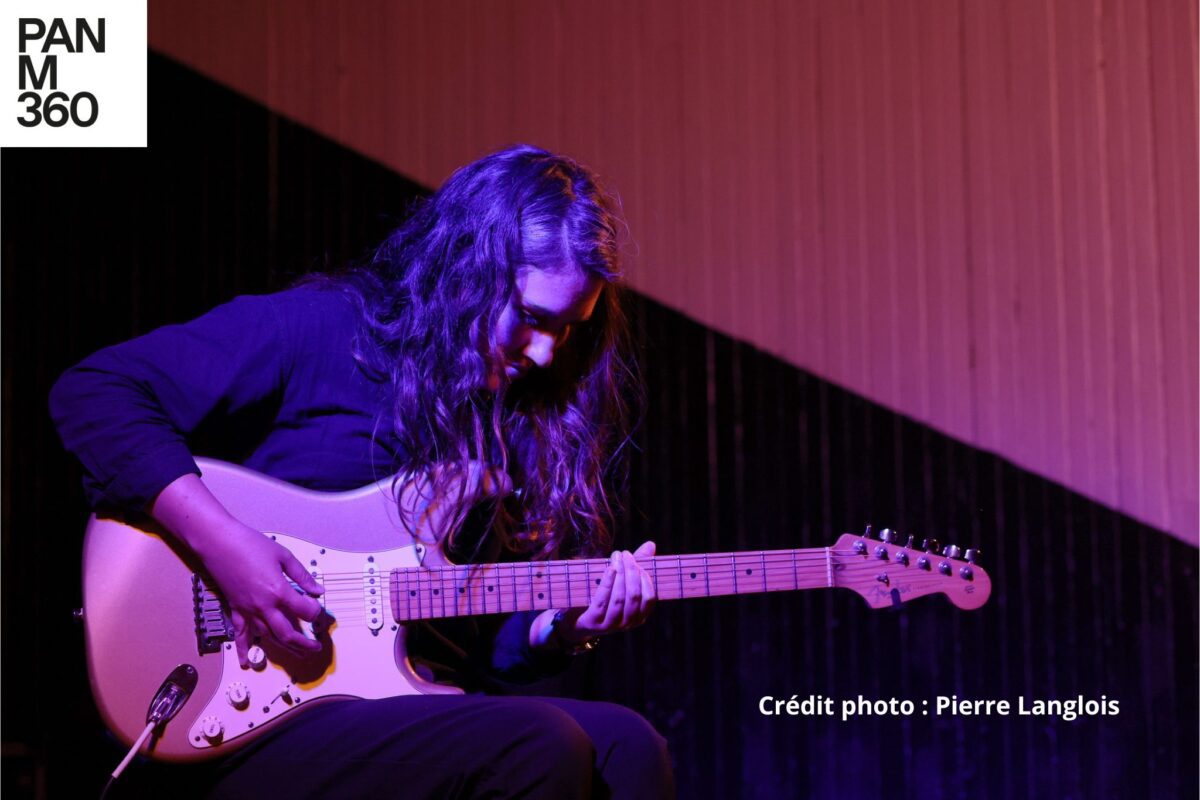
The highlight of the evening was a completely different kind of performance. And that was a good thing. After the previous experiments that almost made Diamanda Galas look like a girl scout, Alberta guitarist Jessica Ackerley imposed a more soothing, purely instrumental energy, made up of soaring, cosmic impressionism and episodes of great digital finesse.

Jessica Ackerley

Occasional outbursts of hard, even metal-style playing, prove her ecumenical guitar skills. All in all, the young lady pursuing a doctorate in Honolulu has made her mark into our minds. Here’s a performer of the very highest level, as much in knowledge and academic refinement as in the art of improvisation and eclecticism. A wonderful discovery for those who didn’t know her before.

It’s this kind of evening that reassures us about the future of musical creativity, and demonstrates the essential nature of events like the Suoni per il popolo festival.

Disco / DJ set / patin

SAT Roller dance

by Rédaction PAN M 360

Marly pour une après-midi de roller ! C’est le retour de la thématique discooo! L’Espace SAT se transforme en piste de danse sur patins à roulettes pour une après-midi à l’ambiance disco en compagnie de Marilyn Basbous, la talentueuse patineuse derrière l’école de roller danse Skate with Marly. Amateur·rice·s et professionnel·le·s sont invité·e·s à nous rejoindre au son de 80 Karats et autour des visuels de Fé pour un dimanche de patinage unique !

Following the success of the last editions, SAT joins forces with Skate with Marly for an afternoon of roller dance! The disco theme is backkkk! Espace SAT is transformed into a roller-skating dance floor for an afternoon in the company of Marilyn Basbous, the talented skater behind the Skate with Marly roller-dance school. Amateurs and professionals alike are invited to join us to the sound of 80 Karats and visuals of Fé for a Sunday of skating.

Marilyn Basbous/Marly

Marilyn Basbous est danseuse en roller, fondatrice et créatrice de “Skate with Marly”. Actuellement, Marly et son équipe proposent des cours de danse en roller à Montréal pour les amateurs de la glisse et les aident à avoir confiance en dansant sur des patins à quatre roues. Marly et son équipe organisent également des spectacles, des événements de danse en roller, ainsi que des ateliers d’apprentissage avec des figures clés de l’industrie de la danse en roller.

Marilyn Basbous is a roller dancer, founder and creative behind “Skate with Marly”. Currently, Marly and her team offer roller dance classes in Montréal to all skate enthusiasts and help them gain confidence grooving on quad skates. They also perform shows, host roller dance events, as well as skate bootcamps with key-players in the roller dance industry.

80Karats

80Karats, c’est l’alliance de deux passionnés : Sofiane et Valentin, amis d’enfance et amoureux du vinyle. Issus de l’univers de la danse, ils font naturellement vibrer les foules avec leur énergie contagieuse. Leur mission : créer une expérience underground unique à travers une sélection 100 % vinyle mêlant Disco et Funk. De Paris à Tokyo, en passant par Montréal et Toronto, 80Karats distille un groove envoûtant et vous transporte dans l’atmosphère électrisante des années 70/80s.

80Karats is the alliance of two passionate people: Sofiane and Valentin, childhood friends and vinyl lovers. They come from the world of dance, and naturally get the crowds going with their infectious energy. Their mission: to create a unique underground experience through a 100% vinyl selection combining Disco and Funk. From Paris to Tokyo, via Montreal and Toronto, 80Karats distills a bewitching groove and transports you into the electrifying atmosphere of the 70s and 80s.

Félicité est une artiste visuelle se spécialisant dans l’image en mouvement, le cinéma et la performance (VJ). Créer de l’art pour elle consiste à se fondre dans son environnement à travers le mouvement et la musique. Elle le fait en déconstruisant les cultures et les genres hiérarchiques, c’est pourquoi elle travaille toujours avec la nature et la technologie à travers des techniques innovantes de composition analogique et numérique.

Félicité is a visual artist specializing in moving image, film and performance (VJ). For her, creating art means blending into one’s environment through movement and music. She does this by deconstructing cultures and hierarchical genres, which is why she always works with nature and technology through innovative analog and digital composition techniques.

POUR ACHETER VOTRE BILLET, C’EST ICI!

Ce contenu provient de la Société des arts technologiques et est adapté par PAN M 360

Subscribe to our newsletter