Festival International Nuits d’Afrique: African circus with Kalabanté
by Rédaction PAN M 360
Country: Guinea – Québec
This show is part of the series Les Grands Événements which is presented by ICI Musique.
Description:
“I worked for almost all Quebec circuses internationally and found that something was missing, I missed the African acrobatics. So I wanted to put on a show that talked about my country of origin which is Guinea,” explains Yamoussa Bangoura, founder of the troupe (RFI, 2022). Afrique en cirque, which returns from an international tour, is a refreshing and hyper-energizing summary of the immense artistic talent that is home to West Africa. Acrobatic, explosive feats, agile and athletic choreography, thrilling percussion, authentic kora, paintings that follow one another in a frantic rhythm… The show brings together theatre, music, dance and circus arts.”
Festival International Nuits d’Afrique : Kirá at Balattou club
by Rédaction PAN M 360
Country: Brazil.
This show is part of the Revelations series presented by Atuvu.ca
Description:
“Brazil is in his veins. Following in the footsteps of Nordeste folklore, without artifice and a little rebellious, Manu Chao’s son happily follows his own path (50 million listens to his 1st album, Semente de Peixe, all platforms combined!). Wrapped in a softly psychedelic aesthetic, its whimsical juxtaposition of rhythms such as Baião, Maracatu, Carimbó, Pisadinhaou or Pagodão Baiano, annexed with Latin sounds such as Salsa, Cumbia and Boléro drink as much from the tradition of popular Brazilian singers as from the alternative movements of Psicodelia Nordestina 70 and MangueBeat.”
Festival International Nuits d’Afrique: AfirkA invite soirée orientale avec ostie de Français
by Rédaction PAN M 360
Country: Algeria .
Part of the «Les étoiles Nuits d’Afrique» series, presented by the Fabrique culturelle de Télé-Québec.
Description:
“Pivotal to AfirkA’s project, the generous sharing with the public of the sweet memory of carefree and warm evenings filled with joy and laughter; unifying, liberating and uninhibited parties, punctuated by the popular music of Algeria, challenged by the long enthusiastic youyous. Authentic and energetic, relying on an instrumentation composed of the darbouka, mandole, guitar and violin, their passionate covers of success to the Rai intonations, Chaoui and Kabyle are reminders of how cosmopolitan their country’s rhythms are.”
Spectacle pour enfants (5 à 9 ans) – Bienvenue à toute la famille!
Simone s’ennuie; sa mère lui a confisqué sa tablette. Elle n’est vraiment pas contente! Mais tout à coup, les sons qui viennent de sa fenêtre semblent prendre vie. Grâce à son imagination débordante, des mondes musicaux inspirés de délicieux biscuits, de décoiffantes tempêtes et de célestes mélodies se déploieront sous ses yeux et dans ses oreilles!
Biscuits, tempêtes et mélodies est une ode à l’imaginaire et au merveilleux pouvoir de la musique grâce à laquelle nous ne sommes jamais seuls.
Children’s show (ages 5 to 9) – The whole family is welcome! Simone is bored; her mother has confiscated her tablet. She’s really not happy! But suddenly, the sounds coming from her window seem to come to life. Thanks to her overflowing imagination, musical worlds inspired by delicious cookies, breathtaking storms and heavenly melodies will unfold before her eyes and in her ears!
Cookies, Storms and Melodies is an ode to the imagination and the wonderful power of music, which means we’re never alone.
Relive the splendour and desolation of Mozart’s Requiem, brought to life by the brilliant Ensemble Caprice and Ensemble ArtChoral. Often thought to have been composed for his own funeral, Mozart’s final masterpiece is a hauntingly beautiful testament to the composer’s genius. Also on the program, Mozart’s Symphony No. 41 (the “Jupiter Symphony”) and Ave Verum Corpus.
Vous pourrez revivre la splendeur et la désolation du Requiem de Mozart, ravivé par le brillant Ensemble Caprice et l’Ensemble ArtChoral. Souvent considéré comme ayant été composé pour ses propres funérailles, l’ultime chef-d’œuvre de Mozart est un témoignage d’une beauté envoûtante du génie de son compositeur. Également au programme, la Symphonie n° 41 (la « Symphonie Jupiter ») et l’Ave Verum Corpus de Mozart.
On 2 April, a concert of discoveries and feminist affirmation took place in Salle Bourgie at the Montreal Museum of Fine Arts. Iranian-born Montreal soprano Bahar Harandi was accompanied by Amir Eslami on ney (a traditional Iranian flute), Saba Yousefi on violin and Hooshyar Khayam on piano. Through a repertoire of contemporary works written by as many Iranian-Canadian women composers, we were presented with a whole universe inspired by Persian roots and its rich history. The concert began with a number of traditional pieces arranged for ney and piano, immersing the audience in an exotic soundscape that was also relatively close to the music of Gurdjieff/Hartmann from the early 20th century. The other pieces on the programme, by Parisa Sabet (born in 1980), Aida Shirazi (born in 1987) and Mina Arissian (born in 1979) demonstrated a very high level of skill, ranging from the consonant music of Sabet to the more demanding expressionism of Shirazi, before returning to the Scriabinian inspirations of Arissian.
The texts, many of them by the great poet Rumi, were used symbolically in the context of this concert, even if their initial premise had no such intention. For example, Parisa Sabet’s Be still (based on a text by Rumi) says:
Sit, be still and listen,
because you’re drunk
and we’re at the edge of the sky
It came as no surprise that the expressive force given to the voice was concentrated on the first stanza. Bahar Harandi put a lot of intensity into it and it was impossible to think of anything other than a man ordering a woman to do this in modern Iran (or indeed anywhere else). There were, in fact, several moments of powerful dramatic force throughout a programme that was quite varied in terms of musical texture, rhythm and atmosphere.
Harandi sang with a beautiful and very well-balanced voice, combining technical mastery with plenty of emotional character. The soprano also demonstrated good dramatic range, accentuating certain passages with bite, cynicism or gentleness.
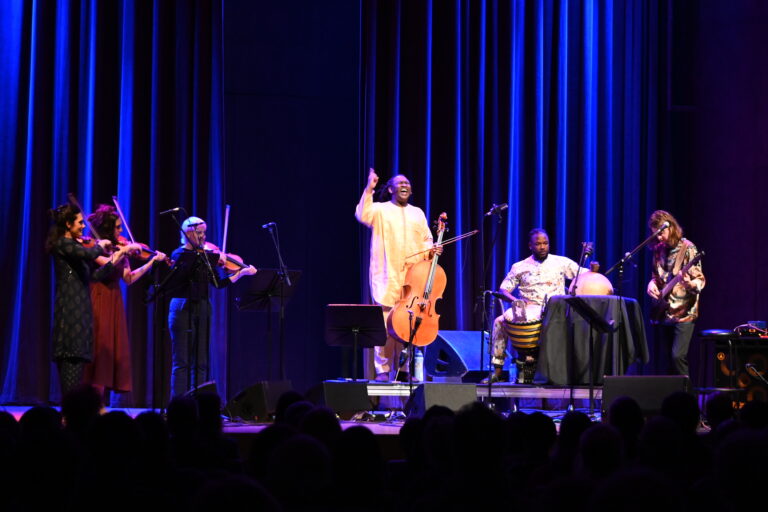
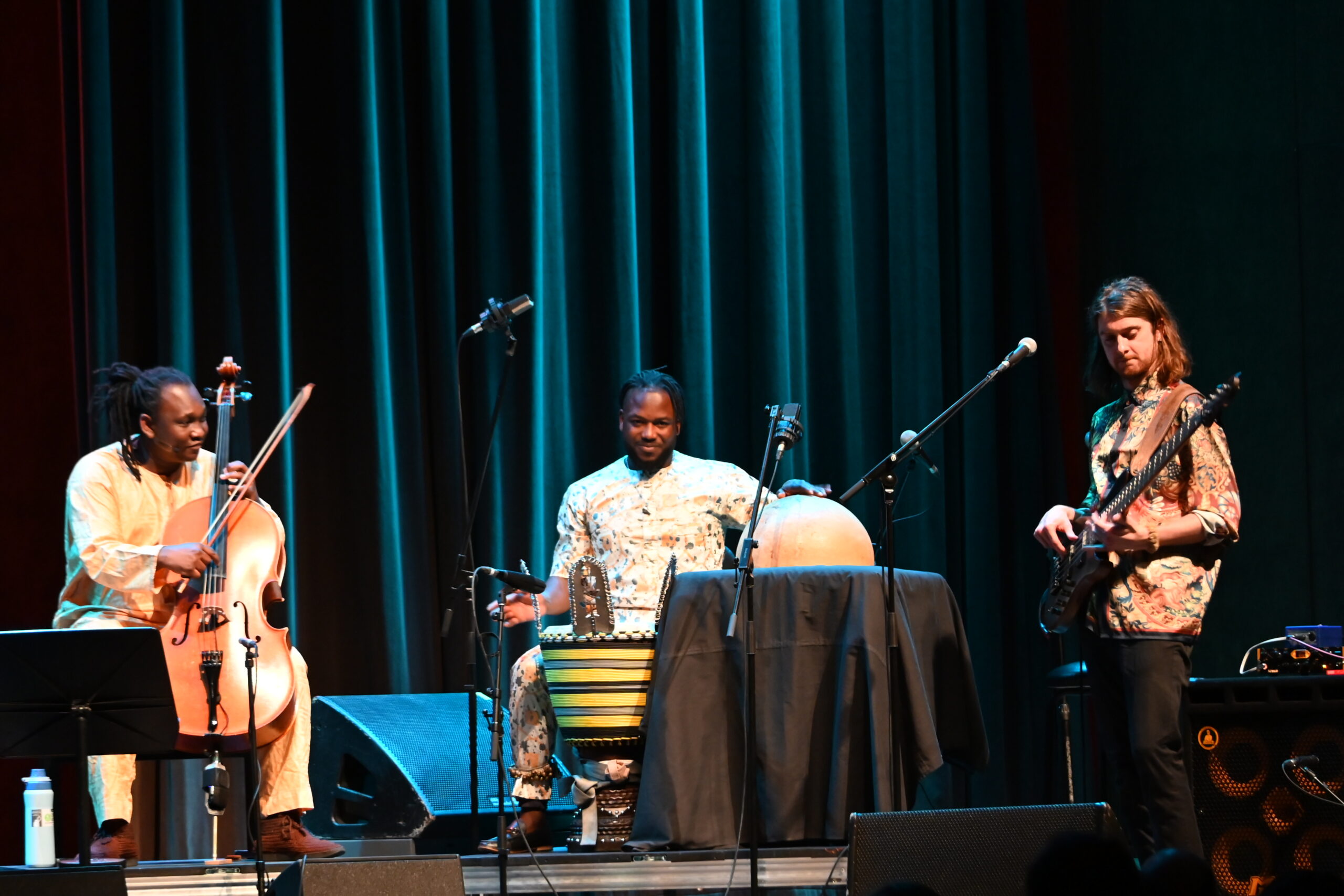
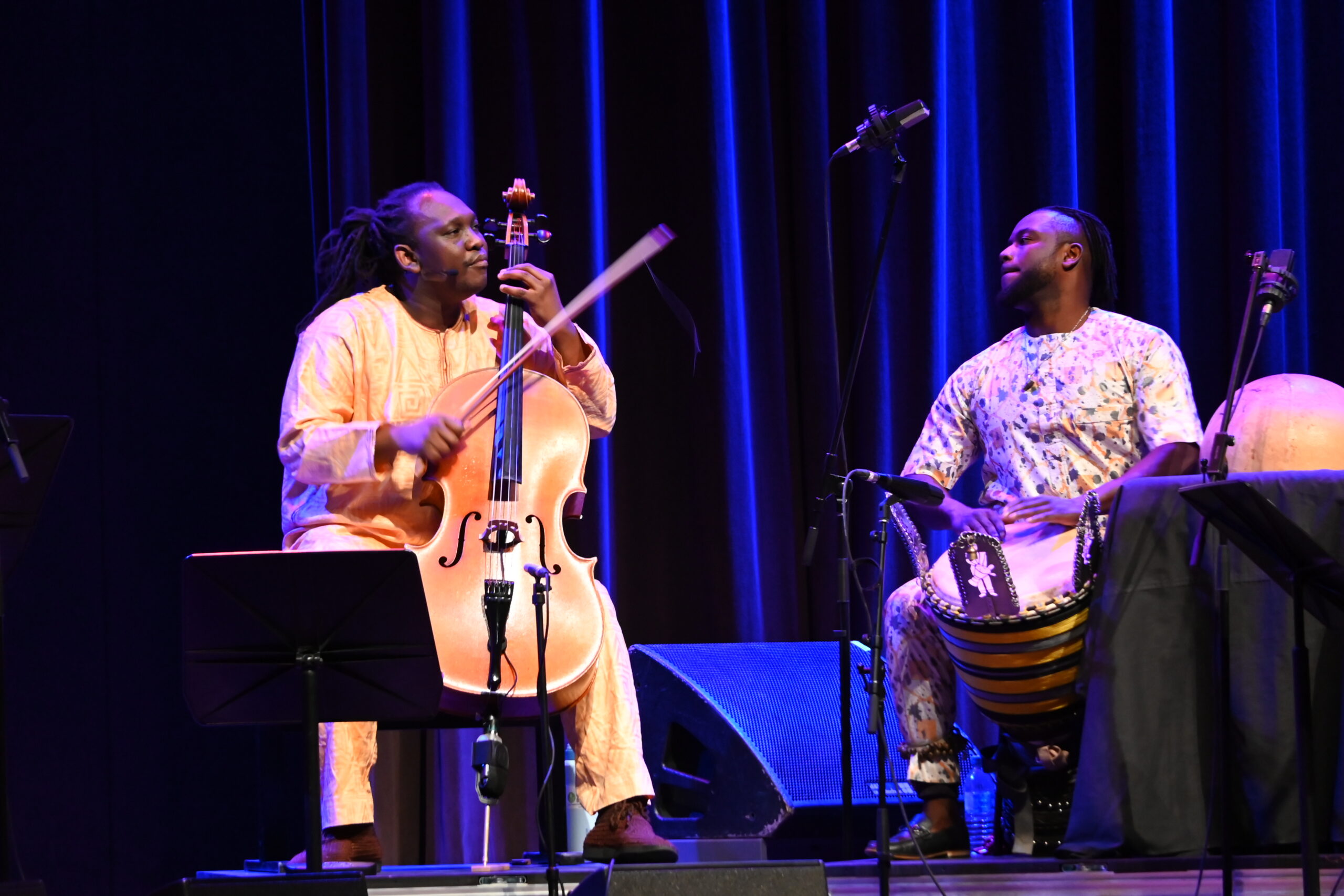
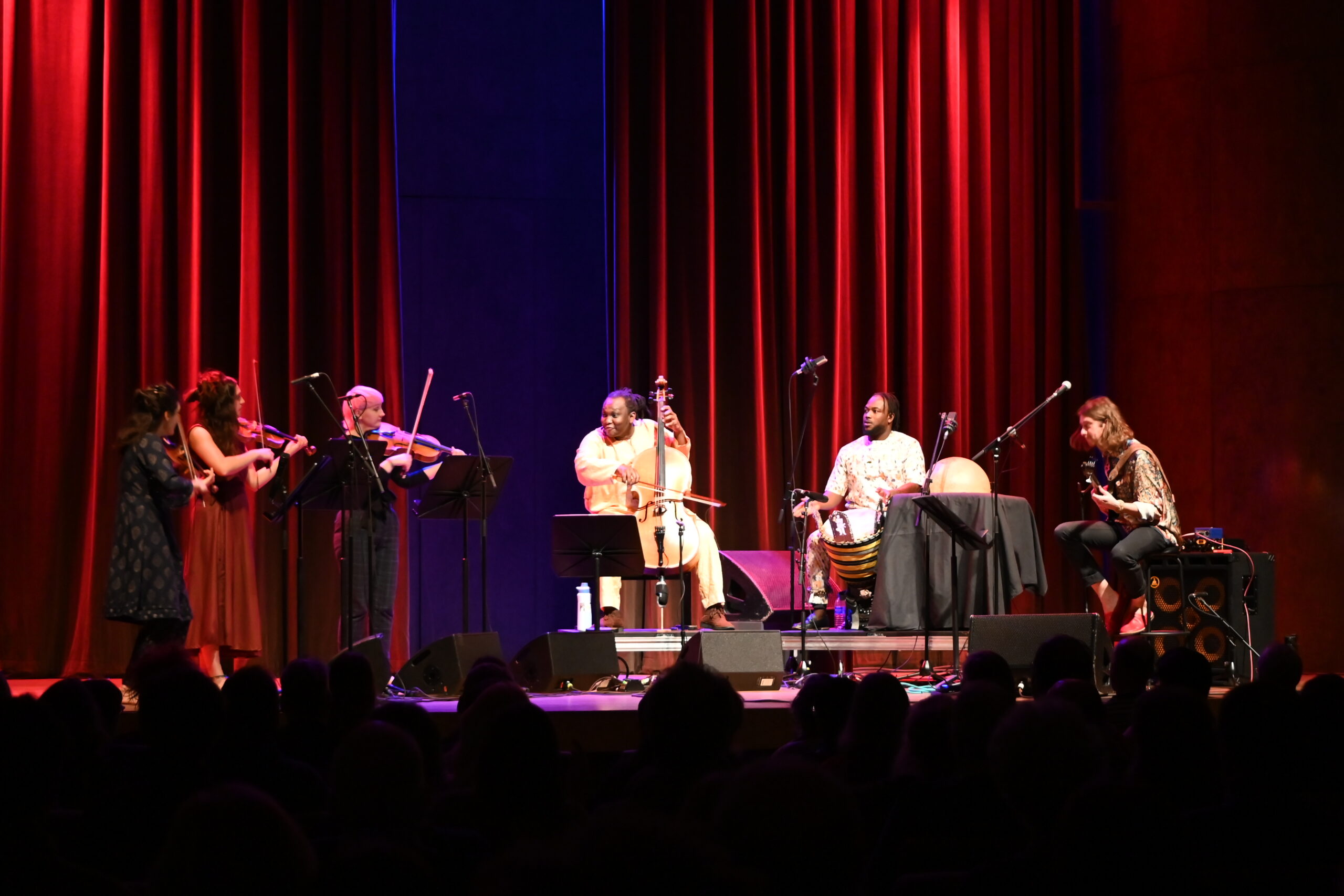
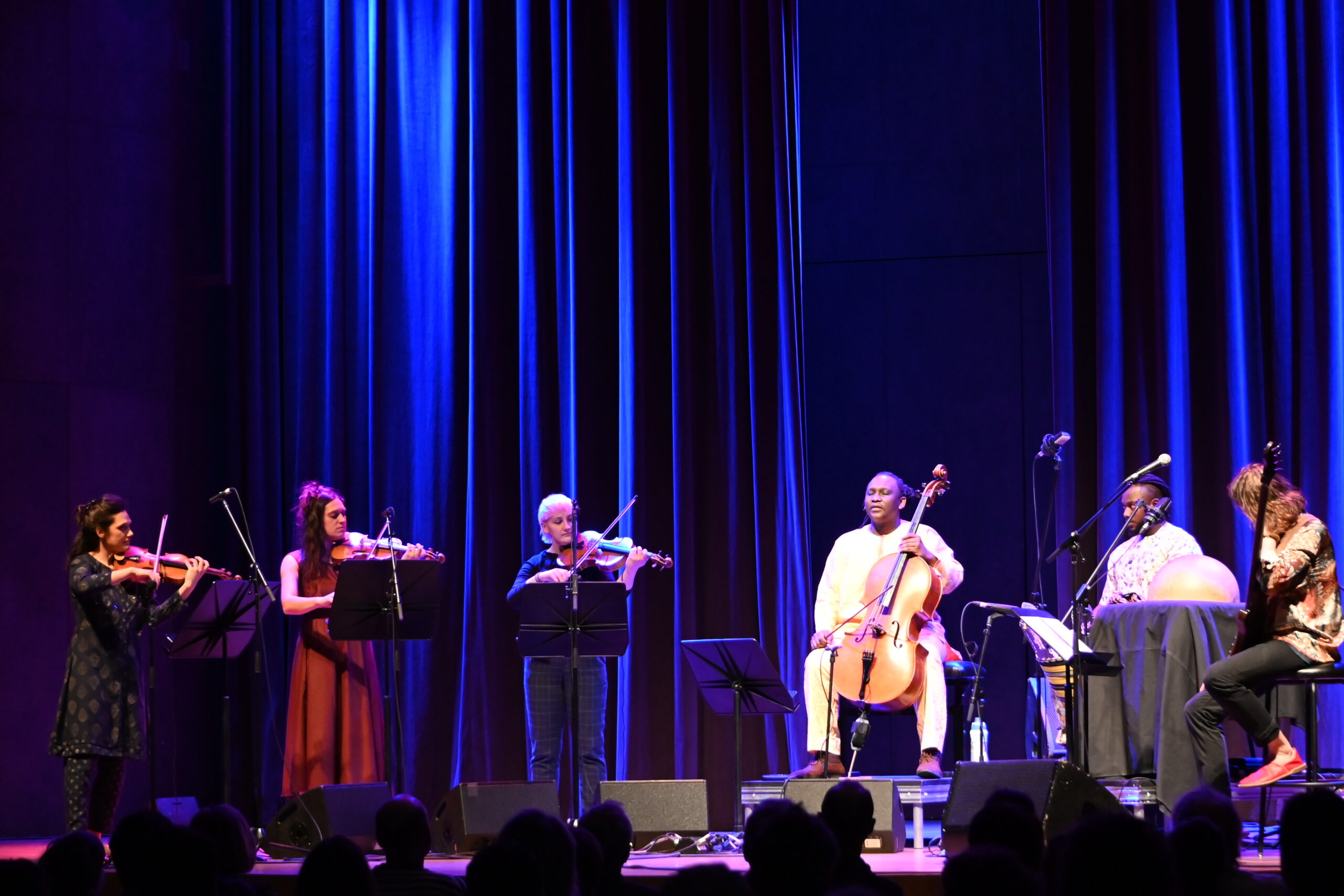
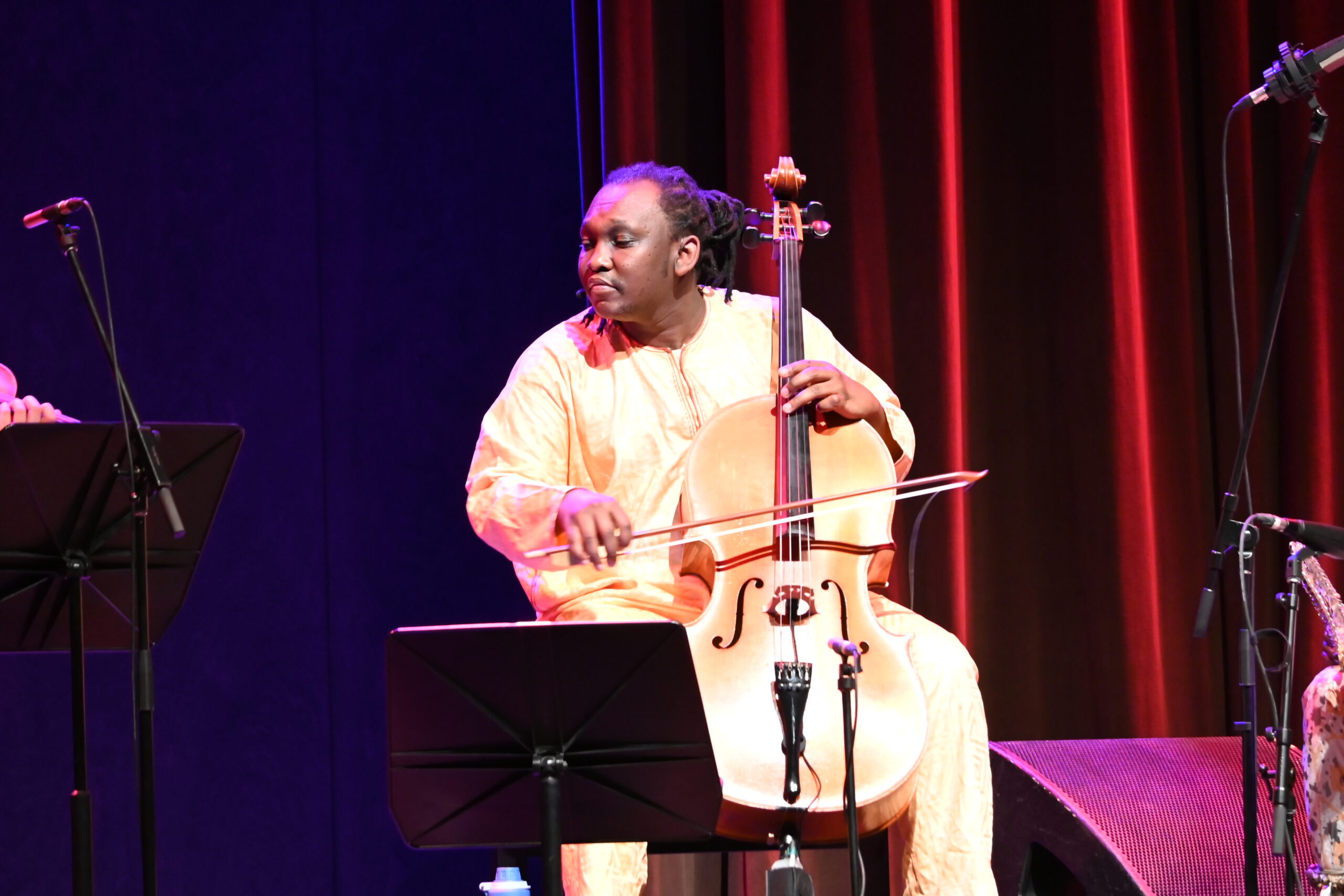
The sirocco is a warm and vast current of air exchanged between North Africa and Southern Europe. It’s also the symbol that South African cellist Abel Selaocoe uses to inspire a spirit of musical exchange between Africa and Europe in a concert programme that he and his friends from the Manchester Collective are taking on a major North American tour, including a stop in Montreal last Thursday.
The artist is as solid in Beethoven and Debussy as he is in arrangements of traditional pan-African pieces or even his own compositions. The Sirocco concert, given in front of a Bourgie hall electrified by his charismatic stage presence, left a little room for the European classics (very brief Haydn, Berio, Hans Abrahamsen and Scandinavian folklore), but gave most of it to the sounds and technical particularities of Africa (Mali, South Africa). More than commercial crossover, although it sometimes sounded a bit like it, Selaocoe offered an intercultural vision of chamber music, where a Haydn quartet had the resonance of an anti-Apartheid spiritual song from South Africa, and percussive techniques thrown at the strings or the cello body were matched by surprising, even impressive vocal inflections. These led the versatile musician to navigate deftly from delicate high notes to rumbling lows reminiscent of Tibetan throat singing. It seems that, between Africa and East Asia, age-old traditions have managed to forge a permanent cultural path.
Selaocoe and the musicians of the Manchester Collective (two violins, a viola, a percussionist and an electric bass) injected an infectious energy that earned them a long and warm ovation. The purists of another era would have hated this kind of programme, but Selaocoe is the bearer of a new future for classical music, and his message of intercultural renewal is clearly reaching a large and, above all, quite young audience.
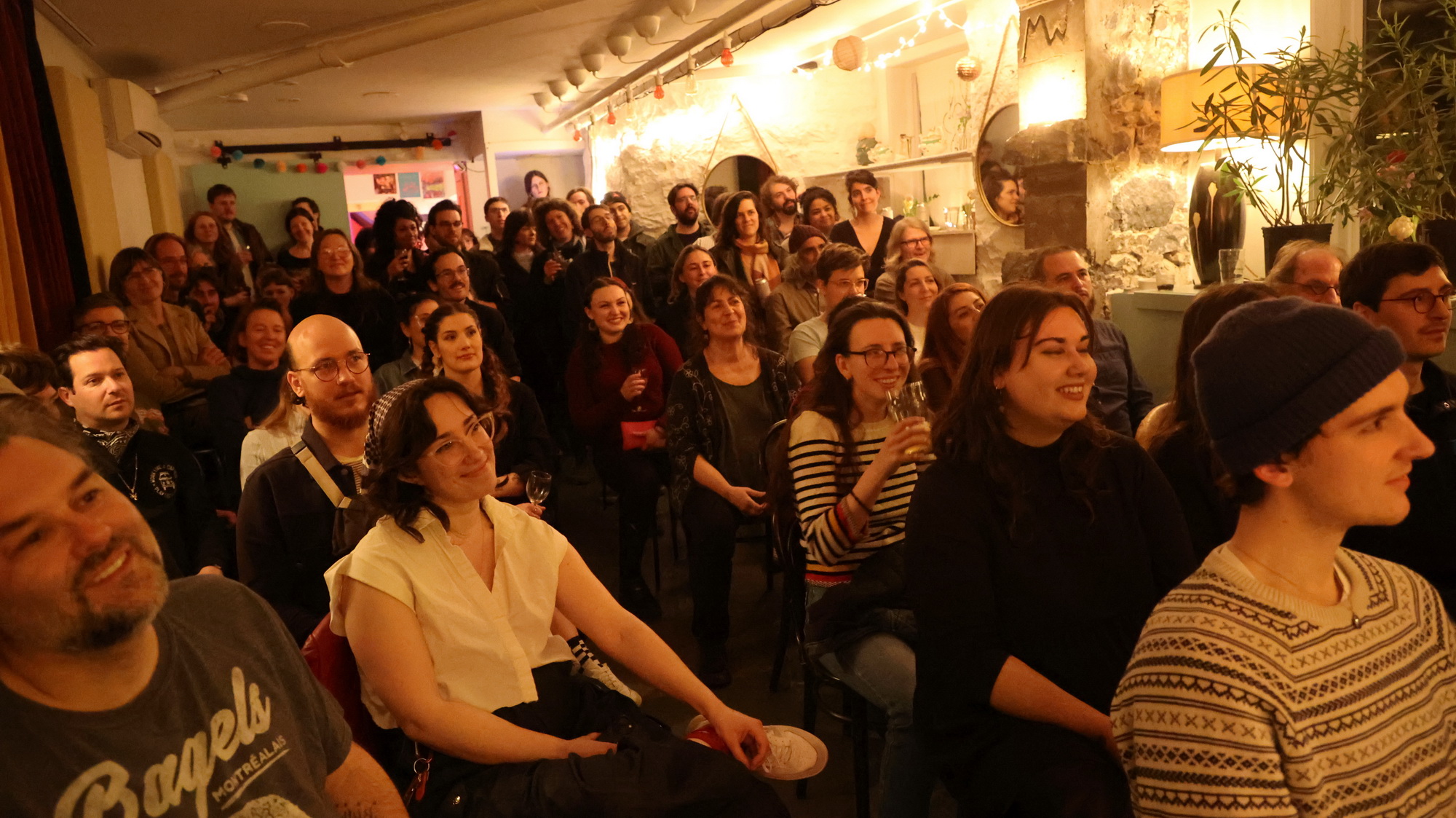
Since everything, even the best, must come to an end, the fourth and final evening of the Montreal Anti Jazz Police Festival at Ursa took place yesterday in an atmosphere of complete satisfaction. The small venue on Avenue du Parc was packed to the rafters with a colourful, happy, attentive, multilingual and warm audience. Totally Mile-End-ian.
This final session of musical bliss began with the Martian dreams of harpist Sarah Pagé, who presented material that will feature on her forthcoming album Utopia Planitia. The great plain recently visited by a NASA rover served as levitating inspiration for the evocation of strange landscapes, to which layers of arpeggios and ethereal echoes added a touch of more earthly colour. Saxophonist Charlotte Greve followed, and she too won us over with her symbolic, spiritually-inflected minimalism, on which she deploys some beautiful, floating and inspiring vocal lines. Greve’s tenor expresses itself with a beautiful roundness that reminds us of Garbarek at ECM. Somewhere in the ⅔ of the performance, the rhythm was activated to give a more pop finish to the whole, to which the excellent Sarah Rossy has come to add her own touch of vocalism. An impeccable dynamic and stylistic progression that set the table for the second act of the evening.
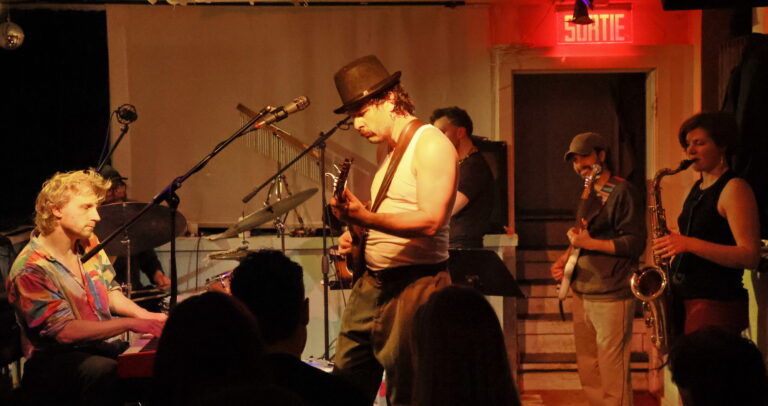
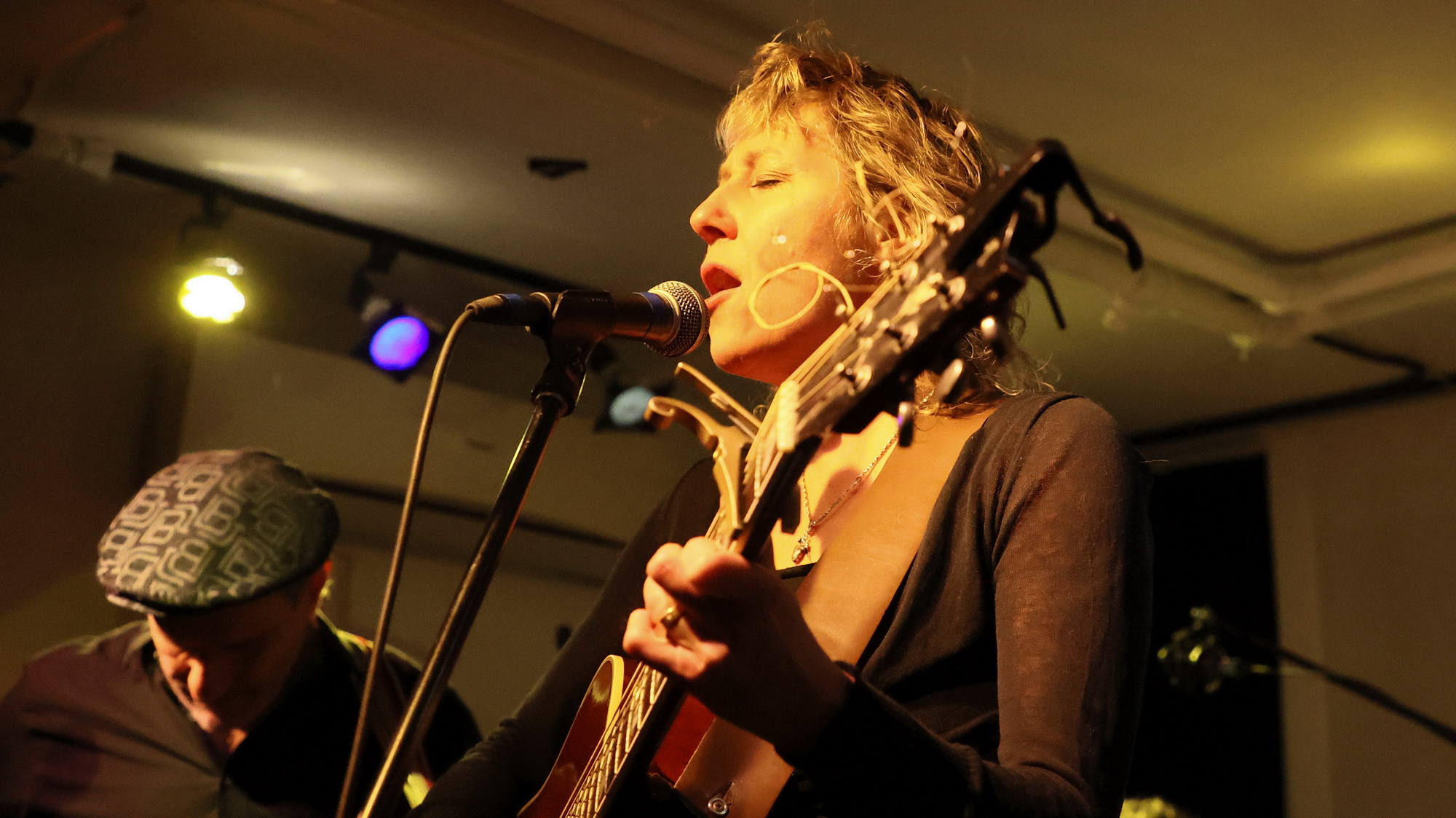
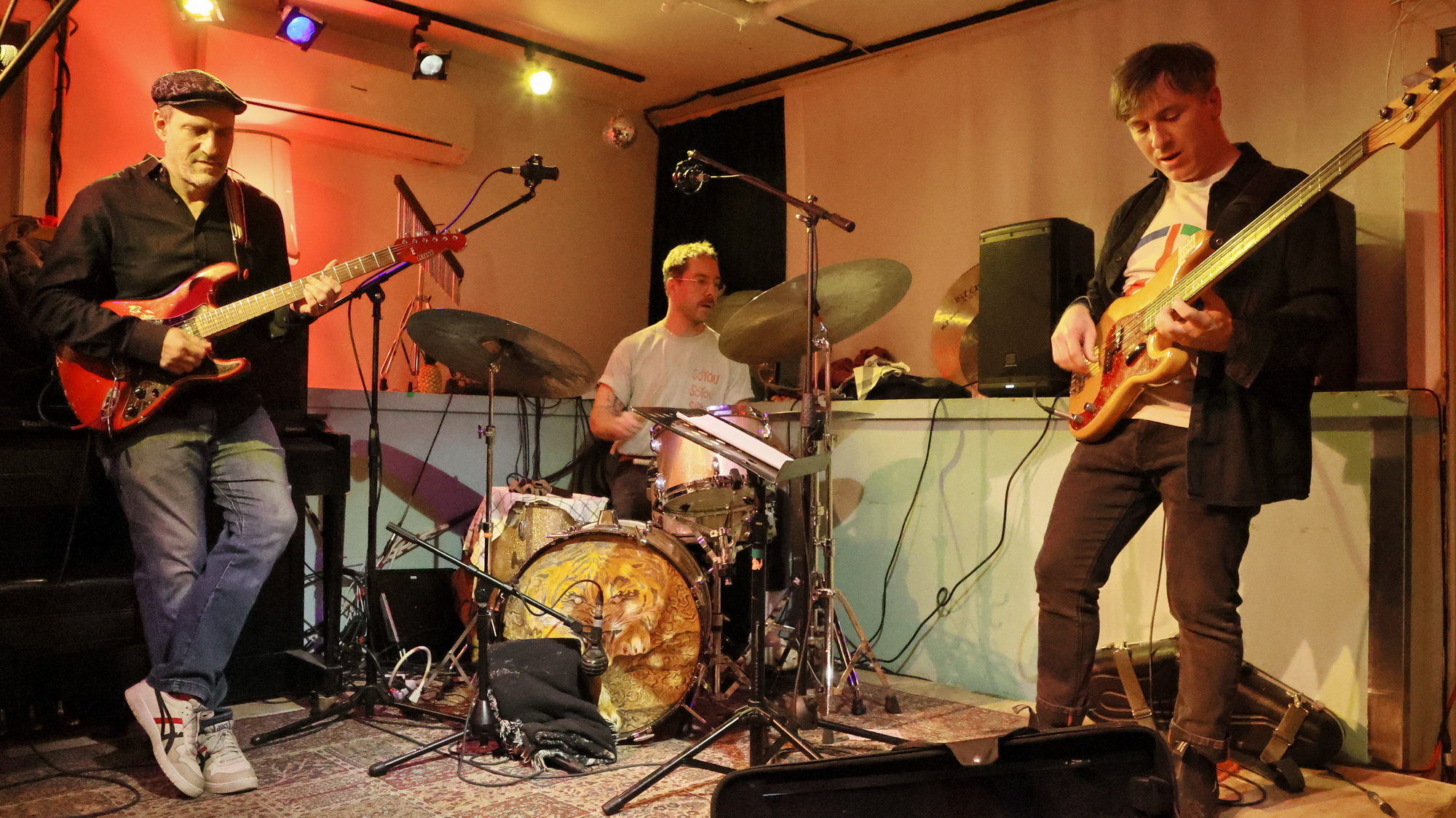
The latter took the shape and sound of Oren Bloedown, singer, guitarist and bassist from New York, known for Elysian Fields, but also with the Lounge Lizards, Bruce Springsteen, Meshell Ndegeocello… The guy knows the Ursa genre quite well: he owns and skilfully manages The Owl Music Parlor, a great little place that supports good local music in Brooklyn. Bloedown does jazz with a rock, pop, blues and R’n’B twist, or vice-versa. Effective riffs and an engaging music mastered by his friends of the moment, Rémi-Jean Leblanc on bass and Samuel Joly on drums, superb. Martha, always there, came to give us her usual song… Wait, no: two! What an honour, but this was the final, so a little give away bonus is understandable. Joel Zifkin on violin and then Charlotte Greve added a not inconsiderable layer of complementary colours. The feeling was great, and the evening was only half over.
Martha Wainwright – Photo : Pierre LangloisOren Bloedown/Samuel Joly/Rémi-Jean Leblanc – Photo : Pierre Langlois
The penultimate set of this eventful conclusion was held by Unessential Oils, the latest incarnation of Warren Spicer (Plants and Animal). He was joined by Tommy Crane, Sergio D’Isanto and Claire Devlin, among others. Unessential Oils is nothing but feel-good groove, dynamic but not rushed, with a sunny character and a beautiful fullness of sound, and enwrapping emotions. Devlin’s lyrical, choral-like sax lines are like flights of fancy that carry us along with them. What we heard will be available on the band’s eponymous debut album, on sale on 24 May. Reserve your copy now!
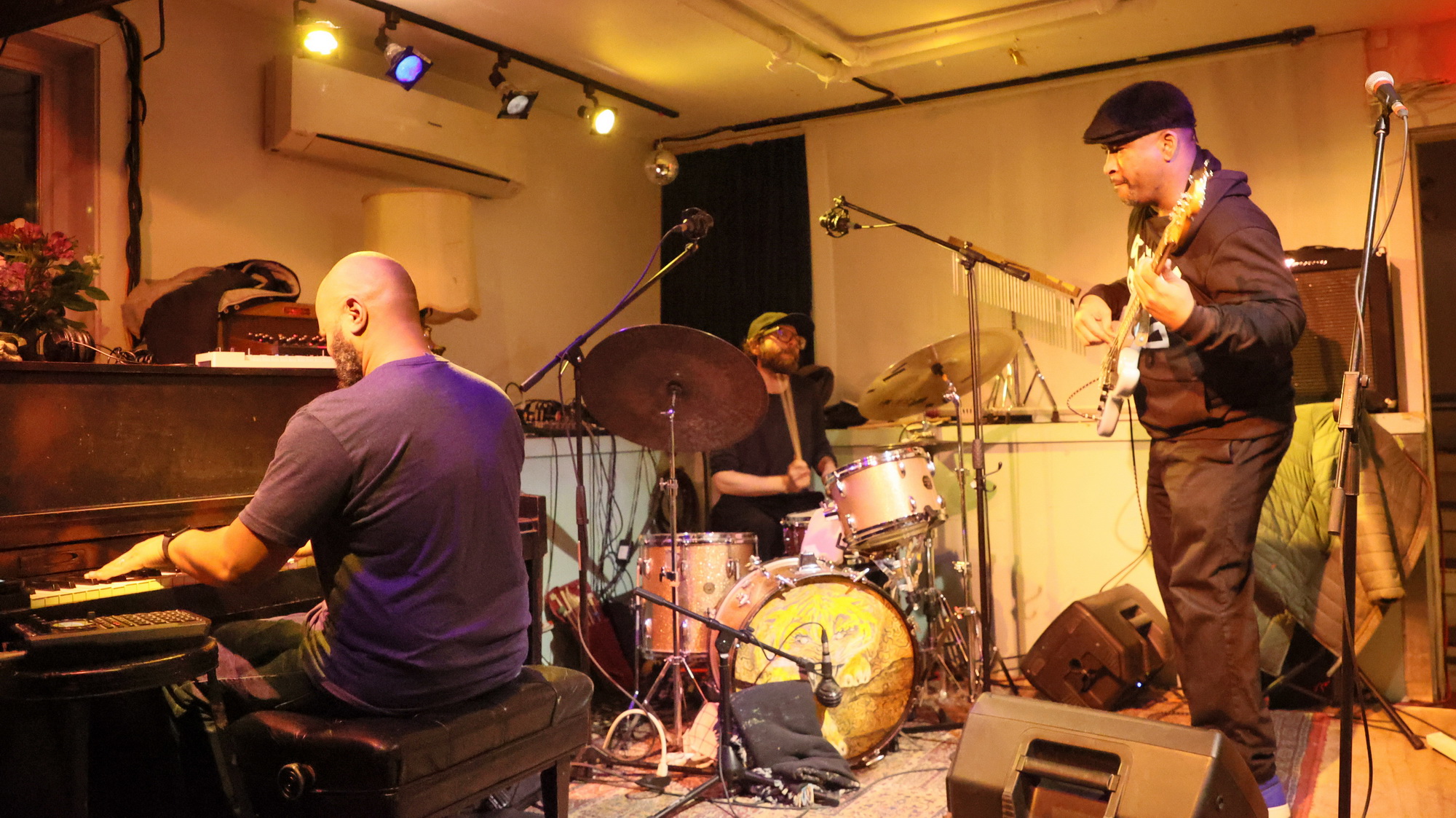
The grand finale of the Montreal Anti-Jazz Police Festival seems to have been designed for the ‘Jazz Police’ of fame, the snobs and purists to whom few flowers have been thrown in these four days of very, very broad music, heart and style. The Nashville duo Concurrence, made up of Paul Horton on piano (Alabama Shakes) and Greg Bryant on bass (with the addition of Tommy Crane on drums) gave us the most ‘authentically’ jazz set of the whole festival. And what a great hour it was! A very high level of improvisation, mutual listening, rhythmic versatility and technical quality. Original compositions tinged with social commentary and a few well-launched standards/homages like Bird’s Now’s the Time, completely and brilliantly reinvented.
A perfect finish that will perpetuate in the minds of music lovers the image of an event of the highest quality, despite its good-natured and somewhat spontaneous side, which, in truth, is exactly the reason for its success. Montreal DIY in all its splendour and honesty, even its occasional mistakes. Everyone present, a panorama of the city’s beauty and diversity, felt the festival’s friendly, family-like atmosphere. Well done!
No promises have been made about a potential second edition. We certainly hope there will be one. But, just in case, we’ll hold on to these superb memories.
Thank you Martha, thank you Tommy Crane, thank you Ursa team and thank you to the large and enthusiastic audience. Mission accomplished.
The crowd at Ursa – Photo : Pierre LangloisConcurrence with Tommy Crane – Photo : Pierre Langlois
Subscribe to our newsletter
Gérez votre confidentialité
Nous utilisons des technologies telles que les cookies pour stocker et/ou accéder aux informations des appareils. Nous le faisons pour améliorer l’expérience de navigation et pour afficher des publicités (non-) personnalisées. Consentir à ces technologies nous permettra de traiter des données telles que le comportement de navigation ou les ID uniques sur ce site. Le fait de ne pas consentir ou de retirer son consentement peut avoir un effet négatif sur certaines fonctionnalités et fonctions.
Functional
Always active
The technical storage or access is strictly necessary for the legitimate purpose of enabling the use of a specific service explicitly requested by the subscriber or user, or for the sole purpose of carrying out the transmission of a communication over an electronic communications network.
Preferences
The technical storage or access is necessary for the legitimate purpose of storing preferences that are not requested by the subscriber or user.
Statistics
The technical storage or access that is used exclusively for statistical purposes.The technical storage or access that is used exclusively for anonymous statistical purposes. Without a subpoena, voluntary compliance on the part of your Internet Service Provider, or additional records from a third party, information stored or retrieved for this purpose alone cannot usually be used to identify you.
Marketing
The technical storage or access is required to create user profiles to send advertising, or to track the user on a website or across several websites for similar marketing purposes.