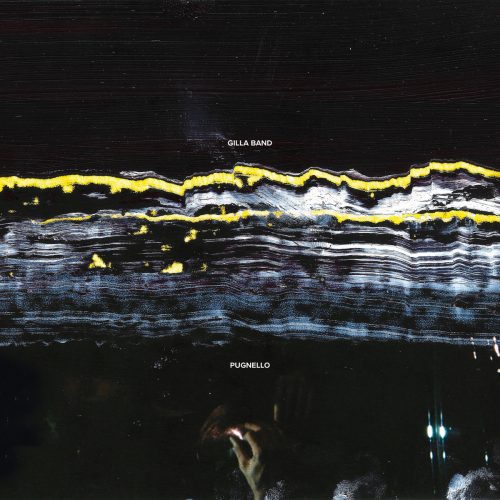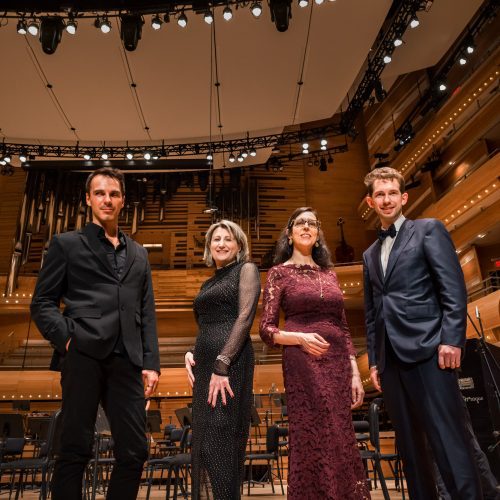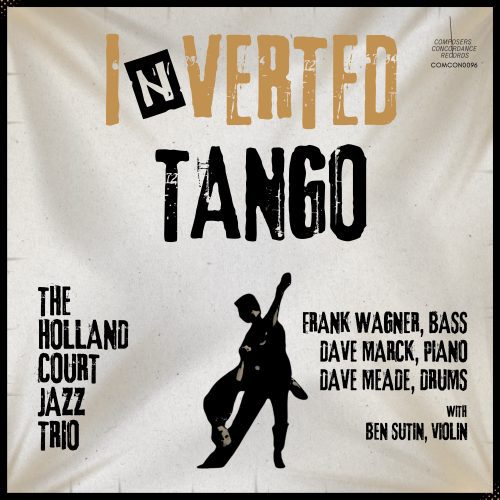
This is not a tango album. The title track certainly wears the clothes (albeit largely reshaped in a jazz style), but the entire album explores various concepts, such as rhythms, modes, or emblematic figures like Monk and Hendrix. It is in a quartet format that the very high quality of the artists present is revealed here.
An extraordinary quartet, I say, formed by a rather classic trio (piano-bass-drums) to which a violin is added, the excellent Ben Sutin, whose arabesques and sinuosities enhance an evident technical and sound mastery.
The term Inverted Tango refers to a mode of the famous dance in which the protagonists reverse their roles. The function is here suggested symbolically, in order to reinforce the idea of innovation behind the artists’ musical performance.
Inverted Tango, said title piece, thus dons the basic attire of Argentine tango, that is to say the mid-tempo but nonetheless propulsive rhythm and certain melodic inflections. Quickly, however, one senses a certain hard bop jazziness taking over. One can also tell that the quartet will not settle for clichés.
From the second track, we are resolutely elsewhere. It’s Monk who is the model here with his Bye-Ya, renamed Hi-Ya, in a rather brilliant and exciting counterfeit.
It continues with Phrygian Natural Six, a technical term associated with ancient musical modes, harnessed by Frank Wagner (the ensemble’s bassist) to offer himself, in a long two-minute intro, a space of freedom which he magnifies by fully inhabiting it before allowing the piano and drums to follow with an atmospheric setting tinged with mystery. The piece finally takes a marked rhythmic flight towards the midpoint with a Latin swing on which the violin flits animatedly.
More than a tribute this time, A Flower is a Lovesome Thing is a true cover (by Strayhorn). Trio-carried (the violin remains silent in this one), the suave melody of Ellington’s famous colleague is revealed with respect and restraint, in a swaying rendition that evokes a slowed-down cha-cha rather than a amorous ballad.
Invisible Enemy is one of the two compositions that Wagner wrote during the pandemic, along with Quiet Room. The first is the most dynamic, with a strong pulse led solely by the trio, while the second is an atmospheric ballad for which the violin colours and comments on the narrative flow. Two very beautiful pieces of refined jazz.
Domenica Canta bears the mark of a journey to southern Italy where Wagner attended a choral concert by Catholic nuns. The melodic phrases that introduce the piece indeed have a hymnic character, supported by the use of the chimes glockenspiel in the percussion, which adds a little something sparkling and angelic to the feeling. After the first few minutes, the ensemble noticeably comes to life, giving David Meade’s drums, Dave Marck’s piano, and Sutin’s violin the opportunity to invigorate the discourse in superbly crafted instrumental interweavings. The piece ends with the return of the meditative atmosphere from the beginning.
The program ends with a powerful reinterpretation of Jimi Hendrix’s Manic Depression. The music here leaps with considerable vigour and authority. The opportunity is ripe for beautiful and brilliant exchanges between Wagner’s double bass (sharp and surgical), Sutin’s violin (occasional but decisive interventions), Marck’s blazing piano, and Meade’s resolute drums. This jazz version of a Hendrix classic will remain in my memory.
An excellent modern jazz album. Thrilling and stimulating.
Frank Wagner – Double Bass
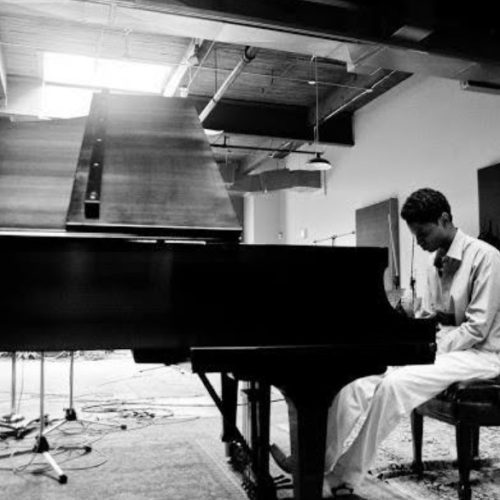
Dave Marck – Piano
Dave Meade – Drums
Featuring: Ben Sutin – Violin (1, 3, 6-8)