Additional Information
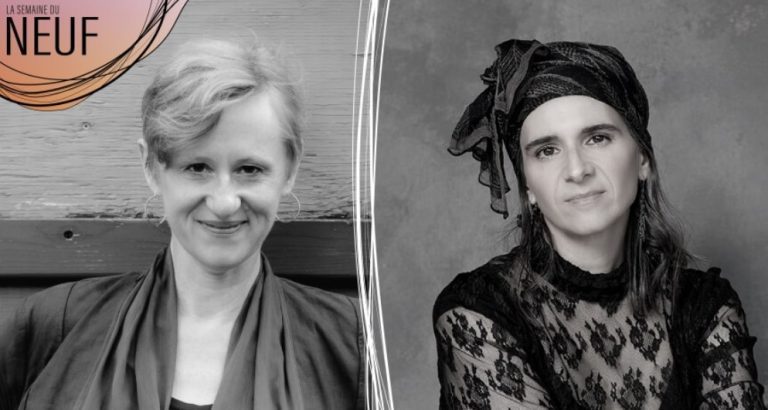
Flutist Marie-Hélène Breault and pianist Pamela Reimer pays tribute to three founding Canadian composers of the “Events of the Nine” that were founding rituals of Montreal composers from the end of the Seventies through the end ot the Eighties: the late Claude Vivier, John Rea and José Evangelista who died at the beginning of this year.
Mes Hommages II is a natural continuation to “Mes Hommages”, a recording put out in March 2020 by Breault and Reimer. The duo had previously performed this repertoire in January 2016 at SMCQ, in the context of the Tribute Series and concluded in 2019 (Collection QB).
This project is still alive and kicking, we will get a new version with new arrangements for flute and piano – made by the musicians – of key works of the Quebec repertoire, namely “Las Meninas”and “Portrait of a Man in Elysian Fields” by John Rea, “Monodías españolas and Nuevas monodías españolas” by José Evangelista, “Piece for Flute and Piano and Pianoforte” by Claude Vivier.
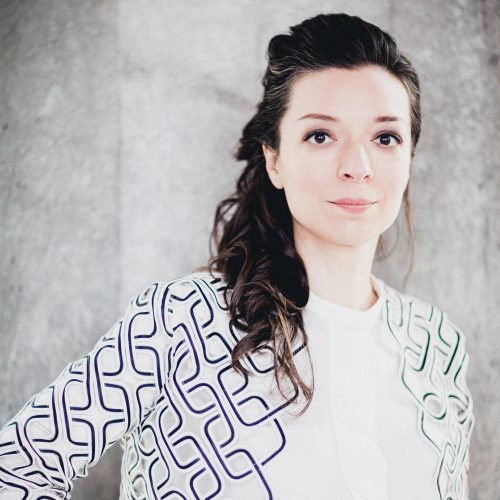
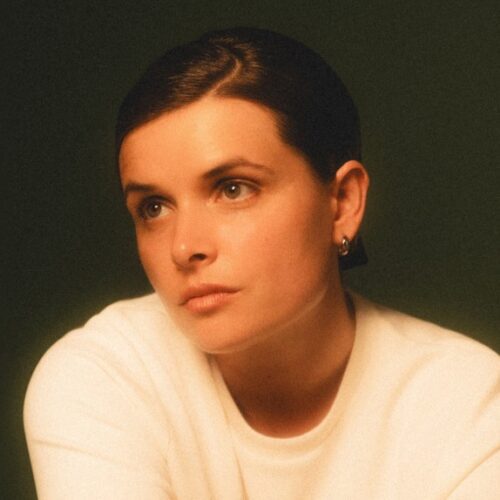
Pamela Reimer pursues a diverse performing career as soloist and collaborator, playing traditional and contemporary repertoire. She has studied with Tom Plaunt, Louis-Philippe Pelletier, Gyorgy Sebok, Lorraine Vaillancourt and Frederic Rzewski. Her career led her performing across Canada but also USA, Scotland, New Zealand, Austria, Switzerland.
Invited by PAN M 360 to tell its readers more about this program,answers generously to our questions.
PAN M 360: First, excuse our ignorance but we aknowledge that you and Marie-Hélène perform together for quite a while.
PAMELA REIMER: No problem ! We can’t know everything! And yes, it’s been 10 years so we’re a longtime team. This is our second tribute concert.In 2016, we did our first tribute tribute to five different Quebec composers John Rea, José Evangelista, Claude Vivier, Ana Sokolovic and Gilles Tremblay. We later did a double disc and then we discovered that we really liked to arrange music. We’ve taken pieces of John Rea and José Evangelista originally written for piano and we’ve arranged them for flute and piano. So we had their permission, and they were very pleased that we’re doing this. So we haven’t changed anything like structural pieces, but we’ve added flutes. Sometimes Marie-Hélène plays bass flute, alto flute, piccolo. We’ve made them just even more colorful than they are already. This time however, we also added two pieces by Vivier that are not our arrangements. One is for flute and piano and one is for piano solo, in this context of hommage.
PAN M 360: So those arrangements you did for flute and piano are transcriptions of the original charts. Reduction in some cases ?
PAMELA REIMER: Well, the piano part is not very different from the original. But sometimes we’ve taken melodies that happened in the piano, and we’ve put them into the flute parts, or we’ve added countermelodies but we would play on top of the piano part. And sometimes it’s really just a color, a different sound. Sometimes it’s, in some of the slower pieces, I’ll play the piece and she just makes like whistle sounds or she pulls into the flute and makes interesting sounds to complement the music or to bring out the character of the music.
PAN M 360: Sounds good ! So it must be a lot of fun but also a lot of work!
PAMELA REIMER : It feels very personal !
PAN M 360: How would you describe your artistic relationship with Marie-Hélène ?
PAMELA REIMER: Well, I think that’s actually one of our strengths is that we’re both like incredible listeners, where we can be soloists when we need to, but we’re, we’re very sensitive to each other’s sound. And because we’ve worked together for so long, we were almost in a place where we don’t have to cue each other anymore. We just know.
PAN M 360: And so is it the first time both of you perform this specific repertoire ?
PAMELA REIMER : It’s the first time we’re playing those arrangements of the Evangelista and Rea pieces and we’ve recorded the Vivier’s before.
PAN M 360: Even if you illustrate the work of the three composers, there is a little emphasis on Vivier’s music because this whole Semaine du Neuf is basically a tribute to him. Since when do you know his body of work ?
PAMELA REIMER : I studied piano at McGill, notably with Louis-Philippe Pelletier who premiered many of Vivier’s works. Among these pieces, he recorded “Shiraz” which I will be playing next week with Sixtrum, the percussion sextet – on March 16th at the Monument National. Louis-Philippe told me that when Vivier was writing “Shiraz”, he would call him up in the middle of the night., saying, I found this incredible chord, I found this incredible harmony, like he was just always searching, searching for these new ideas and new harmonies. So I feel like it’s part of my own heritage, just because I studied with Louis-Philippe. With Paramaribo, by the way, I will be part of the ensemble to perform another piece by Vivier that Louis-Philippe created, called “Prolifération” – on Friday, March 17, at the Conservatoire de Montréal.
PAN M 360: What is the challenge of playing piano with the music of Vivier? Because we don’t see him as a piano music composer.
PAMELA REIMER: He was an extravert, he wanted to communicate. In his music, we can hear this personality. In the piano music, he tries to work out the extremes of the piano like very, very loud, very, very quiet. Within those dynamics, he also is working with different characters. For example, when it’s very quiet, it also can sound very sensual and very intimate. And when it’s loud, it can be quite violent, very aggressive. So that’s what he pushed in the technique of the piano with the extremes. And it’s fascinating to work on it because those changes are very, very sudden.
PAN M 360: Well what you are describing is in all his craft. Sometimes very loud and violent, sometimes very sensual and smooth, and enlightening. He was always traveling between the two poles.
PAMELA REIMER: And there’s not so many composers who are able to do that successfully, I think.
PAN M 360: And there was no fracture between the past and the present. He was able to welcome some music that a lot of composers of his generation and the previous one, were rejecting.
PAMELA REIMER: It’s interesting, as I’ve been really diving into his music, I can hear into it, I know how it feels to play it. I can feel Bartok, I can feel Liszt, I can feel all the past in there and it’s a new language. It’s quite amazing.
IN THE CONTEXT OF THE SEMAINE DU NEUF, THE PROCRAM HOMMAGE II IS PERFORMED BY MARIE-HÉLÈNE BREAULT AND PAMELA REIMER ON WEDNESDAY MARCH 8TH, CONSERVATOIRE DE MUSIQUE DE MONTRÉAL, 7H30 PM
PROGRAM
- José Evangelista: Monodías españolas , 1989 arr. for flutes & piano
- Claude Vivier: Pièce pour flûte et piano , 1975 for flute & piano
- John Rea: Portrait of a Man in Elysian Field , 1989 (arr. Breault-Reimer)
- Claude Vivier: Pianoforte , 1975
- José Evangelista: Nuevas Monodías españolas , 1989 ((arr. Breault-Reimer),)
- John Rea: Las Meninas , 1990 – 1991 ((arr. Breault-Reimer))
PARTICIPANTS
- MARIE-HÉLÈNE BREAULT (flutes & arrangements)
- PAMELA REIMER (piano & arrangements)