The industrial setting of Théâtre La Chapelle opened a window onto musical universes with an emotional intensity very much of our time and into the inner world of the performers and composers. The evening featured an ad-lib production presented by Le Vivier, two immersive creations by Marc Hyland and Nour Symon that were poignantly complementary.
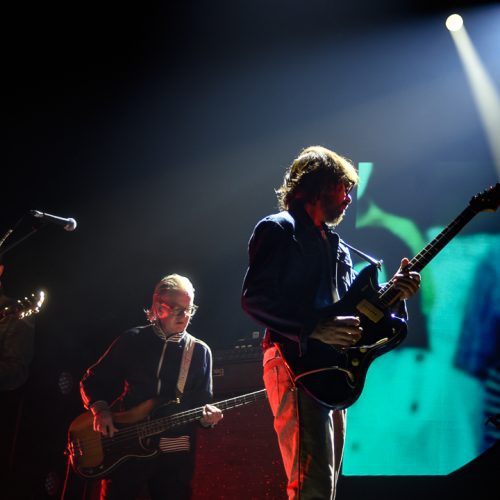
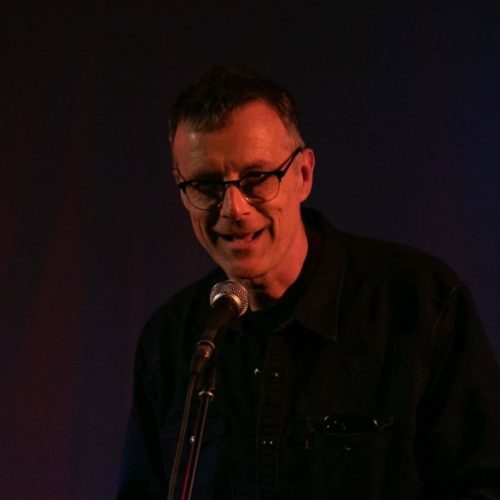
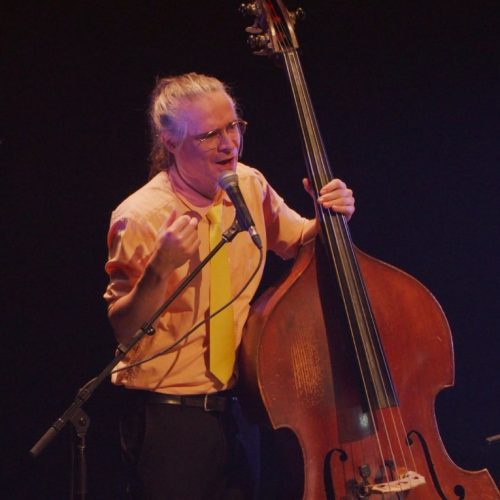
Opening the concert, the large, attentive audience witnessed a sonic meltdown with Le grand dégel, a piece for voice, electric guitar, and tape. The work takes Orlando, Virginia Woolf’s seminal novel, as its source. The excerpt Marc Hyland chose to illustrate speaks of a great thaw and heartbreak, which the author depicts and describes as “a frightful debacle, where waves and ice carry away human beings, animals and objects.” Plunged into the half-light, with the only illumination of a red light projected onto the cyclo at the back of the stage, the work opens with a declamatory recitation accompanied by an electroacoustic framework that gradually increases in intensity and transformation, revealing horse gallops, whose movement is the “life force” serving as motivic material that melts into the introduction of the electric guitar. Once this introduction is underway, we enter a second phase of the work where the interaction is between guitarist Simon Duchesne and baritone Vincent Ranallo, who converse in a crazy recitative. Both artists are to be commended for their technical prowess. Ranallo shines in this long recitative with an operatic flavour, where he alternates between falsetto and his deep voice with ease. He is accompanied by clusters of guitar sounds that Duchesne handles in different ways. Gradually, the sounds and even the voice become distorted, accentuating the drama of the text and the underlying sound wave effect.
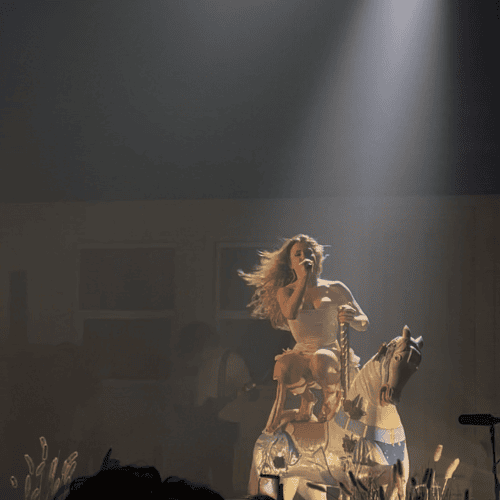
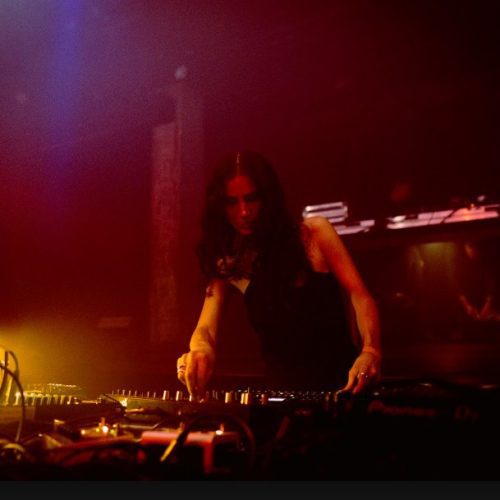
Both Marc Hyland’s and Nour Symon’s works demand total abandonment and a letting go of the mind on the part of the viewer and listener. The sound worlds they transport us into are so sensory-charged that they require time to adapt. This is particularly true of the second work on the program, J’ai perdu le désert by composer Nour Symon. By his own admission, his musical universe is so charged and chaotic that it requires necessary acclimatization before the listener and performers find their cruising speed. The title of J’ai perdu le désert foreshadows a link with the artist’s previous major work, his opera Le Désert mauve, based on the novel of the same name by Nicole Brossard. The intensity of the work and the music remains, but the approach here is more personal. Indeed, Nour Symon invites us to cross her inner deserts and venture with her on a quest for identity in the form of tarab, a form of sound meditation emblematic of Egyptian culture “where all our emotions are summoned at once”.
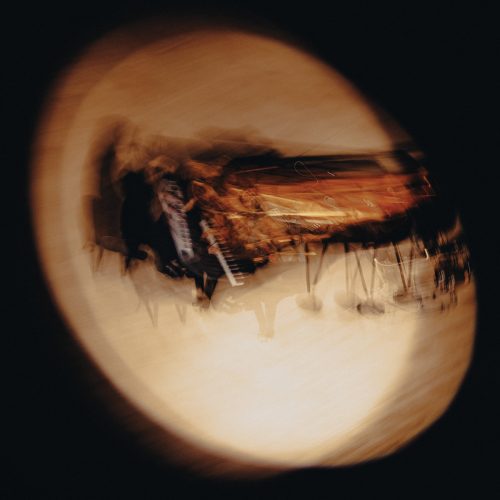
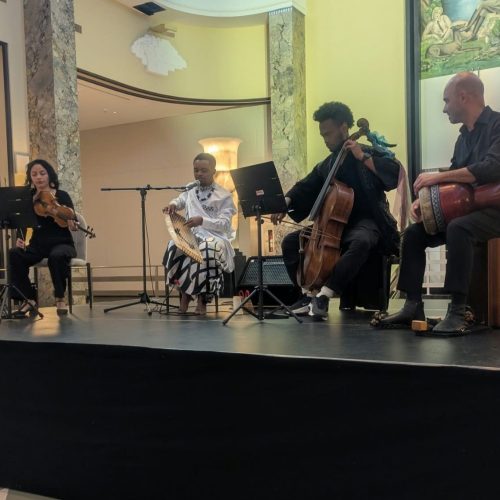
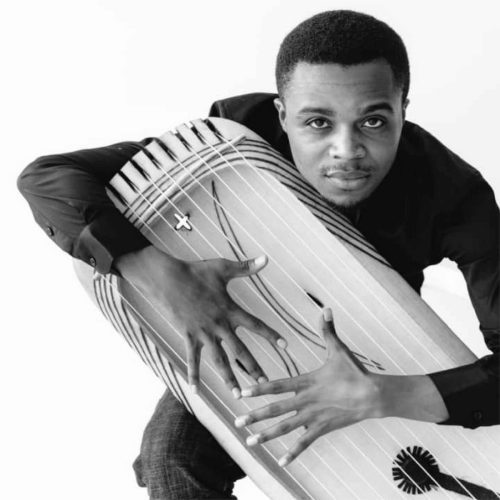
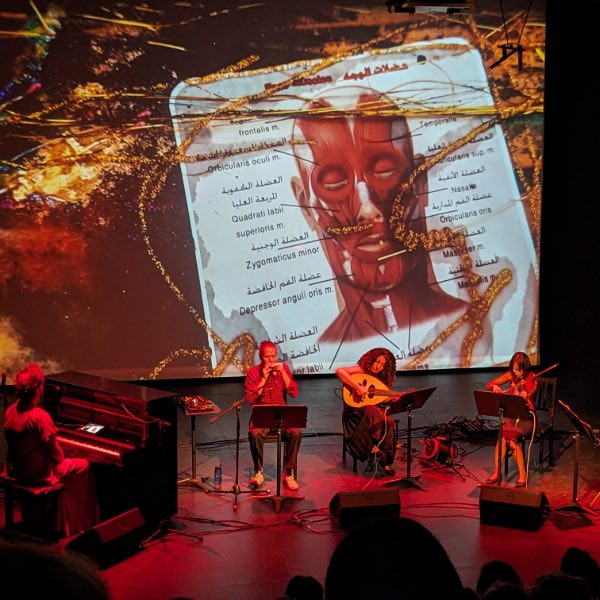
This hour-long event features a wide-ranging instrumental line-up: piano (Symon); harmonica (Benjamin Tremblay-Carpentier); oud (Nadine Altounji); violin (Lynn Kuo) and cello (Rémy Bélanger de Beauport), evolving with graphic scores projected at the back of the stage as a guide for the musicians and audience alike. Every image, line, and video presented, superimposed in the presentation, has a musical meaning to which the artists respond, evolve, listen to each other, and improvise with a host of extended playing techniques.
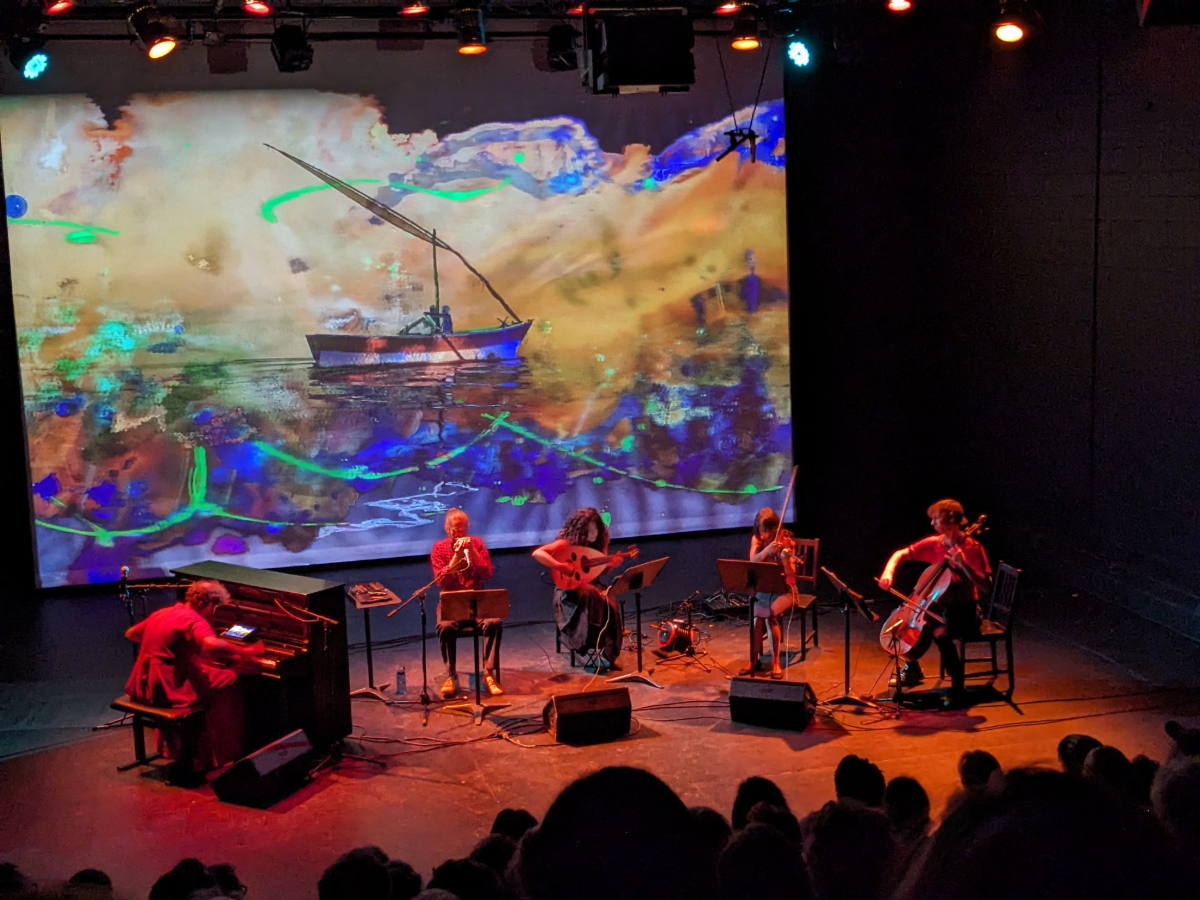
Despite the appearance of disorganization, Nour Symon’s writing is astonishingly precise, with every change of dynamic, sound and visual material executed to the second. From the Egyptian desert to the outskirts of Cairo, via the watery desert and even the desert of a snowy path, Nour Symon’s music appeals to our senses. While the confrontation between her identity and her Egyptian origins is reflected in the video excerpts taken from her own travels, it is also the experience of shock at the Palestinian genocide that informs the creation of this work. It alternates between moments of great intensity, anger and chaos, and calmer passages. The latter are experienced a little like catching your breath after screaming and crying your eyes out, before plunging back into the world of sound.
Between the symbolism of an emotional and environmental debacle and the incommensurability of the desert, confronted with its multiple identities and the violence of the world, both physical and internal, we came away from this cathartic evening with strong images imprinted on our retinas, a myriad of sounds hanging in our eardrums and strong emotions anchored in our being.
Photo Credit : Claire Martin