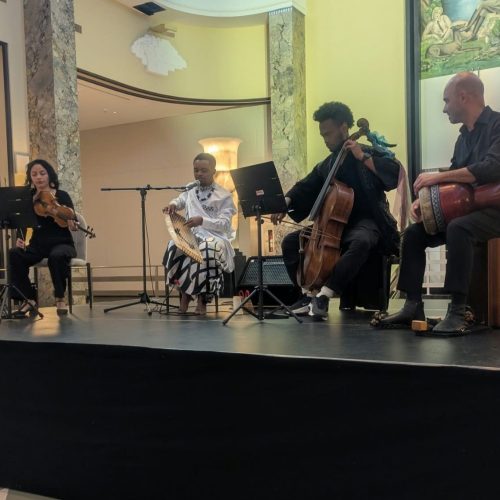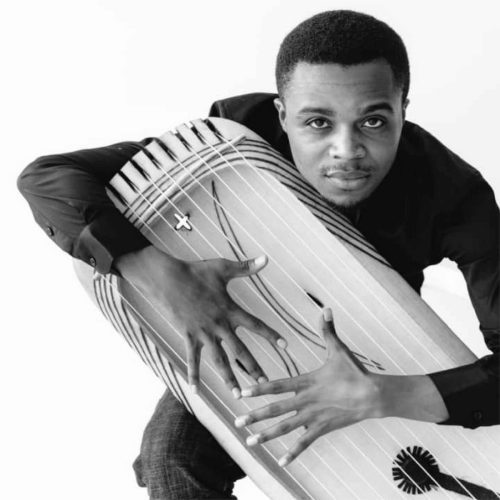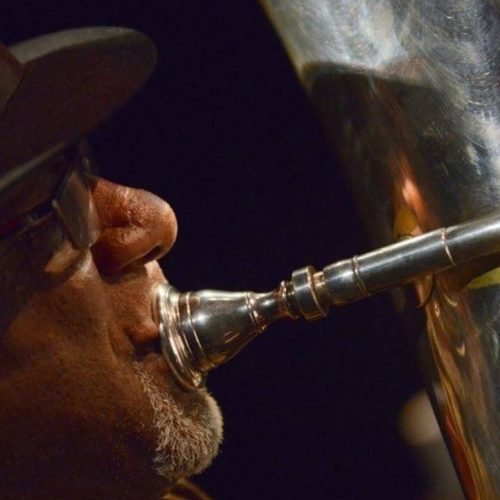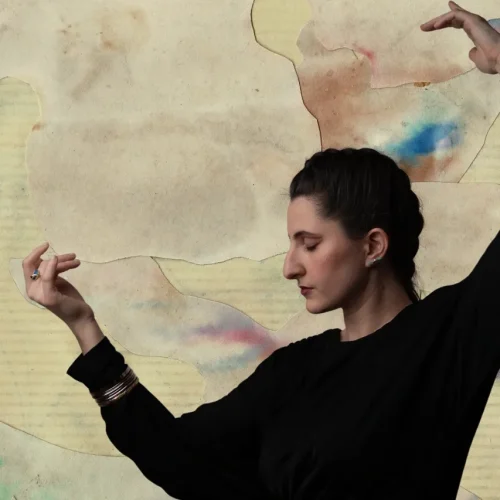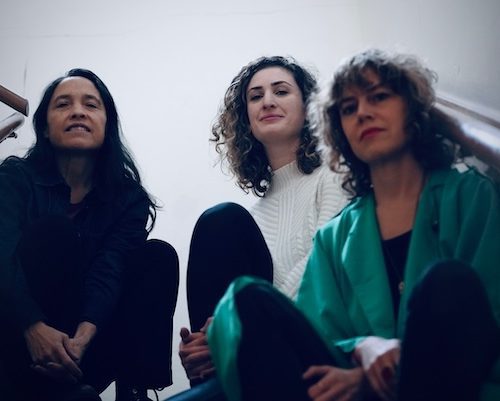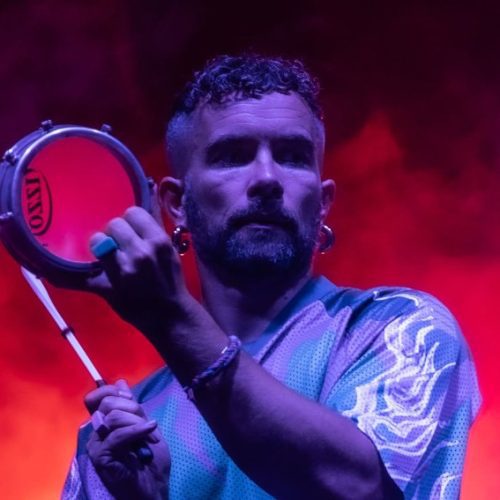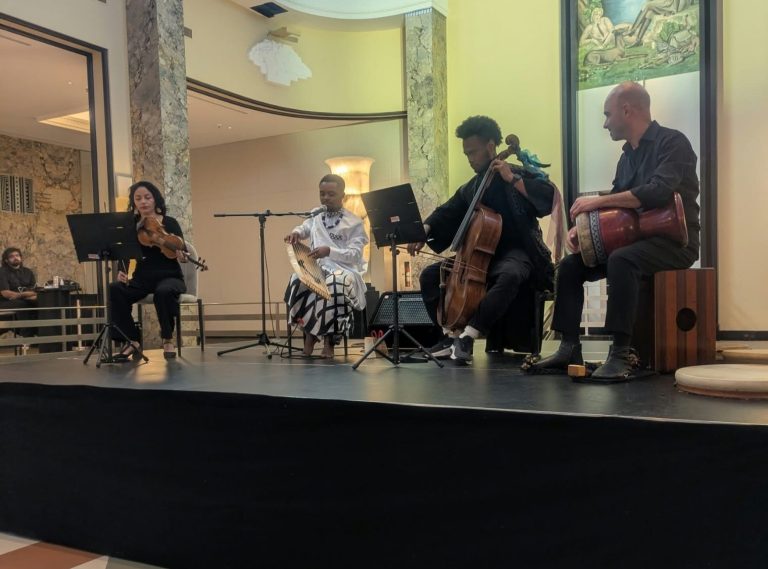
Yesterday was the first concert in the VoixMonde series, led by percussionist Ziya Tabassian. A series that will take us later this season to China, Latin America and the Jewish world of klezmer (with the Montrealer Socalled). Yesterday at 5 PM in the Art Deco panorama on the 9th floor of the Eaton Centre in Montreal, it was the African essence of Rwanda taking the stage, with singer and musician Deo Munyakazi, performer of the inanga, a traditional instrument at the heart of the traditions of this small country in the Great Lakes region of Africa.
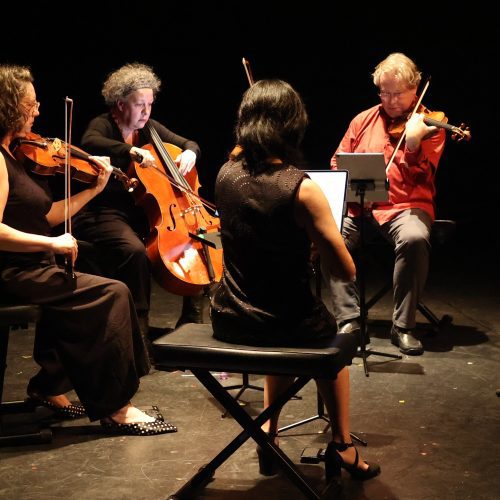
The uniqueness of the VoixMonde series, and also its mission, is to enable a dialogue between non-European scholarly traditions and Western classical music. Thus, for the needs of this dialogue, violinist Karin Cuellar and baroque cellist Kyran Assing joined Munyakazi, as well as Ziya Tabassian himself on percussion.
In a one-hour program, we heard beautifully unfolded melodies by Munyakazi’s assured voice, which is elegantly accompanied by his plucked-string instrument, whose body somewhat resembles a concave surfboard. The sound that rises from this instrument is very soft, very velvety, but sometimes has to fight a losing battle against the greater power of his Western companions, despite the amplification. In the last piece, Ngwino urare, Munyakazi came out of his general reserve, standing up and urging the audience to sing along with him. This reserve was perhaps imposed by the venue itself, as I have seen and heard this musician elsewhere, and he knows how to get the audience up with considerable energy.
The intersection between Rwandan tradition and classical music was made through two chaconnes by relatively obscure composers of the European Baroque: Antonio Bertali (1605-1669) and Nicola Matteis (1650-1713). The reason for this historically plausible dialogue lies in the origins of this form, initially danced in the Spanish colonies. These were already a space of syncretism between Spanish, indigenous, and especially African cultures, stemming from the slave trade. Obviously, all of this was largely distilled into the final European result, but the nod served as sufficient justification to allow Deo Munyakazi (and Ziya Tabassian on percussion) to integrate into the musical play of the two baroque specialists (Cuellar and Assing). I would have liked Munyakazi’s inanga to play a bigger role, though. He was very discreet (and only present in Matteis’ chaconne). A polite crossover, then, but nevertheless some beautiful musical moments, especially with regard to the violinist Karin Cuellar, a very good interpreter of early music. In the continuo, Assing, who is equally good, did not have much space to shine. But that is the nature of much of the music from that era for the cello.
Finally, we were treated to a pleasant and respectful meeting, a chic interculturalism that was sometimes touching, and high-quality melodies (like the one in the video above). A program perfectly calibrated for the imposing aura of the 9th floor.