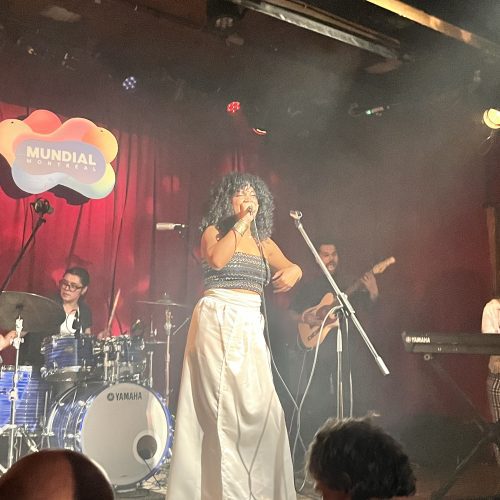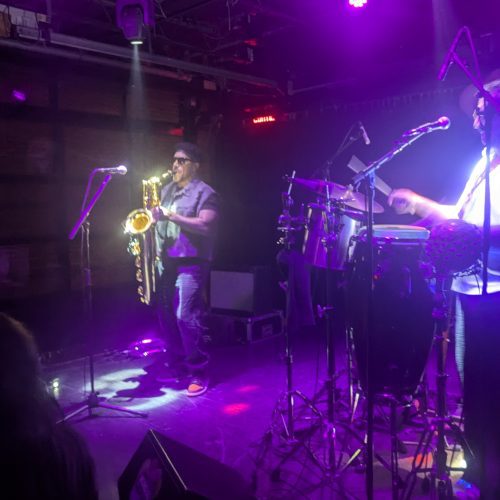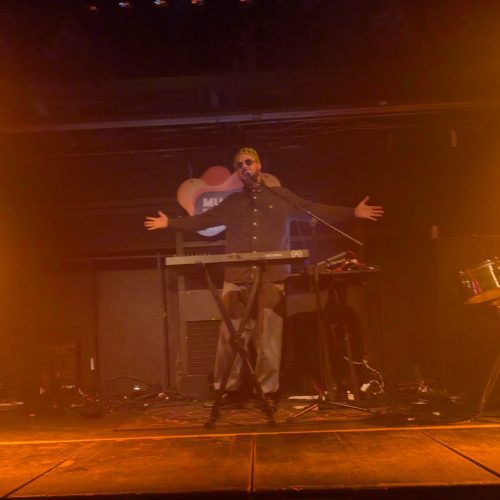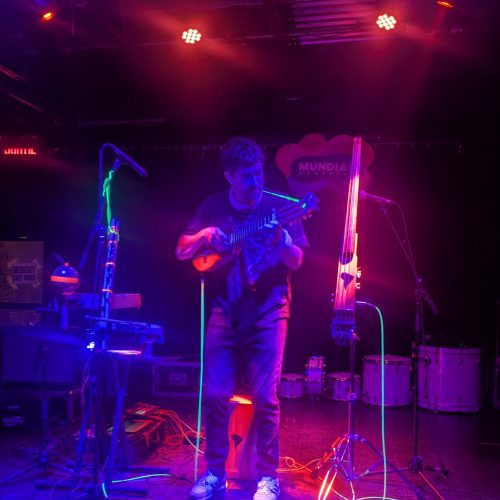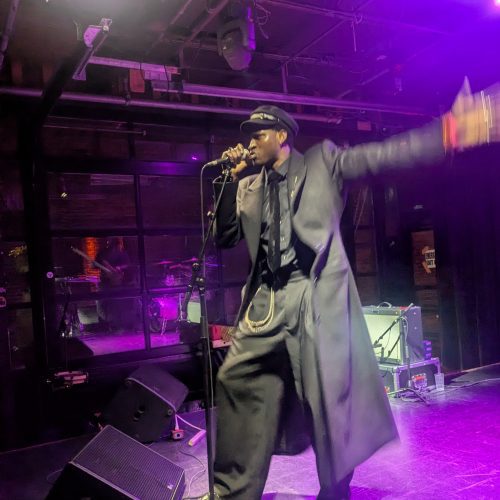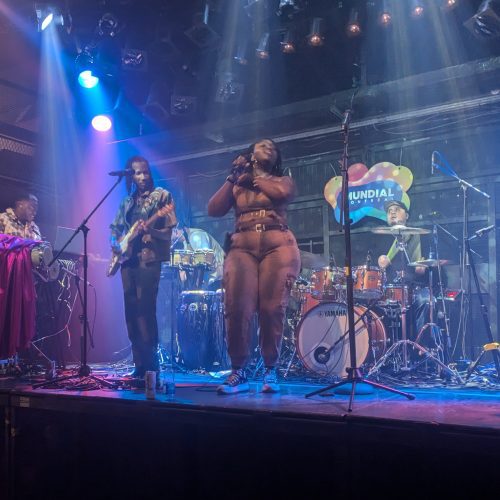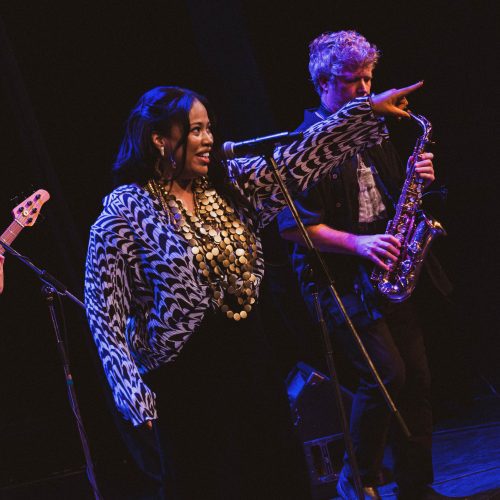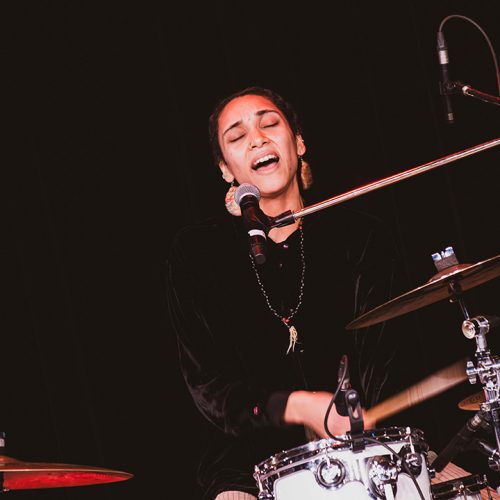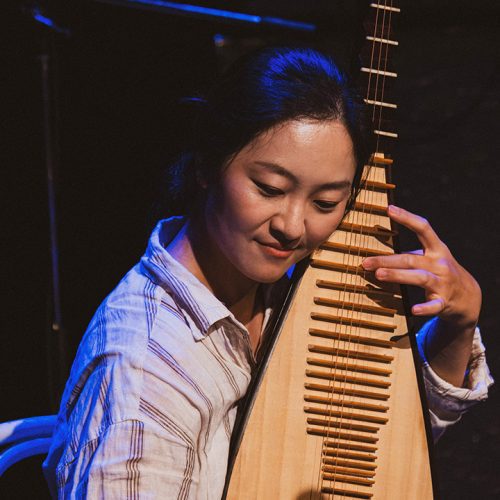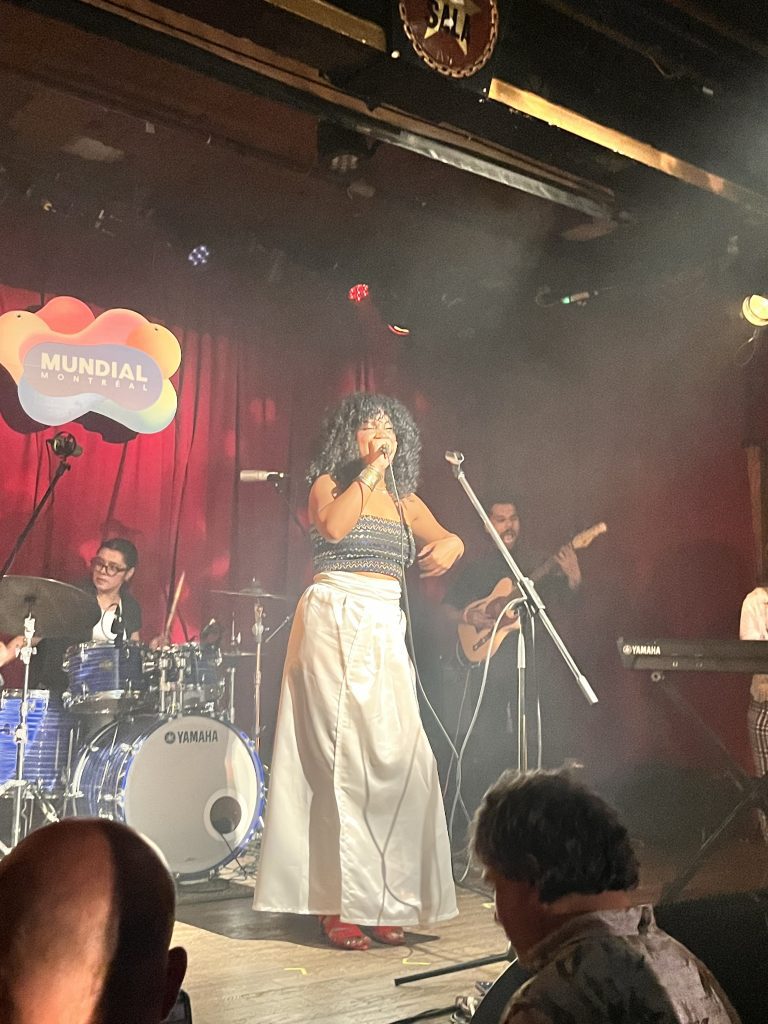
It’s easy to see why Tara Moneka and her predominantly female band were chosen to close out the first night of Mundial Montréal. At Sala Rossa, the group delivered an energetic performance, driven by Arab-Latin rhythms and funk influences that at times evoked the 1980s. This was particularly true of “Hia” (She, in Arabic), a track from Madina, her microalbum released in 2024.
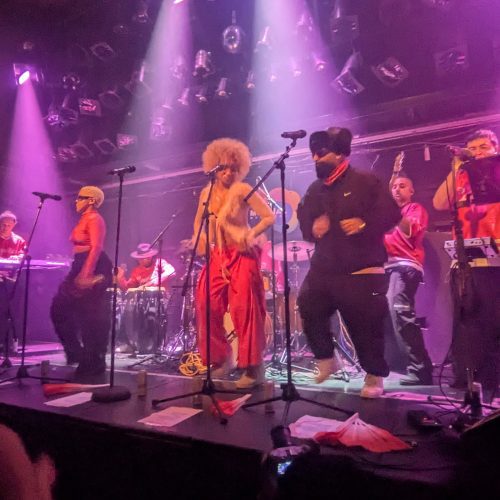
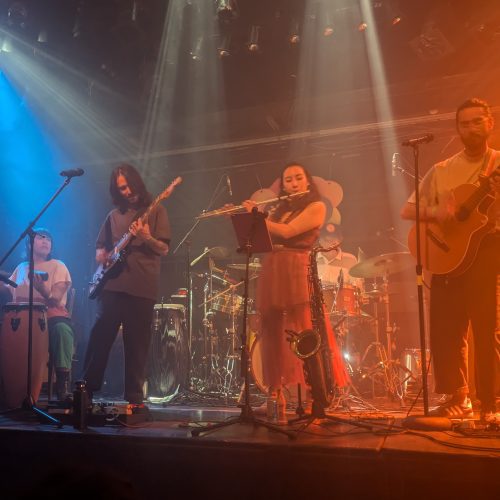
Surrounded by a bassist, a drummer, a keyboardist, and two musicians on guitar and saxophone, Tara Moneka had everything it took to get the crowd on its feet. Despite the late hour, the audience members still in attendance didn’t take long to get swept up in the music. The venue was certainly less crowded than it had been earlier in the evening, but those who chose to stay until the very end were richly rewarded.
Tara Moneka shone on stage, as much for her presence as for her sparkling top and white silk skirt. Her infectious energy, her smile, and her voice—with its captivating oriental flourishes—quickly captured the audience’s attention. The musical interplay also produced some beautiful moments: at times, her voice seemed to engage in a dialogue with the saxophone, while the guitarist stood out with particularly inspired solos.
Beyond the music, the artist also took the time to address the audience to speak about peace, particularly before performing “Salam,” which means “peace” in Arabic. The defense of women’s rights is another central theme of her work, as she explained to us during our interview a few days earlier. Several of the female musicians on stage are part of Dijla, a project led by Tara Moneka that showcases female musicians from diverse backgrounds.
To wrap up the evening, she performed a piece with salsa influences, without ever straying from her signature Arab-Sufi style. The blend was irresistible: the entire audience broke into dance, including El Gato Negro, who came to join me in front of the stage. It was a festive and unifying finale, just like the rest of the performance.