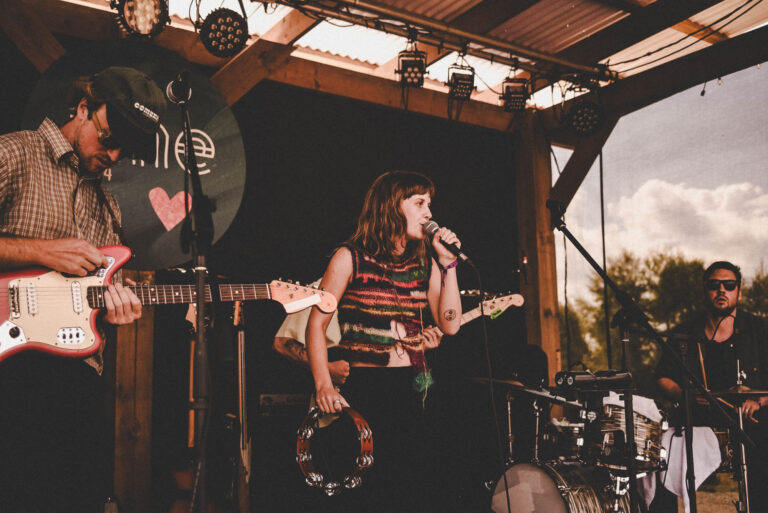
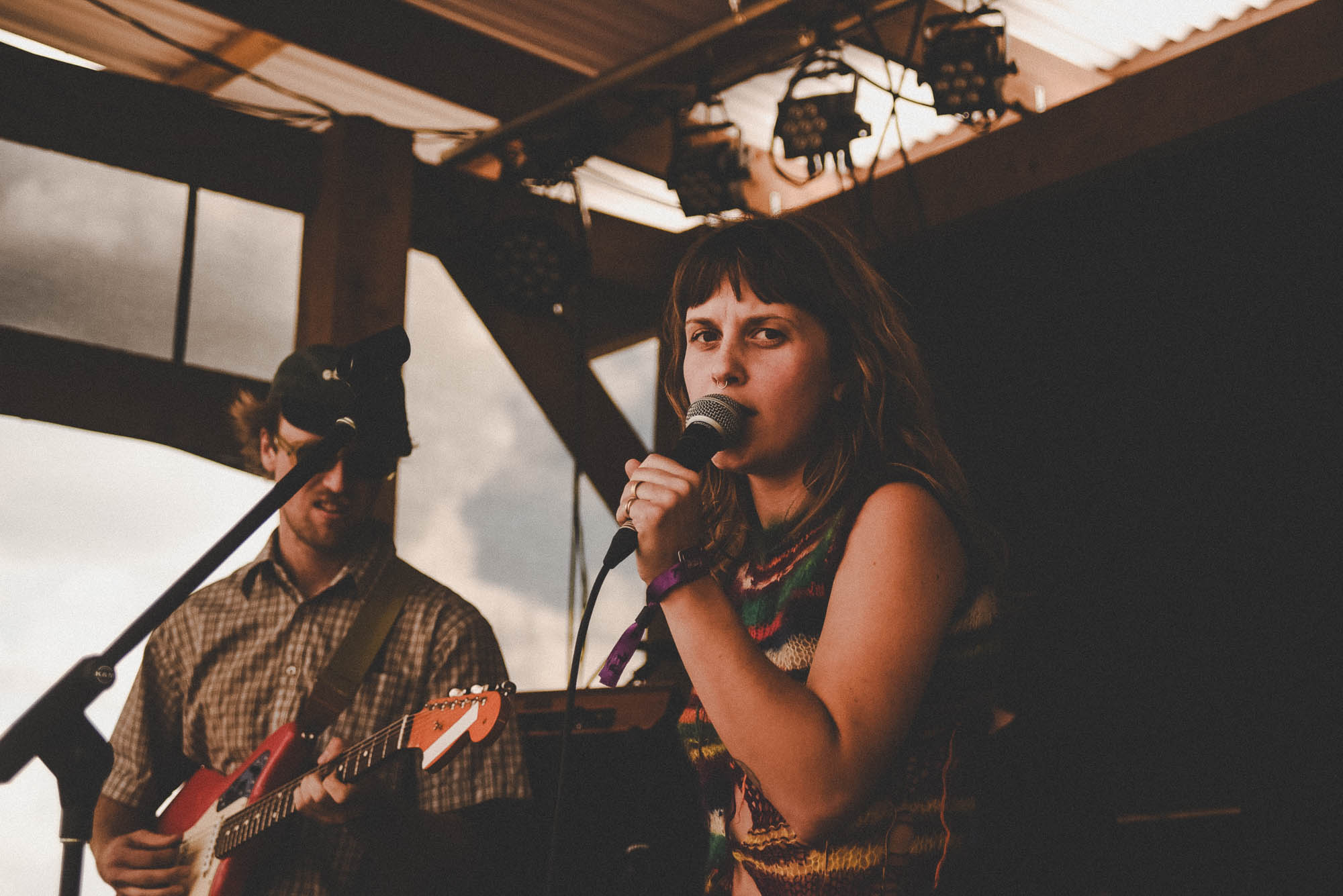
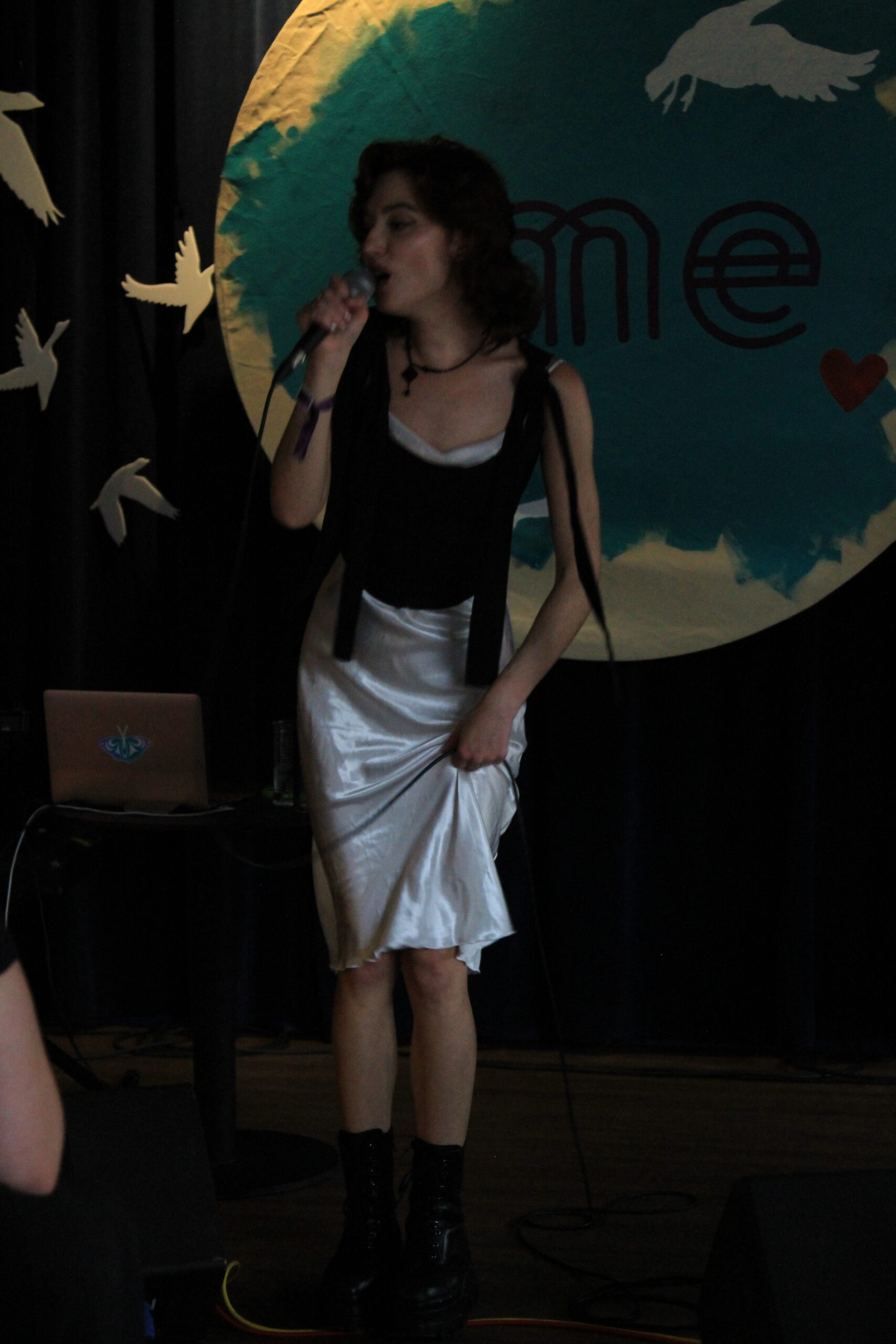
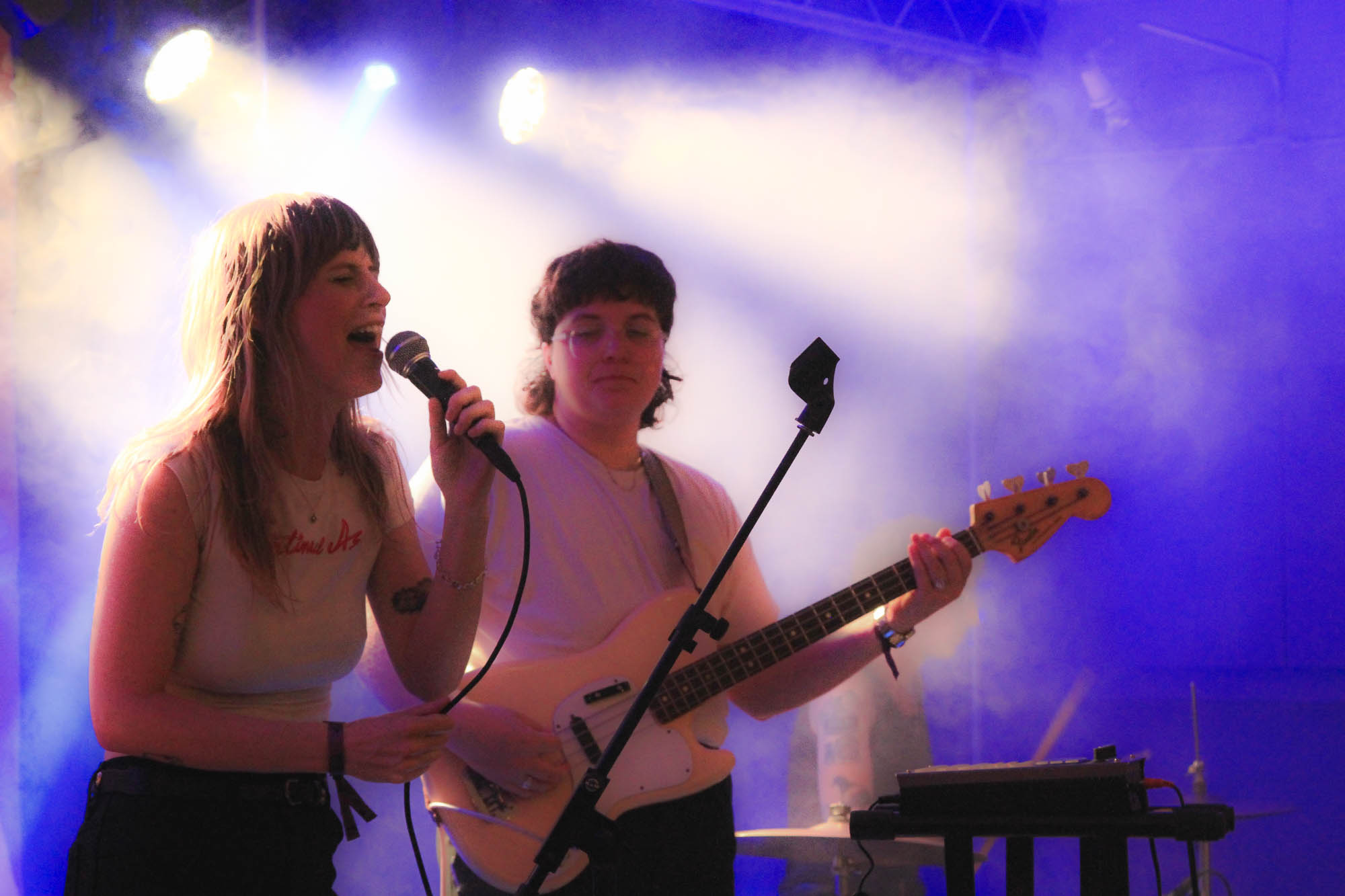
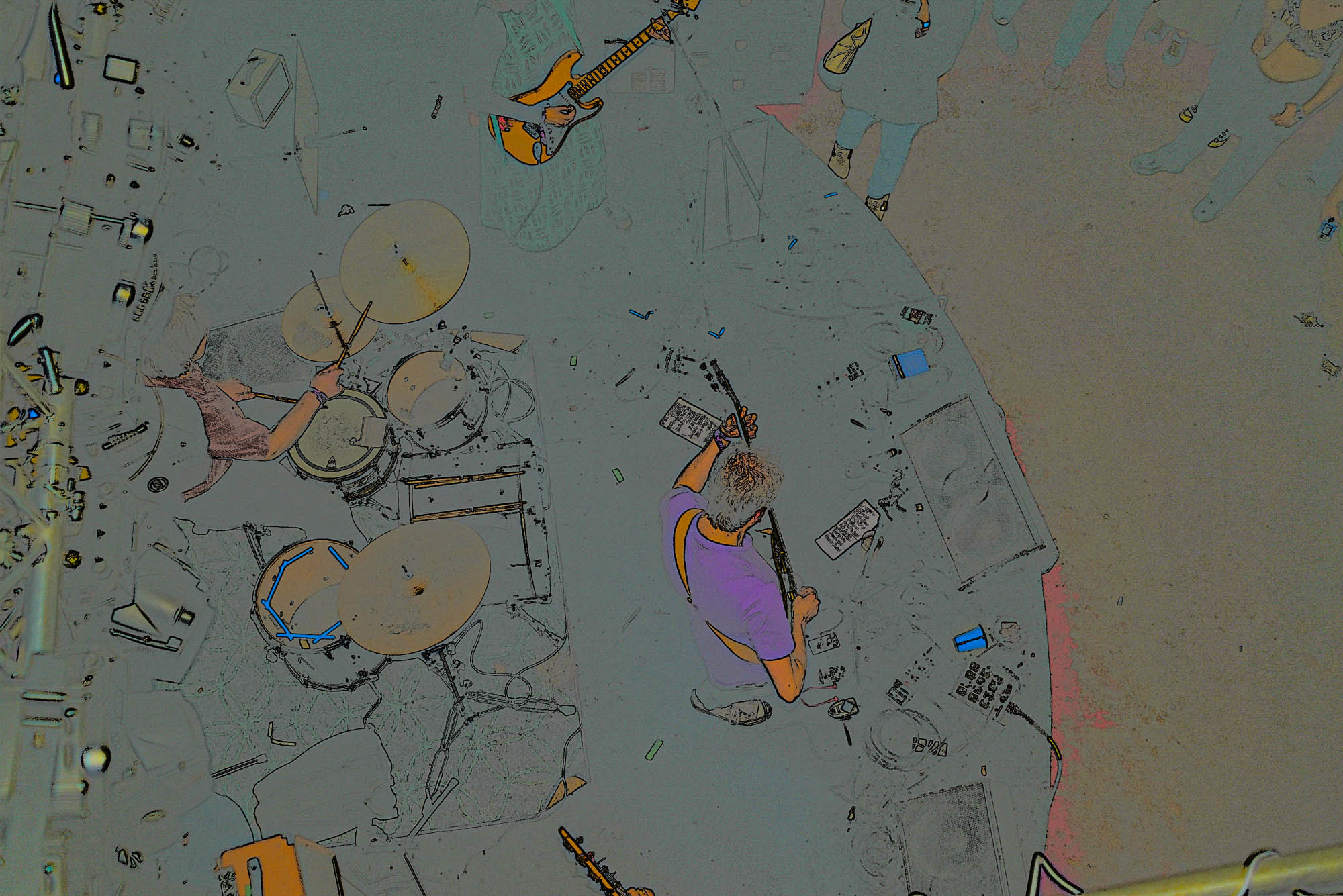
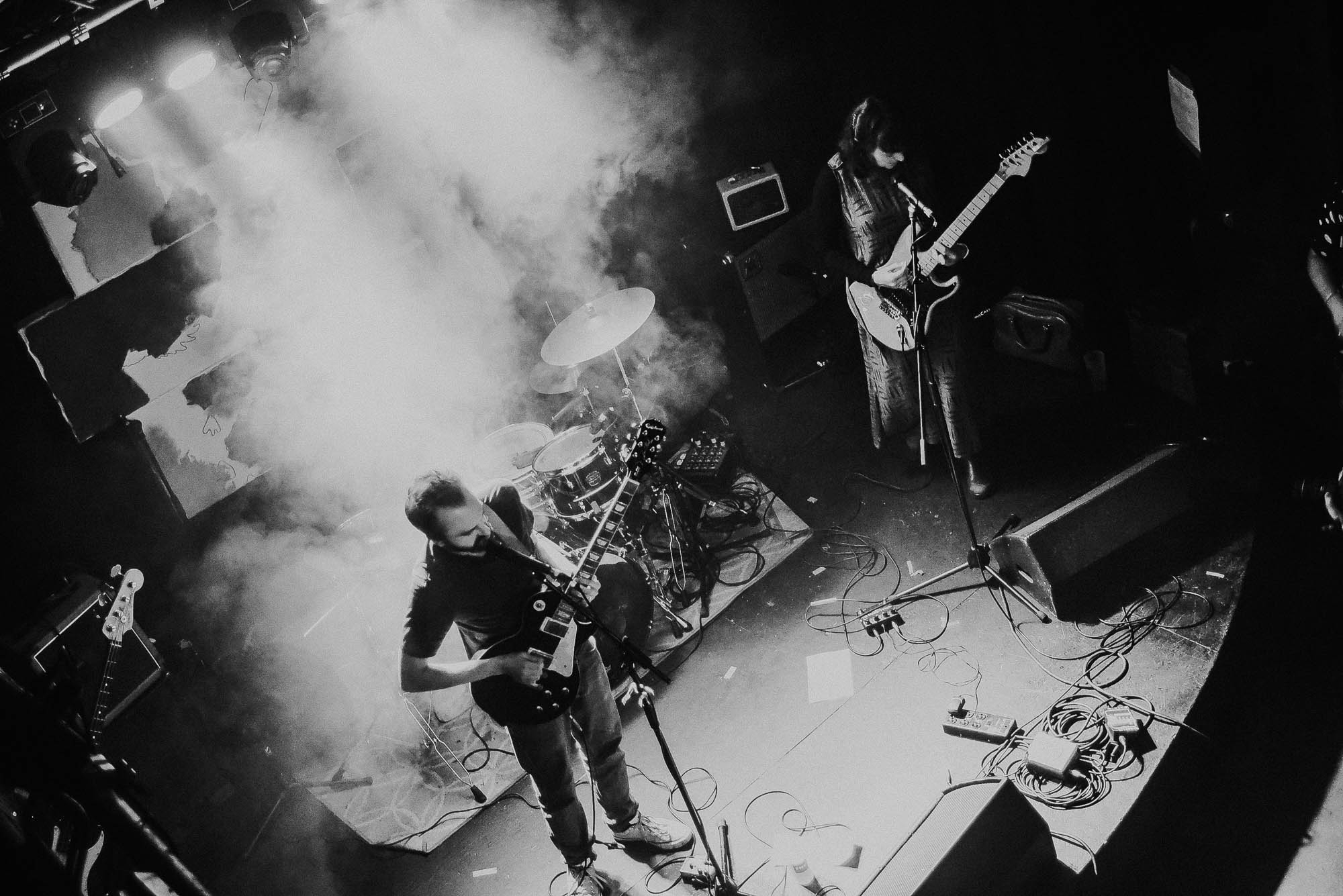
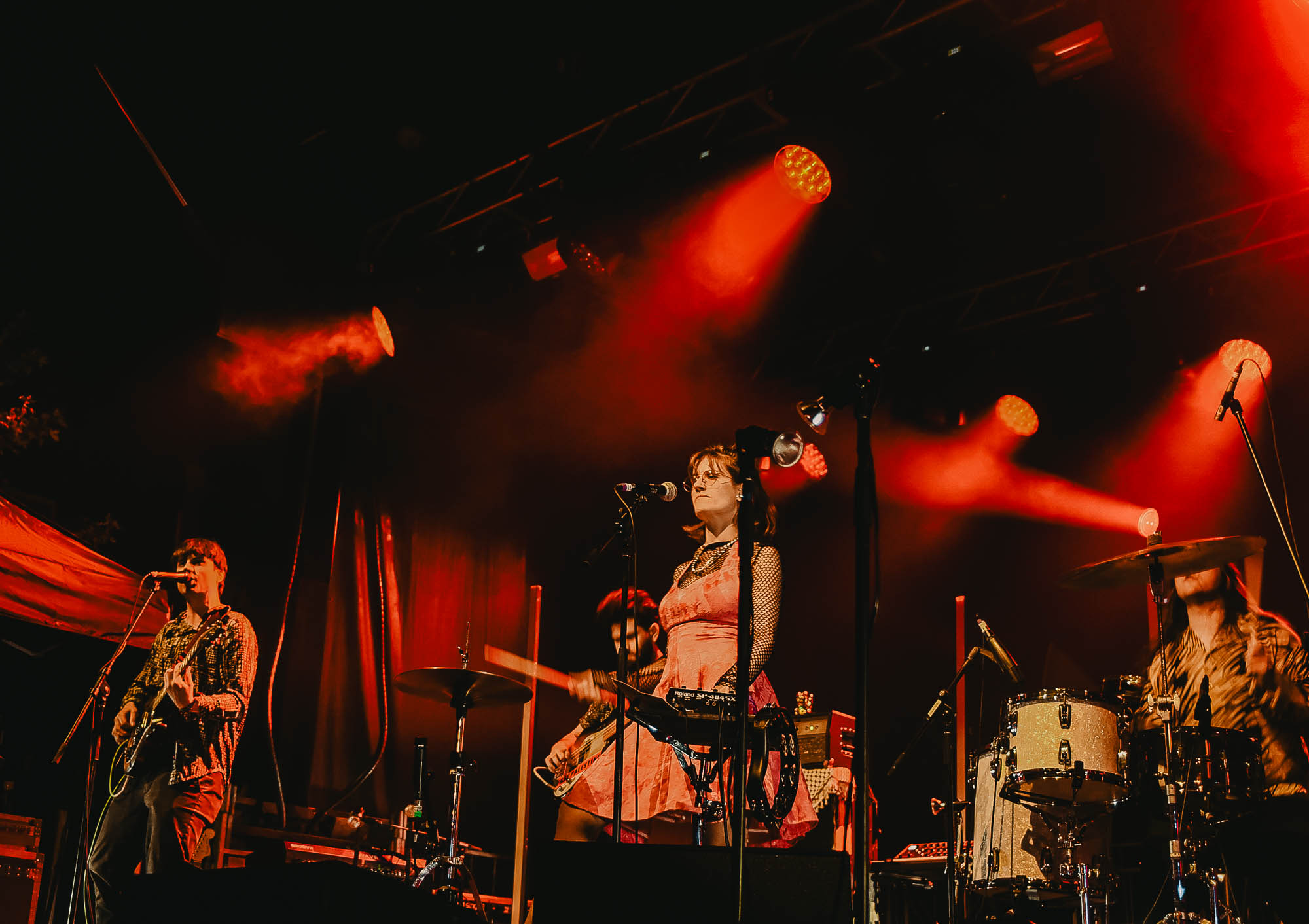
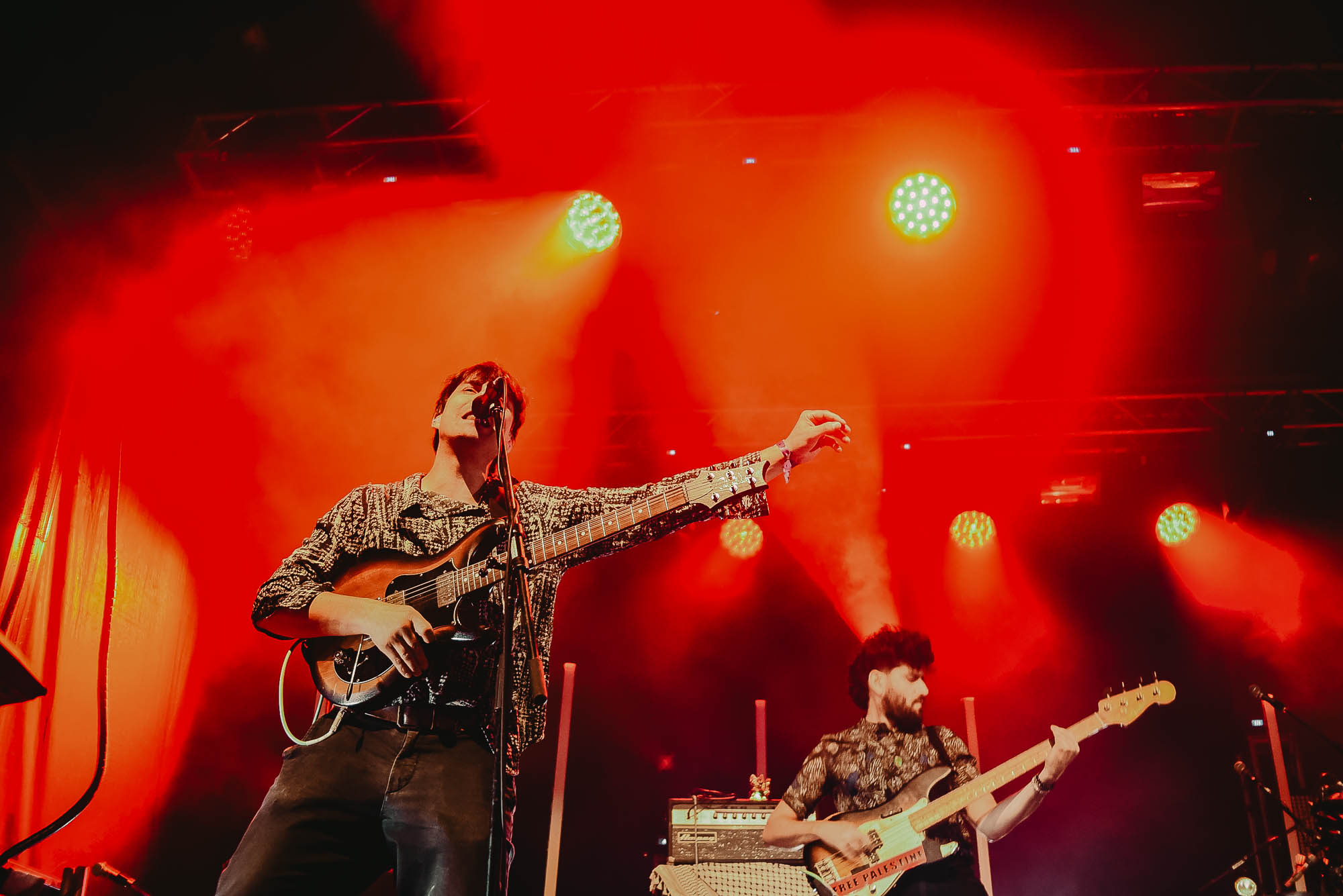
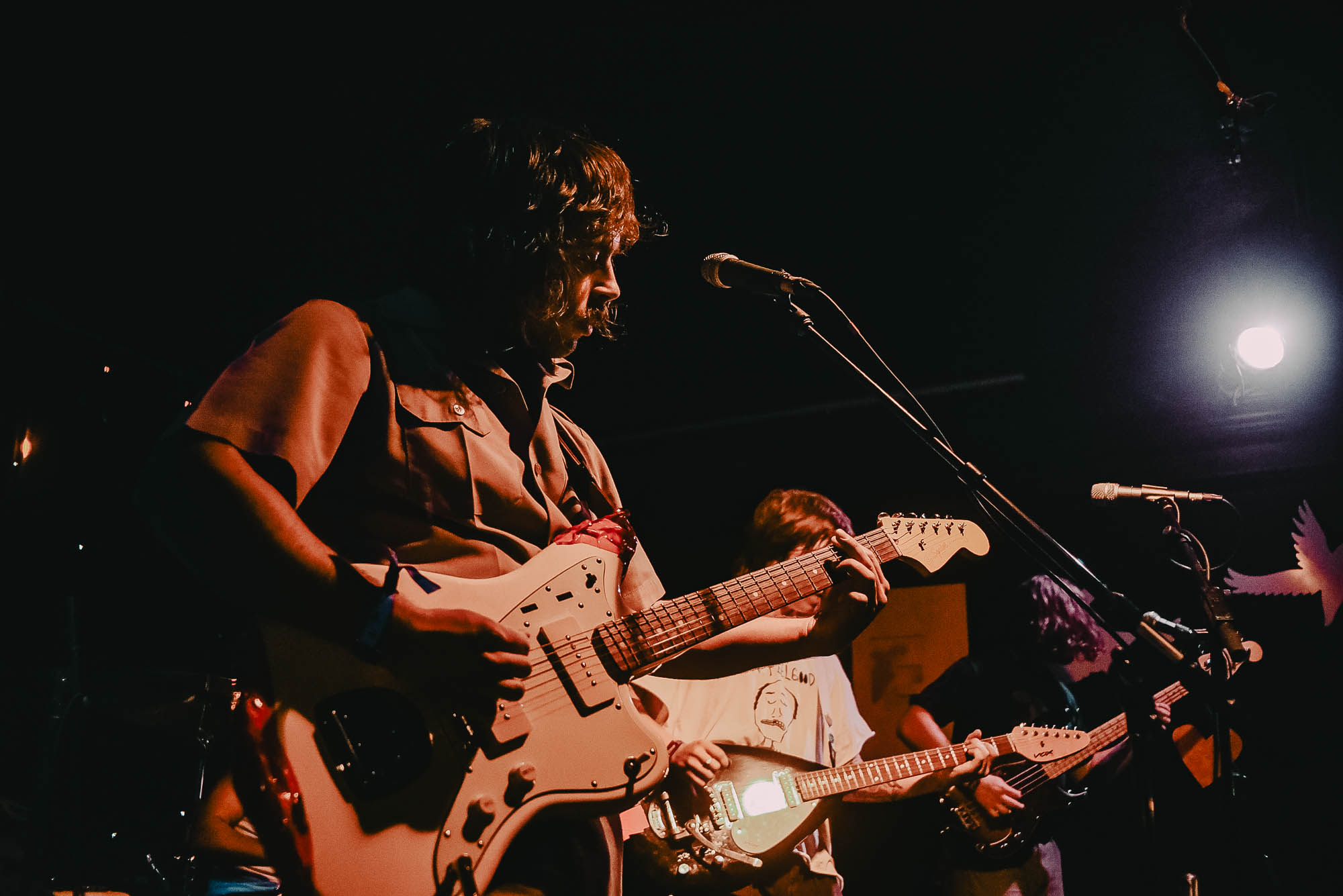
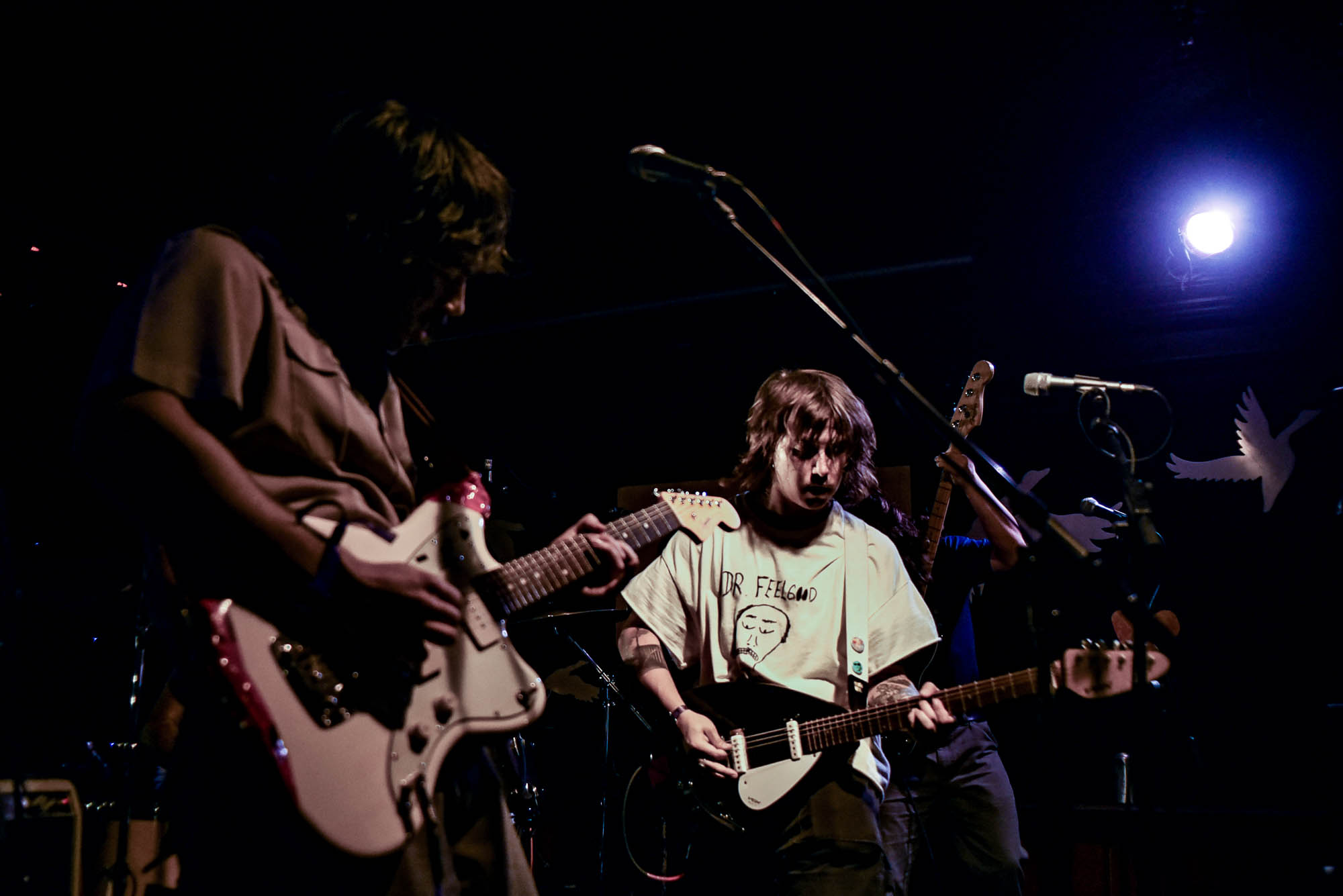
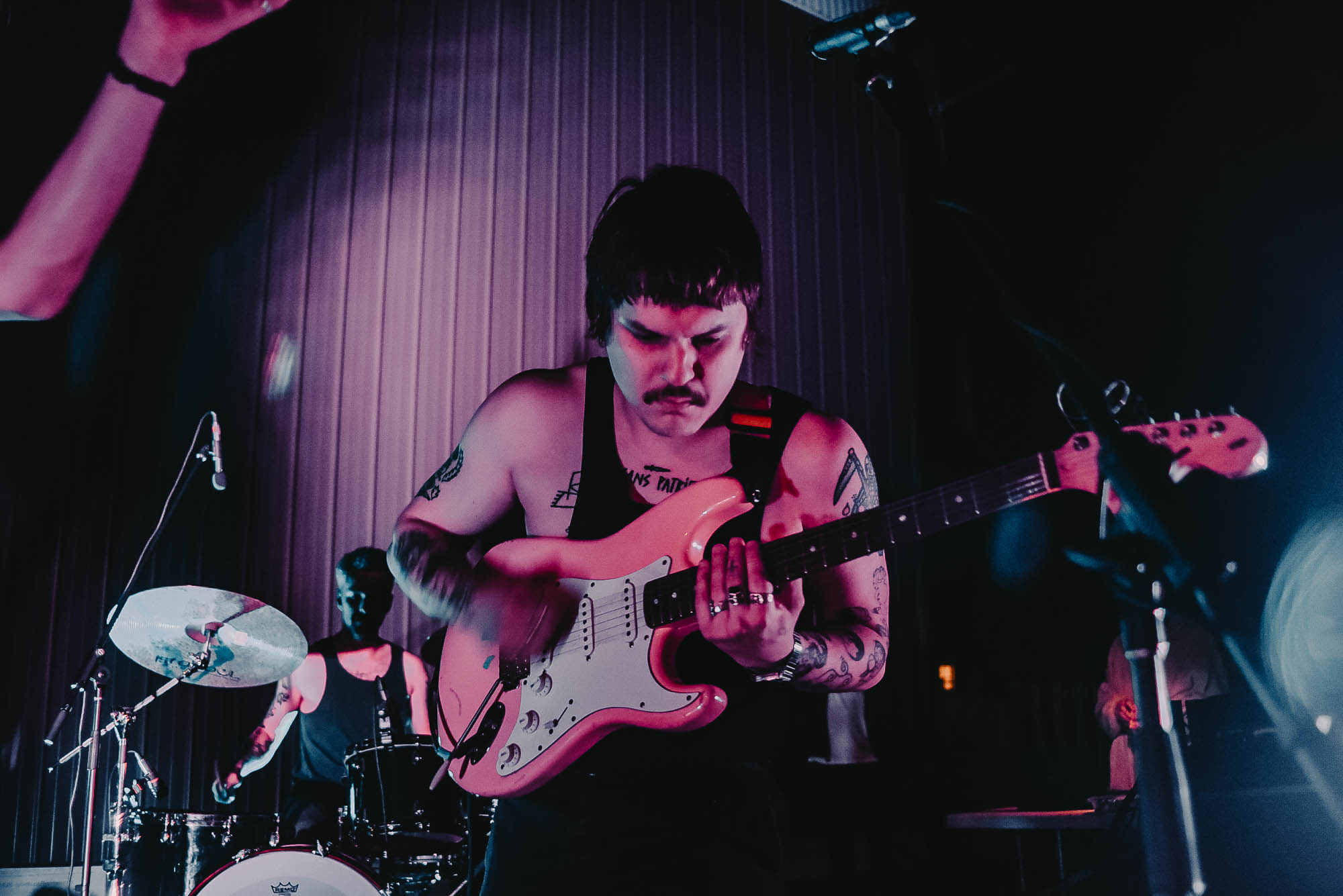
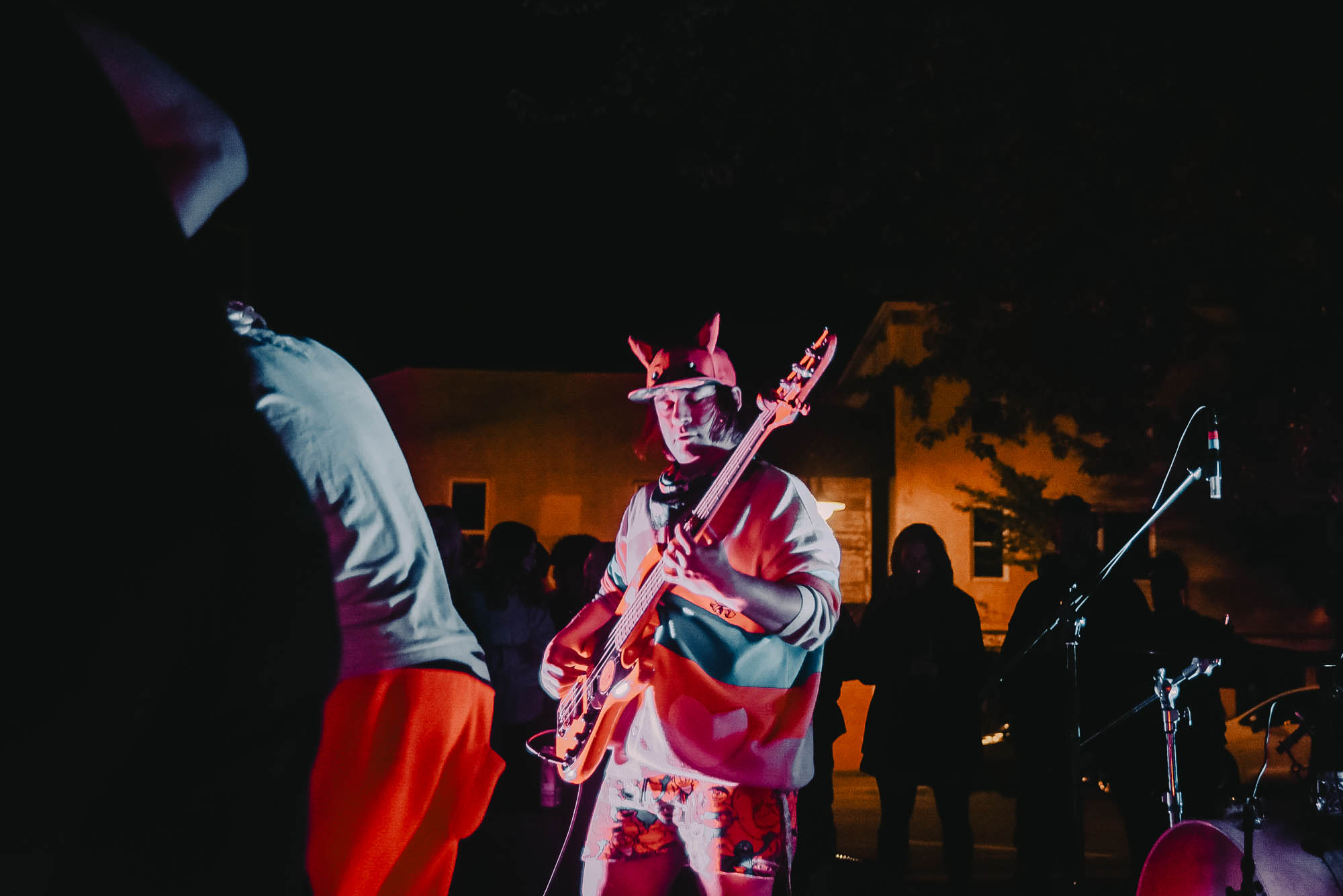
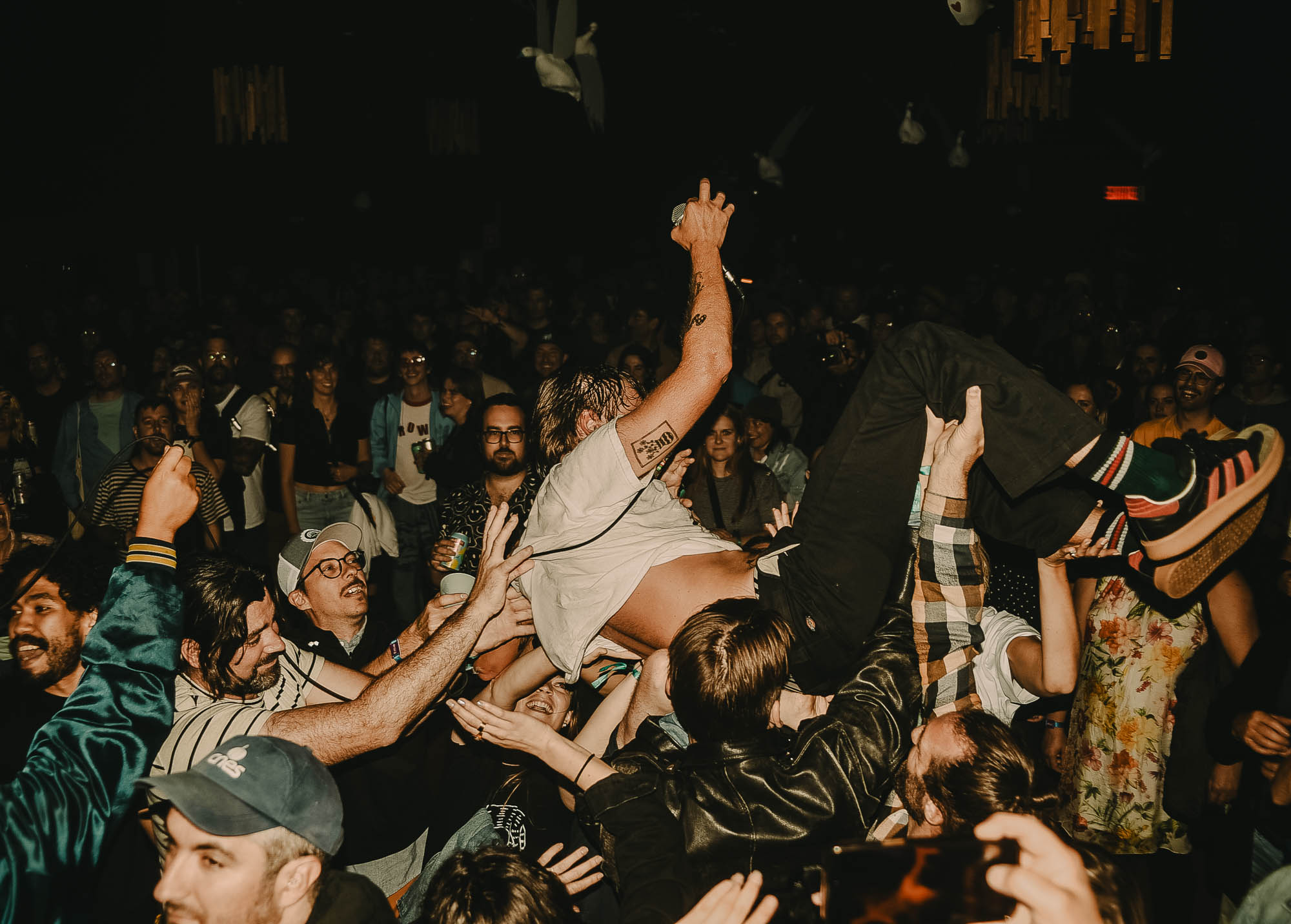
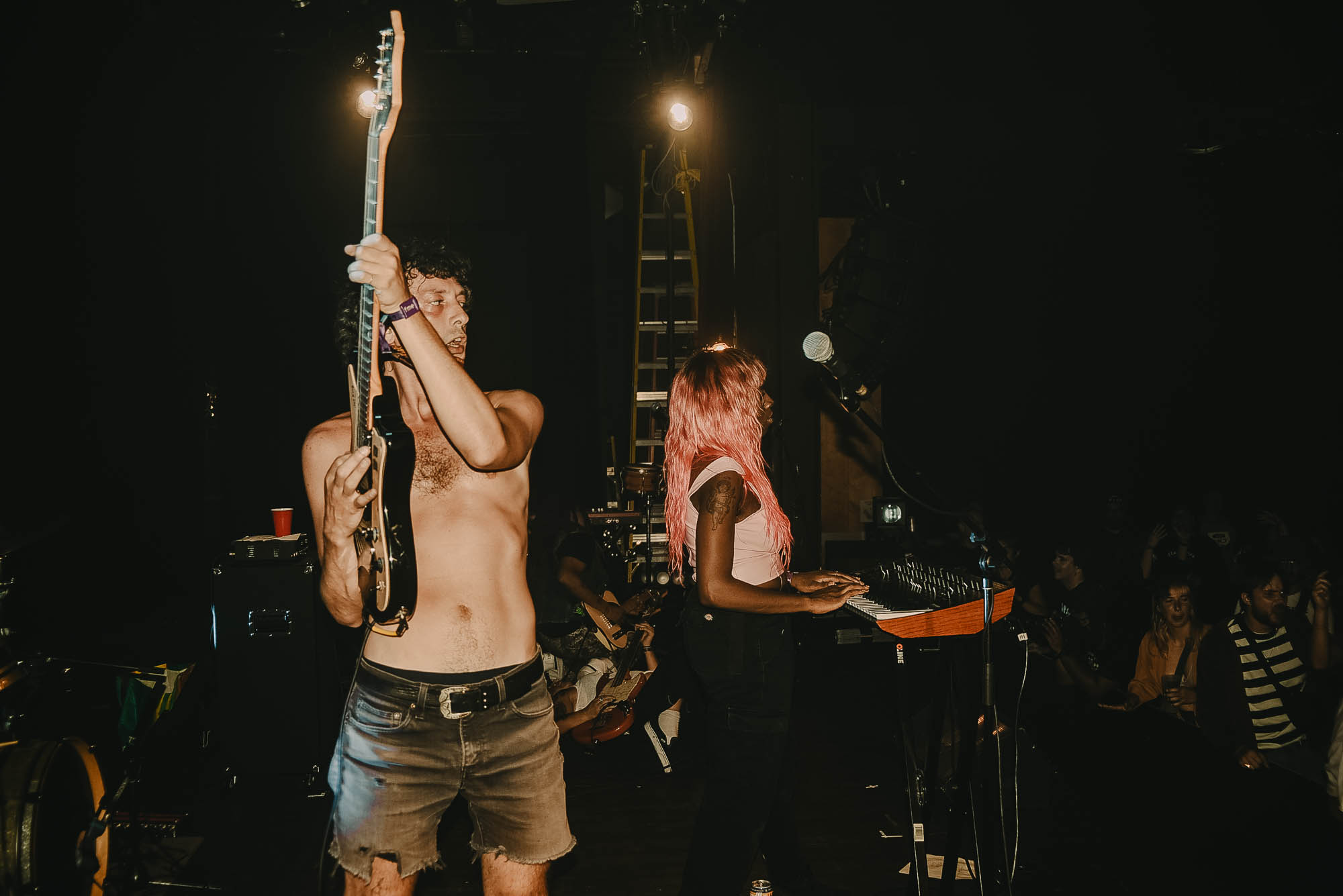
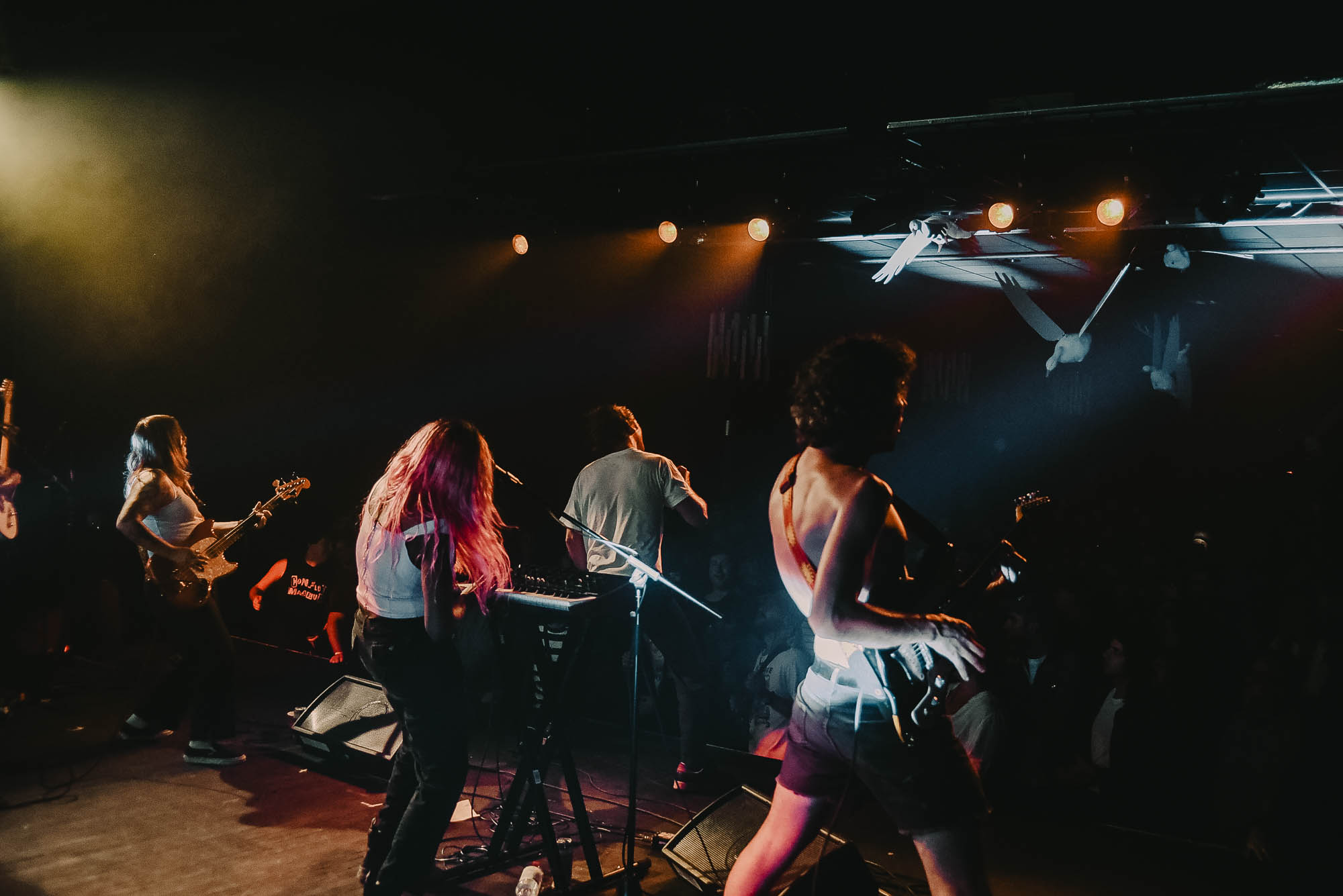
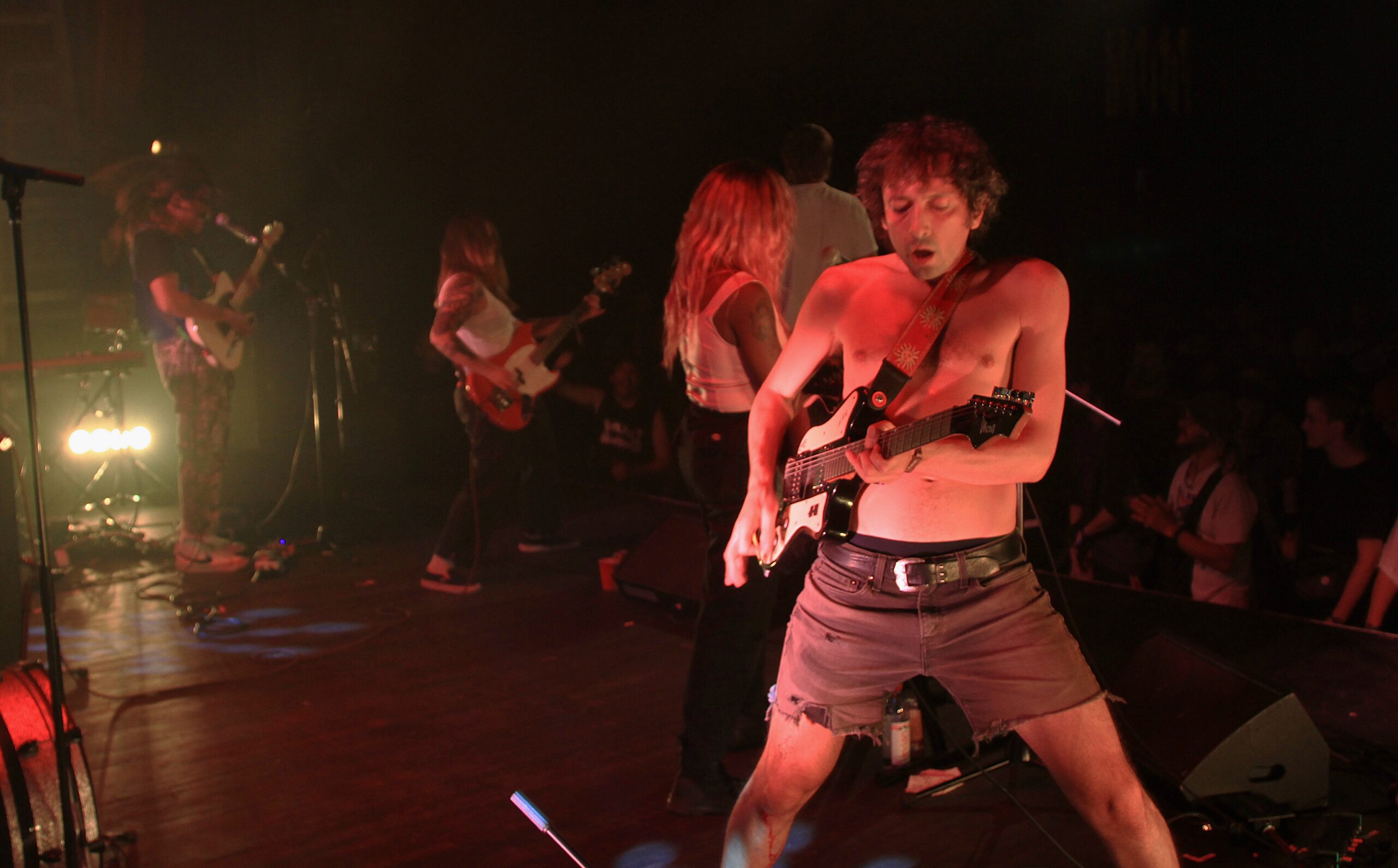
After a whirlwind of music on Friday, and late-night conversations about anything and everything, I needed a reprieve, something to ease me into another gauntlet. A bit melancholic, dreamy, and hazy, Grand Eugene was the perfect start to Saturday at FME. Under the wooden structure of La Guinguette Chez Edmund, with a backdrop of the Osisko Lake, Grand Eugene’s sound; Drugdealer mixed with old Andy Shauf and hint disco drab ala Gab Bouchard was exactly what we all needed.
As the sun peaked out of the clouds to say “hi,” we were welcomed to a vacation from ourselves, a vocational summer, the bass—my god the bass, the tones, the wash of synthy majesty, just pure delight. Their new album is aptly named, Les vacances d’été, be sure to take off the time from the daily grind and check it out.
Fête de la musique de Tremblant 2024 | Hispanic and flamenco all round with Les Rugissants
by Frédéric Cardin
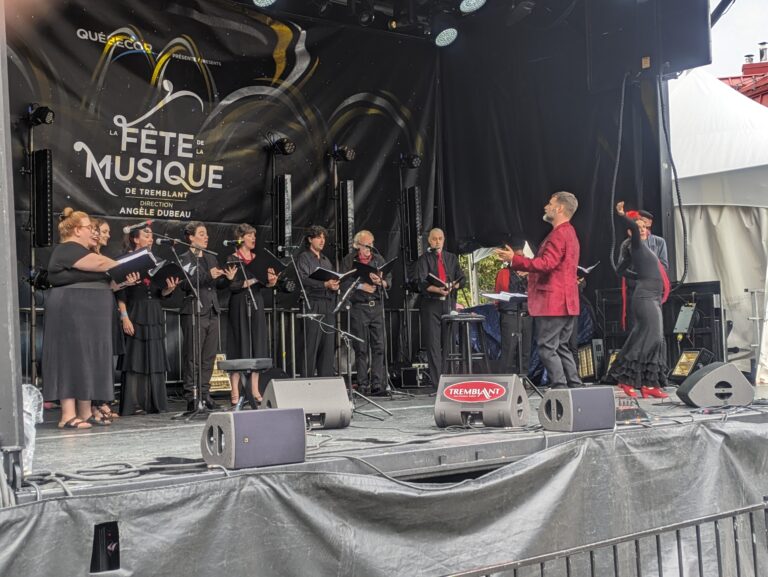
The vocal ensemble Les Rugissants, directed by Xavier Brossard-Ménard, put on a fine hour of rich choral singing this Saturday afternoon at Tremblant 2024’s Fête de la Musique. A dozen top-class singers, accompanied by a guitarist and a flamenco dancer, all led by Brossard-Ménard’s energetic, communicative direction, transported the audience in Tremblant’s main square into a Hispanic vocal universe far removed from facile clichés. Whether using Spanish or foreign composers, but inhabited by the magic of this country, the artists did not hesitate to offer works of a level of ‘seriousness’ and harmonic demands somewhat more advanced than in the other classical shows on the bill. This approach is to be applauded. That said, you’d have to be in very bad faith to balk. The programme put together by Brossard-Ménard was well chosen in terms of its expression of colours easily identifiable with the Iberian peninsula, despite some tonally modern passages. It was a performance of the highest quality, underpinned by a refinement that testifies to fine artistic integrity.
Fête de la musique de Tremblant 2024 | The warmth and elegance of the great Paulo Ramos
by Frédéric Cardin
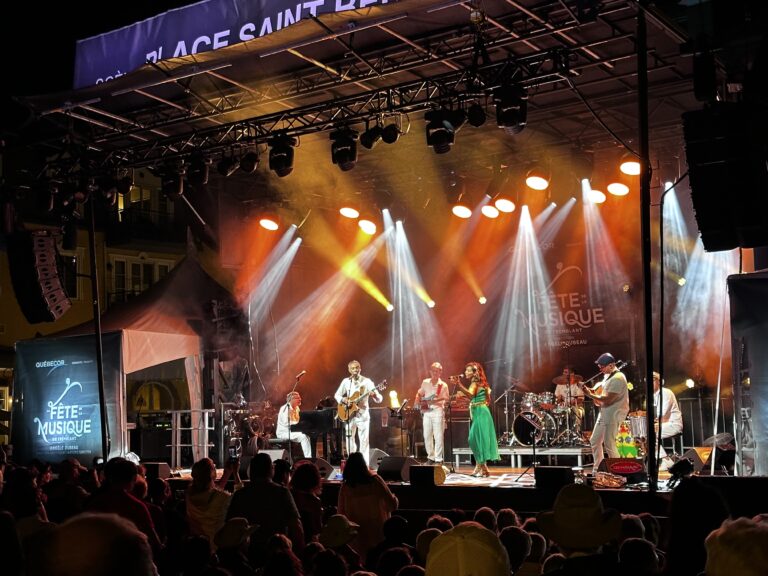
Paulo Ramos is synonymous with elegance, class, quiet strength, warm gentleness… and impeccable Brazilian music, of course. The artistic director of the Fête de la Musique de Tremblant, Angèle Dubeau, gave the veteran guitarist and singer the task of bringing the warmth and sunshine of his native country to the first of the two major shows in the 2024 edition. Mission accomplished. It must be said that it wasn’t difficult for this godfather of Brazilian music made in Quebec. The man has a lot of experience, and a lot of friends. After launching out on his own, but accompanied by his faithful quintet made up of Sacha Daoud, Daniel Bellegarde, Dan Gigon, John Sadowy and Rodrigo Simoes, Paulo invited a number of regulars to his concerts, including the excellent Bia. She offered up a few songs, including a beautifully modified and ‘pimped’ Chega de Saudade, as well as daring a few capoeira steps! The Quebec-Brazilian beauty is still in fine form! Guitarist and singer Rommel Ribeiro, Winnipeg-born singer Annick Brémaud and two dancers added the right layer of style to make this Brazilian evening an undeniable public success.
Fête de la musique de Tremblant 2024 | Beautiful flights of latino a capella singing
by Frédéric Cardin
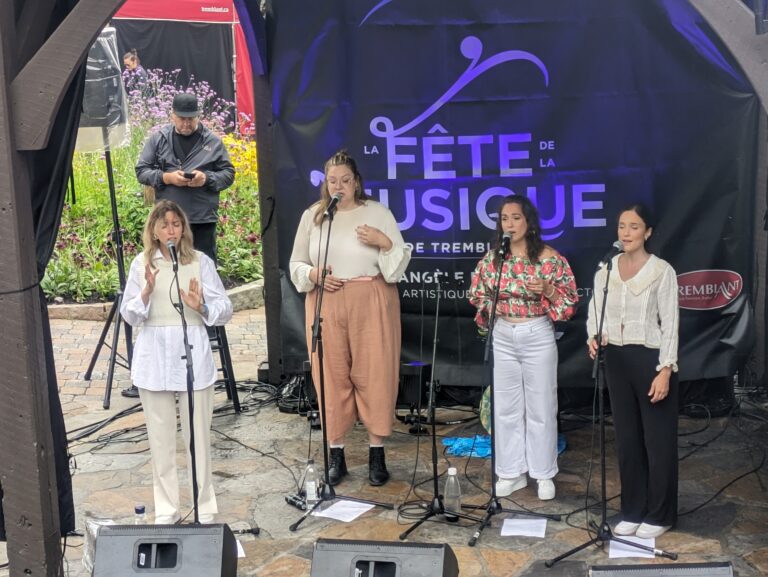
Mikhaëlle Salazar is ‘Chilicoise’, as she says herself. The young woman of Chilean and Quebecois origin founded the Mikha.elles vocal quartet in 2020. Of course, the pandemic has meant that the group’s influence has only just begun. But the group is showing great potential to spread the word. What we heard on the Deslauriers stage at Tremblant’s Fête de la Musique on Saturday afternoon made a pleasant impression. The a capella quartet, made up of Mikhaëlle Salazar and her friends Marie-Neiges Harvey, Carmelle Gauvin and Judith Little-Daudelin, lead the listener through a repertoire of songs, original compositions and Latin folklore, set to harmonies bordering on jazz and supported by an onomatopoeic rhythm reminiscent of men’s barbershop ensembles. It’s elegant yet relaxed, an image reinforced by Mikhaëlle Salazar’s simple, engaging presence. The young ladies were among the first to launch the activities of this Fête de la Musique 2024, so they had to perform in the light rain, which only dried up a little later. The audience was nevertheless present and remained attentive, a sign that the quality was there.
Fête de la musique de Tremblant 2024 | Ensemble Caprice: fun and festive
by Frédéric Cardin
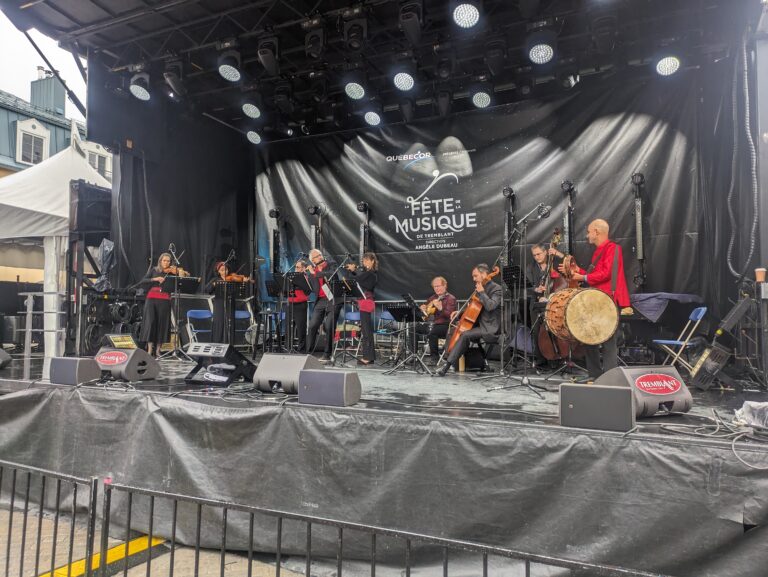
The morning drizzle had just ended when Ensemble Caprice began playing on the Québecor stage at the Fête de la Musique de Tremblant. The sun wasn’t out, far from it, but it was already more pleasant, especially as the Montreal ensemble had brought some light with them. Twice, in fact. First there was the presence of director Mathias Maute, who provided some amusing entertainment. I knew Maute was a nice guy, but I didn’t remember him being so funny with the audience. Perhaps I hadn’t been paying close enough attention… The conductor’s comments had the particular advantage of supporting a sparkling programme devoted to Vivaldi and the ‘nomads’ of Baroque Europe. Vivaldian concertos that were as twirling as one could wish sat happily alongside anonymous works by little-known composers with a strong folkloric flavour from various corners of the continent, particularly from Eastern Europe. I’d like to highlight the sound quality provided by the festival’s sound technicians. Classical music suffers from outdoor performance and amplification is often not up to scratch. What I heard yesterday was of a quality you’d have heard from the Montreal Symphony or the Orchestre Métropolitain with Yannick Nézet-Séguin, for example. Very good point for the organisation.
Souldia repeated it a few times on Friday: this was its biggest show ever in Abitibi. For a market of this size, it was indeed considerable. And totally justified. Rouyn-Noranda is a hip-hop town, and also the home of Steve Jolin, whose 7eme Ciel label is a pillar of Quebec’s musical ecosystem.
Several keb rap headliners took to the FME main stage. This region is also home to Zach Zoya, who is very much in evidence this weekend as a distinguished guest, notably at Haviah Mighty, Prix Polaris 2019, on stage on Saturday.
But the one to whom we gave the most flashes, the one who brings people together the most, is undoubtedly Souldia. And with good reason: the boots follow the lips when it comes to defending the material on stage, including the best salvos from Non Conventionnel or excerpts from Portrait Robot performed with fellow bandmate Lost. Can’t wait for the new album in the making.
Hellish stage presence, superior tone, and a formidable machine behind him to perform in real time. Souldia has truly built his identity as an artist who has arrived at the top of keb rap. His connection with the largest portion of keb rap fans is no accident. He graffitied just enough, quickly brought himself back into line, and eventually won over as many fans as possible.
Lost performed at the Petit Théâtre du Vieux Noranda, adjacent to the main stage aisle. An excellent set from the poetic MC, the MTL rapper commands respect. His pen is razor-sharp, his words direct and to the point, his syllables punchy and his stage presence authoritative. And, needless to say, a return visit from Souldia, still pumped up. The next day, the main stage on 7th Street was packed again for another program of rap keb with LaF, Haviah Mighty and Loud Lary Ajust reunited in the context of the 10th anniversary Blue Volvo tour. Indeed, it’s a cause for celebration in the always astonishing city of hip-hop, Rouyn-Noranda.
Photo Credit: Christian Leduc
Publicité panam
FME DAY 2 I Feeling Figures, Alix Fernz, Allô Fantôme, Maryze, Amery
by Rédaction PAN M 360
And we’re back! The PAN M 360 team is crisscrossing the entire FME 2024 program, picking up as many artists as possible during this 22nd edition in the beautiful Rouyn-Noranda. Continuing into day 2 we have coverage of Maryze, Amery, Feeling Figures, Alix Fernz, and Allô Fantôme.
Allô Fantôme: Artsy baroque pop and a side of tacos
by Stephan Boissonneault
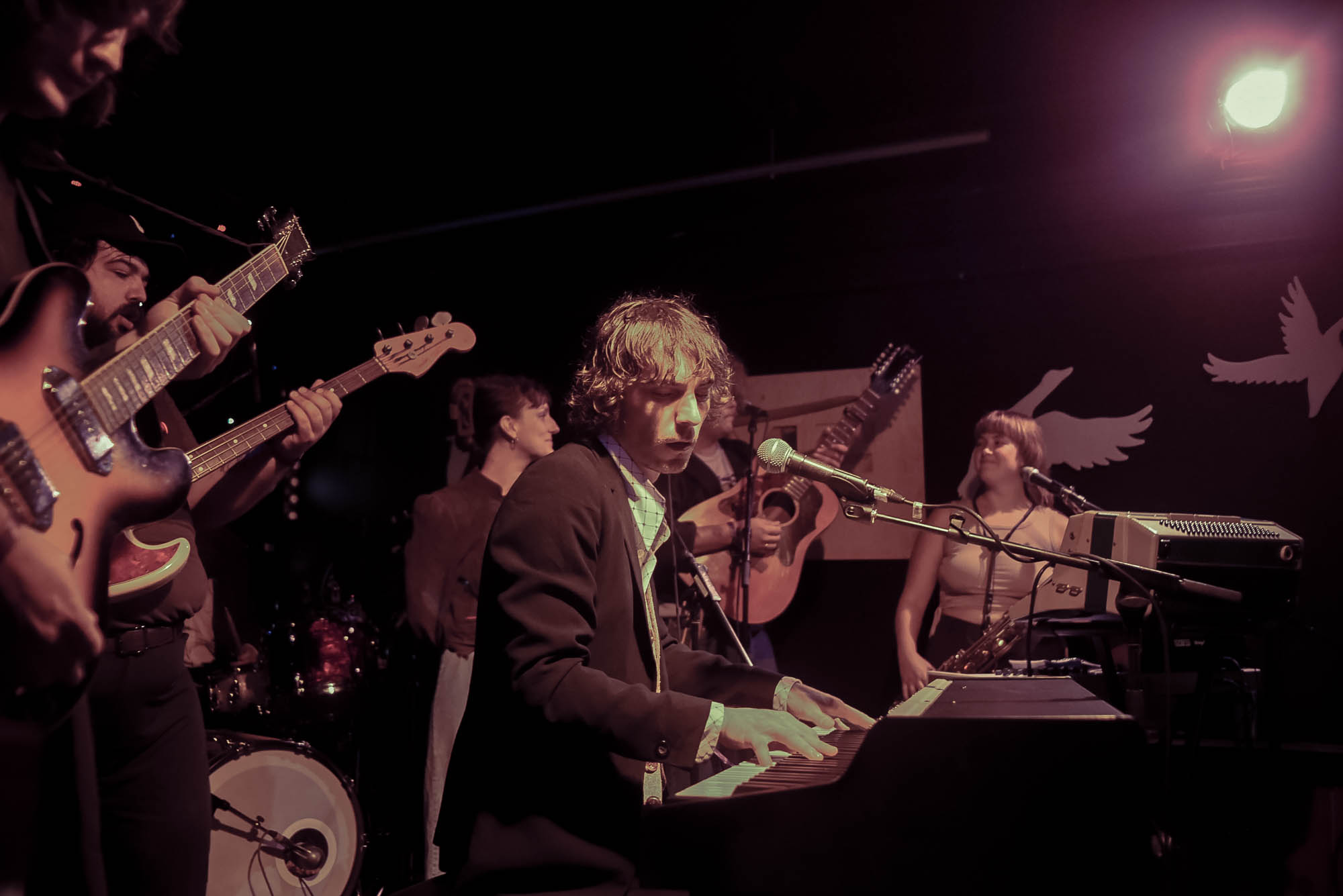
The tunes of Allô Fantôme, the super project of songwriter Samuel Gendron, feel like they were plucked out of the ’70s, along with bands like Procol Harum and The Moody Blues. Leading a seven-piece band of electric and 12-string guitar, flute, bass, synths, and a steady drum section, Gendron commanded the room with his prophetic voice, singing about fear, love, and balloon animals. This maximalist approach to rock was perfect after a delicious offering of tacos, courtesy of label cuties, bonbonbon, for the five-year anniversary. Gendron’s skills on the keyboard are captivating to watch and his band, we must give a shout-out to the bassist for holding it all down, is tight as sin. The whole performance felt like staring at an abstract painting and finding the next part to change your life.
Melodrama and Mystique
by Lyle Hendriks
For my first show of Friday evening at FME, we had Maryze, a solo act from Montreal who pulls inspiration from the likes of pop’s heaviest hitters while bringing a unique boudoir intimacy to her anthemic tracks. Maryze played for a relatively tame crowd in a cocktail bar that would have been dusky if it had only been after dusk.
For a solo performer who, as she puts it, is basically reading from her diary, this early evening show could have been an intimidating setting for her performance, making it hard to bring (and keep) the energy. But fortunately, Maryze didn’t have this trouble at all. She covered a lot of sonic and emotional ground in her set, and sang her ass off for the entirety. Whether it’s huge pop songs that would be at home in the church of Lady Gaga, dirty club tracks about tongues, a romantic (and devastatingly sad) ballad with just her voice and the piano, or even a full, 4-minute acapella rendition of “La Vie en Rose” as she sat on the bar, Maryze was a pleasure to watch. Her voice is unbelievable, soaring over her backing music and giving me goosebumps as she draws us closer and closer. We might as well start booking Maryze for stadiums—she’s already playing like she’s in one.
Alix Chaos Fernz Incarnate
by Stephan Boissonneault
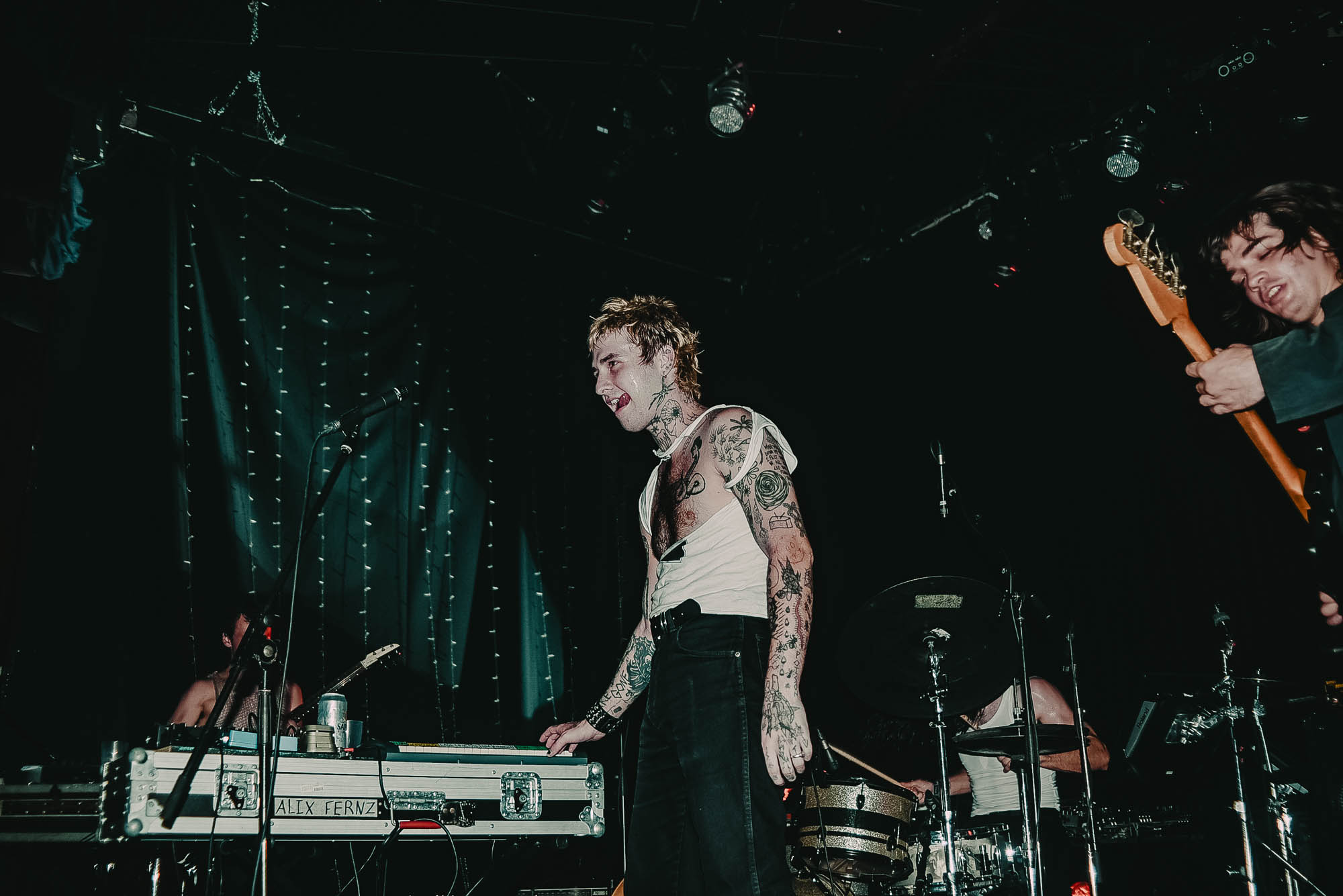
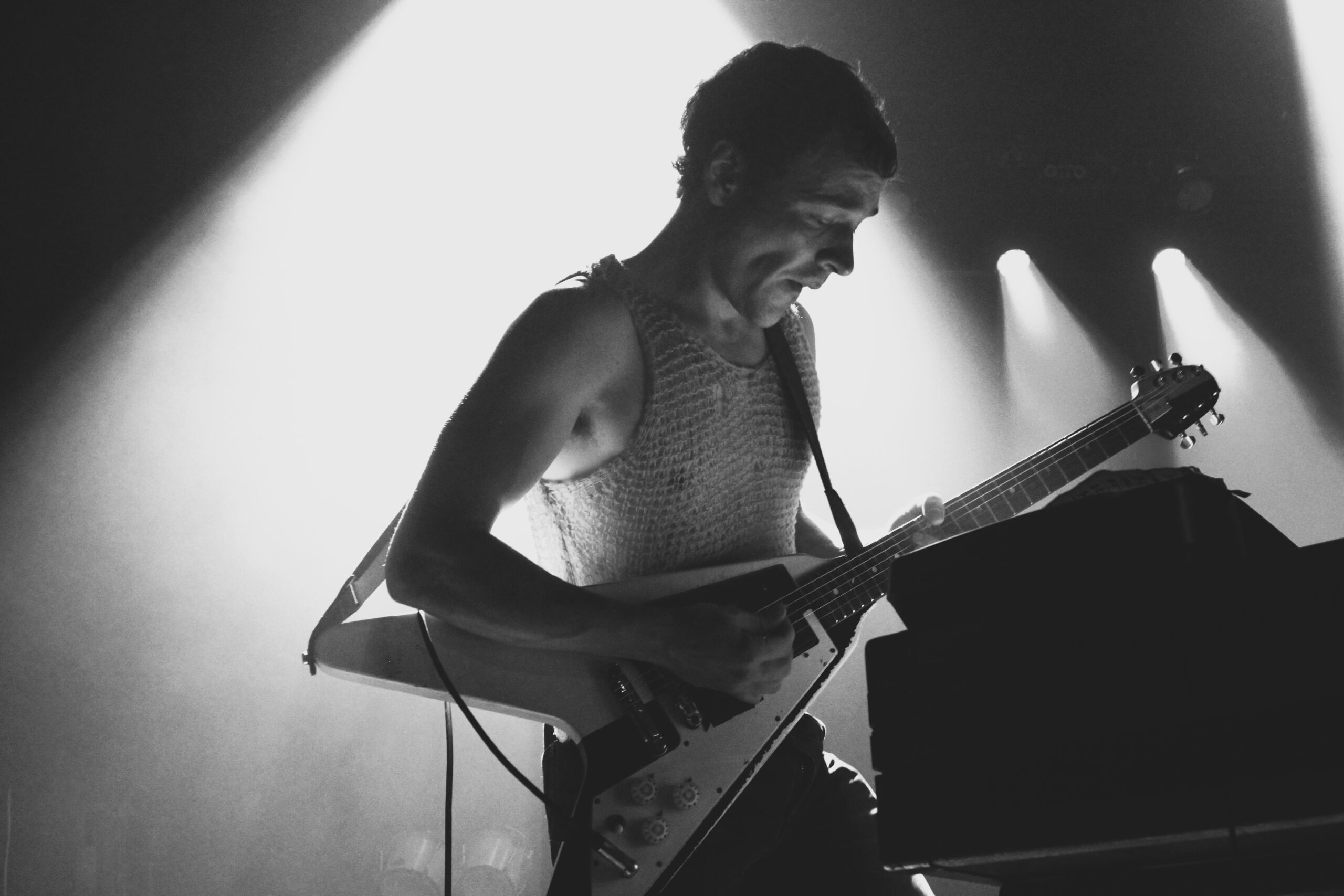
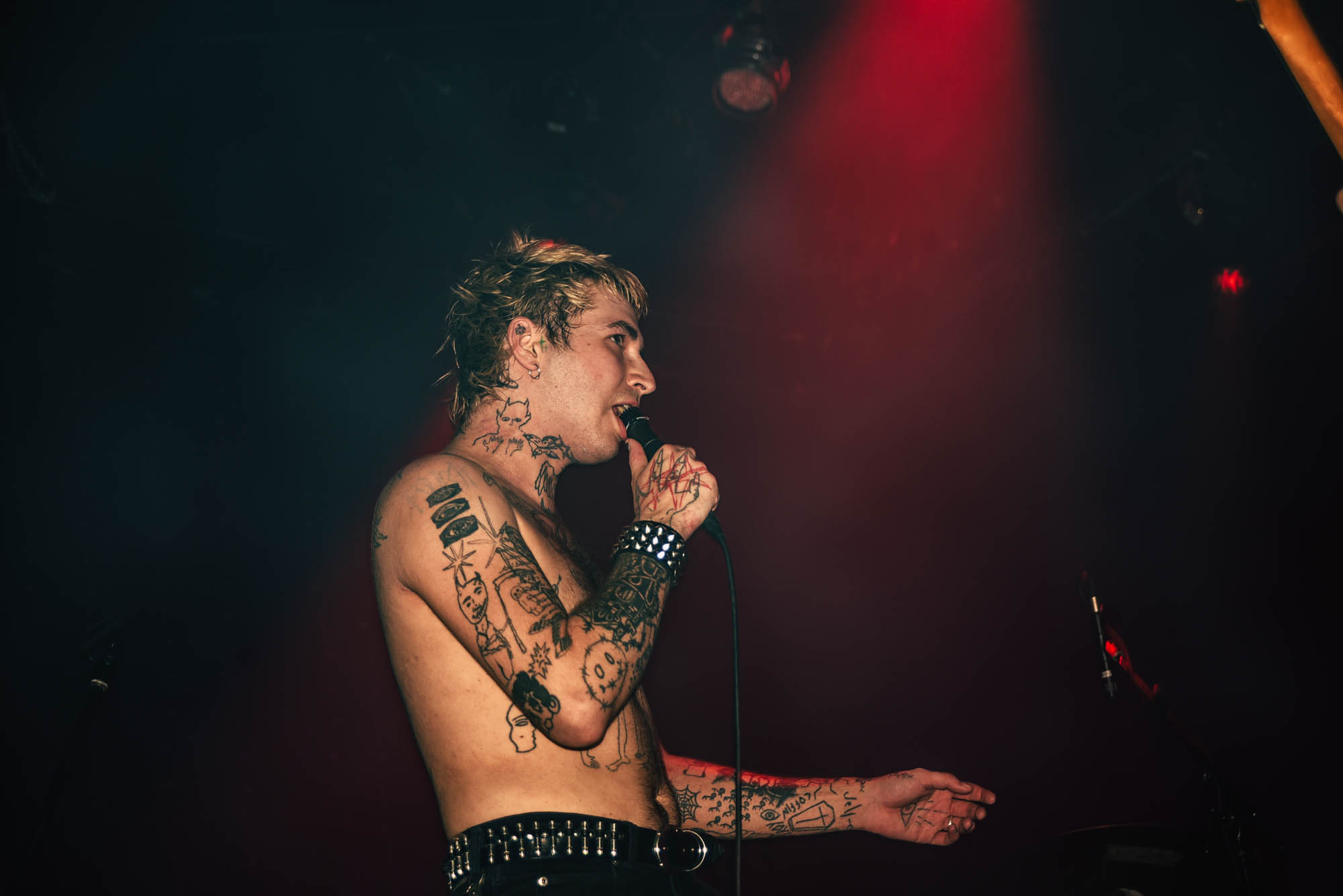
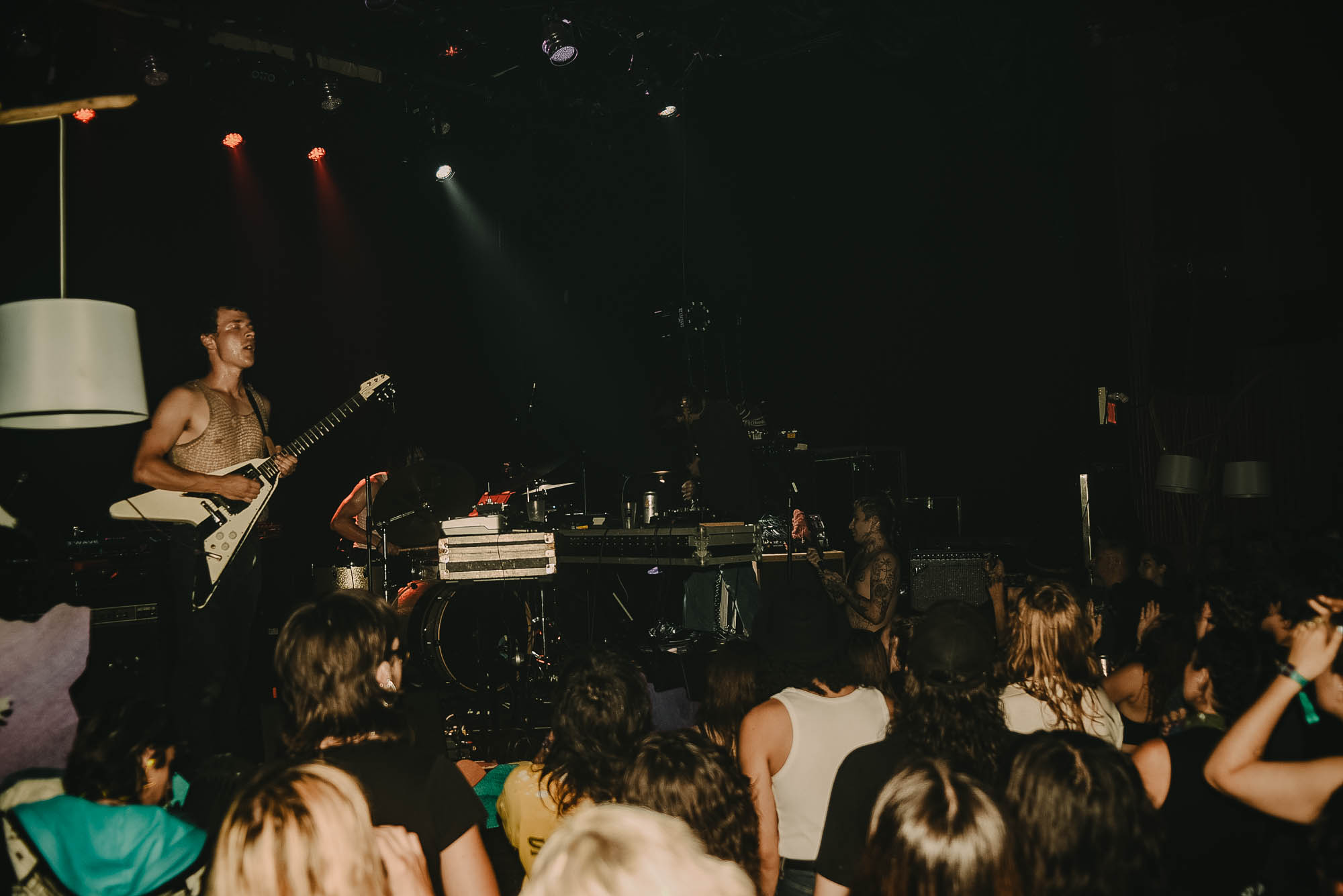
One aspect that has perhaps been somewhat lacking in the music scene is chaos, pure unbridled chaos that the great poets will try to lament. But on Friday night at Le Paramount, the town of Rouyn-Noranda was witness to that chaos in the form of Alix Fernz, the young, yet dynamic post-punk meets everything synth stooge who has been on a steady incline before the release of his debut album, Bizou. Wearing half of a shirt and showing off his canopy of tattoos, Alix launched into the whirlwind, stuffing his microphone in the back of his throat and at one point, almost choking himself out with the cable. It’s dangerous fun and most of the crowd loved it. A few had no idea what they had just walked into and probably felt like they were in the thickened haze of a preternatural trip. The Alix Fernz project is definitely best served with a full band; buzzing flying-v lead guitar, a prog-gasmic bass section, heavy drums, and jammy interludes that felt like Wire on speed. Safe to say, we can’t wait for the follow-up to Bizou and all its splendour.
Amery — Soft Rock Sweethearts
by Lyle Hendriks
I’m pleased to announce that the sunshine, falling-in-love-for-the-first-time vibes of Amery are absolutely apparent in her live performance. While some music in this niche treads into the territory of being annoyingly cheerful, Amery and her band completely sidestep this issue thanks to an overwhelming sense of genuine joy behind their music. Soft, sensitive, and sweet, the band draws us in with a lower-than-average volume and a subdued energy that only entices us.
The band feels somehow both tight and loose, ebbing and flowing with one another as we’re led through the emotional centre of each song. Amery herself is a pleasure to watch, with a huge smile on her face and relentless dancing that you can’t help but love. Her music makes you want to hold a puppy or go on a bike ride to nowhere, and every lyric comes to us like someone admitting a playground crush. By the end of the set, she’d won the room over handily, shredding a cover of Donna Summer’s “Hot Stuff”, much to the delight of a few dad-aged dudes who got to tearing it up on the dancefloor. If you get the chance to see Amery perform, make sure you’re ready to leave in a good mood.
Feeling Figures or Mysticism with Teeth
by Stephan Boissonneault
Maybe it was the cocktail of substances and Sapporo’s I had partaken, or maybe it was just something clinging to the air at FME, but I could not for the life of me get the concept of ego death out of my mind while watching Montreal’s Feeling Figures. Their set, a sporadic dose of twee-shoegaze pop and heavy guitar noise, backed by a rounded-out rhythm section who lead the band down a few grooving rabbit holes, felt at times like an unrelenting dream, one you never wanted to end. The dual vocals from Zakary Slax and Kay Moon, while each slaying on their respective axes, was a back and worth of noisy harmony that brought to mind some of the no-wave madness of ZE Records days. Back to ego death, the feeling of ultimate surrender and loss of the senses (a calming feeling, I know), The Figs took us on a psychic journey, one where you had to float around the walls of catharsis. A spiritual journey fit for FME.
Fête de la musique de Tremblant 2024 | Sophie Faucher and Callas in symbiosis
by Frédéric Cardin
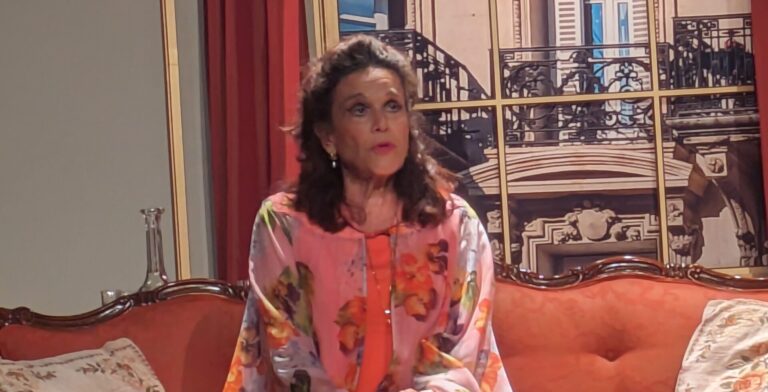
The Fête de la musique kicked off last night with an off-site presentation (in the village church of Mont-Tremblant) of the play Callas : une voix pour être aimée (Callas : A Voiced to be Loved) starring Sophie Faucher as the divina at the end of her life, Marc Hervieux as Giuseppe di Stefano, tenor and companion on her final years, and Dominic Boulianne as pianist and coach Robert Sutherland.
I won’t go into the details of this play, which tells the story of the singer’s last (plausible, but fictitious) moments before she was found dead in her Paris flat. For that, I invite you to listen to the interview I conducted with Sophie Faucher and Marc Hervieux (in French).
I have to admit that I hadn’t yet had the chance to see this play, written by Sophie Faucher and Anne Bryan, and which premiered in autumn 2023. What I saw and felt yesterday was above all a Sophie Faucher inhabited by her role. Here we are, with a gracious lady who is no more than a shadow of her former artistic self. And yet she still has greatness. We’d like to tell her so. We’d like to get up on stage and retort when she says that her voice was everything, that her voice made her. To tell her that no, it was she who made this voice, who gave it its unique character. It was her passion and extreme artistic integrity that built an instrument that has become iconic. That’s how much we believe in it. Marc Hervieux (tenor Giuseppe Di Stefano) is sunny, the polar opposite of the depressed star. But he has his dark side. He loves Callas with all his heart, but he too clings to the past. To the time when she still had her powers, and with whom he could reign on the stage. This forthcoming tour of Japan, which he has come to rehearse at his friend’s house, is a lifeline to which he is clinging after a family tragedy (he has lost his daughter). So he is only partly attentive to Maria’s despair. As for the pianist, he doesn’t really know what to say, other than generic platitudes most of the time.
It’s a shame, then, that Maria Callas’ last moments (if they ever took place like that) were weighed down by the inability of two men to understand the pain of a woman torn apart. The inability to commune with her tragedy, and to pierce her dark shell of regret, absence (maternal love) and resignation (she will sing no more). In fact, Callas’ final moments in this play are the story of a failure. A failure of communication. Perhaps it was possible to break through the defences behind which the exhausted diva had repressed herself, this certainty that she was no longer of any use without singing? She says: ‘The best way to serve music from now on is to keep quiet’. But serving music could have been a matter of passing on the knowledge she had acquired, of giving inspiration to another generation, and so on. Who knows, perhaps with the right words, the right arguments, Maria could have survived ‘Callas’ for a while longer. She could have avoided the trap of having to die out like one of her much-loved characters, Traviata, Mimi, Tosca, Aida.
All these things run through our minds during the hour and a half of the show. And it’s the proof that Sophie Faucher’s acting is so strong, because we dream of intervening, of finding the right arguments, where these two gentlemen fail.
Hervieux is also good and fair in the role of Di Stefano. We can forgive him a few stammerings, but he is genuine in his outpouring of tenderness and love for his friend. The same feelings that drive him to become harsh and even cruel when she doesn’t (or no longer) live up to the idol he still holds her up in his mind. The advantage he has is that he can sing, too. Which he does very well indeed, and with generosity.
Dominic Boulianne plays pianist Robert Sutherland, caught off-guard by this rehearsal that goes nowhere.
The staging, by Marc Hervieux, is very classical, in the form of a three-person huis clos in the realistic setting of a Paris flat with hints of faded luxury. The movements and set-up are designed to help us understand the emotions of the protagonists.
If you understand French (there is no English translation yet) and especially love opera, I encourage you to dive into this play with all your heart. You will be moved.
FME DAY 1 I Orchestra Gold, BODEGA, Bouge Pas, TVOD, Last Waltzon,
by Rédaction PAN M 360
The PAN M 360 team is crisscrossing the entire FME 2024 program, picking up as many artists as possible during this 22nd edition in the beautiful Rouyn-Noranda. So get ready. First off we have Orchestra Gold, TVOD, Last Waltzon.
Orchestra Gold: African Psych Rock under the night sky by Stephan Boissonneault
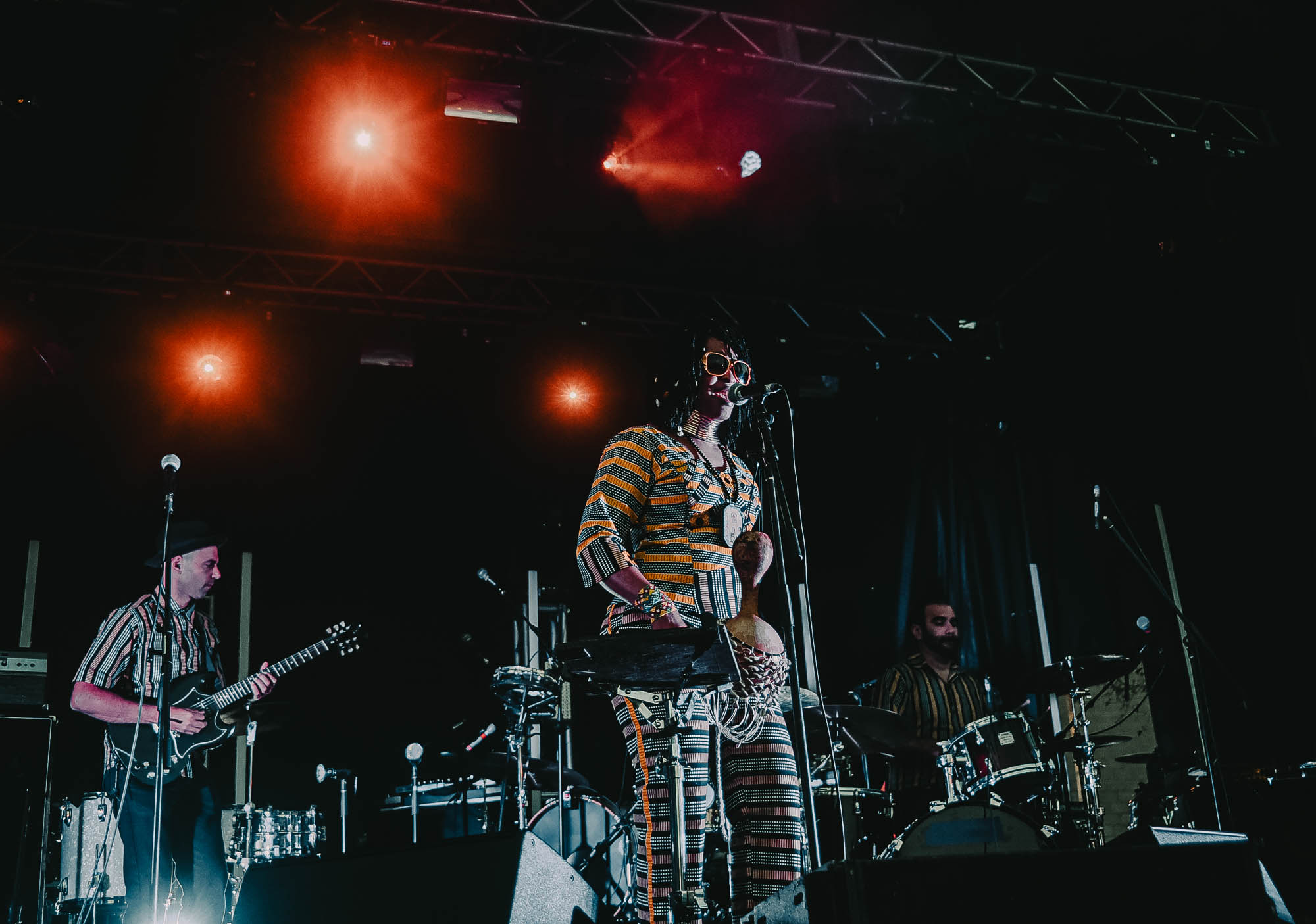
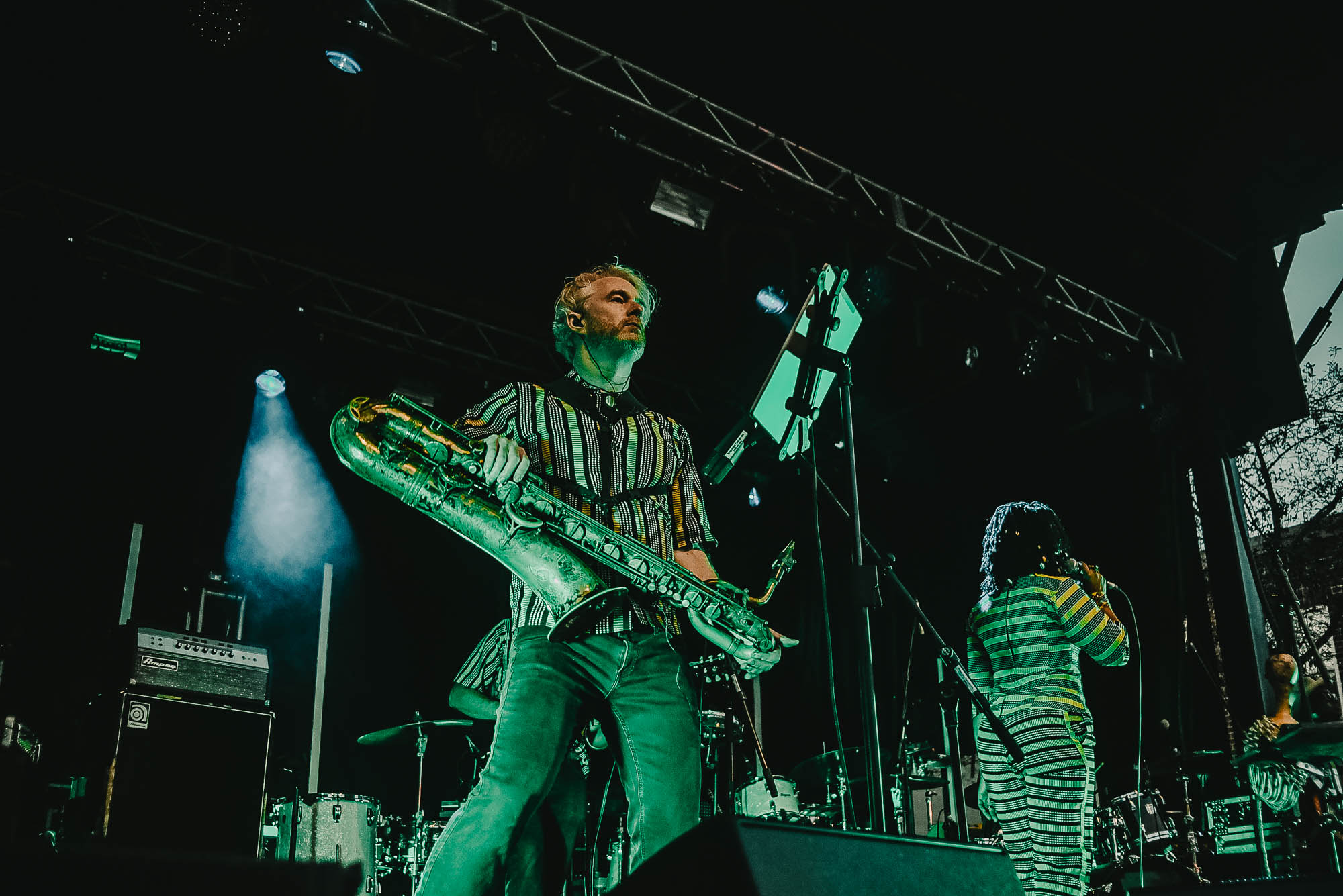
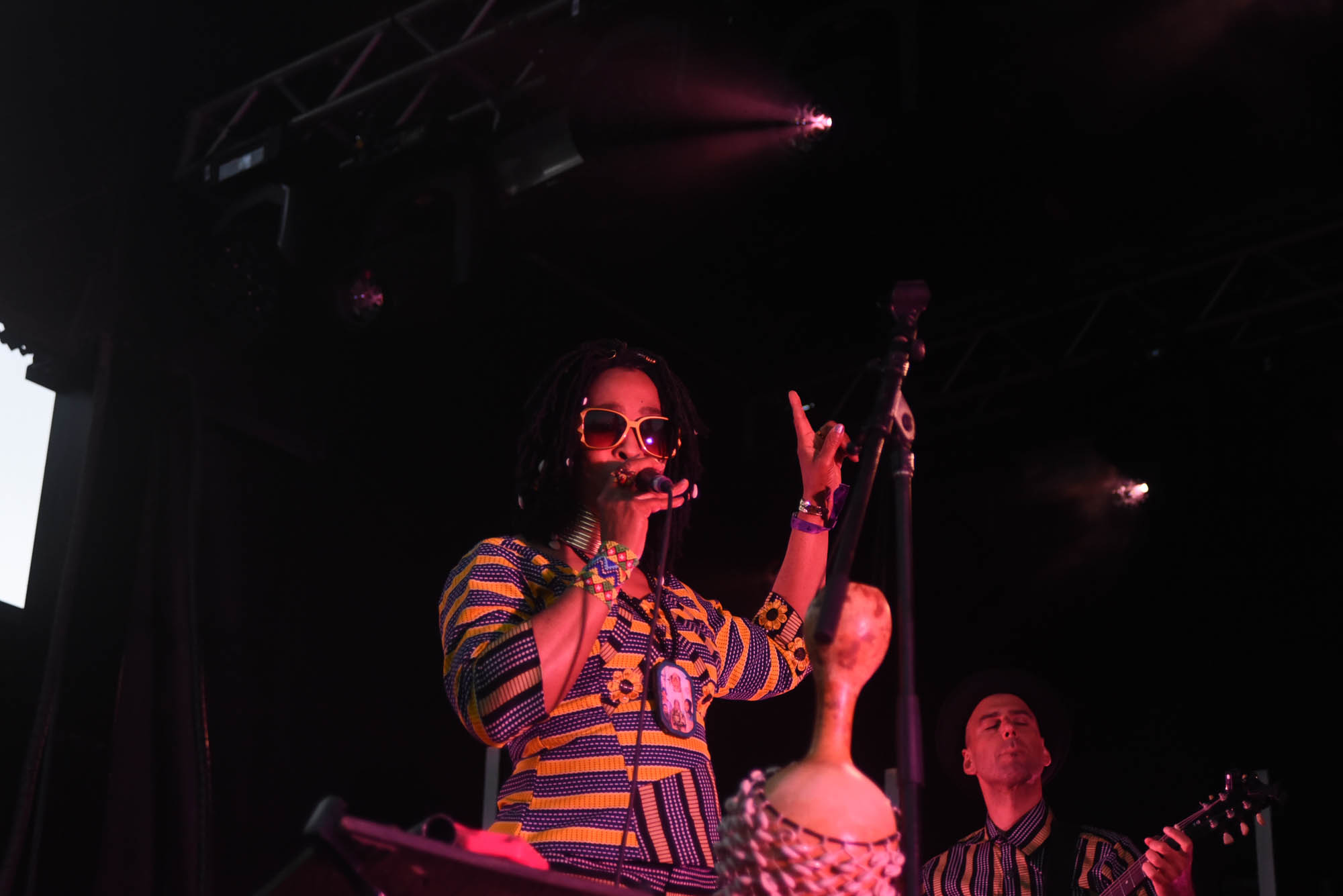
As lead singer Mariam Diakite walked on stage, sporting a vintage blue and yellow-striped jumpsuit, the crowd at FME’s mainstage ventured closer and closer. It was as if giant invisible arms were gathering clusters of the crowd and dropping them in front of the stage. We were all transfixed under the psychedelic night. A sizable crowd developed by the time the band was three songs in. The other members of Orchestra Gold, matching Diakite in vibe and style, jumped into an African rock n’ roll; blistering guitar work and a steady rhythm and drum section. The music felt retro, a bit of Marvin Gaye meets Khurangbin and had flourishes of modern accompaniment—superbly hypnotic. The set was healing, a sound bath of sonic medicine, sung primarily in Bambara—a fantastic start to the night.
BODEGA WAS OUR BRAND by Stephan Boissonneault
Bodega, New York’s scuzzy anti-capitalism post-punks may have the strangest, almost pretentious marketing structure—including a video essay on the concept of consumer culture—a band could have, but their live show is pure maddening fun. Two drummers playing a few pieces of a kit, fluttering lead guitar wankery, a bass player in his own world, and the satirical in-the-red vocals reminiscent of early Pavement. The band was infectious, playing songs off the latest, cleverly named Our Brand Could Be Yr Life and Broken Equipment. The music has a wonky, metallic, and punchy quality to it and though many of the songs are about the perils of capitalism (which does sound a bit overdone 2024, if not boring), the sounds cut through over the main stage. I’d say, given the right effort and drunken motivation, Bodega is a band that could be someone’s life.
Fatal Explosion Reported in Rouyn-Noranda: Last Waltzon at FME by Lyle Hendriks
In the lurid haze of mid-to-late evening FME, I make my way to the dark, beer-stained Caberet de la Dernière Chance. Montreal agitators Last Waltzon are already onstage, shredding and screaming their way through their cavernous, noisy blend of post- and pop-punk. Movement is everything for Last Waltzon’s stage presence, though it’s less choreography and more a matter of writhing around as they force a jagged symphony out of their instruments. It’s incredibly loud, every drum hit cutting through the room as the guitars whip themselves into a fervor. Dual vocalists trade off lines with one another, a dialogue of cryptic messaging that conveys the emotional centre of their sound. Every Last Waltzon song comes from some kind of deep-seated need, some sort of feeling that comes out in a torrent of fury or not at all. Loud, irreverent, and brimming with energy, Last Waltzon is a pleasure to watch. Each powerful track is another psalm that urges you to move. The guy did a fucking backward somersault on stage while hitting a riff. What more could you want?
Bouge Pas gets us moving by Stephan Boissonneault
The hidden alleyway off of Rouyn-Noranda’s downtown was witness to musical paroxysm in the form of Montreal garage punks, Bouge Pas. The character of this band live is held down by the dual drummers, who synced up like maniacal automatons. The bass was thick and this band loves to jam, going on outlandish tangents of guitar riffery that are well-rehearsed. The band wants us to think it’s all sporadic and unscripted, but for a punk band, this set was unbelievably tight. A flurry of Osees-esque art punk, a veritable whirlwind that will be ringing in the ears and minds of a Rouyn-Noranda for many days to come.
Dropping a Hero Dose of TVOD by Lyle Hendriks
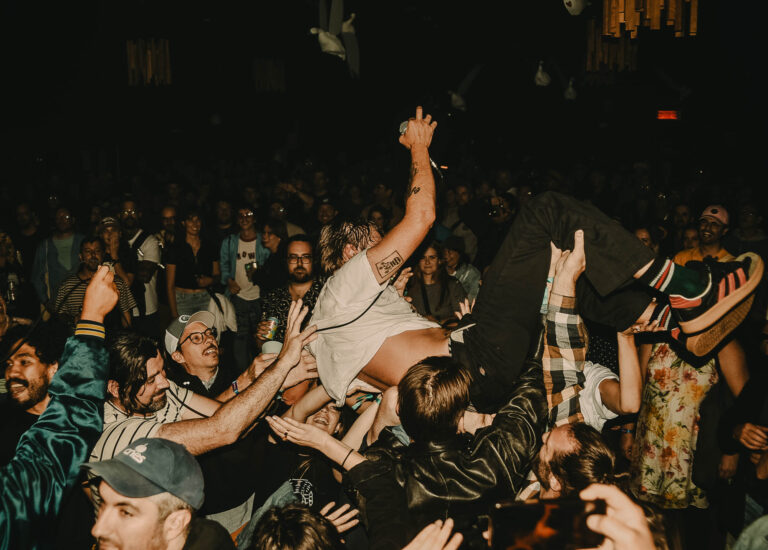
Do you ever notice that some punk bands are a little serious? Sometimes, it’s nice to get primal and release my tortured soul in a catharsis of violent music. But sometimes, what I really need is to watch six people having a lot of fun as they make some really loud noise. The word on my mind as I watched Television Overdose, or TVOD in Rouyn-Noranda’s Petit Theatre is ‘perceptive’. There’s a knowing wink behind every song, even as we’re blasted in the face by a minor orchestra’s worth of instrumentation. Frontman Tyler Wright offers us brilliant lyricism that’s delivered with satisfying diction, ensuring his words always cut through the often chaotic mix. I love watching a band that’s having fun, and TVOD delivered. At one point, Wright was surfing the crowd near the front, belting plosives and punctuation into the mic as the room carried him to his FME-themed Viking funeral. A little positive post-punk never hurts, especially when it’s this rowdy and easy to love. In the end, a quick hit of TVOD was just what I needed to get through the end of my first night at this year’s FME.
Accompanied by Dj Daz and DJ Kheops, the legendary French rap group took to the Fizz stage to perform Petit frère. Indeed, IAM was eagerly awaited last night by a mostly French audience, but not only.
All ages were represented, even some young fans who weren’t born when the band debuted in the late 80s. For the occasion, there were four of them on stage: Akhenaton, Shurik’n, Kephren and Saïd, the group’s backing singer. They followed up with another of their hits, Samouraï, which the audience knew by heart, before continuing with Ça vient de la rue, which clearly set the crowd on fire.
All dressed in black t-shirts and jeans, they address the crowd several times, especially Akhenaton and Shurik’n, to express their gratitude to the Montreal public. “It’s a pleasure to be here,” says Akhenaton, ”the welcome’s great, as it always is, always love. And it’s off to the classic Je danse le MIA, with the famous dance step that goes with it. A return to adolescence for me. We were treated to several other tracks from their most popular album, L’école du micro d’argent, including Nés sous la même étoile, and L’empire du côté obscur. For this track, they came on stage with red lightsabers, straight out of Stars Wars, against a backdrop of red light.
“Montreal, make a fucking mess for us!” shouted Akhenaton, before the track La saga. “Tonight’s not a very long night, so let loose on all the sounds,” he advised the crowd. Indeed, the concert lasted just over an hour and started right on time, not a minute late.
Another highlight of the evening was the song Bad Boys de Marseille, which has become an anthem for their hometown. Their first concert in Montreal was in 1994, so it’s been 30 years. They also took the time to mention some of the Montreal artists they’ve collaborated with in recent years, including Meryem Saci, former member of Nomadic Massive, and Malika Tirolien, whose career is in full bloom.
As the concert draws to a close, the four of them sit on a bench for the 9-minute track Demain, c’est loin, another classic. Shurik’n and Akhenaton take turns addressing the crowd, leaving the others on the bench. “We see that not much has changed since we wrote this song, but that doesn’t stop us from thinking about tomorrow, because… tomorrow is far away,” says Akhenaton by way of introduction.
After the traditional end-of-concert photo, they leave, shouting “Palestine libre! Free Palestine! ”. IAM’s activism remains intact, even after 30 years.
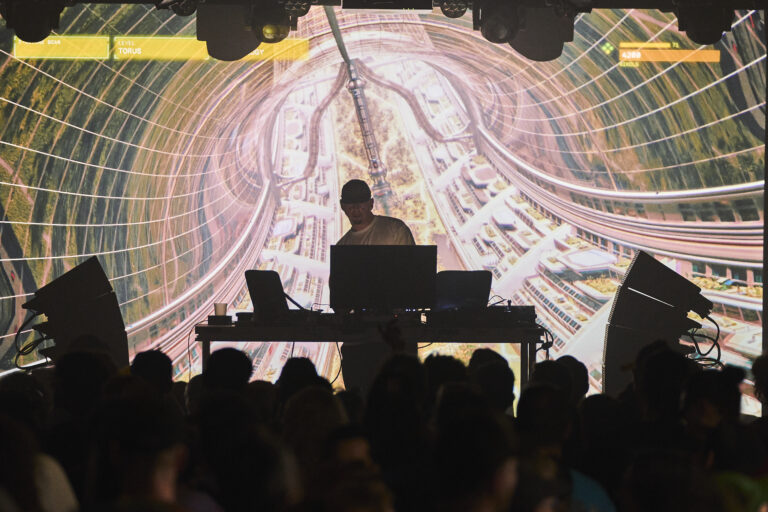
To attend a Kode9 concert in August 2024 is to continue the electro experience with a master creator and a master thinker.
Real name Steve Goodman, this Glasgow-born London artist has been creating forms and ideas for some thirty years. A Doctor of Philosophy, the Scot has published the essay Sonic Warfare: Sound, Affect, and the Ecology of fear. However, his artistic output is better known, since he founded the excellent Hyperdub label and, above all, was one of the first designers of the dubstep movement. This was just one phase in his artistic career, needless to say.
What we were treated to on Sunday night was a conceptual universe where electroacoustics, film music and electro-jazz come into play in the groove of dub, jungle, drum’n’bass and grime, fundamental experiences in the UK.
In a context where rhythm is not continuous from beginning to end, Kode9 has chosen instead to present a succession of audiovisual tableaux (Lawrence Lek, Optigram, Bianca Hic, Mark Garlick, Plus Minus Studio) through which he illustrates his new sound treatments, very often based on rhythmic exploration, much on the insertion of random sounds, much less on the more consensual melodic-harmonic constructions.
All this is highlighted in a variety of contexts: calm, dreamy, dynamic, tempestuous, meditative, paroxysmal. The succession of these episodes was also in phase with inspired projections, whether of pristine nature or an aerospace launch pad, or the praise of Escapology, a kind of art of escape that is also the theme of his most recent album (2022).
There was plenty to feed on in this abundant offering, that of a superior intelligence, capable of varying its proposition and softening it, as was the case with his very good DJ set given earlier on the quiet Esplanade.
It sometimes happens that established, recognized creators have little to say after their “peak hour” has passed. In many cases, this is true, and in others, it’s not. In the case of POLE, it’s not true. Here’s an artist who’s still fervent, who reached his peak of coolness at the turn of the 2000s, and who hasn’t stopped searching since.
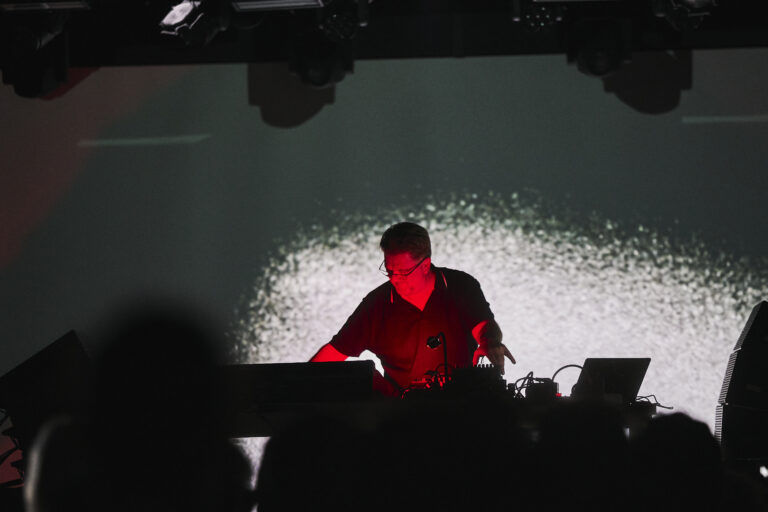
Invited to perform as part of Nocturne 6, the final program on the MUTEK Montréal 2024 menu, the German artist is one of the originators of glitch, a Germanic alternative to dub, an electro sub-genre then immersed in an electro-acoustic perspective and an inclination for minimalism in expression. As POLE points out in an interview, glitch was an important influence on the founding artists of dubstep, such as Scotland’s Kode 9, who took over from POLE at the SAT on Sunday night.
To make a long story short, there was nothing nostalgic about POLE’s program, recent material far outweighed old sounds, and there was no formal repetition. Low frequencies were deliberately exacerbated, to the point of generating vibrations on all the plexuses close to the stage. Technical problems broke the rhythm of the performance a little, but POLE took matters into their own hands and got their set off to a good start. Aside from the special use of infrabass, we also detected a number of small details in their sonic quest and a real expertise in rhythm and the synthetic percussion that generates it – notably those rather jazz-like cymbal effects.
In short? Fashions and generational tensions are the enemies of creation, and this is the counter-example. After pole position, there’s life, and it’s good to live it.