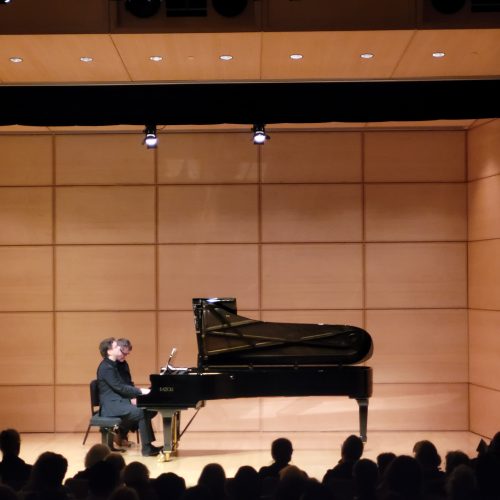
Sunday, June 14, 3:00 p.m., Studio-Théâtre des Grands Ballets, Wilder Building. Accompanied by a music-loving friend, I’m here to experience the opera L’hiver attend beaucoup de moi, with a libretto by Pascale Saint-Onge and music by Laurence Jobidon.
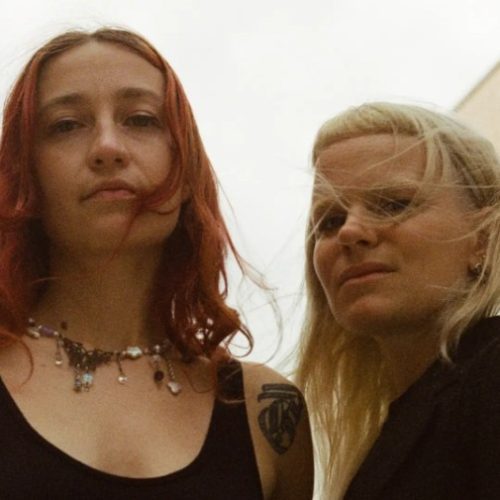
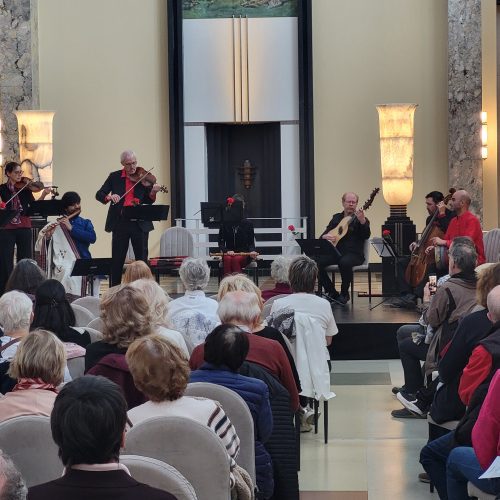
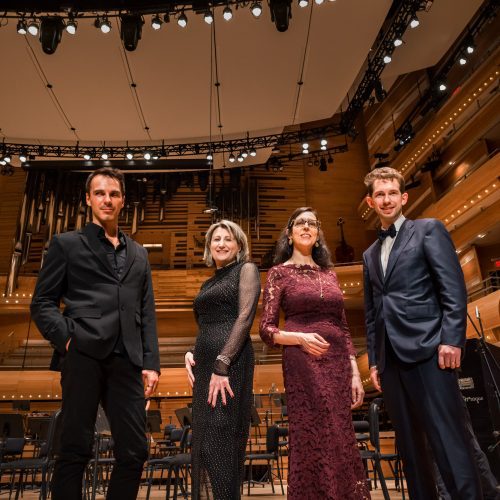
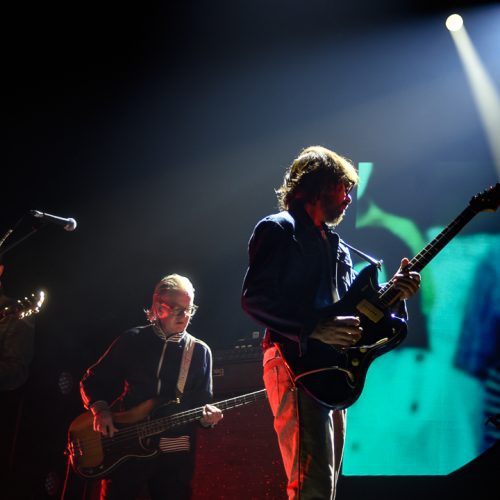
This is the first performance on a Quebec stage of this opera, which was created in 2018 at the initiative of Opéra Magnolia (then Opéra M3F) but postponed due to the pandemic. Originally a work for two soloists (here, Kristin Hoff, mezzo-soprano, and Marianne Lambert, soprano) with piano accompaniment, we now experience a reworked version accompanied by six musicians from the Paramirabo ensemble, conducted for the occasion by Mélanie Léonard.
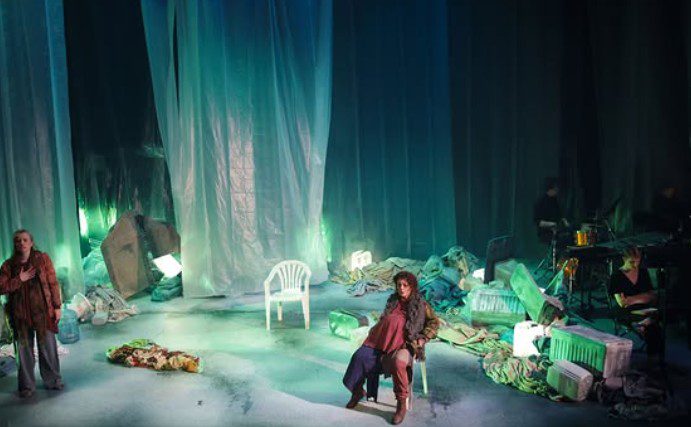
Right from the start, a striking vision: on stage, enormous swaths of sheer plastic hang from the ceiling, like shrouds framing a devastated setting—an abandoned backyard or an illegal dump. “Wow,” my friend exclaims. As we take our seats, the speakers play wind-like sounds. We find ourselves, in a way, in another world.
Before the opera, an opening piece: Rien n’est dit – tout est engagé, a composition for six instruments by Laurence Jobidon, commissioned by Paramirabo and presented as a world premiere.
This first piece begins. It’s a little gem. It opens with a sinuous rhythmic motif, as if following the undulating course of a frozen river, evoking the atmosphere of a snow-covered forest. The passages that follow, each like a separate scene, are captivating: at times calm and soothing, but also unsettling and tense. We’re navigating whitewater. While playing with leitmotifs, the music never falls into monotony; there are all sorts of embellishments and small, impromptu sonic touches, even as the piece carries us into unexpected territories, toward the edge of the woods.
I confess I have a soft spot for the use of percussion here—always judicious yet playful—such as that unexpected but welcome quasi-military march in the second half of the piece. Excellent.
With the winter atmosphere now established, here comes the centerpiece: Winter Expects a Lot from Me. And the music settles in, intriguing and deconstructed: not a continuous stream of notes, but like uncertain footsteps on frozen ground. A shadow appears, cast onto the large plastic panels hiding the backstage area from us. It is Léa (Marianne Lambert) who, in her desperate flight, enters the stage preceded by her shadow. She is soon joined by Madeleine (Kristin Hoff), her guide, heralded by the flashlight she holds aloft. Shadow and light. We are now in the heart of winter, in a forest haunted by shadows, the whispers of the past, and violence.
In the distance, perhaps, a refuge, a warm house that might offer them shelter.
This piece explores violence against women. It is not a cheerful theme, and the aim is to make us feel the emotions of these two haunted women. The piece that unfolds before us is thus built on a interplay of dissonances and convergences, chaos and melodies. This plays out as much in the relationship between the orchestra and the soloists as it does between the soloists themselves.
Particularly striking are certain passages sung in unison, yet where a single word diverges—or sometimes the entire phrase. This is an excellent way to highlight both their similarities and differences. As the true driving force of the work, the orchestration plays a similar role. At times, the ensemble seems to fall apart, with each instrument veering off into its own syncopated part, accompanying the heroines’ wanderings and echoing them in canon.
At other moments, however, the music becomes resolute, united in a single energetic motif that serves as a counterpoint to the singing, drawing us into the twists and turns of the story and propelling Léa and Madeleine toward the next turning point, despite the despair that resonates in their singing.
A word about the script and the staging: The set is striking—I would even go so far as to say magnificent—and the stage design is very effective. From the very first moments, it draws us in and perfectly conveys the despondency and destitution of the two women struggling before our eyes, while highlighting various key moments through a sparing use of lighting effects.
The imagery in the script is powerful: those whispers in the woods, those ghostly murmurs suggesting visions from beyond the grave; that burning yet redemptive house, so dearly hoped for; and that orchard that stands as a symbol of paradise. Yet this symbolism sometimes seems to undermine the production, introducing a certain lack of clarity into the overall structure.
It’s unclear whether the protagonists have remained frozen in stupor in the initial clearing, or whether they are, despite everything, stumbling along a forest path. This uncertainty is reinforced by the staging, which—aiming to evoke a sense of wandering—leads the two performers to often remain motionless, sitting, prostrate, lying on the ground, wrapped in debris.
This certainly creates a striking visual world, but one that reinforces that sense of stagnation, which can be frustrating. In fact, a certain monotony sets in during the last quarter of the film. We are thus left with an open ending, which remains unsettling but does not fully satisfy me, as we are left wondering whether we have actually arrived anywhere, and what has become of that famous refuge—that burning house that seems to have simply vanished.