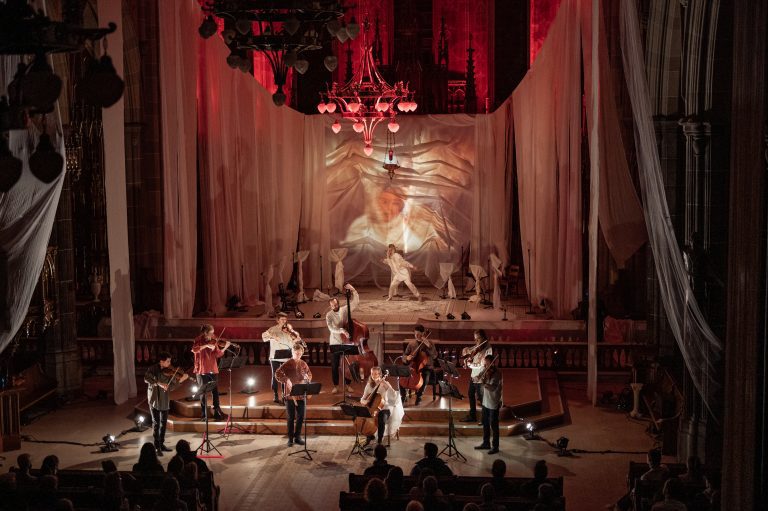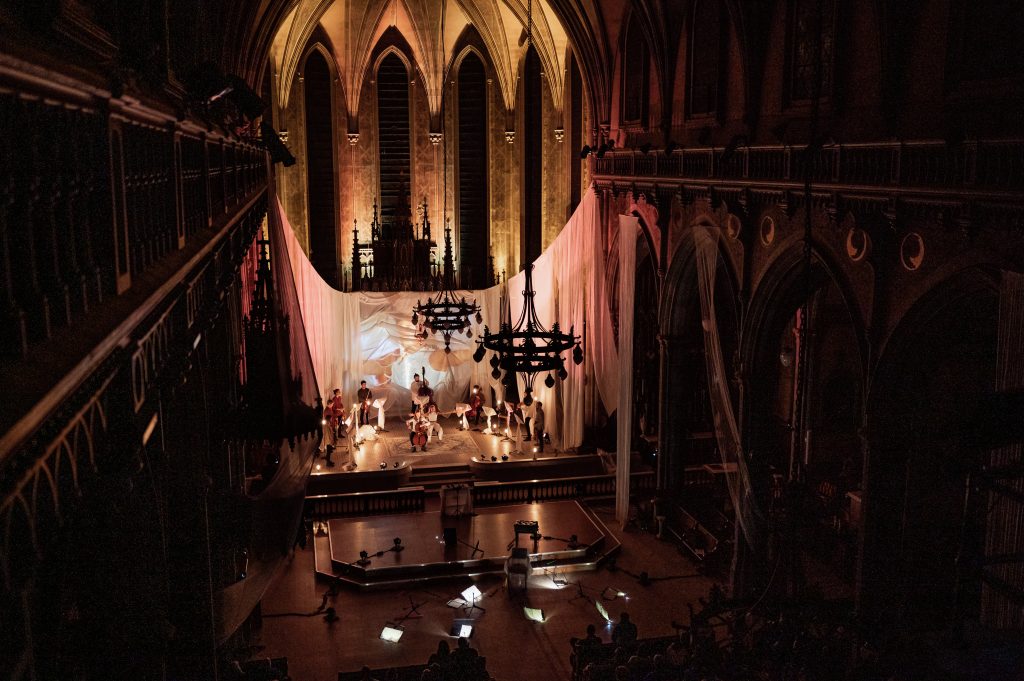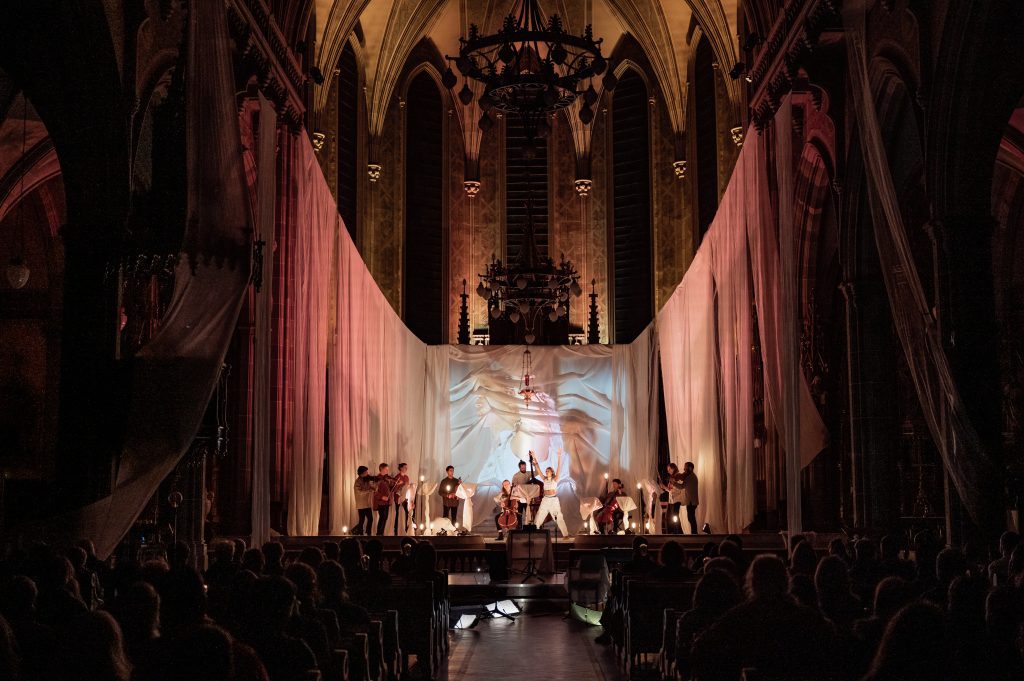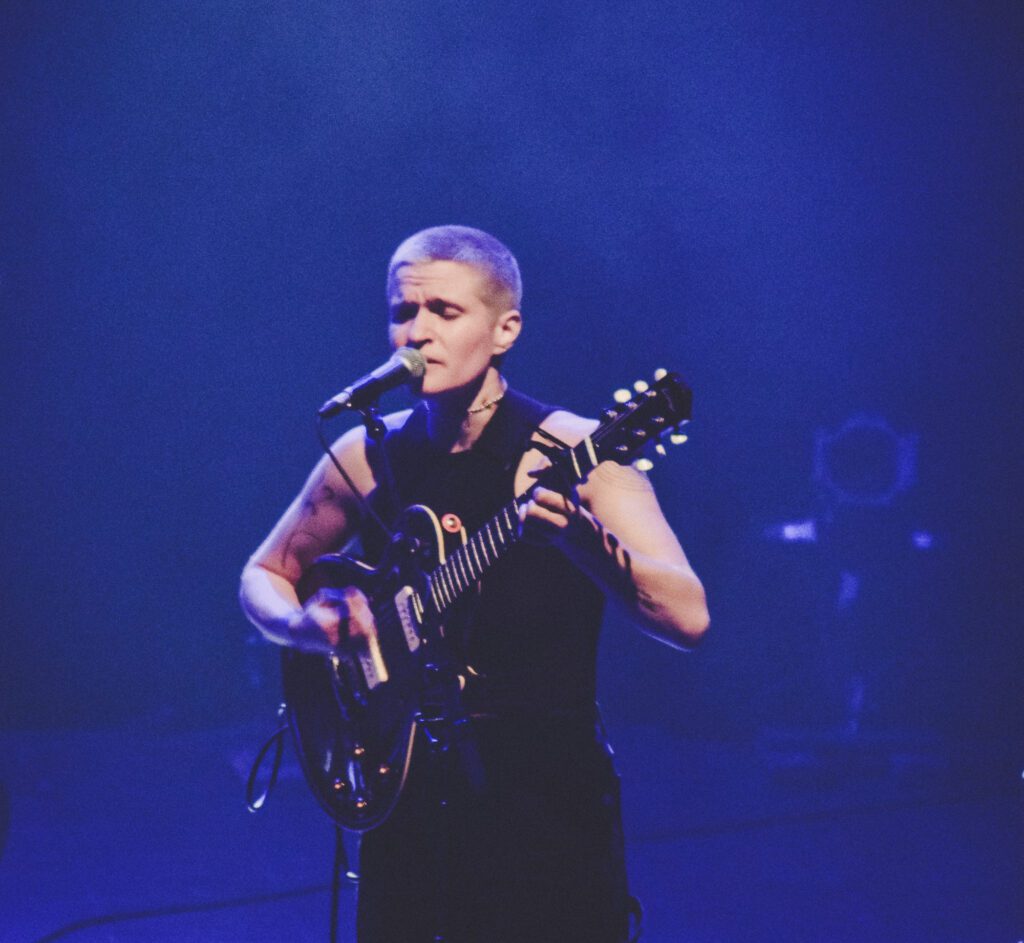
Rituaels by Collectif9 started with a high quality video project in 2019. The mystical concert/staging/music-visual experience including music by Hildegard of Bingen, Arvo Pärt, Nicole Lizée, Bryce Dessner, Jocelyn Morlock and Michael Tippett was to be presented to the public afterwards. However, a certain pandemic shifted the world’s priorities and the whole thing ended up on a shelf. Here we are in the world after, where the possibilities of the world before seem to be within reach again. That’s exactly what happened on Saturday, November 19 at Montreal’s St. Pierre Apôtre Church, where the Montreal string band was finally able to present the concept dreamed up by the band’s leader, bassist Thibault Bertin-Maghit, to a real audience. I’m happy to say that the real world was there, in numbers, and that what seemed enchanting on video was even more so on stage.
The staging was simple but tinged with mystique, with white veils covering part of the front of the church. The nine string players began this reinvented holy mass by slowly walking in from the sides of the altar, then moved to the middle of the aisle, before approaching the altar again, and finally finishing the symbolic/spiritual journey at the very back, just below the Cross. Lamps oozing a calm, intimate, and warm luminosity created a subtle atmosphere conducive to meditation. The choreographer and dancer Stacey Désilier, dressed all in white, acted as an allegorical guide to the emotional transformations through which Rituaels invited us to journey.
Of course, the final credit for the success of this classical 2.0 concert goes to the music. The programming was cleverly designed to take the listener through a dramatic arc that crescendos to a central ecstatic climax, followed by a soothing final decrescendo, but not without its doubts and uncertainty.
A feast for the ears, the eyes and the mind that we hope you will soon be able to enjoy, wherever you are in Quebec, Canada and the world.
Rituaels de Collectif9 – Photo : Tam PhotographyRituaels de Collectif9 – Photo : Tam Photography
Ifriqiyya Electrique or the kind of possession I can get behind
by Stephan Boissonneault
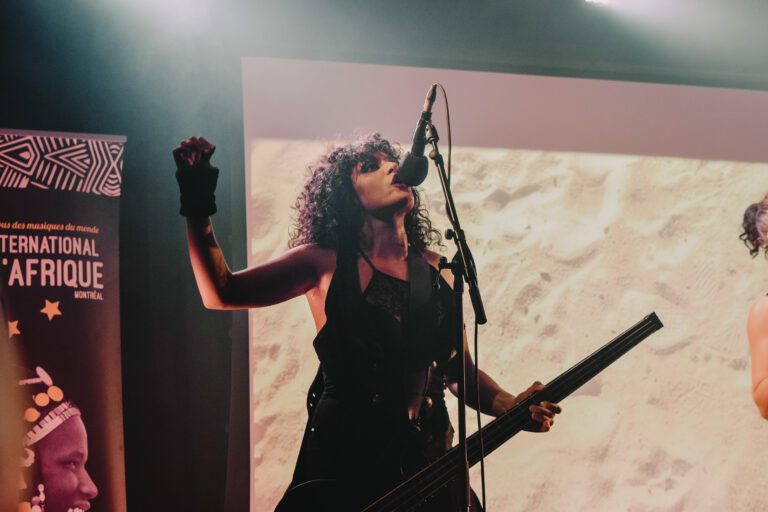
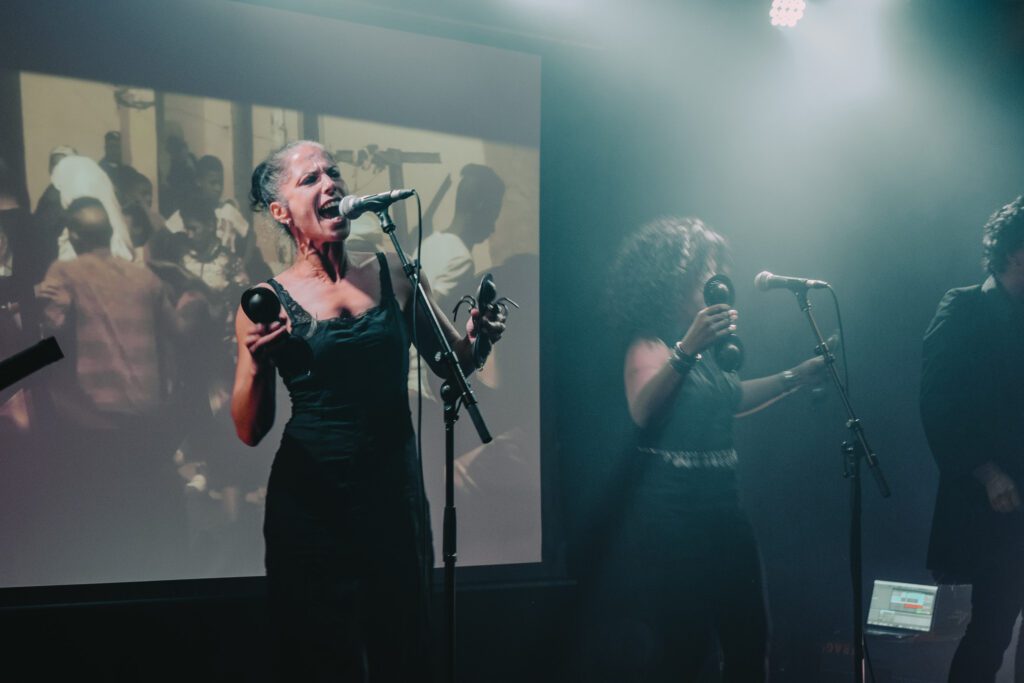
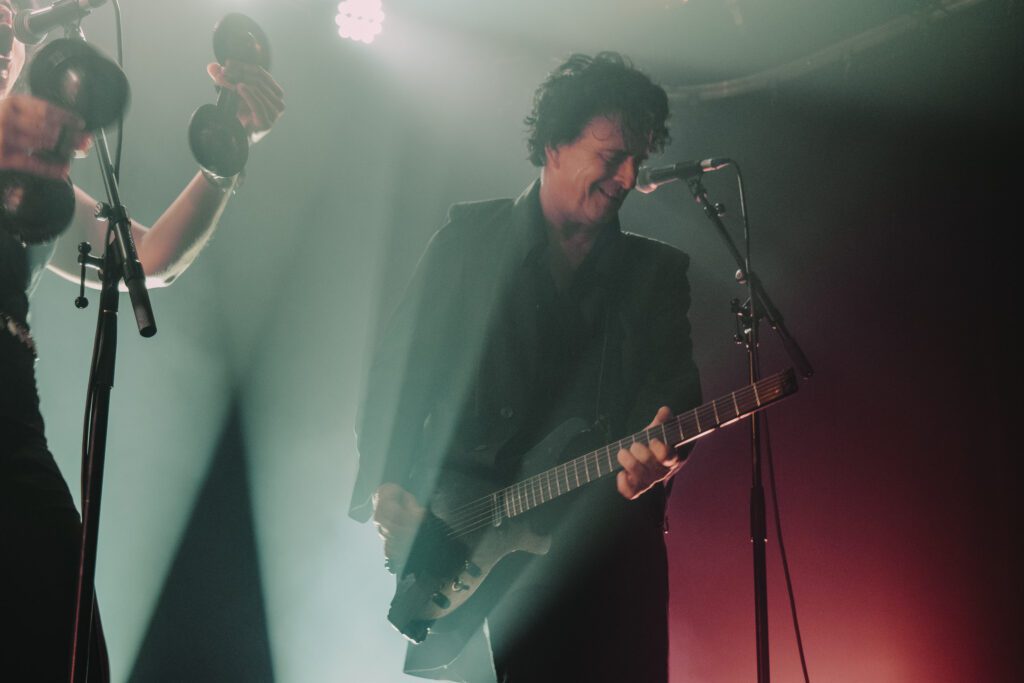
There are four figures losing their minds on the Le Ministere stage—all dressed in a black modern goth kind of look—jamming to a heavy and gargantuan trance. A woman playing hand percussion chimes lets out a scream as if she’s calling down the heavens themselves, as another woman, rocking a Bellatrix Lestrange corset and haircut slaps her bass in complex arpeggios while rolling her eyes in the back of her head. The guitar player is drenched in sweat as he lays down some Middle-Eastern-sounding scales while the other hand percussion player jumps and hops over the stage. There are drums of course, pre-recorded, but still thunderous. This goes on for what seems like 10 to 15 minutes and the repetitive call and response vocals mixed with the heavy droning music are omnipotent.
This is Ifriqiyya Electrique, an experimental four-piece from Morocco who uses the ritualistic Banga—a therapeutic practice that the Black communities in South Tunisia used to invoke friendly spirits—and combines it with noise and dark industrial for an insular experience. It’s a bit like being at a metal or NIN show in the middle of the Saharan desert. Each song quickly blends into the next as each member of Ifriqiyya Electrique goes through their own form of sonic possession. Without any context, it could be considered a terrifying sight to behold, as it looks at times like a live exorcism. But it’s not. It’s an adorcism, a type of possession that is wanted by the human practitioner for satisfaction by trance.
I can’t understand the words, but these chants sound like they come from a place of pain and torment, cathartic releases for each singer to fire off into a cruel world. Each performer is easily a pro, and I later learn that the guitar player, Francois Cambuzat, and the bassist, Gianna Greco, frequently collaborate with the New York queen of post-punk, Lydia Lunch. At one point, Cambuzat lifts up his mic stand and begins playing and singing within the crowd. He moves around like a specter, sweating buckets, invoking the crowd to join in. It just might have been too much for a Thursday night crowd, but Cambuzat kept the intensity all the same.
Ifriqiyya Electrique is a project you could go on your whole life without knowing about, but I can promise you, their live show is like nothing you’ve ever experienced.
The first night of Nuits d’Afrique goes off with a bang
by Stephan Boissonneault
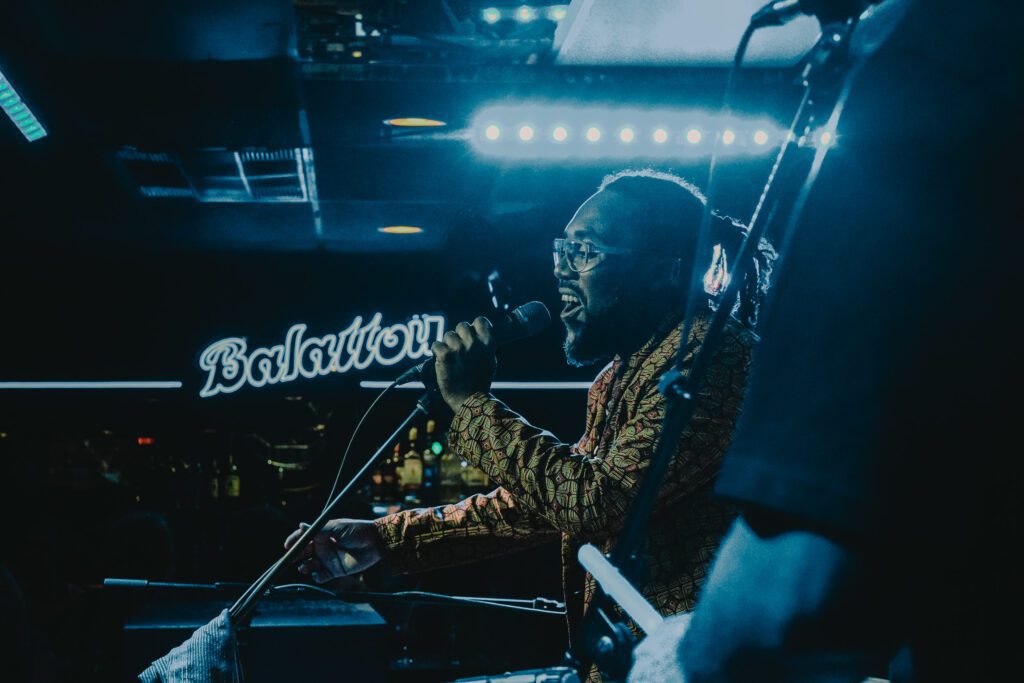
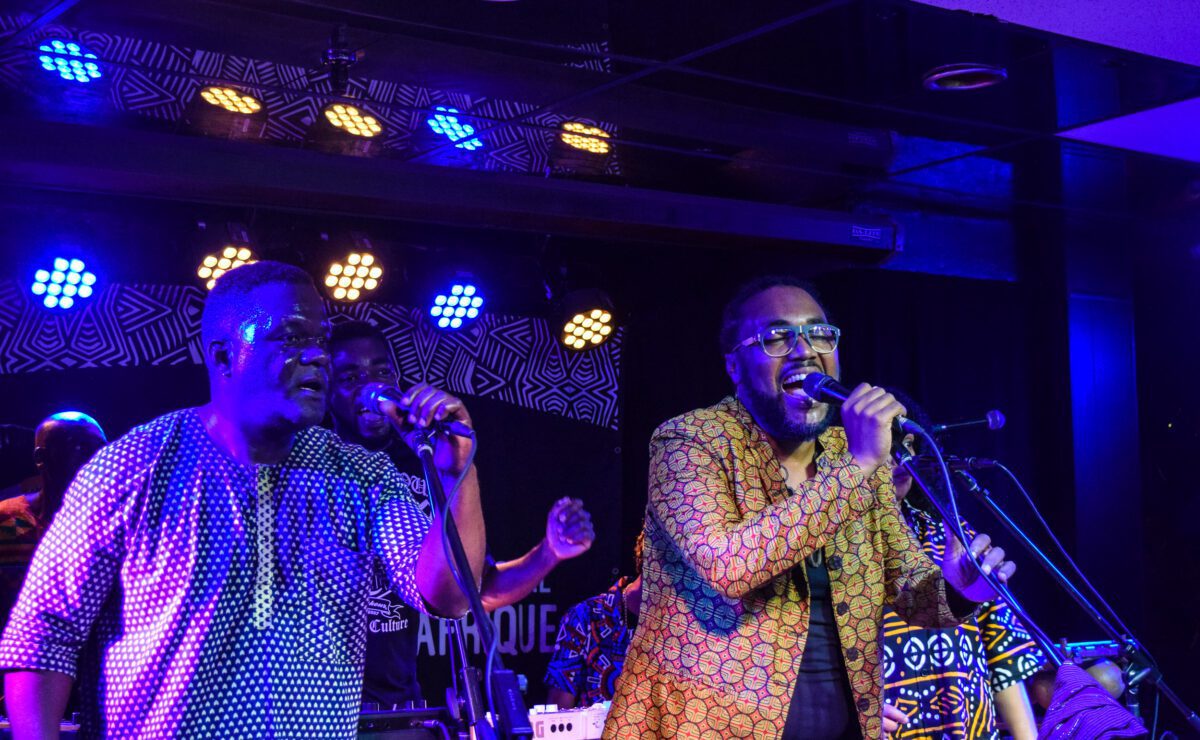
I arrive at Nuit D’Afrique’s first night, at 8:40 p.m. in Club Balattou and Lindigo, an eight-piece Maloya percussion group from Reunion Island, is already leading the club into a sweaty dance-filled frenzy. Fronted by the charismatic Olivier Arasta, in his golden geometric jacket, Lindigo has the crowd on their feet, jumping, spinning, and singing along to Creole vocal calls.
You wouldn’t guess it’s a Tuesday night based on how packed the venue is, but Lindigo clearly has fans here and even if they don’t they do now. It’s definitely a spectacle with the blending of conga drums and the West African kamelengoni and balafon (the West-African xylophone).
“Are you ready to go to Madagascar?” shouts Olivier. The crowd loses their collective minds and cheers.
I feel bad for the servers having to weave through the crowd, as everyone tries out their complex dance moves, attempting to match the beat of the drums. Although, the servers have grins on their faces as well.
Lindigo at Club Balattou
Lindigo
This Maloya music genre originated with the slaves brought to work on the sugar plantations and eventually became a weapon of cultural resistance that was banned until the 1980s. Lindigo has made it its mission to preserve the sounds and spread them from generation to generation.
Down the street from Club Balattou, another man in an equally gold and geometric jacket is taking the stage at Le Ministère. He is announcing the opener with anticipation, a local Quebec DJ who goes by Oonga. The crowd is ready and soon a wave of funky and heavy drum and bass covers the venue. It’s loud and sweaty once again and some of the older crowd has no idea to react.
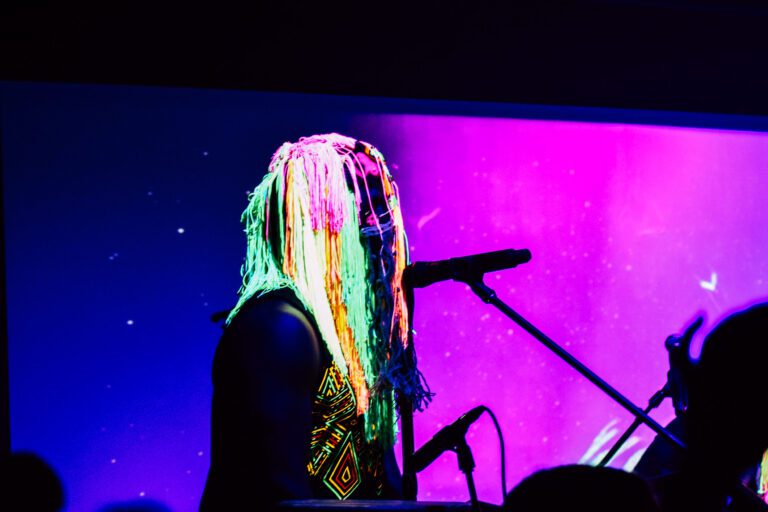
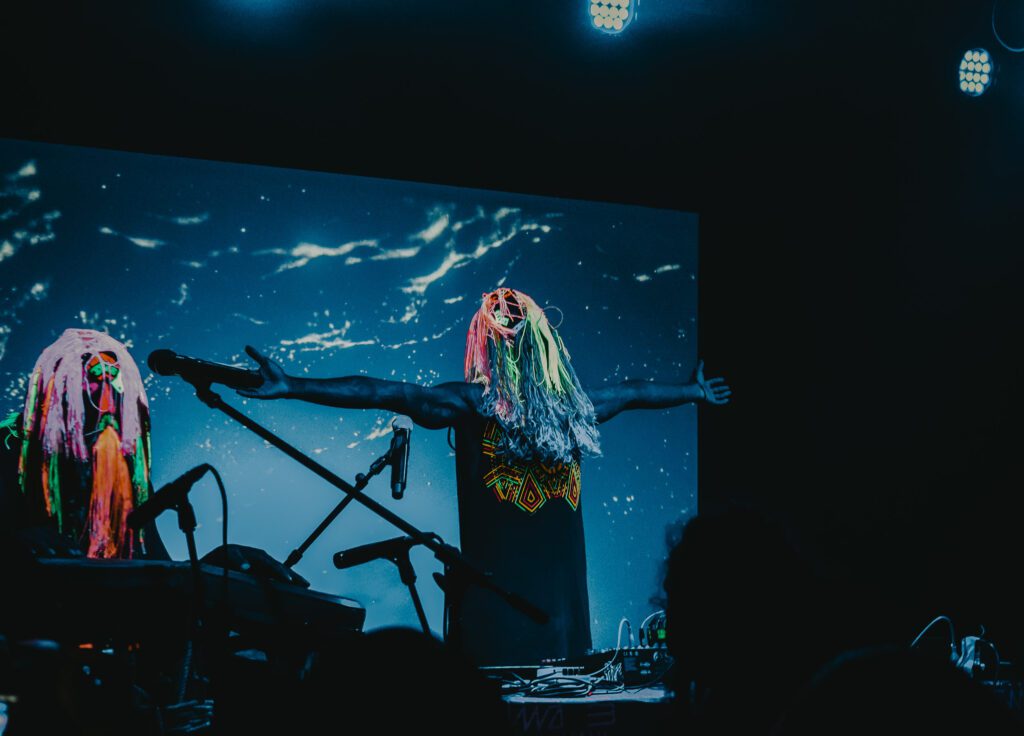
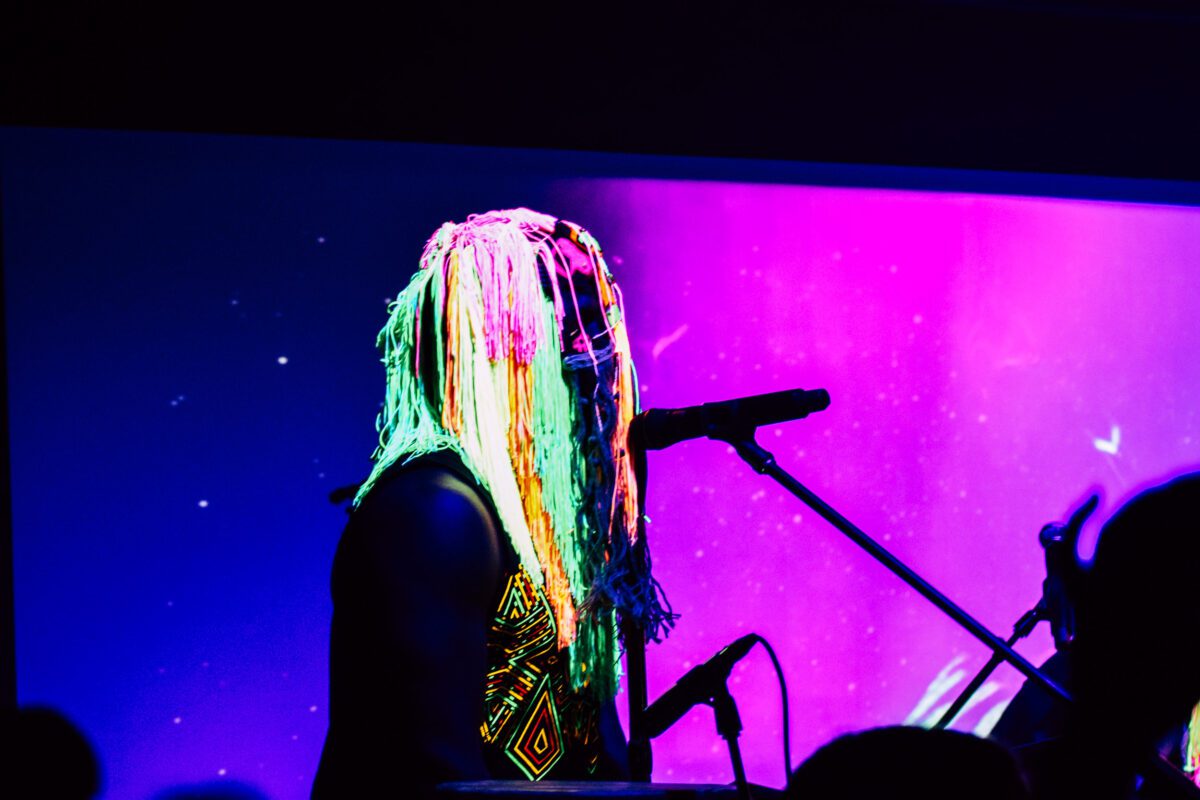
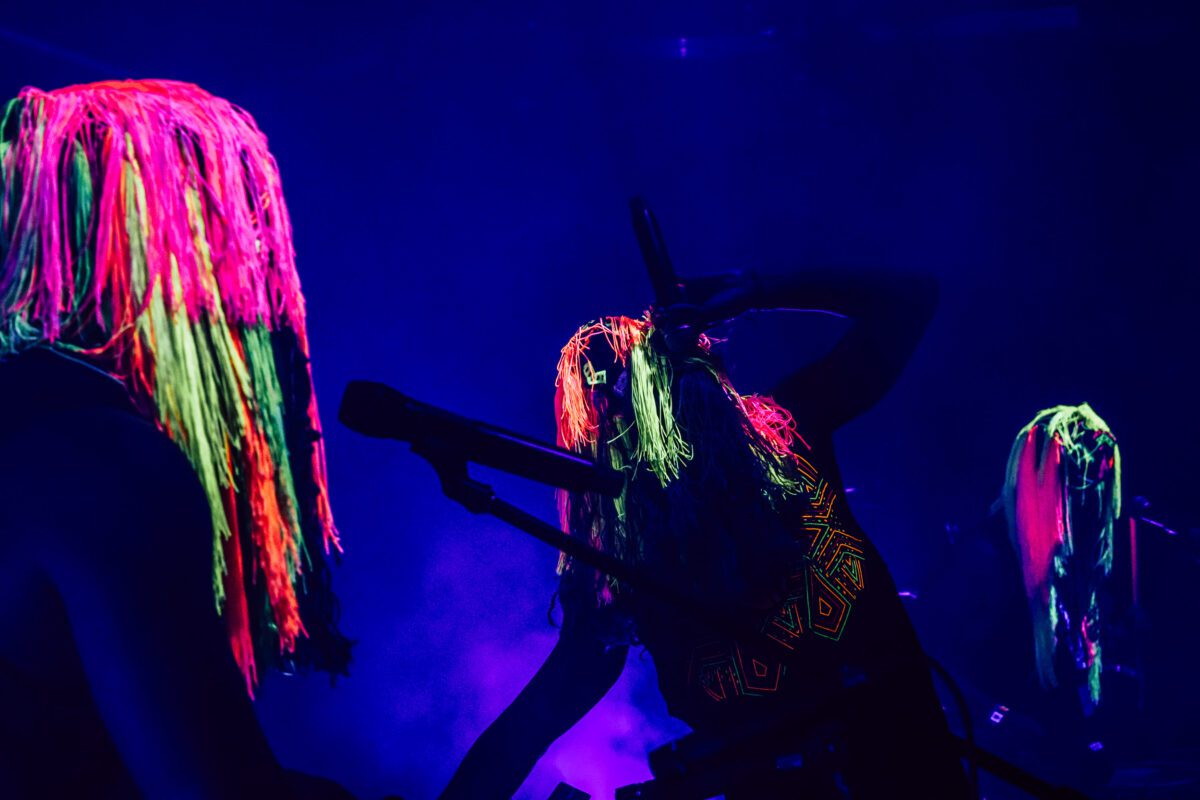
Oonga plays for 30-40mins until the headliner of the night, a three-piece from Bogota, Colombia, who goes by Ghetto Kumbé, takes the stage. The stage is darkened, only lit up by Ghetto Kumbé’s glow-in-the-dark masks that are connected to phosphorescent dreads. It reminds me of laser tag, but led by ritual monsters ready to ensnare the minds of their followers—and ensnare they do. There are two drummers, laying down some Afro-Colombian rhythms backed up by another creature laying down some gargantuan Colombian house music.
Ghetto Kumbé
If you’ve ever been to a South American discotheque, think of that, but crank it up to 11. The whole room is shaking and a man races to catch his glass of beer as it buzzes off a table. Ghetto Kumbé also raps, quite well, as the two MCs play double duty on the drums and mic. My broken Spanish hears a call for revolution from the corrupt governments of the world, something we all can agree on. It’s Afro-Colombian futurism. Not bad for a Tuesday night.
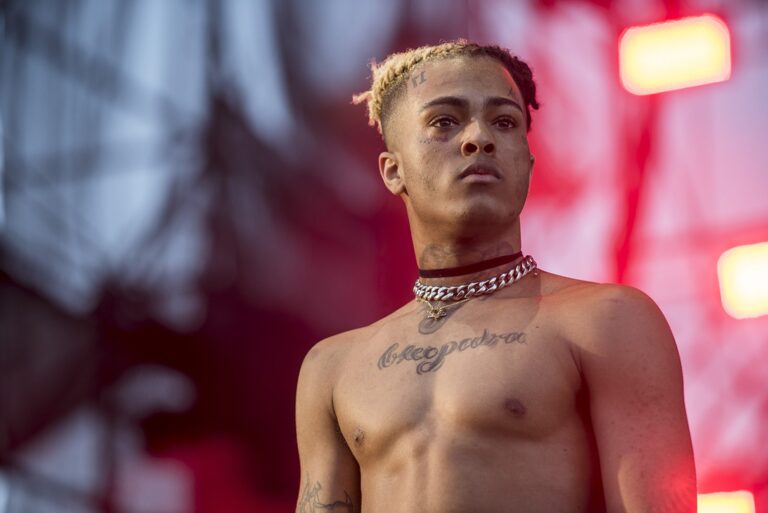
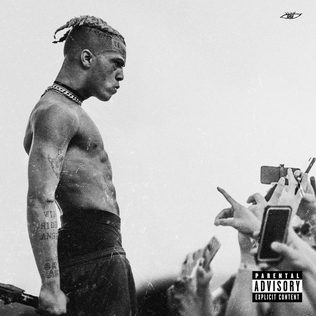
On June 18, 2018, 20-year-old Jahseh Onfroy, better known as XXXTentacion, was tragically murdered in cold blood. Four years later, almost to the day, his fans and constituents were graced with his post-humous “best of” album Look at Me: The Album. Around the same time, a corresponding documentary would be released chronicling and exploring who Jahseh and XXX really were. I frame my previous statement like that because after listening to and watching both the album and the documentary, you come to realize very quickly that those are two completely different people. For the sake of this column/review, I will refer to him as XXX. With that being said, this piece is less of a standard album review, as it only features two new previously unheard songs, but rather an endeavour of apprehension.
Candid with his fans, yet mysteriously enigmatic all at the same time, XXX was able to connect with people on a very deep and personal level. In his personal life, however, he felt disconnected from his family and the people around him. Born of a 17-year-old mother, his father was slightly abusive and also in and out of jail. After his mom got them away from his dad, XXX claims she had dated abusive men whom he had gotten into physical altercations with as a child. Struggling with anger and paranoia at a very young age, his mother expressed how he was a very privileged child. Her words were “extremely spoiled”, followed by a myriad of photographs of XXX growing up with nice clothes in a nice house; the latest technology and fashion, he had it. After acting out in school too many times, his mother proposed he move in with his grandmother and as long as he stayed out of trouble, she would pay for him to go to the studio and record music. XXX would relocate only to get into further trouble.
Tormenting his grandmother and documenting it, traveling to the hood and getting into fights, caught with guns, and being involved in home invasions and armed robberies. All of these things landed XXX in a juvenile detention centre where he met Ski Mask the Slump God where they connected over their love of music. I speak on these things as it’s important to understand the seeming separation of reality from realism for XXX. He had every advantage in the world and for some reason still felt unloved, unwanted, and angry, highlighting the struggles that people with mental health issues deal with. Feeling uncomfortable in his own skin, maybe he was chasing street cred to validate the character he was portraying to the public? Perhaps it was simply the void of not having a father in the home as a youth? Either way, this is where Jahseh Onfroy officially took a backseat to XXXTentacion.
Struggling with paranoia, hating himself, and constantly changing his appearance, XXX would choose to stop going to school and begin living on the streets. He formed a group called Members Only and capitalized on the SoundCloud era of rap music. Taking over his local scene with insane stage performances and presence, XXX developed a special connection with his fans, unlike anything seen before. He did assault some fans for clicks and clout, but he did love them and recognized he was tapping into something. He felt as though his validation came from people he didn’t even know. Understanding how to make an impact, XXX consciously started fights and did crazy WorldStar-type stuff on camera knowing kids would click on it. He literally had a miniature bot farm going on with his crew. He would release a song and his people would all be logged into five Twitter accounts each, interacting with each other and anyone else who commented to mess with the algorithms and help their videos go viral. I don’t know if you’ve been on social media lately, but this marketing strategy was truly genius and ahead of its time.
Look At Me: The Album
As previously stated, XXX was constantly changing appearance and his musical stylings and sounds were no different. Fitting into almost no genre whatsoever, packaged as Emo Rap, XXX began to focus on almost purely emotional, singing music. Serendipitously, around the same time, he met a young woman by the name of Geneva, who he had thought was his soulmate. XXX believed he had to be living and experiencing the things he was talking about in his music, whether good or bad. His obsession with Geneva became horribly toxic and abusive as she also battled with her own mental health issues and isolation. Although she was recognized as his first real love, he was incredibly jealous and controlling of her, as claimed by people close to the young couple. He had numerous allegations made against him, that I won’t get into tremendous detail about, including physical and life-threatening violence, words and actions towards Geneva. It should be noted that nobody close to XXX at the time condoned or defended his actions and the documentary did a great job of offering help lines and options in the subtitles to anyone suffering from abuse or mental health issues.
As XXXTentacion’s popularity was hitting its peak, internally he was suffering the worst he ever had. He began hearing voices in his head that would tell him he was going to pay and die for the things he had done in his life. He had to constantly live a facade. With XXX being put in jail for his alleged abuse and imprisonment of Geneva coinciding with accusations circulating online of Drake stealing his flow, XXX became more relevant and popular than he ever had been.
Separating himself between Jahseh Onfroy and XXXTentacion, he began to realize his influence in the world had mostly been a negative one. He recognized he had to change that and leave a positive imprint. He started by contacting Geneva, apologizing, and rectifying any harm done. Though criticized for never being honest to the public or fully acknowledging his accusations, Geneva had accepted his efforts and it should be noted that his freedom was on the line. Any form of admittance could have landed him back in jail and with the new trajectory of his life, it would seem he was waiting for the right time and outlet to own it all. Instead of acting out with violence and aggression towards others, he joined a gym and started training, learning, and implementing breathing techniques in his everyday life.
Nothing would exemplify the changes he had been making more than the music video for his song “SAD!” In the video, with XXX shedding his old hairstyle for his new, positive, “indigo baby” look, representing his identification of true-self; he battles with and kills his former, blonde-haired, negative self.
“There was a point where I wanted to be the villain and it’s not fun bro, it’s not fun…” XXX would say, “It doesn’t attract anything that you truly want.”
Unfortunately, not long after these breakthroughs and way too early for any life, XXXTentacion was murdered after leaving a motorcycle shop. Posthumously, XXX had a son, inspired millions and helped usher in an entirely new wave of music. He was truly lucky to be surrounded by people who identified his creativity and passion so early, who went far out of their way to help facilitate and accentuate him. The only thing holding him back was himself and his mental health, separating Jahseh from XXX.
“Jahseh was weak and nobody cared about him until he took on the persona of XXX.”
Was he just performing as a character? Or was this mental illness manifesting itself in front of the public? Is that not what all artists are at the end of the day? His story is that of separating art from reality. “…My situation, they should pay attention to who I am as a person rather than a character, but it is hard to mend these two things together if everything that I portray as an artist is purely art.”
Look at Me: The Album perfectly encapsulates precisely who XXXTentacion was. A structureless compilation of genre-less music that had the ability to touch any and everyone. Perhaps this was the journey intended for him. It’s almost as though he was tested and was put here to be the embodiment of a stigmatized “bad person with mental instability” who would then show the world that it is possible for anyone to change. To show the world that if you’re born with everything or nothing, we all struggle with our mind and self-discovery and that it is possible to come up from under that personal pressure. He knew he would not live past 21, as if sent on a mission, which in my opinion, he accomplished with the mark he has left on this generation and music as a whole.
Distorsion is back with another concert series in July
by Stephan Boissonneault
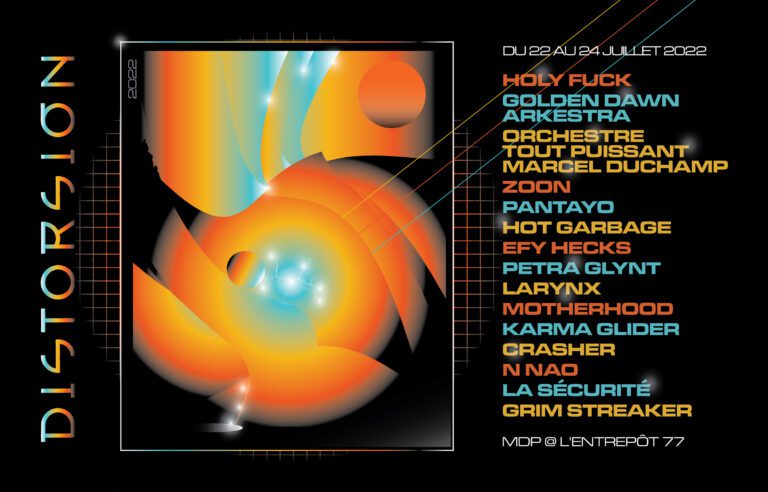
Montreal’s favourite psych-rock festival, Distorsion, put together by our favourite experimental music label, Mothland, is returning—this time from July 22-24 at Entrepôt 77, a mythical Montreal landmark located in Plateau Mont-Royal. This news comes only weeks after the Distorsion Théâtre Plaza Takeover, which featured bands like The KVB, Celebrity Death Slot Machine, Paul Jacobs, Meggie Lennon, and more. This time, we will witness bands like Toronto’s electronic freaks, Holy Fuck, Texan cosmic avant-garde rockers, Golden Dawn Arkestra, New Brunswick’s experimental art punks, Motherhood, and a slew of other talents.
We’re most excited for the newer Mothland bands, La Sécurité and Grim Streaker, but also the unsigned synth-punks, Crasher. The full lineup will be out June 3 and we are envisioning more lineup surprises.
Kodak Black does not deserve to be part of Kendrick Lamar’s redemption arc
by Stephan Boissonneault
In fact, he deserves retribution.
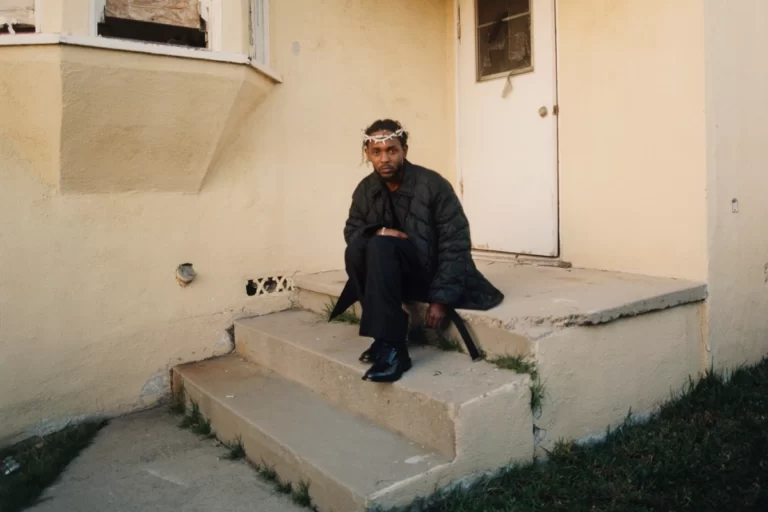
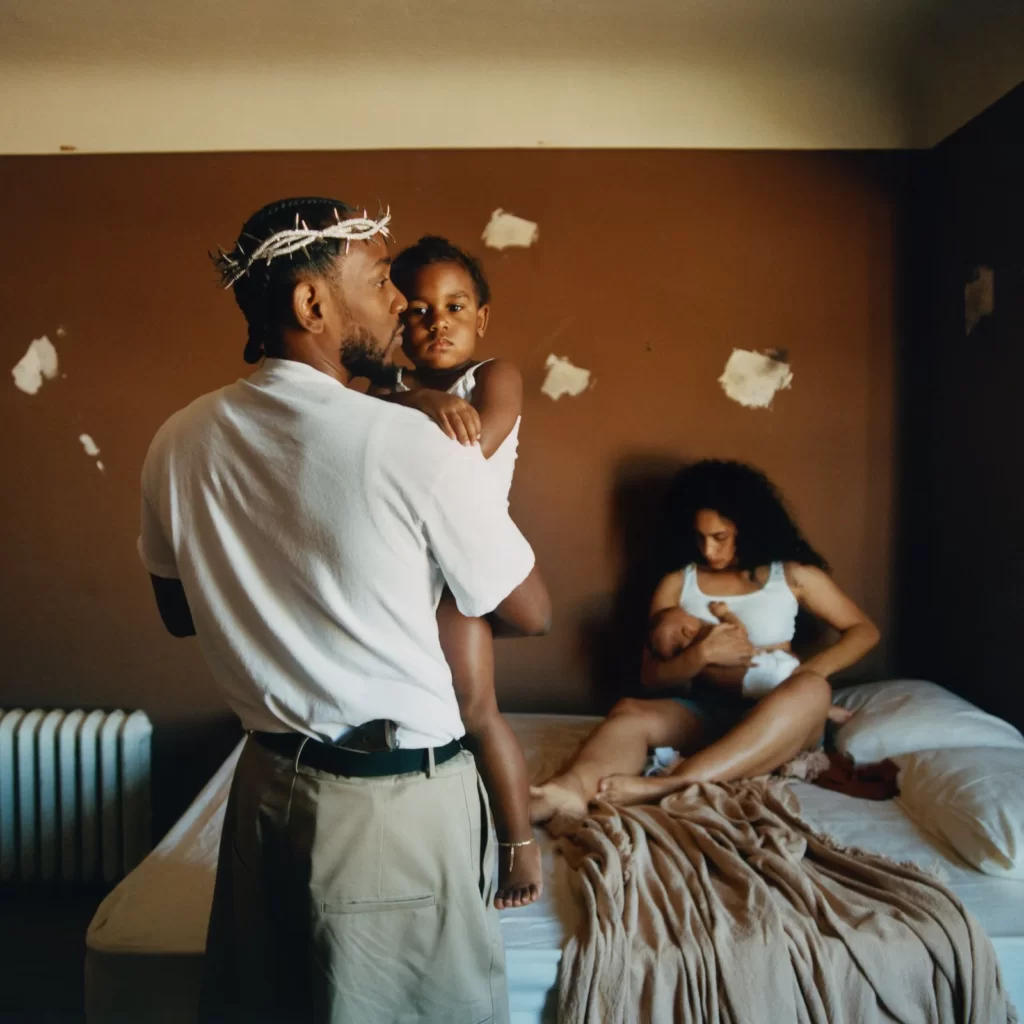
Kendrick Lamar’s fifth studio album, Mr. Morale & the Big Steppers, dropped a few days ago and it is already reaching critical acclaim. Multiple reviews have systematically been making the rounds, talking about how this is Kendrick’s opus, his most vulnerable and personal piece of music to date. And this is all true, but one aspect I can’t seem to get over is the inclusion and outright collaboration with Kodak Black, another rapper whose real name was Dieuson Octave until he legally changed it to Bill Kapri, to shade himself from his long record of multiple criminal charges.
Kodak Black has always been a controversial guy in the rap and pop culture scene (he’s been arrested and almost arrested multiple times for weapons charges, drug use, and most recently, trespassing)—you know, gangster stuff. It’s part of his image and the whole point of him having social media; to gain the gangster clout and respond to his fans with grammatically incorrect sentences.
But in 2016, Kapri was facing criminal charges for sexually assaulting a high school girl. He eventually admitted to the charge in 2021 and took a plea deal of first-degree assault and was given 18-months probation and a fine of $125—according to XXL Mag. He was also pardoned by former President Donald Trump. Which makes sense the more I think about it. I guess alleged abusers would pardon other abusers. No payment was made to Kapri’s victim, which again, he admitted to assaulting and to make matters even uglier, has since bragged about not having to pay her a cent.
So that’s Kodak Black—a real class act—who has now been featured on an album by one of the world’s most inspiring and influential individuals of the 21st century—Pulitzer Prize-winner Kendrick Lamar. And that’s a real problem, one that I feel completely downplays and cheapens the vulnerable places Kendrick goes to in his 18-song album.
As I listened to Mr. Morale & the Big Steppers for the first time I realized it was going to be an album that took me to some very dark places, places that break and slowly rebuild one’s psyche in real-time. The album is about many themes—relationships, fatherhood, past demons—but one that stands out near the second half is reconciling with sexual assault and trauma, brought up in songs like “Auntie Diaries,” “Mother I Sober,” and “Mr. Morale.” Now I don’t know Kendrick and I don’t know how he thinks as a Black man in America who has gone through some of the most tumultuous times in modern history, but I do know that if I made an album that goes through the steps of confronting the abuse of myself, my mother, aunt, and friends, I would not want to feature a man who has next to no remorse for committing these acts.
The utilization of Kodak Black on Mr. Morale& the Big Steppers could have been about accountability and a real change of growth moving towards redemption, but instead, he is a narrator who gets a few useless bars in the song “Silent Hill.”
In the song “Mother I Sober,” a real heart-stopper that has Kendrick bearing parts of his soul psychoanalyzing himself and conveying how he knows he’s a flawed individual and he can’t just blame it on being sexually abused when he was a child, one line always strikes a chord: “I know the secrets, every other rapper sexually abused / I see ’em daily buryin’ they pain in chains and tattoos.”
This line is powerful for many reasons. On a macro level, rap is all about image and clout, and on a micro level, it’s about reliving painful memories and mistakes through poetry. We can think of rappers as people with flaws, but they’re always strong, rich, successful, and larger than life. Kendrick is larger than life, but his whole point for me is to be exposed in the public eye. He’s not afraid to rap about the real pain in his real life and the real pain he sees in his surroundings. He doesn’t hide behind flowery metaphors or vague phrases. He’s 100% genuine and that line is about himself and other rappers who can be reduced to shreds of themselves because of sexual trauma. Much like the sexual trauma Kodak Black caused. So why allow a person who is at the very root of the issue to be celebrated on your album? People who make the choice to sexually assault others should not be celebrated. This isn’t to say they’re beyond redemption, but if they convey that they have no remorse … what’s the point?
Mr. Morale & the Big Steppers
I tried to not read other opinions on this issue before writing this because I didn’t want it to be influenced (which happens with writers all the time), but I did come across an excellent piece in Complex by poet and activist Kevin Powell that completely dissects Mr. Morale and why it’s one of the most important albums for Black history in recent memory.
Powell calls the album a masterpiece, but even he is at a loss for words on Kodak’s featuring saying “Not sure what point Kendrick is making, perhaps he is genuinely mentoring K.B., or thinking he is, but the entire album would have been better served leaving someone like Kodak Black completely off.”
As I’m writing this, I’m reminded of the conversation I had with some of the PAN M 360 staff about this issue before deciding to write an opinion about it. The environment both Kendrick Lamar and Kodak Black grew up in, being Black men in American ghettos, is greatly different than mine—a 28-year-old Canadian-Hispanic guy. This is true, but I’ve always hated the defence ‘I am a product of my environment.’ Sure, if you grew up around abuse, violence, and disregard for human well-being, this can influence your decisions, but if you know that it’s inherently wrong (and rap about how it’s changed you), shouldn’t you be trying to change that situation? Isn’t that what Kendrick is rapping about? Abusers can come from fractured environments, but they’re still abusers nonetheless. There needs to be a form of redemption. Otherwise, nothing changes and the cycle continues—and Kodak Black is right in the middle of this cycle.
I’m grateful I’ve never had to go through my own sexual trauma, but as a journalist, I’ve interviewed multiple people about it and I’ve had friends confide in me about it. Kodak’s inclusion gives off an ‘Oh well, people can be evil and do evil things and that’s just the way it is,’ aura and for victims of any kind of abuse, this type of mentality is horrifically depressing and damaging. Just think of the fans of Kendrick who have their own history of sexual abuse. This is going to feel like a slap in the face.
I think of the first time I heard Kendrick Lamar. It was around seven years ago. I didn’t listen to much new rap at the time. I preferred groups like Public Enemy, NWA, Run-DMC—the more old-school stuff. But I was introduced to Good Kid, M.A.A.D City and it completely opened a door for me into the more jazzy resurgence side of hip-hop. Kendrick was my gateway drug into guys like Thundercat, Anderson .Paak, The Alchemist, Freddie Gibbs, Flying Lotus, Childish Gambino, Run The Jewels, the list goes on. It all started with Kendrick and I won’t be the only one this is true for. Years from now or maybe even tomorrow some kid is going to discover Kendrick, maybe from Mr. Morale & the Big Steppers, and have his or her mind blown. And maybe that will be it. But maybe that kid will become as obsessive with Kendrick’s lyricism as I was a few years ago and really dig deep into his reason for creating art.
You see, what Kendrick Lamar does, matters. He’s a Pulitzer Prize-winning artist and his influence means something to many aspiring artists and music fans. And without any context on the thematic impetus behind the sexual trauma stories brought up in Mr. Morale, he is basically showing that what Kodak Black did is OK. This wasn’t a random choice. It’s not as if Kendrick threw darts at a board when deciding on who he was going to work with. He has a reason for why he chose to feature Kodak Black and even though there has been an outcry on social media about it, he has not responded. And he probably never will.
Still, as a fan of Kendrick Lamar, I want answers that I will probably never get but I am lucky enough to have a platform to write about it. Mr. Morale& the Big Steppers has some of the best work Kendrick has ever put out, songs that I will continue to listen to, but I will also bring up the problem with Kodak Black’s inclusion any chance I can get. Because maybe that was the point of Kendrick including him. To continue the conversation around abusers.
I know this isn’t the first time—and certainly not the last—when an abuser, make that a self-admitted abuser, will be featured on a big album. I guess I just thought that Kendrick would be above all that. I don’t know, but I do know that Mr. Morale& the Big Steppers will always be a little soured for me and I really hope that this conversation continues leading to a real redemption or change in the culture surrounding abuse and rap. Perhaps Kendrick is right in the song “Father Time” and he is in fact not as mature as he thinks and still does have some learning and “healing to do.”
Big Thief has always been an enigma to me. It’s a group led by singer-songwriter Adrianne Lenker, who has a penchant for mercilessly honest poetic songs that have enough lyrics to make your head spin but somehow come off as easy to remember. Not only that, but the two main songwriters, Lenker and guitarist Buck Meek are divorced and still not only remain friends but songwriting companions. Bands have failed for much less.
Perhaps it’s the blend of indie-folk, Americana, and sometimes straight-noise rock that draws in such as crowd to a Big Thief show, or maybe it’s experiencing a moment of vulnerability with such a great songwriter.
Either way, this was the case on Easter Monday as thousands poured into the L’Olympia venue, a building that’s decorated like an old Chinese exploitation movie theatre, right down to the piercing red on the walls and pillars centre stage.
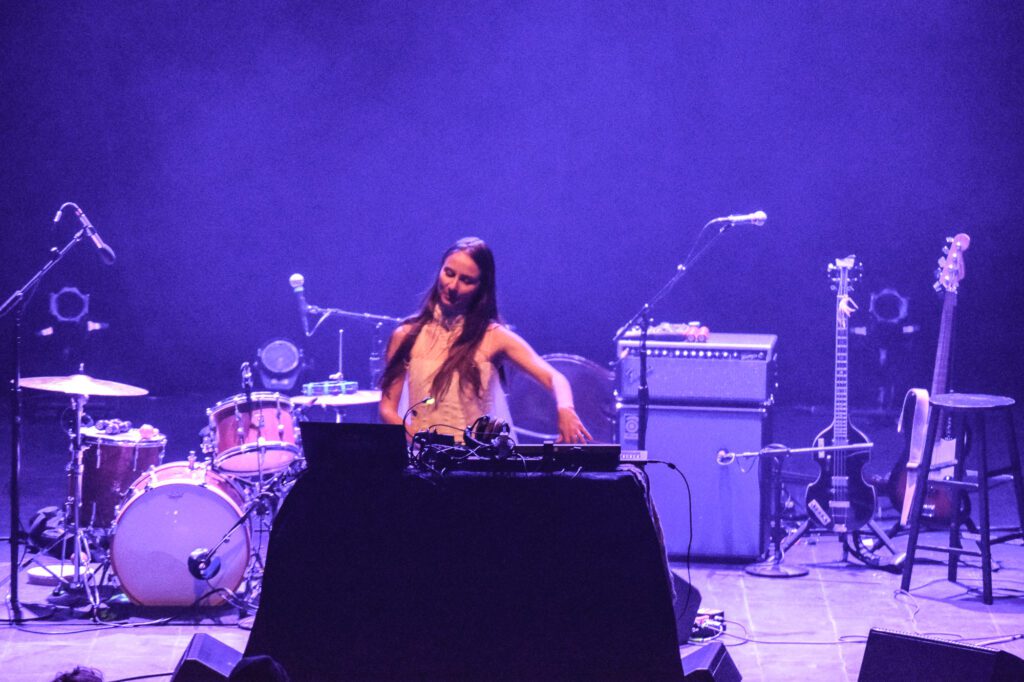
I don’t think anyone expected an opener like Kara-Lis Coverdale (who is now based in Montreal) to open for Big Thief, but with her electronic cinematic soundscapes, the crowd was left in a state of rapture. Her set was borderless in terms of genre, with moments sounding like a Studio Ghibli film or a heavy, demonic reckoning.
Kara-Lis Coverdale
She didn’t say a word but created and experienced the moments of sonic bliss with us. Although, there was a bit of chatter from the crowd during her set, and Big Thief’s Lenker made a statement about it a few days ago via Instagram. This was not in reference to only the Montreal show, but opening acts in general.
In the video, Lenker calls upon concert-goers to be “mindful if there is somebody performing and playing, to either listen or at least be quiet so that other people can listen, or go and put yourself elsewhere.”
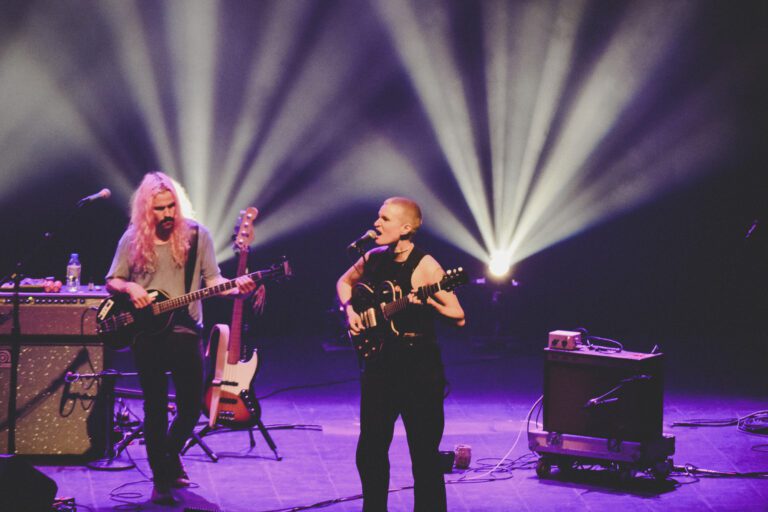
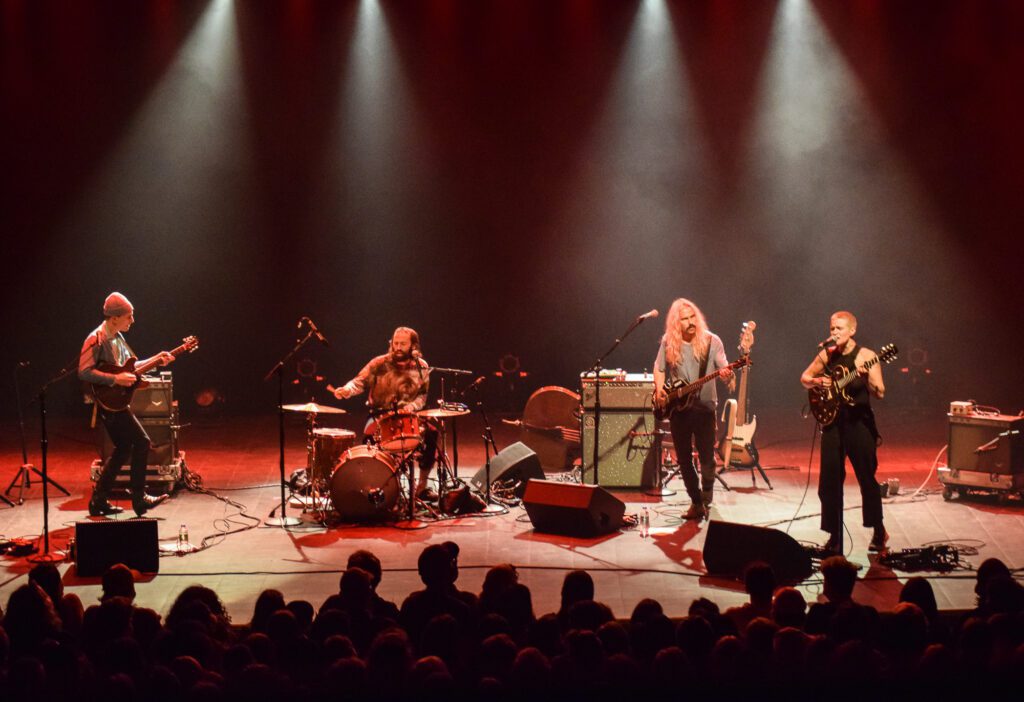
Lenker has a point, but everyone was silent during the Big Thief set, except for the thunderous applause between songs. And the setlist was sublime, focusing on the new mammoth of an album, Dragon New Warm Mountain I Believe In You, but also some older material from Masterpiece and Capacity.
Big Thief live at L’Olympia
“How do you like Montreal?” a fan shouted after the first song “Black Diamonds.”
Lenker quietly responded “I love Montreal,” and proceeded to tell a story in a hushed voice about when she and four friends drove from Minnesota to Montreal in a few days. They each took turns driving and only gave themselves a day in the city, leaving them to pack “everything into one day.”
I saw Big Thief once at Levitation in Austin and it was good, but it doesn’t hold a candle to the Montreal show. This set was way more electric, both Lenker and Meek switching between guitars between songs for more interesting tunings and sounds. They are also virtuosos at almost a-tonal guitar solos that come from pure energetic feeling. Lenker especially was amazing to watch as she played a bat shit, distorted, seven-minute solo movement during “Not.” This is why you go to see live music: to relive your favourite songs, but also see the artists surprise themselves live.
Adrianne Lenker, Big Thief
The set ended with “Certainty” from the latest album, but Big Thief wasn’t done as their encore was four songs long. It began with the most playful track “Spud Infinity,” featuring Lenker’s little brother Noah on mouth harp, and ended with, of course, the hit indie burner “Masterpiece,” but then also “Mary.”
It was a live show for the history books and even had one brand new song “Happy With You,” meaning Big Thief probably has a new project, album, or EP in store. Even after they just released Dragon New Warm Mountain I Believe In You. Talk about prolific.
With the exception of the openly pro-Putin stars, such as maestro Valery Gergiev, pianist Denis Matsuev or soprano Anna Netrebko, Russia’s most talented artists are in a very delicate position, whether they work in their own country or outside it. The Putin regime has rediscovered its Stalinist traits over the last two decades: historical revisionism, new fascism, institutionalized lies, disinformation, authoritarian pressure on opponents and their relatives, denunciation, repression, violence… In short, if you are a public figure, it is dangerous to speak out about the actual situation in Ukraine. Until when? As long as Putin is in place.
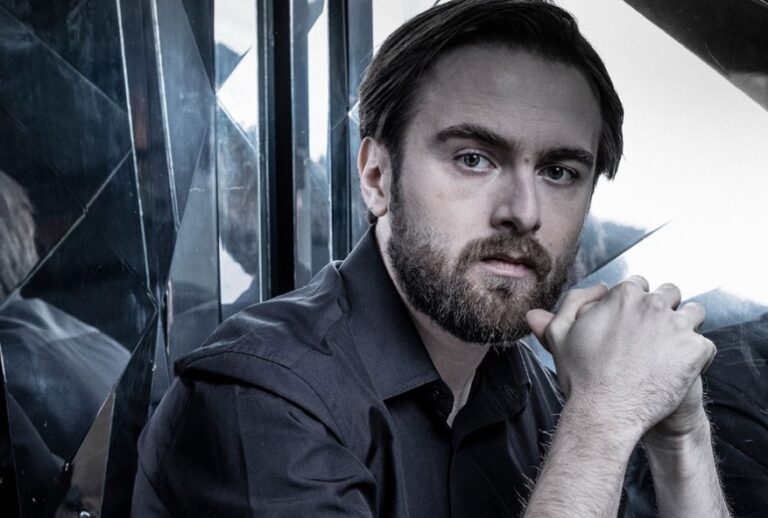
Daniil Trifonov, who performs in Montreal this week with the Montreal Symphony Orchestra conducted by Rafael Payare, obviously does not give interviews to the media, most of them would ask him to take an open position and the best he could answer is to wish for peace to return. As do most NHL players, for that matter. If not… remember the case of Artemi Panarin, one of the New York Rangers’ top players. When last year he took a clear stand against the reprehensible practices of the Putin regime, the Russian troll farm was quick to spin a false story of physical violence against a teenage girl… the hockey player had to leave the game to shed light on this vicious scam.
We have to acknowledge that almost all of Russia’s public figures risk their own safety and that of their loved ones if they openly speak out against this regime that slanders, smears, imprisons or outright murders its opponents.
This is why the MSO is handling this crisis differently: the Russian pianist Alexander Malofeev was cancelled under pro-Ukrainian pressure at the beginning of the invasion. MSO adminstration was afraid that the young 21-year-old prodigy would be the victim of the anti-Putin anger in Montreal. MSO wanted to protect him and have been intensely criticised all over the world. A few weeks later, the reflection is different. Of course, in front of the Maison symphonique, there will be a demonstration by pro-Ukrainian activists to denounce the holding of concerts by pianist Daniil Trifonov, Wednesday and Thursday. Opponents do not condemn Russian culture but believe that the public presence of Russian artists is not acceptable in the current context. By the way, let’s remind that the Canada Council for the Arts announced on March 4 that it would stop funding “any activity involving the participation of Russian or Belarusian artists or arts organizations”, but stated that these measures were temporary.
This is an interesting case of grey area: publicly, Trifonov said he was sorry about the situation, but did not say more, as did other public figures such as Washington Capitals superstar Alex Ovechkin (a notorious Putin darling) or tennis player Daniil Medvedev, the world’s No. 2. Basically, these artists remain very vague about their position towards the regime and candidly wish for a return to peace, which seems clearly insufficient from the outset. Indeed, it is, but… we must also understand that all public figures and their entourages are closely watched by the Russian authorities, and therefore muzzled if they cross this line of candor.
This justifies the invitation of Daniil Trifonov, a difficult decision by the MSO. We can guess that the pianist cannot really express his thoughts on the conflict and that he wishes to pursue his career abroad. However, if the conflict gets bogged down, Trifonov and his colleagues will sooner or later have to take a public stand, whatever happens to their safety. We are not there yet and we understand that the classical world is walking on eggshells, including us music lovers.
Bandcamp absorbed by Epic Games: a new capitalism
by Alain Brunet
On March 2nd, news broke that California-based Bandcamp, which runs the ultimate online sales and listening platform for global independent production, was being absorbed by Epic Games, a North Carolina-based company that has seen exponential profitability in recent years, particularly with its online game Fortnite.
Yet Epic Games reportedly still believes in the need for creators to have “fair and open” platforms and allow them “to keep the majority of their hard-earned money.”
Founded in 2008, the Bandcamp platform had supplanted MySpace as the site to discover and consume the world’s independent production. The business model was established by the formula of prices set by the artists themselves, and by taking a 15% commission on album sales, which is much more advantageous for the artists than what the web giants offer, i.e. commissions that can go up to 95% of the revenues, in the worst cases. Bandcamp thus became profitable in 2012. According to the company (not very worn on public statistics), 5 million albums were purchased on Bandcamp in 2019. This is an example of this success but also of its limits, because the revenue from streaming is non-existent, and therefore the main mode of consumption of music makes nothing via Bandcamp. What will happen from now on? We’ll talk about it in a few months or years.
It’s 2022 and Bandcamp is definitely the most powerful and fair alternative to the web giants and their infinite content platforms: Spotify, Apple Music, Amazon Music, YouTube Music, Deezer…
Gamers have probably been aware of this for a long time, but music fans are learning that the video game community also has its Bandcamp. Since 1991, Epic Games has been charging a 12% commission to creators, while Apple would charge 30%. The success of a Bandcamp cousin model is bound to be economically more formidable, since the video game industry is much more profitable than the music industry. And that’s why Epic Games has gotten considerably richer after launching its famous Fortnite and other free-to-play games; there’s talk of a meteoric rise in the markets. The company is now worth US$ 28 billion… which is not exactly a marginal phenomenon anymore! It’s worth noting that the company is 40% owned by the Chinese gaming multinational Tencent. Extremely rich, Epic Games can count on a community of 160 million users.
According to the official version, the advantage of Epic Games’ acquisition of Bandcamp lies in its ability to implement cutting-edge technologies, much more powerful than those currently used by Bandcamp, in order to maximize referencing and user consumption patterns. What’s more, the company’s strong interest in the metaverse, which is the deployment of a vast 3D universe based on a web of interconnected spaces, requires investments that Bandcamp could not assume.
Needless to say, the usual logic of the market generally leads successful companies to go public in the best case, or to be absorbed by more powerful companies. A basic principle of capitalism…
By posing as managers of the vast community of independent music, these companies position themselves intelligently in front of the Web giants whose propensity for non-sharing of revenues is now archaic. In the case of these online companies, however, this perception of community is misleading. Even if they offer services to creators with a better return on investment (from download sales and not from streaming), Bandcamp and Epic Games remain for-profit companies, certainly innovative but purely capitalist. Their founders had noble intentions at the beginning, but their ultimate goal was to make their businesses profitable.
Should we expect this revenue-sharing mentality to continue in the long term?
We’ll have to rely on that, for lack of global alternatives… since no one in the creative world devotes the energy necessary to organize distribution networks that can reach such a scale and distribute the revenues equitably. Imagine if Epic Games’ US$ 28 billion belonged to the artists who are the raw material of this phenomenal profitability, we could then talk about a real community that could eventually compete with the Web giants.
One can dream… but the reality is quite different.
Once again, the acquisition of Bandcamp by Epic Games is a cruel reminder that the creative world does not have this culture of self-organization. Most of the time, artists focus on their works, ensure their survival and don’t think about these considerations, with the distressing results we know: disposable products after use, meager incomes, short-lived careers, abandonment of the profession…
Gergiev and Putin … dubious friendship at the time of the Russian invasion
by Alain Brunet
Like all humans of goodwill, we, music lovers, will have to monitor carefully the consequences of the invasion of Ukraine by the Putin regime.
Instrumentalists, composers, beatmakers, singers, amateurs, connoisseurs, pedagogues, musicologists, producers, and tour organizers will feel something strange… every time a Russian artist will speak in the coming days, months, and years.
What will happen, for example, to the great Russian musicians revered on the classical planet? What will happen to those artists whose careers are essentially based on international influence, especially in Europe and North America? We are thinking here of the pianists Daniil Trifonov, Evgeny Kissin, Denis Matuev, the violinist Maxim Vengerov, and many others.
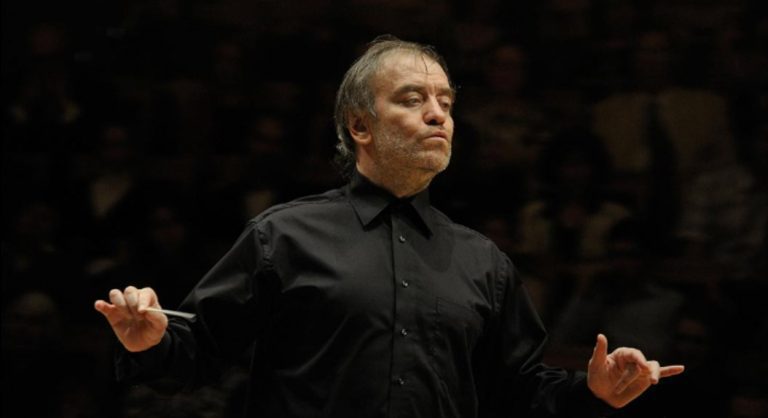
The unease is already setting in this weekend with the replacement of the Russian maestro Valery Gergiev by the Quebecer Yannick Nézet-Séguin at the helm of the Vienna Philharmonic Orchestra. The Austrian orchestra is scheduled to perform in New York for three nights in a row at Carnegie Hall, starting Friday.
For those unfamiliar with classical music, this replacement of Valery Gergiev, an avowed close relation of Vladimir Putin, is a legitimate and justified move, one that makes sense. Those who know the value of the Russian maestro, however, do not have exactly the same reaction: they are upset by the idea that an artist of such talent shares Vladimir Putin’s conquering delirium, a historical fiction turned tragic reality.
Hasn’t Valery Gergiev invited us to the most formidable symphonic programs in recent decades? Don’t orchestras levitate under his direction? Anyone who has attended concerts given by the Mariinsky Theatre Orchestra knows what a fabulous maestro he is, and what a fabulous orchestra he directs. I interviewed him a few years ago and can assure you that I have been dealing with a brilliant man, a man who is both coarse and refined, rough and delicate, patriot and citizen of the world, without any doubt one of the great living masters of the Russian repertoire of the Romantic, modern and contemporary periods.
This case is more than interesting, because Valery Gergiev, today shunned by the West, embodies the Russian paradox that artists trained during the Soviet era, pure products of Stalinist authoritarianism of the communist tradition, are living today.
Let’s try to understand.
The conductor is 68 years old, he was educated in the 70s by the best pedagogues of an extremely solid classical culture in the Soviet Union. At the turn of the 1990s, the young maestro was able to count on the support of the mayor of St. Petersburg, Anatoli Sobtchak, and his first deputy, a certain Vladimir Putin, in order to build a new concert hall, which was inaugurated in 2006, and an ultramodern opera house, the Mariinsky II, inaugurated in 2013. Remember that the architect of the building is the Canadian, Jack Diamond, who drew the plans of the Montreal Symphony House (whose construction is very close to that of the Russian amphitheater).
Gergiev knew Putin before his meteoric rise to the top of the Russian state. They were both shaken by the death of the Soviet empire, they witnessed its fall and the instability that followed. And, like so many intellectuals and artists supported by the Soviet regime, Gergiev may have experienced the fragility of his status after the communist era ended… then reinvigorated by the current regime.
A leading artist of the Putin regime, Gergiev has never hidden his friendship and support for the former deputy mayor, a former KGB officer who became president for life of a country described in French as a “democrature” or if you prefer in English “democratorship”, an amalgamation between a surface democracy and a de facto dictatorship. Let’s remember that Valery Gergiev conducted the symphony orchestra at the opening ceremony of the Sochi Games, applauded live by its president for life. So we can guess why Gergiev has already refused to condemn the Russian invasion of Ukraine … a few years after approving the annexation of Crimea in 2014. Barring a dramatic about-face that would exclude him immediately from his advantageous position in the Russian nomenklatura, the maestro will assume his choices.
This position is understandable, but now unacceptable from a democratic and progressive point of view, after what happened recently. By remaining faithful to his buddy Putin during wartime, in any case, Gergiev risks putting an end to his career in the West. Abruptly. Already dumped by the powerful Felsner Artists agency in Germany, he could be excluded from his responsibilities with the Munich orchestra of which he is the artistic director, his links with the Vienna Philharmonic and other Scala orchestras in Milan could be broken forever.
His performances may now be limited to areas of Russian influence, to markets dominated by the Chinese ally, by the Turkish ally, or other areas where Western culture is in decline. That’s still a lot of people again, you may say. It’s the new world of classical music, you may say. But, losing his fame in the old world will hurt Valery Gergiev a lot. He will pay a high price for the rest of his life.
Let’s assume that this great Russian artist has been thinking about this issue of denouncing the imperialist, authoritarian, and bellicose intentions of the Putin regime. Let us assume that the most outstanding Russian conductor of our time refuses to express any condemnation of the Russian state because he shares its patriotic and conquering values. Let’s assume that he has resigned himself to renounce his Western career.
Let’s assume that he assumes this strange paradox… and that this position draws him to the dark side of the force.
Dallas Good passed away on Thursday, February 17, 2022. He was 48 years old. The Grim Reaper hadn’t been so cruel to Canadian rock since Gordon Downie died at age 53, in 2017. Cause of death: newly diagnosed coronary disease. Dallas Good and his brother Travis formed The Sadies in 1994 with bassist Sean Dean and drummer Mike Belitsky. At a young age, Dallas fell into the roots music potion concocted by the legendary Good Brothers, his father Bruce, and his brothers Brian and Larry. For musicophiles fond of cutting-edge rock where Americana becomes Canadiana, Dallas Good was a true icon. His voice, which exuded a pastoral warmth and charm, was irresistible and instantly recognizable. His fingers produced pure, haunting vibrations. Praise is pouring in from everyone from old classic-rock seadog Randy Bachmann to multi-instrumentalist and songwriter Richard Reed Parry (Bell Orchestra, Arcade Fire), who produced a Sadies album due this spring, from which the single “Message to Belial” (see video below) was recently released.
In almost thirty years, Dallas Good and the Sadies have acquired a rare status among rock bands: that of a creative entity that is both superior and prolific, as well as a backup band that the whole scene is after. The Sadies have been regular musicians or collaborators with the formidable Neko Case, the late and gritty R’n’B minstrel Andre Williams (one must listen to their album Red Dirt), Jon Langford (The Mekons), John Doe (if Country Club isn’t one of the best Americana-rock albums of the last 20 years…) and the aforementioned Gordon Downie (And the Conquering Sun). On February 3rd and 4th 2006, The Sadies had organized a sort of Will the Circle Be Unbroken or Last Waltz without farewells at Lee’s Palace in Toronto. Garth Hudson, the eminent survivor of the real Last Waltz with his ever so magically nimble fingers, participated as did Jon Spencer, André Ethier (The Deadly Snakes), the Good Brothers as well as Margaret Good–Dallas and Travis’ mom–, Kelly Hogan, Gary Louris (The Jayhawks), Neko Case and a host of other musicians including Blue Rodeo and Steve Albini. In 2010, Garth Hudson returned the favor by inviting them to the concert that became the album Garth Hudson Presents: A Canadian Celebration of The Band. Dallas and his colleagues had the honor of accompanying Neil Young on “This Wheel’s On Fire” and performing a heartfelt version of “The Shape I’m In”. The Sadies’ four friends were also de facto members of the Canadian supergroup The Unintended, along with Rick White (Eric’s Trip, Elevator) and Greg Keelor (Blue Rodeo).
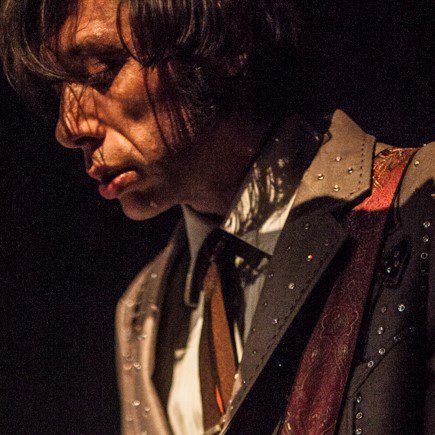
One would be remiss if we didn’t point out that Dallas Good was the epitome of rock coolness at its finest: with a slim, trim figure and an angular, slightly sinister-looking face, Good was always dressed in an impeccably tailored suit, often of the Grand Ole Opry variety. The man, who looked a bit like a semi-ironic western mortician character, was humble, quiet, affable and, above all, devilishly talented and inventive. With his brother Travis and their rhythm section, they created their own musical genre by hybridizing country, bluegrass, psych-rock, blues, punk, rock’n’roll, surf-rock, rockabilly and a few other sub-genres. Over the course of their existence, Dallas and the Sadies have earned the admiration of music lovers and rock musicians both north and south of the 49th parallel. However, it is on the scale of Canadian rock that their contribution is exceptional: like Blue Rodeo and the Tragically Hip, they have served as a liaison for countless musical projects with a host of musicians of various stripes. Dallas Good’s major contribution to the world of rock music will remain, of course. But the passing, in his prime, of a musician-creator like him can only be infinitely sad.
Dallas Good photo by David Bastedo.
What does the spectacular sale of the Bob Dylan songbook mean?
by Alain Brunet
The intellectual property of Bob Dylan’s repertoire of over 600 songs has been sold to Universal Music Group.
On Monday, December 7, the New York Times offered the best documented report on the subject of of the transaction between His Bobness and Universal Music Group (not, it should be noted, with Sony-BMG, which owns Columbia, where Dylan has lived since the beginning of his career) and placed the estimated sum at US$300 million.
What’s the rationale for this decision? Is the sum of $300M accurate? It’s a private agreement, in any case… presumably, it was negotiated in the nine figures. Colossal?
This is a typical trend of our time: the control of intellectual property by the most powerful players in recorded music. Not only are the three majors (Universal Music Group, Sony-BMG, and Warner Music) adopting such practices, but new publishing companies are also investing heavily in getting their hands on the back catalogues.
For example, the Hipgnosis Songs Fund has just paid US$670 million for a bouquet of repertoires – Blondie, Rick James, Chrissie Hynde & The Pretenders, etc. – that will be released in the next few months. Another example is Primary Wave investing US$80 million in Stevie Nicks songs. If the Fleetwood Mac singer is worth that amount, it’s easy to deduce that Dylan’s repertoire is worth at least 300!
Photo: Bettmann Archive
It should also be noted that this transaction is limited to the publishing of the Dylan songbook. Music publishing manages the copyrights for the creation of songs – the lyrics and melodies of the songs – which distinguishes this practice from the management of recordings. For a percentage negotiated in advance with their clients, publishers collect for and with them the copyright and licensing fees when a work is sold, streamed on platforms, played on the radio and in public places, or when a song is used in a film, show, or advertisement.
Since the advent of Spotify, Apple Music, Deezer, and YouTube Music, streaming has helped to drive the entire music market. According to the NY Times, U.S. publishers have raised $3.7 billion in 2019, per official statistics from the National Music Publishers Association in the USA. Understandably, the regular and growing revenues generated by music rights are now attracting major new investors, because there will be a lot of revenue to be made from the “classic” repertoires of songwriting, in the medium and long term. Hence these spectacular transactions like Bob Dylan’s.
This being said, it must be stressed that these well-known repertoires can only be marketed by very powerful players who will make their subsequent use in every corner of the web bear fruit. In addition to the purchase of intellectual property, the marketing of these acquisitions require very large investments, and this is probably the calculation made by Dylan’s entourage.
The marketing of the acquired repertoires is therefore part of a monopolistic process of cultural money, money which is increasingly concentrated in the hands of the super-mega-rich of this world. From this point of view, it must be observed that the most powerful are even more powerful than ever and… almost all music repertoires are, on the contrary, doomed to economic precarity and the progressive impoverishment of their creators and performers.
This dynamic was already unjust before the digital environment took over an economy, based on the sale and distribution of physical products of the works of the mind. With the web, the collapse of earlier ecosystems has given way to an even more marked, even more shameless monopolisation. Needless to say, this restructuring of the cultural industries around a tribe of billionaires favours only a tiny minority of artists, including Bob Dylan, a monstre sacré from another era.
For we are indeed talking about an artist from another era.
It’s impossible in 2020 to imagine the emergence of an artist of the depth of Bob Dylan becoming such an influential artist, moreover Nobelized at the end of his career. Name a single hyper-talented songwriter of today with the power of influence of Robert Zimmerman when he himself was an emerging artist six decades ago. Good luck with your research.
The current structure of the music industry and the adaptation of media (social and traditional) to the digital environment precludes mass success for ALL the emerging Bob Dylan’s of this world. Great songwriting has only become very profitable for the best… in their seventies and the eighties. Misery of the niches…
Subscribe to our newsletter
Gérez votre confidentialité
Nous utilisons des technologies telles que les cookies pour stocker et/ou accéder aux informations des appareils. Nous le faisons pour améliorer l’expérience de navigation et pour afficher des publicités (non-) personnalisées. Consentir à ces technologies nous permettra de traiter des données telles que le comportement de navigation ou les ID uniques sur ce site. Le fait de ne pas consentir ou de retirer son consentement peut avoir un effet négatif sur certaines fonctionnalités et fonctions.
Functional
Always active
The technical storage or access is strictly necessary for the legitimate purpose of enabling the use of a specific service explicitly requested by the subscriber or user, or for the sole purpose of carrying out the transmission of a communication over an electronic communications network.
Preferences
The technical storage or access is necessary for the legitimate purpose of storing preferences that are not requested by the subscriber or user.
Statistics
The technical storage or access that is used exclusively for statistical purposes.The technical storage or access that is used exclusively for anonymous statistical purposes. Without a subpoena, voluntary compliance on the part of your Internet Service Provider, or additional records from a third party, information stored or retrieved for this purpose alone cannot usually be used to identify you.
Marketing
The technical storage or access is required to create user profiles to send advertising, or to track the user on a website or across several websites for similar marketing purposes.