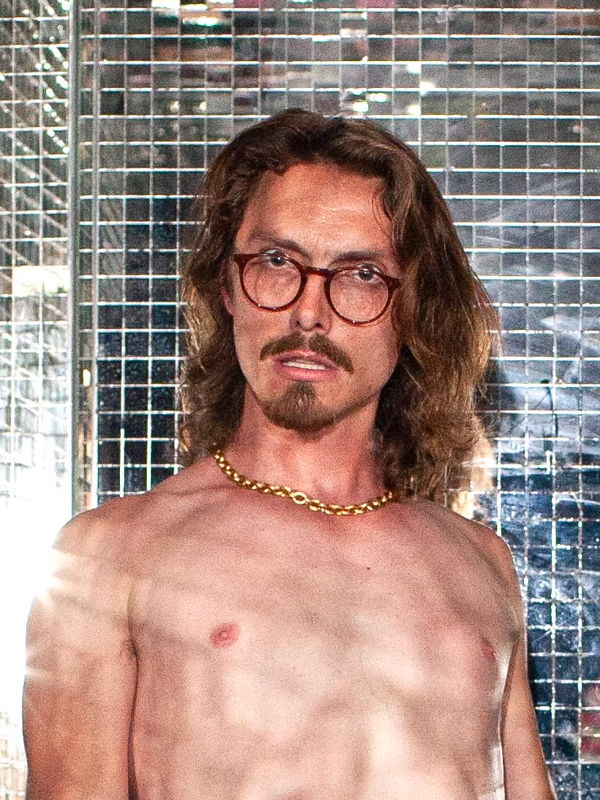
Lucien Francoeur – Requiem For A Rocker.

by Patrice Caron

Photo Camille Gladu-Drouin

September 9, 1948 – November 6, 2024

It was the day after the incarnation of Le Cauchemar américain that Lucien Francoeur strapped his last piece of luggage onto his bicycle and took off to join the big band on the other side. As befits his legend, the media paid tribute to him, and I think he would have been quite pleased with the effect of his release. In any case, I’m very proud for him, finally back to being as big as he should have been.

Too young to have known Lucien Francoeur during the first Aut’chose period, it was with the classic Nancy Beaudoin and Rap-à-Billy (and the Burger King ads) that I became aware of his existence. It was also the CKOI era, with its garage plogues, restaurants and elevator returns. I heard he also read poetry there, but I never listened to him long enough to witness it, he made me want to change the station. In my mind, he was associated with Gerry Boulet-style Quebec rock fm, nothing to make me want to listen to the vinyl that was lying around in my mother’s record stack.

In 2001, I was working at Foufounes Électriques when Aut’chose attempted a comeback with La Jungle des villes, an album of little interest, and given the scattered crowd present that evening, it was a comeback that didn’t excite many people. I watched 3-4 songs to see what Aut’chose was all about, but it still wasn’t the best introduction and I ended up spending the rest of the show at my desk waiting for it to finish. On my way round afterwards, I bumped into Lucien in the dressing room, but given my preconceptions, I looked down on him a little and he gave it right back, ha ha.

It was in 2005, with the 30th anniversary show of his first album and the release of Chansons d’épouvantes a month later, that things clicked. Attracted by the supergroup revisiting Aut’Chose classics, with original member Jacques Racine (who died on September 18) joined by Denis “Piggy” D’Amour and Michel “Away” Langevin of Voivod, Vincent Peake of Groovy Aardvark and Joe Evil of Grim Skunk, Aut’chose’s music suddenly took on a dimension beyond the caricature that had come to replace the original. Lucien shone outright, proud to present this version of Aut’chose, proud to still be there and proud to be where he belonged, at the front of the stage with a microphone in his hands.

And he was out of his “tank salesman” phase. Finally. And he understood how lucky he was to have these musicians with him, he was still Francoeur but with a less pretentious tick. And it also helped that he was with musicians I considered to be part of my gang.

So I gave Aut’chose another chance, starting from the beginning and bang, everything fell into place. I understand the shock of the time and the influence it had on the rest of Quebec rock, musically in tune with the trippy rock of those years and, above all, with a unique frontman who gave Aut’chose’s discography all its flavor.

Inhabited by an almost naïve ideal of rock’n’roll and its importance, Francoeur’s persona was as shocking, if not more so, in interviews than on record or on stage, which helped to boost his personality to the eventual detriment of the band. But the seed was sown, and for better or worse, the Francoeur effect has been felt ever since.

It was when the book L’Évolution du heavy métal québécois was published in 2014 that I really met Lucien for the first time. As my view of him had changed and when he felt he was loved, Francoeur made way for Lucien, it clicked.

A few months later, I decided to change the name of the trophy awarded to the Gamiqs from Panache to Lucien. Because he deserved to be recognized for his contribution to the history of rock in Quebec, particularly for his influence on what was to become the alternative scene, with Voivod of course, but also Groovy Aardvark, Grim Skunk, Gatineau, Galaxie and many others, but above all for his attitude which, in my opinion, was as fundamental to the building of his legend as his poetry or the music that carried it. Because that’s what made the difference. And still does, it’s what explains the success, or otherwise, of one artist over another. In short, I thought it epitomized the idea behind GAMIQ.

He wasn’t the first, but he was the one we were talking about. Because he was unique, the timing was right and he seized the opportunity. It’s a chemistry that’s hard to achieve, and even he often failed to find that state of grace, but by the early 70s, Francoeur was on his x and building a monument that still stands today.

Because beyond his discography or literature, it’s his influence that will be remembered in Quebec history. It’s not about chart-toppers or trophies on the mantelpiece, but about a work that marked its era and inspired the rest of history. Not many artists can boast that. Lucien Francoeur can.

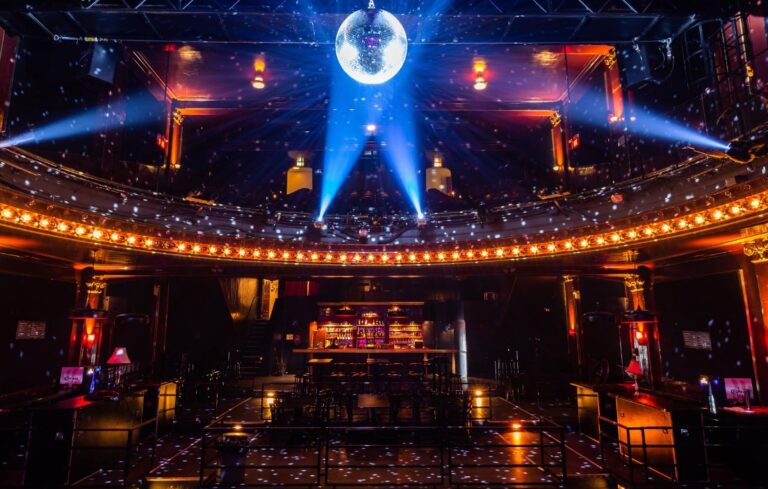
La Tulipe, What a Shame!

by Alain Brunet

Early in my career, I interviewed Gilles Latulippe at his office in the Théâtre des Variétés, then the temple par excellence of burlesque and popular comedy. I didn’t have much to do with Manda Parent and Juliette Pétry, but I was very impressed by the history of the place and, above all, by the intelligence of Gilles Latulippe, who gave me an excellent interview.

For more than a century, this amphitheater has not been the object of any disapproval – quite the contrary. Only one person complained vigorously about its practices and its role in the community. And that complaint led to the amphitheatre’s closure, because a judge ruled with a rigorous interpretation of the noise bylaw, while excluding the context of the now-famous complaint.

What a disgrace. A shameless developer obtains a building permit, granted by an official who’s totally out of his depth. The developer transforms the building into a rental (not commercial) property and then complains about the noise once his work is completed and occupied by human beings who obviously didn’t realize the context in which they are now immersed.

“Monday’s ruling by the Court of Appeal partially vindicates the plaintiff, Pierre-Yves Beaudoin, owner of La Tulipe’s neighboring building on Papineau Street, who has been complaining about noise since he purchased the building in 2016. Mr. Beaudoin had filed a request for an injunction to this effect in December 2020,” reports Isabelle Ducas in La Presse.

“Partially right” virtually means that this ruling limits La Tulipe to relatively quiet performances on stage, which is totally absurd for such an amphitheater steeped in history, an authentic monument to our popular culture. La Tribu, the company that brought La Tulipe back to life after buying the Théâtre des Variétés, is thus forced to cease its activities, as they are likely to come to an end far too soon in the context of showbizz as we know it in 2024. Exclusive chamber music and acoustic folk??? Of course. Nonsense.

Shame on Pierre-Yves Beaudoin, who couldn’t see beyond his nose and his wallet. Shame on the civil servant who slept on gas. Shame on the judge of the Quebec Court of Appeal who clearly failed to consider the bureaucratic error that caused the disappearance of an institution in favor of a visionless entrepreneur, who will go down in Montreal history as a true destroyer of heritage.

But… why didn’t the city rectify the situation as soon as it found out? Perhaps there was a catch: “If this were vaudeville as it was in Gilles Latulippe’s day, there would be noise, fury, overturned chairs and at 10pm, it’s closed. Here, it lasts until 3 a.m. and it’s sound in the carpet,” said host Luc Ferrandez on 98.5, considering that the amphitheater had become a ‘discotheque’ in most of his interventions. Did the former mayor of the borough (where La Tulipe is located) express the views of current officials, including the one who authorized developer Pierre-Yves Beaudoin’s construction? Let’s not prejudge, but…

In any case, the “discotheque” had been like that for many years, and neighborhood disapproval was almost non-existent, simply because no one slept nearby.

Can the dramatic consequences of this lamentable bureaucratic error be rectified? Is a turnaround possible? That’s what we’ll be seeing in the near future. Beyond emergency meetings, borough mayor Luc Rabouin must put on his britches and force the occupants of the new building adjacent to La Tulipe to endure the sound and assume the consequences of their nearby occupation.

Will they have to comply with new noise regulations? Will they sue the city if they do? It’s hard to say. One thing is certain: a by-law protecting the assets of Montreal’s concert halls is absolutely essential, given the legal limbo that has led us into this mess.

Jeremy Dutcher, a 2nd Polaris … Which Says a Lot About the Prize.

by Alain Brunet

Since the early days of the Polaris Prize, I’ve spent a day or two a year going through the long and short lists of nominated artists and groups, after having given my five preferences at the start of the selection process.

Every year, I submit and vote again, mainly to gain access to the discoveries and recommendations made by jurors, cultural journalists and communicators recruited from all over Canada. That’s what interests me most: getting a complete picture of Canadian music news that neither the Junos nor the Félixes can provide.

The Polaris long list is the most precious of all, more precious than the shortlist, and even more precious than the first prize awarded on Tuesday evening to aboriginal artist Jeremy Dutcher.

Of course I praise his talent, I know he’s brilliant and inspired, but for me, he remains one of the great artists of the Canadian Indigenous cultural revival, himself from the Wolastoqiyik Wahsipekuk First Nation – settled in New Brunswick, Quebec and Maine. Once again with the superb album Motewolomuwok, which earned him a second Polaris, Jeremy Dutcher has created a solid blend of classical vocal culture (tenor training), digital culture, and richly arranged creative pop. We recognized and celebrated him in 2018 when he won his first Polaris. For him to win a second one at a time when Canada sorely needs to showcase new talent or reward those who work hard and offer high-quality material, I tell myself… yeah.

It’s clear that the respectable Jeremy Dutcher dominated the dozen or so artists who made it through to the final… but how many productions equivalent to his were not retained along the way by a vast, heterogeneous, and… not entirely coherent in the end?

With the objective of rewarding the best Canadian album, chosen without any commercial considerations or quantitative impact by the specialists, I find that the ultimate choice often corresponds to an ideological and generational posture rather than an artistic one. The choices are inevitably the result of strong tendencies among the voters, most of whom are incapable of evaluating the whole of Canadian production. There are many reasons for this.

More to the point, the majority of English-speaking voters don’t understand Canada’s second official language. This makes it impossible to grasp the quality of a French text, essential to a great song. Yes, the majority of voters are very sensitive to the issues of cultural communities in Canada, the Indigenous condition or LGBTQ2s+ issues, which is laudable in itself, but… very often, this posture excludes many emerging artists who are not impacted by the oppression inherent in the communities mentioned, which can paradoxically produce an unfair evaluation at the end of the process. Also, the majority of voters are mostly familiar with the various declinations of popular music: hip-hop, soul/R&B, rock, chanson d’auteur, electro… as for contemporary jazz, contemporary instrumental music, non-Western classical music and more complex electronic music, these expressions are systematically excluded from the shortlists and the grand finale.

How could it be otherwise? How can we fairly celebrate the archipelago of Canadian cultures, languages, and musical styles?

How can we compare the creative pop of an Aboriginal artist with that of an electro-ambient producer or a country singer-songwriter? How can we evaluate poetry written in an Aboriginal language if we only understand the translation? How can you evaluate an artist’s songs if you don’t speak the language? Are musical genres comparable in the context of an award?

I’ll give you that.

How about it? Take a look at the 10 finalists for the Prix Polaris 2024. Listen to these artists and you too will see the theoretical impossibility of their comparison. I bet my shirt that very few of you have done this exercise, better late than never.

Publicité panam
Publicité panam

PAN M 360 at FIJM 2024 | About the Laufey phenomenon

by Alain Brunet

Laufey performed in Montreal last year and I saw her and listened… cold, with no emotion for these noble and good feelings set to lushy jazzy music. For me, I had seen and heard enough, really not my cup of tea to rehabilitate post-war Anglo-American vamps. But… these considerations were completely unnecessary, as we can see a year later. The Chinese-Icelandic singer’s pop ebullience was already underway, and here we are in 2024, she’s THE superstar in the concert hall at this Montreal International Jazz Festival, the one who sells the most tickets at the highest price.

I invite you to read the respectful review by our collaborator Vitta Morales, in which he reports that Laufey’s audience is super-young and embraces that pop aesthetic of the 40s and 50s: sentimental ballads with strings, bossa nova and other torch songs that their grandparents, then teenagers or young adults, enjoyed at a time when American pop culture was still triumphantly dependent on jazz. Then came the 60s and 70s, the counter-culture, rock, electric jazz… and these velvety melodies met with disapproval from all quarters, starting with jazzophiles, who considered this pop approach corny, old-fashioned, dead and buried.

Time passed, passed, passed and… surprise in 2024.

Of course, the cultural breaks happen generally without nuance, as the generations that succeeded the heyday of jazzy, orchestral pop had forgotten the quality of the arrangements, the harmonic richness, the lascivious, elegant expressiveness, that expression of the ups and downs of sentimental life.

No less than 8 decades later, Laufey takes up those satiny forms again, and millions of young people, mostly female, go wild. Broadcasters on all the world’s major stages are rubbing their hands, as few female singers associated with jazz are capable of such mass impact.

The jazz business, which has been in a state of disrepair since the turn of the century, regularly tries to launch another Diana Krall, without succeeding in overflowing the market with dying nostalgia… since the absolute majority of fans of the genre who lived through that era are no longer with us or unable to attend a concert hall. And then there’s this resurrection of a genre long considered obsolete.

The Laufey phenomenon is not unique. Social media, especially TikTok in this case, are contributing to the exponential unearthing, revival and classicization of musical forms from the distant past. Neoclassicism feeds on it with the results we all know, and now neojazz is doing the same. What more is there to say?

Our Afro-descendant hip-hop: rap, consciousness… under-representation

by Gabriella Kinté

In this Black History Month, PAN M 360 proudly highlights the thinking of its new collaborator Gabriella Kinté, a committed bookseller, Montreal author and avid hip-hop fan. Adjacent to the Ausgang Plaza space on Plaza Saint-Hubert, the Racines bookshop she founded offers a wide range of writings on the history, culture and living conditions of racialized people in Quebec. Gabriella’s work now continues on the pages of PAN M 360!

In this month dedicated to celebrating black history, I want to share with you my impressions of hip-hop, a culture I adore and that my Afro-descendant community has actively helped to create. My favorite elements of this culture are rap and consciousness.

So here it is:

It’s impossible to walk the streets of Montreal without seeing the influence of this global movement. In Quebec, I’m very well served by the supply of local talent, but I’m annoyed that it’s too often misrepresented in the mainstream media. In fact, it seems to me that these institutional media tend to highlight the same type of artists … male, cis, white.It’s impossible to walk the streets of Montreal without seeing the influence of this global movement. In Quebec, I’m very well served by the supply of local talent, but I’m annoyed that it’s too often misrepresented in the mainstream media. In fact, it seems to me that these institutional media tend to highlight the same type of artists … male, cis, white.

In any case, there are very few who sound like me and whose recordings are played on commercial radio or invited on major TV shows. I find that mainstream media favor the visibility of white rappers, which can be attributed to a variety of factors, including the preconceived opinions of decision-makers.

Some journalists, probably unconsciously, integrate the negative perceptions ingrained in society, directing them towards a preference for artists from non-minority backgrounds. This contributes to an imbalance in the representation of diversity within the Quebec hip-hop scene, as in other cultural sectors.

What I really don’t like to hear is that the lack of diversity in the media is linked to a lack of good emerging artists from that diversity. I don’t believe that there is a directly proportional link between talent and media presence. In 2024, we can no longer turn a blind eye! We all know that discriminatory behaviors persist in the media landscape, even if they are complex to perceive.

Regularly, I have to access to independent media such as Onz Montréal, Hit’Story, Da Main Source and Rapolitik, in order to stay abreast of the latest trends. I have no choice, because what the “media leaders” offer me is often boring, disconnected or puts forward American talent, whereas we can count on excellent local artists. That’s why independent media fascinates me, because it’s closer to artists of all kinds.

It’s thanks to them that I’ve had the pleasure of discovering artists such as Chung, Planet Giza, SLM, Ya Cetidon and others. If I’d stuck to what’s offered on traditional channels, it would have taken a long time for their work to reach my ears. It would have been disappointing for me to discover them only once their international success had been established. It’s a shame, given their talent. With so many platforms out there, I think they deserve to be seen/heard more.

But how, in fact, can you contribute to improving things, whether you’re a fan or a media player? First of all, put yourself in a better frame of mind:

For fans: reach out to what’s not like them, broaden their field of vision and challenge our own unconscious prejudices.

For columnists: go beyond simply writing down their preferences, explore different perspectives and question their unconscious biases;

Fans or columnists, I believe we all have a certain power to influence.  While we wait for changes in rigid media spheres, let’s act together by exploring and sharing the profile of often overlooked talents, and thus contribute to enriching the cultural scene ourselves.  Why? To ensure more equitable and authentic coverage of hip-hop in Quebec.

Nevertheless… shout out for the following positive advances:

  • The documentary serie Les Racines du Hip-Hop au Québec. At the origin of this nugget is a diverse, competent team, offering the general public the opportunity to discover major players. 
  • The rapper Lost, the only Montrealer or even the only Canadian to be part of YouTube Music’s new Fifty Deep campaign. It was a proud moment for me!
  • The independent media for their exceptional and authentic work, a breath of fresh air in the media landscape.

Although the road to fair, authentic and equitable representation is a long one, my confidence in the emergence of new local musical talent persists.  In any case, the current era offers creative minds many opportunities to make themselves heard. My wish for 2024? That the quest for new audiences will be less arduous for racialized artists. That we base ourselves exclusively on real artistic ability rather than status or privilege.

On the credibility of Bob Marley One Love

by Richard Lafrance

Highly anticipated, the biopic of the mythical Bob Marley is analyzed here by our colleague Richard Lafrance, unquestionably one of Quebec’s leading specialists in Jamaican music. In Canada, Bob Marley One Love opens in theaters on Valentine’s Day, and PAN M 360 brings you the most comprehensive online review of it in this territory… and more!

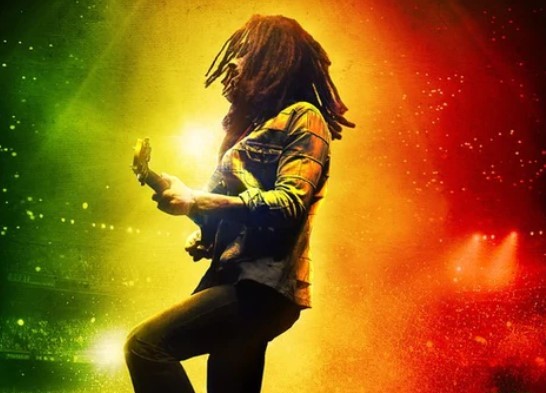
On November 2, 1979, I went to the Montreal Forum to attend one of the most memorable shows of my young life:  Bob Marley and The Wailers were there as part of the Survival tour. What a strange feeling, then, to find myself at the same venue 45 years later (renamed the Pepsi Forum, later Cinéma Cineplex Forum) for a screening of the biopic Bob Marley One Love. The film, pays tribute to the Rasta icon and beautifully presents him to the most recent generations.

Tribal warfare in Kingston

The script takes us back to Jamaica during the 1976-80 period, with Marley at the height of his international fame, as he agrees to perform for his local audience as part of the Smile Jamaica concert, proposed by Michael Manley, then Jamaica’s prime minister, at the height of a tribal and urban political war. 

A few days later, perceived as being much closer to Michael Manley’s socialist-leaning People National Party than to Eddie Seaga’s pro-American Jamaican Labour Party, the singer was the victim of an armed attack at his Hope Road home. He was shot twice, his wife Rita was hit in the head (without any serious injury) and his manager Don Taylor was rushed to Florida for treatment after being hit by 6 bullets.

On a last-minute whim, Bob and Rita, still bloodied and in shock from the attack, decide to take to the stage with the musicians present who are brave enough to accompany them, and give one of the two defining Jamaican performances of their careers.

The second being, of course, the now-legendary One Love Peace Concert, during which Bob literally forced the two political opponents to shake hands on stage, in front of a Jamaica devastated by gun violence. The film ends right on the real scenes of this 1978 event.

To enhance the film’s biographical content, several flashbacks with two other younger Bobs – one around the age of 10 and the other, superbly played by young American actor Quadajay Henriques (Sean Paul’s cousin) around the age of 20 – expose crucial moments in his life and career.

The best examples are the Wailers’ audition, with intimidating producer Coxson Dodd and the hilarious Lee ” Scratch ” Perry at Studio One, the ” Jamaican Motown “, or the Groundation, a Rasta gathering on the beach, where Rita introduces Bob to Mortimer Planno, who will become his Rasta spiritual guide.

Since 1972 and the release of the cult film The Harder They Come starring Jimmy Cliff, no other film production has left such a lasting impression on the Jamaican (and international) imagination as this one. 

In our actual context, Paramount’s people understood that Jamaica’s contribution would be essential to the project : more than 400 actors and technicians, in addition to 1,800 Jamaican extras were used for this 25-day shooting project, specifically in Trench Town, the Kingston ghetto where Bob grew up and at Kingston’s National Stadium, venue of the One Love Peace Concert.

The costumes are exact replicas of the wardrobe worn by Bob and his cohorts; the dialogue and dialect are natural and fluid, very much based on the actual events, apart from a few liberties taken in the script.

Kingsley Ben-Adir et Lashana Lynch,  Oscarisables ?

Obviously, the greatest feat of this Brad Pitt-financed film, produced by Rita, Cedella and Ziggy Marley and directed by Reinaldo Marcus Green, concerns Kingsley Ben-Adir’s transformation into a veritable Kingstonian ” yardie “! The Williams, Joe Bell, Monsters and Men method, in fact.

Physical resemblance being the only obvious starting point (and yes, his “artificial” dreadlocks are totally believable!), the 38-year-old British actor had to learn to play the guitar, sing, dance and, above all, speak a credible, fluent patois… in his voice and with the intonations particular to Tuff Gong. Ben-Adir is said to have had some 50 interviews phonetically translated, and then received linguistic support. 

Which raises the crucial question: Ziggy Marley claimed that none of his 7 sons and 10 grandsons, nor any Jamaican actor, could have played the role of Bob, for the purposes of the film, at around the age of 36. One assumes that the gem was long and hard to find, but rather on the UK side.

Kingsley Ben-Adir seems credible in every way. At live shows, Bob’s real voice can be heard on remixed soundtracks, giving the well-known songs a more contemporary sound. But for acoustic performances, it’s really the actor who sings. This gives the impression that he generally makes his character a little more playful than melancholy, despite all the vulnerability and insecurity expressed at other times.

For her part, Lashana Lynch, the British actress who was the first woman to play James Bond in No Time to Die (2021), plays with finesse and aplomb the matriarch of the Marley clan and backing vocalist for the I-Threes, the vocal trio that accompanied the Wailers on all their international tours, for which she put a serious solo career on hold.

Sons and daughters of…

Another Jamaican factor worthy of note is that several of the film’s actors and singers already have musical careers: singers Naomi Cowan, daughter of Carlene Davis and Tommy Cowan (ex-tour manager of the Wailers), who plays Marcia Griffiths, and Sevana, taking on the role of Judy Mowatt. Abijah Livingston plays his father, Bunny Wailer, and Aston Barrett Junior takes on the role of his father, the renowned bassist Family Man Barrett, who died at 77 two weeks ago.

Never without controversy

Since the film is produced by the Marley clan itself, it’s not surprising that the Gong’s extramarital adventures, particularly that torrid love affair at the end of his life with Cindy Breakspeare, Miss World 1976 who produced Damian ” Junior Gong ” Marley, arguably one of his most talented children, goes by the wayside.

Marley’s greatest love songs, Turn Your Lights Down Low and Waiting In Vain were inspired by the beauty queen. Despite all his misdeeds, Bob remained married to Rita until his death. In his 36 years of life, Bob Marley is said to have had over 15 children: 11 officially with 7 different mothers, 5 with Rita, 2 of whom were adopted.

One of the film’s most memorable scenes takes place in Paris, where Rita reminds her jealous husband that she must raise all his children – including those of his other mistresses – while being his backup singer and touring the world.

My downs 

The (invented) scene in which Bob’s assailant appears to him (in a dream?) to beg his forgiveness, a completely superfluous scene and very far from the truth of what happened to the gunman in question.

The metaphorical scenes of young Bob escaping from a burning forest, accompanied by his biological white father whom he has only seen twice in his life, or his spiritual father, the one to whom he has dedicated his existence, Emperor Haile Selassie 1st, Jah Rastafari!

All in all?

Expectations were obviously very high for this film, and…  despite the reservations expressed here, Ziggy Marley and those close to him rose to the challenge in fine style. 

870 millions for the Montreal Olympic Stadium…

by Alain Brunet

It’s not like renovating the ruins of Rome’s Colosseum to make a high-tech stadium but… The fact remains that Montreal’s current Olympic Stadium is a dilapidated shell to be rebuilt or demolished. It’s not like renovating the ruins of Rome’s Colosseum to make a high-tech stadium… The fact remains that Montreal’s current Olympic Stadium is a dilapidated shell to be rebuilt or demolished.

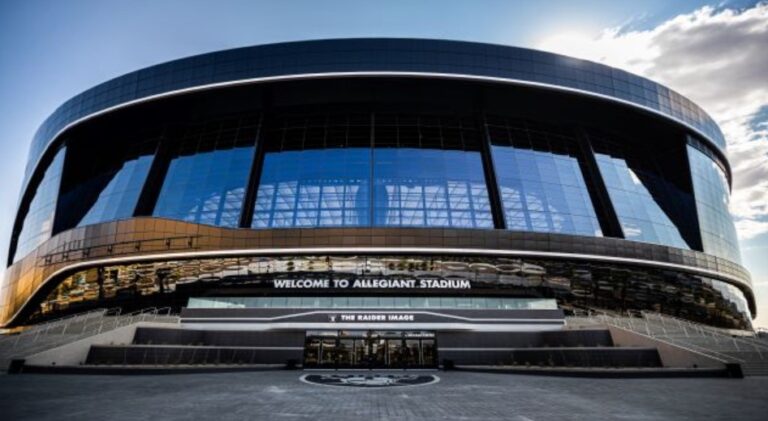
So the decision was made to rebuild, and as we know, $870 million was spent. A good choice? In these days of Super Bowl LVII, held at the gleaming Allegiant Stadium, it’s a good time to think about it.

Demolishing it would cost several hundred million Canadian dollars, 2 billion according to the promoters of the refurbishment, and… we’d be left without a stadium. Doesn’t a city the size of Montreal need such a facility, capable of attracting 60,000 people? Yes, absolutely.

For a population of 4 to 5 million, a modern stadium is an essential public asset. Some cultural and sporting events simply cannot be held in a 20,000-person arena, that’s now an objective fact.  So what to do? Let’s take a look at the costs of the three most high-tech stadiums in the USA.

Allegiant Stadium in Las Vegas, where this year’s Super Bowl was held, cost US$1.9 billion before the pandemic; we can easily imagine US$2.5 to 4 billion if construction were to start this year. Los Angeles’ SoFi stadium, where the Rams play, cost US$5.5 billion. The Dallas Cowboys’ AT&T stadium cost US$1.3 billion… in 2009!

You already understood that building a stadium costs at least a couple of billion to be competitive and meet the new international standards. Demolishing the Olympic Stadium and building a new one would cost a minimum of 3 to 4 billion, so there’s no need to add that this choice is out of the question and that we have to choose the lesser evil.

The presumed sum of 870 million for rebuilding the roof and its technical ring is acceptable in context, but… Renovating the Olympic Stadium, let’s be clear, will not cost CAD$870 million. Renovating its shell is only the first step in a much longer process, and its promoters might be well advised not to shout it from the roof… in the process of being renovated.

Just how much will it cost to fix the faulty acoustics? Very expensive, as Montreal’s stadium is a dunce in this respect, perhaps the worst in the world. The late architect Roger Taillibert, its designer and great aesthete, obviously hadn’t thought about it.

I personally attended most of the mega-concerts up until the 90s. As time went by, my profession led me to attend concerts in other stadiums around the world, which were far more acceptable sound-wise. At a late stage in my career as a pop music columnist, I promised myself I’d never go back in such mediocre conditions again.

I’d like to add that none of the concerts I’ve attended at the Olympic Stadium – Emerson, Lake & Palmer, Pink Floyd, U2, David Bowie, the Stones, Madonna, George Michael, Bruce Springsteen, in short – have been handicapped by poor acoustics. It’s easy to understand why only 3 musical programs have been presented there in the last decade… You really have to be motivated to go there, and I haven’t been one of those believers for a long time now.I’d like to add that none of the concerts I’ve attended at the Olympic Stadium – Emerson, Lake & Palmer, Pink Floyd, U2, David Bowie, the Stones, Madonna, George Michael, Bruce Springsteen, in short – have been handicapped by poor acoustics. It’s easy to understand why only 3 musical programs have been presented there in the last decade… You really have to be motivated to go there, and I haven’t been one of those believers for a long time now.

How much will it cost to replace and reconfigure the outdated seats? Very expensive indeed. Considerable work will be needed inside the structure to create a better feeling of proximity.

How much will the audiovisual equipment cost? A fortune. Since stadium led screens are now a fundamental part of the experience, we can’t skimp on the cost of such equipment, which the Olympic Stadium doesn’t have. The SoFi stadium in LA cost 40 million a few years ago, so it’s easy to imagine the Olympic Stadium costing twice as much (in Canadian dollars).

And then there are the passageways, the food stalls, the VIP boxes – in short, everything a stadium needs in 2024 to attract megastars, major sports tournaments and top professional teams.

Let’s face it, it won’t cost C$870 million to compete with international offerings. A refreshed shell, as beautiful and historic as it may be, won’t be enough. Let’s consider at least doubling, and possibly tripling, the cost, so that the Olympic Stadium experience can meet the new standards of the global market. Otherwise… we’ll have another signature work on the outside and a permanent mess on the inside.

Taylor Swift, pop, branding, Travis Kelce, SB, deep fake porn, conspiracists, more and more

by Alain Brunet

You’d have to be cloistered in a monastery with no web connection, encapsulated in a survivalist bunker, caged in a hamlet with no electricity deep in a primeval forest. In short, you’d have to be totally disconnected from earthly reality not to know of Taylor Swift’s existence. So that’s why we’re talking about it too… from another angle, as you’d expect!

Time Magazine personality at the end of 2023, formidable businesswoman, entrepreneur of her own success, bulimic of creation and production, empress of the song hook, absolute conqueror of pop culture;

Taylor Swift is clearly the most influential Caucasian singer and songwriter in the solar system.

It has tens of millions of dedicated fans, including a sizeable portion of cultured humans who have little to do a priori with its culture. It’s clear that her influence extends far beyond the circles of her “natural” market: generic pop, or what used to be called “variété”.

What’s going on? Avoiding or denying the swiftie mega-phenomenon deprives anyone of understanding a fundamental part of today’s cultural reality.

Released in January, the Luminate  report indicated that listening to Taylor Swift’s songs last year accounted for 1.78% of 4100 billion listens on streaming platforms. 

Do the math : 72 billion 980 million wiretaps were devoted to the American superstar.

Continue the exercise: if she earned $4,000 per million listens as the average Spotify artist does, she would have pocketed 291 million US$ in streaming revenues last year.

But let’s not forget that she renegotiated the amount of clicks she was awarded, which could well double the stakes…. So? 400, 500, 600 million US$, not to mention an even larger sum for her concerts and merchandising? We won’t know, as these agreements are private.But let’s not forget that she renegotiated the amount of clicks she was awarded, which could well double the stakes…. So? 400, 500, 600 million US$, not to mention an even larger sum for her concerts and merchandising? We won’t know, as these agreements are private.

Where are we now? Not half a day goes by without hearing about Taylor Swift.

Time Magazine named her Personality of the Year at the end of 2023, and more recently, the New York Times analyzed her possible queerness, American soccer, to round it all off. Since the fall, we’ve been the spectators of this romance with Chiefs star player Travis Kelce, who isn’t exactly a celery stalk – and who only earns 12 million a year… poor guy!Time Magazine named her Personality of the Year at the end of 2023, and more recently, the New York Times analyzed her possible queerness, American soccer, to round it all off. Since the fall, we’ve been the spectators of this romance with Chiefs star player Travis Kelce, who isn’t exactly a celery stalk – and who only earns 12 million a year… poor guy!

Via the NFL, the Taylor Swift brand has just taken on even greater proportions, culminating on Sunday February 11, not at one of the stadiums and arenas she fills by snapping her fingers, but at the Las Vegas stadium where Superbowl LVIII will be held.

Travis Kelce would normally be at the top of his game to lead the Chiefs to victory over the Niners… which isn’t going to happen because San Francisco has a better team than Kansas City this season… on paper. Wasn’t that also said about the Buffalo Bills and Baltimore Ravens?Travis Kelce would normally be at the top of his game to lead the Chiefs to victory over the Niners… which isn’t going to happen because San Francisco has a better team than Kansas City this season… on paper. Wasn’t that also said about the Buffalo Bills and Baltimore Ravens?

The best tight end of all generations will be doing his best to win a 3rd SB after beating the odds in the playoffs. In the last two games in which he shone, the connection was just about perfect with Patrick Mahomes, still the NFL’s best quarterback. Gambling against this tandem at the next SB is at your own risk !

If her Tokyo-USA flight is on time, as we’ve been told several times, Taylor Swift will be helping to light up with her presence a game watched by over 115 million viewers last year. Add to this audience all the Swifties newly interested in the NFL, and let’s predict that the ratings will be higher than 2023 because of the Taylor/Travis relationship. What a boon for the professional league.

On est donc loin, très loin de la pâle midinette des années 2000, aujourd’hui âgée de 34 ans.

Ever since childhood, she’d been creating these colorless, odorless, tasteless songs, but…Ever since childhood, she’d been creating these colorless, odorless, tasteless songs, but…

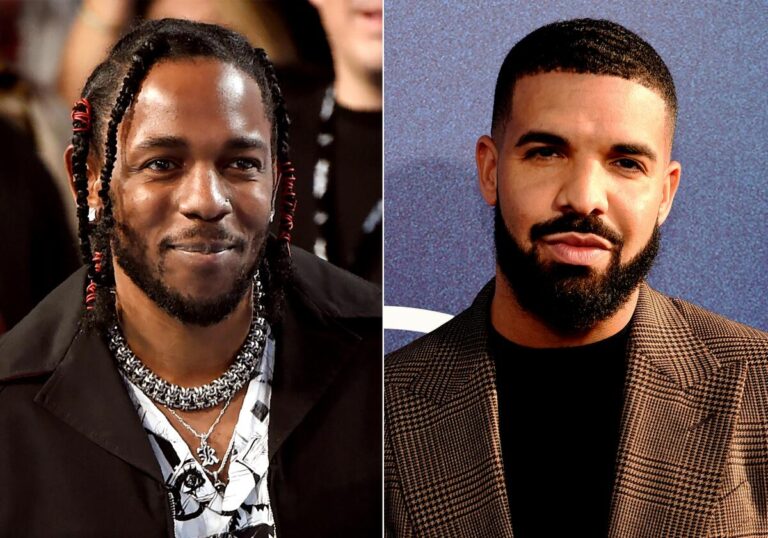
She was a conqueror, determined to become the biggest star in the known universe. She did country, but then folk, Americana, pop-rock, electro-pop, synth-pop and even hip-hop, to the point of including the brilliant Kendrick Lamar in her song “Bad Blood”..

She has churned out hundreds of songs, most of them predictable, but with a deep knowledge of popular culture in music. The lyrics, the harmonic choices, the catchy melodies, the references to musical genres – everything is mastered, everything is efficiently constructed, oiled to perfection.

In her namby-pamby country days in the 2000s, she was that pretty girl next door, raised in an upper middle-class suburb somewhere between Philadelphia and Harrisburg. Remember when Kanye West maligned her at the MTV Awards in 2009, when she was just 19 years old? ” Taylor, I’m really happy for you and I’ll let you finish (your thanks), but Beyoncé had the best music video of all time.” 

Like the indelicate Kanye, who missed another opportunity to shut up, many of us believed that Beyoncé had a far more interesting and innovative pop culture signature. Many of us also believe that Beyoncé is far superior, that Taylor Swift’s repertoire is made up of generic, pre-digested songs with no real artistic signature.

And… of course, there are many more of us who think just the opposite, exchanging friendship bracelets and sticking their tongues out at us.And… of course, there are many more of us who think just the opposite, exchanging friendship bracelets and sticking their tongues out at us.

Unsigned, Taylor Swift? Let’s put it another way. She quickly explored sonic territories other than country-pop. She set out to master an ever-expanding songwriting lexicon, even to the point of working with more than credible artists from the indie movement that preceded her. Let’s remember the Folklore album released in July 2020, with landmark contributions from Aaron Dessner (The National) and Bon Iver.

So nothing, absolutely nothing, about this kid star among so many others suggested that she would become the army general she is today.

No matter how indifferent we may be to the singer and her imperial brand, we can’t deny Taylor Swift’s values in the current context:  feminist, centrist, pro-democrat, pro LGBTQ +. Could her personality and socio-political stance be more interesting than her art? To ask the question…No matter how indifferent we may be to the singer and her imperial brand, we can’t deny Taylor Swift’s values in the current context:  feminist, centrist, pro-democrat, pro LGBTQ +. Could her personality and socio-political stance be more interesting than her art? To ask the question is answering it.

As you can imagine, the attacks on Taylor Swift have been multiplying in this embryonic phase of the presidential campaign. On the web, far-right conspiracists see her as a fabrication of the Democratic establishment.

The completely schizoid narrative of these clueless millions also consists of denying her romantic relationship with Travis Kelce, a Deep State fabrication needless to say, and that the Chiefs-Niners game would be rigged to benefit the Chiefs and the US government. And how about that disgusting deep fake of the singer in a fake porn movie.

And what else? Much, much more.

The next chapter, by the way, could be political. It’s unlikely that she’ll be a politician at this stage of her existence, but then we can only applaud (paradoxically) her real power to influence the American nation in a direction other than that of Trumpist neo-fascism… which may well triumph next autumn.The next chapter, by the way, could be political. It’s unlikely that she’ll be a politician at this stage of her existence, but then we can only applaud (paradoxically) her real power to influence the American nation in a direction other than that of Trumpist neo-fascism… which may well take over next fall.

Photo FB Taylor Swift
Opening Night of Igloofest: (Re)Discover Marc Rebillet in 5 Songs

by Elsa Fortant

As Marc Rebillet prepares to set fire to the main stage of the world’s coldest festival, Igloofest, warm up your ears with these five musical nuggets representative of his electro-funk-hip-hop-techno-house-delighting universe.

The Dallas native’s discography is an impressive demonstration of his virtuosity in loops and complex arrangements, both live (we remember his livestream sessions on social networks during the pandemic) and in the studio. His lyrics are tinged with humour, irony and satire, and his energy is infectious. The nickname he proudly sports – which is also the title of several of his albums – “Loop Daddy” suits him like a glove. As you’ll see and hear for yourself tonight, the Franco-American excels in the art of improvisation. Let yourself be surprised, and get ready to dance and have fun!

  1. Reach Out
  1. The Way You Make Me Feel – avec The Kount et Moods
  1. I Want To Die 
  1. Let Me See Your Dick 
  1. Funk Emergency 

100 million more… 125 million less… and what else?

by Alain Brunet

What’s $100 million worth of help for traditional media ? What’s $125 million less at CBC / Radio-Canada worth?

This $100 million sum, recently obtained from Alphabet/Google in Canada and hard fought for by the web giant, is put into perspective by the $125 million in cuts at CBC/Radio-Canada. The public broadcaster ‘s annual budget was $1.3 billion before the cuts, which involved 800 positions across the corporation’s English and French services.

Do we compare apples with oranges? NO. Google’s tempting $100 million gift package is by no means a panacea, and allows us to assess the real size of the pie to be shared among all Canadian media, whose revenues are melting like snow in the sun. 

After the first slap in the face for the print media, the all-powerful traditional TV is now bending its knees. This fall, TVA drastically reduced its staff, the Coopérative nationale de l’information indépendante did the same a few weeks ago, and now it’s CBC/Radio’s turn to experience a black day on Monday, December 4. A 44% drop in revenues since last year has led managers to cut Anglos and Francos kif kif. Many experts consider this unfair, since Radio-Canada’s market share is 24%, while CBC’s is 4%. To this, CBC management retorts that the web reach of the two services is roughly equal. Basically… we can guess that CBC management couldn’t bear the political weight of admitting that CBC scores too low in the traditional sphere.After the first slap in the face for the print media, the all-powerful traditional TV is now bending its knees.

This fall, TVA drastically reduced its staff, the Coopérative nationale de l’information indépendante did the same a few weeks ago, and now it’s CBC/Radio’s turn to experience a black day on Monday, December 4. A 44% drop in revenues since last year has led managers to cut Anglos and Francos kif kif. Many experts consider this unfair, since Radio-Canada’s market share is 24%, while CBC’s is 4%. To this, CBC management retorts that the web reach of the two services is roughly equal. Basically… we can guess that CBC management couldn’t bear the political weight of admitting that CBC scores too low in the traditional sphere.

So let’s get back to Google, whose compensation to the web giants is far too meagre to reverse the trend. The GAFAMs’ monopolistic position is far, far from being shaken by this award, which is far too modest when put into perspective. According to American economists from Columbia University quoted on Monday by RDI, Google should be granting Canada $750 million rather than $100 million. Progressive hypothesis for now…. Because there’s a long, long way to go from the cup to the lip.So let’s get back to Google, whose compensation to the web giants is far too meagre to reverse the trend. The GAFAMs’ monopolistic position is far, far from being shaken by this award, which is far too modest when put into perspective. According to American economists from Columbia University quoted on Monday by RDI, Google should be granting Canada $750 million rather than $100 million. Progressive hypothesis for now…

Whether we like it or not, traditional media are moving less and less slowly and more and more surely towards this paradigm shift. Is the traditional media crisis an incurable cancer? To ask the question…Whether we like it or not, traditional media are moving less and less slowly and more and more surely towards this paradigm shift. Is the traditional media crisis an incurable cancer? To ask the question…

The decline of the traditional media ecosystem is inevitable, and the descent into hell is eerily similar to that of the music industry in the 2000s. Since then, music revenues have been progressively concentrated in the wallets of a tiny minority of pop stars who outrageously dominate the streaming platforms. The vast majority share the crumbs, and the music business has been stagnating for two decades… except for Taylor Swift and co, of course.The decline of the traditional media ecosystem is inevitable, and the descent into hell is eerily similar to that of the music industry in the 2000s. Since then, music revenues have been progressively concentrated in the wallets of a tiny minority of pop stars who outrageously dominate the streaming platforms. The vast majority share the crumbs, and the music business has been stagnating for two decades… except for Taylor Swift and co, of course.

With the increasingly severe traumas experienced by traditional TV, a comparable picture is emerging, and it’s far more considerable than that of music: unstoppable web giants, the collapse of the old giants of national ecosystems and… a host of small initiatives sprouting up on the web and seeking to oppose new models to the monopolies, most of them American. Needless to say, platforms like PAN M 360 are humbly part of the long-term solution.With the increasingly severe traumas experienced by traditional TV, a comparable picture is emerging, and it’s far more considerable than that of music: unstoppable web giants, the collapse of the old giants of national ecosystems and… a host of small initiatives sprouting up on the web and seeking to oppose new models to the monopolies, most of them American. Needless to say, platforms like PAN M 360 are humbly part of the long-term solution.

classique / Modern Classical / Post-Rock / post-romantique / Rock

A night at the MSO concert and… Godspeed You! Black Emperor

by Alain Brunet

Since the beginning of my professional career, I have nurtured this value of extreme eclecticism. Why do I do this? To experience music for a lifetime, not so that the flame never goes out until the last day. And to avoid feeding the nostalgia of aging fans who ignorantly claim that it was much better in the 70’s and other such nonsense – we’ve just seen it with the 50th anniversary of “The Dark Side of the Moon” album, right?

And that’s exactly why I founded PAN M 360, which has been progressing slowly and surely since it went online three years ago.

Almost half a century later, I still have this deep conviction that this value must be nourished every day, that this nourishment perpetuates our passion and our open-mindedness. Of course, I don’t make it an absolute value: we must respect the music lovers who choose one or a few areas of musical exploration without venturing elsewhere. We do not all have the same thirst for music, but I believe that it is still possible today to value an authentic overview of world sound creation, from its most complex concepts to its most naive.

Let’s take Thursday night as an example.

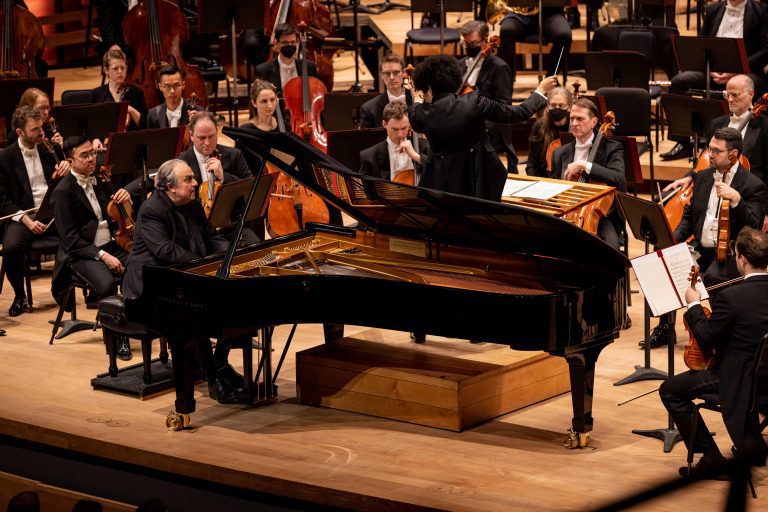
The Maison symphonique was sold out, and music lovers that attend this program had no idea, with a few exceptions, that MTELUS was also packed with Godspeed You! Black Emperor. And it was much the same in the other venue with the MSO’s repertoire. My young colleague Stephan Boissonneault, who had covered the group the day before, was experiencing his first immersion with the MSO with me, and I am delighted that he sincerely appreciated this brilliant performance.

Since his arrival in MTL, we knew from the start that Maestro Rafael Payare’s direction would be very different from that of his predecessor (Kent Nagano). But on Thursday night, the day after a New York triumph at Carnegie Hall (widely reported by the traditional press), we observed that the Venezuelan conductor had reached cruising speed with an OSM reinvigorated by this new relationship.

Thus, Gustav Mahler’s very demanding and athletic Symphony No. 5 showed a very fine balance of forces, a balance different from what we had heard before from Nagano, even though he is a (different) master of the Mahlerian repertoire. The brass and woodwinds are more muscular under the Venezuelan maestro’s direction, the strings are also more incisive in the ensemble, the percussion more intense than ever. This balance between power, brilliance and subtlety is already a fundamental trait in the Payare style.

Even the contemporary work by Dorothy Chang, a Chinese-American composer now living in Vancouver (and a professor at UBC), seemed to have more depth than one might have expected, given the somewhat generic nature of the ten-minute work played at the beginning of the program.

This was also evident in the performance of Belà Bartok’s Concerto No. 2 for Piano and Orchestra, composed in 1930, three decades after Mahler’s Fifth Symphony. With Bartok, we are already in the midst of modernity, and the arrangements bear witness to new harmonic constructions that are now part of the music lover’s imagination. Obviously, a soloist of the calibre of the Israeli American Yefim Bronfman was needed, a performer of very high level to give an account of the Bartokian discourse, as much in the percussive sequences, sometimes downright violent, at the keyboard or in the chromatic ascents and descents executed at breakneck speed, as in the slow and introspective sequences requiring a silky and circumspect phrasing.

This alternation of extremes is typical of modernity in Eastern Europe a century earlier. The orchestral parts of this concerto require the total involvement of the brass and percussion, and the MSO’s dialogue with the soloist is more than intense. In this context, Rafael Payare was the right man to bind it all together. On Thursday, we saw his bill come through for good, well beyond the honeymoon experienced with Montreal music lovers since his arrival in the middle of the pandemic.

At the end of this successful experience, my colleague and I headed to the MTELUS where Godspeed You! Black Emperor, was playing for a second consecutive night. Stephan Boissonneault had been so struck by what he had heard the night before (read his review!) that he wanted to go again. For me, it was my umpteenth from GY!BE, which I’ve been following since its foundation in the mid-90s.

Montreal’s Post Rock jewel for more than a quarter of a century, the band could have become a prisoner of its original bill, which is fortunately not the case. Before this 7-year hiatus in the 2000s and even at the turn of the next decade, GY!BE built its music in the manner of an arc, a sinusoidal curve where the paroxysmal intensity was in the middle of the work. For a few years now, things have been done differently. We can see it, especially with “G_d’s Pee at State’s End! “the band’s seventh studio album released two years ago, and we experienced it on Thursday night.

First and foremost, the strength of GY!BE is the result of a collective, no instrumentalist shows great virtuosity in articulation or speed of execution, some musicians of the group can nevertheless count on an academic formation of quite good level. But everything happens elsewhere than in technical excellence in the classical sense, that is to say essentially in textural expertise through saturation and extreme amplification, and in the quest for a coherent and inspired global sound. However, there is even more now: in addition to the proverbial Godspeed sound, there are now fragments of Celtic, Baroque, or even Oriental traditions, and the dramatic framework is now based on a sequence of distinct works rather than a single massive one.

This is another illustration of the compositional intelligence of Efrim Menuck and his bandmates, all of which is linked with a solid dissident point of view, a critical and radical posture towards the power in place, all of which is supported by a surge of cinematographic projections of demonstrations violently repressed by the forces of order.

One comes out of such a performance refreshed and one thinks that the OSM, Mahler, Bartok, Chang and Godspeed You! Black Emperor can go together. It’s up to us to make the connections. And that’s exactly why PAN M 360 exists. And long live extreme eclecticism.

Contemporary Jazz / Jazz / Jazz Fusion / Modern Jazz

RIP Wayne Shorter (1933-2023)

by Alain Brunet

One evening in the summer of 2015 at the Symphony House, Wayne Shorter was performing with this excellent quartet that had extended its creative life on stage, against all odds. That night, however, it felt like the beginning of the end. It was obvious that the master no longer had the absolute mastery of his instruments (tenor and soprano) that he was known for even at his eighties, and that his improvisational dialogue was no longer as alert and solid as it had been throughout his life, since his early days with drummer Art Blakey’s Jazz Messengers.

One could tell that the smiles of his accomplices hid a certain sadness, and I told myself that this was my last Wayne Shorter concert. Seeing him on stage again in such a diminished state? Nay. This immense composer, improviser and performer would never again be what he had been: for more than 60 years, one of the most brilliant of this music that we still call jazz.

Eight years after this sad report of his loss of faculties, a few months before reaching the age of 90, Wayne Shorter passed away. Even today, the general public and even the general public of jazz will not put him in the pantheon of the unavoidable. A discreet character, not very talkative, but nevertheless interesting in what he had to say (having spoken to him many times, I can testify to that), he expressed himself first of all by his achievements.

His creative qualities and intellectual curiosity led him to change jazz after its golden age of hardbop, by injecting more modern music from the Western classical tradition and more non-Western modal music into the lineage from which he came. Up until the 1950s, jazz had certainly integrated post-romantic and modern classical music, especially impressionist (from the French composers as Ravel or Debussy). It was heard with attention, from Duke Ellington to Bill Evans through Miles Davis’ first quintet, especially in his collaborations with the arranger Gil Evans. Wayne Shorter, on the other hand, showed an even deeper knowledge of modern and contemporary advances in classical music and used them brilliantly without these colors prevailing in his essentially jazz work.

Why is Wayne Shorter less quoted than the great icons of the style? Most probably because he didn’t have the media flamboyance and swag of Miles Davis, for whom he was the crucial composer in the famous quintet of the 60’s – Herbie Hancock, piano, Tony Williams, drums, Ron Carter, double bass, Miles, trumpet, Wayne, saxes. Without him, this historic quintet would not have been able to count on the compositions of such an acoustic apotheosis: “Nefertiti”, “Footprints”, “E.S.P”, “Fall”, “Pinocchio”, “Iris”, “Orbits”, “Dolores”, “Prince of Darkness”, “Limbo”, “Vonetta”, “Parephernalia”.

Under the Blue Note label, the saxophonist had a parallel career, his solo albums are in the same spirit as the Miles Davis Quintet, but with less impact for the reasons we have just stated. It is therefore necessary to listen again to these essential recordings of the jazz of the 60’s, especially “JuJu”, “Speak No Evil”, “Adam’s Apple”, “Super Nova”. As he did with Miles, Wayne Shorter was tracing the post-hardbop path while remaining faithful to melodic themes and consonant harmonies, while Ornette Coleman, Cecil Taylor, John Coltrane, Pharoah Sanders, Albert Ayler and so many others were admitting atonality and arrhythmia in their proposals.

At the end of the 60s, the famous jazz electrification sessions led by Miles Davis constituted the founding community of jazz-rock, later renamed jazz-fusion, for better or for worse. His complicity with the Austrian keyboardist and composer Jozef Zawinul, central architect for the mythical Miles Davis album, In “A Silent Way”, a founding recording if ever there was one.

The founding of Weather Report with Joe Zawinul was the most interesting extension of Miles’ early electric work (“In A Silent Way”, “Bitches Brew”, “Jack Johnson”, “On The Corner”, “Big Fun”). The first recordings, “Weather Report” (homonym) and “Sweetnighter”, were very close to this sound, the identity of the band had then become clearer with I “Sing the Body Electric”, “Mysterious Traveler”, “Tale Spinnin’, albums whose rating will not cease to rise with time if you want my opinion In 1976, we witnessed another turning point with the opus “Black Market” and the arrival of Jaco Pastorius within WR. This spectacular entry of the superbassist coincided with a sound closer to African and Afro-Caribbean music, put forward by Zawinul and endorsed by the band. Advance or watering down? Advance at the beginning, watering down afterwards…

Some deplored Shorter’s overly effete posture as a soloist and conceptual leader, a posture he maintained until the end of the group. Things had progressively gone wrong with albums that were really too sweet, after the release of the opus “Heavy Weather” in 1977, certainly the most famous of the WR discography. Afterwards, we witnessed the decline, until 1985 with the release of the cheezy “Sportin’Life”.

There followed a renaissance of Wayne Shorter as a leader and composer, while Zawinul continued WR’s work by hiring several non-Western virtuosos – Ivorian drummer Paco Sery, Mauritian bassist Linley Marthe, Cameroonian bassist Richard Bona, etc.

From the mid-70’s until his death, Wayne Shorter’s genius was progressively recognized by jazz lovers of all tendencies, from left field to right field.

This recognition came first with the memorable Native Dancer released in 1974, an album featuring the Brazilian singer Milton Nascimento, and whose concert in Montreal much later, in the late 80’s, was one of his most dazzling. The albums “Atlantis” (1985), “Phantom Navigator” (1986), “Joy Rider” (1988), and “High Life” (1994) were shorter extensions of an aesthetic that had been influenced by Weather Report, but without Zawinul’s Afro-pop impulse – which had reached its limits.

At the turn of the millennium, it was safe to assume that everything had been said by each entity of the famous tandem that created Weather Report.

But Wayne Shorter was about to surprise us with a new acoustic quartet, based essentially on real-time improvisation: Danilo Perez, piano, Brian Blade, drums, John Patittuci, double bass. The contribution of this quartet far exceeded expectations, memorable concerts followed until the announced decline in 2015. Here and now, the leader integrated the many themes and harmonic progressions of his compositions in his cranium. We remember the albums “Footprints Live!” (2001), “Alegria” (2003), “Beyond the Sound Barrier” (2004), “Without A Net” (2010). And we don’t count Shorter’s work in chamber music, an angle that we would have liked to have been more nourished given the convincing results.

The creative life of Wayne Shorter, a follower of Nichiren Buddhism, was marked by a few tragedies: the short life of a severely handicapped child and the untimely death of his second wife Ana Maria in a plane crash. In this respect, the musician was true to himself, very discreet publicly about what, after all, is none of our business. On Wayne’s side, what is our business… can be heard.

Subscribe to our newsletter

Inscription
Infolettre

"*" indicates required fields

Type of Suscribers