Airat Ichmouratov will compose Alice in Wonderland for Montreal’s Grands Ballets canadiens

by Frédéric Cardin

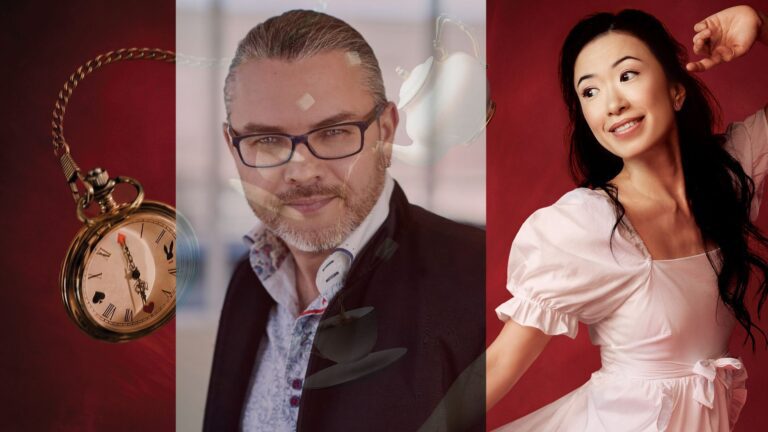
A lovely surprise awaited the guests at the unveiling of the 2026-2027 season of Les Grands Ballets Canadiens yesterday in Montreal : the Quebec composer Airat Ichmouratov will write the music for a new creation, Alice in Wonderland, with choreography by André Santos. We will certainly have the opportunity to talk about it again in due time, I have already booked Airat for an interview! The composer was present at the meeting with the media and the public. He revealed that his inspiration will largely come from Tchaikovsky, Stravinsky, and Prokofiev. For him, they are the best in the genre. In any case, we are well aware of Ichmouratov’s neo-romantic affinities. It should be noted that this will be the first time under the leadership of Ivan Cavallari that the Grands Ballets will commission new music for a choreographic creation. Ichmouratov acknowledged being “extremely honoured and excited,” and particularly inspired by all the musical possibilities offered by the story full of oddities written by Lewis Carroll. The premiere will take place in June 2027.

If this news has made an impression, certainly on those attuned to music (PanM360), we have still taken note of other proposals that will align dance with beautiful scores during this upcoming 26-27 season.

La Dame aux Camelias by Peter Quantz (based on Alexandre Dumas Jr’s novel) makes a return in September, with music drawn from von Weber and creative women like Lili Boulanger, Fanny Mendelssohn, Clara Schumann, Grazyna Bacewicz, Louise Farrenc, and Kaija Saariaho. No Traviata, the lyrical incarnation of La Dame. 

In October, a good friend of Les Grands Ballets is back : Guillaume Côté at the helm of a remake of Shakespeare’s A Midsummer Night’s Dream, conjugated in the plural! Les songes d’une nuit d’été (Midsummer Night’s Dreams) multiplies the romantic, even erotic, cross-purposes, with the addition of a couple to the two present in the original version, in addition to transposing the action to the 21st century. It will explore the various polyamorous possibilities, from an unconfined perspective of the classic cis-gendered framework. Côté has chosen (inevitably) excerpts from Felix Mendelssohn’s A Midsummer Night’s Dream, apparently in a remixed electro/orchestral version. There will also be scores by his sister Fanny Mendelssohn, Johann Strauss, and minimalist and very popular contemporaries like Steve Reich and Max Richter.

In February 2027 (no need to talk about the Nutcracker in December, it’s a given), it will be Cinderella, in an aptly magical version by Jayne Smeulders, taking the stage, with the Orchestre des Grands Ballets playing Prokofiev’s score.

Lady Chatterley, in April, makes a return after a production in 2018. The play by Cathy Marston features the characters from the famous novel by DH Lawrence, long censored for offending public morals. The eroticism and sensuality of this story, as we remember, were carried by the expressive, almost carnal music of Scriabin.

A season focused on the theme of storytelling, you may have already guessed, thanks to these incarnations of existing literary or dramatic works, to which will be added the narrative exuberance of Alice, mentioned earlier.

After Bad Bunny: Dare to Listen to the Latin World

by Michel Labrecque

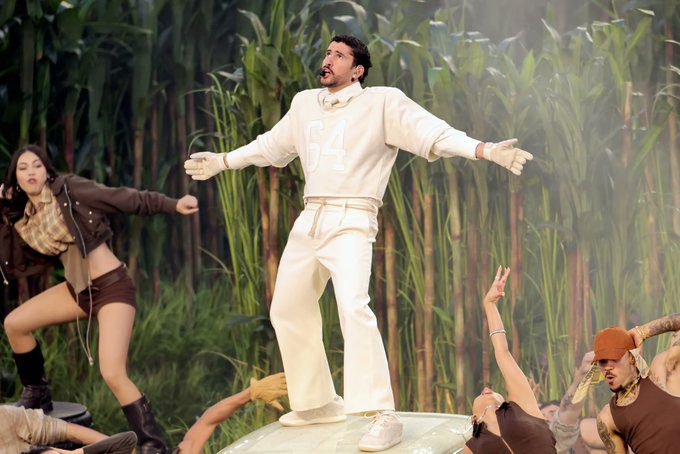
Bad Bunny’s excellent Super Bowl halftime show opened many ears and minds to Puerto Rican culture, but also to Latin culture more broadly. A mini-concert performed almost entirely in Spanish that very subtly demonstrated the resilience of Latinos across the Americas, not only in the United States.

My colleague Alain Brunet very effectively described the importance of this moment in a previous article. I would like to take advantage of this moment of openness to invite you to listen more closely to contemporary Latin music, which has reached an incredible level of diversity and richness over the past decade.

If you read me from time to time, you will have noticed that I regularly review albums and concerts from the Latin world. I have made it something of a specialty, although I sometimes consider myself an impostor: I am not of Latin origin. I lived in Brazil for two years and have traveled through much of Latin America in recent years.

I speak a mixture of Portuguese and Spanish, very imperfectly. But I have been deeply moved by all the music I was able to hear during those stays. And I am more moved than ever at a time when Bad Bunny, Rosalía, Natalia Lafourcade, Shakira and Ana Tijoux, among others, have become global phenomena. And behind them, there are hundreds, even thousands, creating all kinds of music: from norteña in Mexico to cumbia in Colombia, to rock, trap and electronic music.

Of course, many of us are familiar with Cuban salsa, Brazilian bossa nova, Argentine tango, Portuguese fado and Spanish flamenco. But there are so many other forms and crossovers between tradition and modernity. These blends are one of the great strengths of this adventurous music.

In Puerto Rico, as Bad Bunny quickly demonstrated, there is an infinity of genres beyond reggaetón. Jíbara, danza, bomba and plena, which I heard extensively in Florida at electoral events within that community while working as a journalist. Endless percussion. There are also highly engaged rap groups that resonate across Latin America. Calle 13 is a fascinating group, darker than Bad Bunny but complementary. The same goes for Residente, one of the group’s founding members, who has a very rich solo career.

In the Southern Cone, there is a rock tradition dating back to the 1980s that today blends with folklore, tango, hip-hop and electronic music. Extremely fertile.

Brazil is a musical planet in itself, incredibly diverse and far beyond samba and bossa nova. I recently wrote a review of an album that brings together a jazz musician, a rapper and a Cape Verdean pop singer who reinvents R&B. A fabulous blending of genres.

Portugal also has a captivating contemporary ecosystem where former African colonies intersect with Portuguese guitars and synthesizers.

What can be said about Mexico? Spain? Colombia? And Quebec, which counts more and more bicultural or immigrant artists weaving a dense Latin tapestry that enriches our music. Lapeluda, Boogat, Maritza, Less Toches and many others.

Do you not speak Spanish or Portuguese? Let yourself be immersed in these distinctive sounds. Sometimes, the music is purely instrumental.

Muchas gracias to Bad Bunny for opening this window, ventana, onto this plural universe that we are far from done discussing in our pages.

Polaris Prize | Why Yves Jarvis? Because

by Alain Brunet

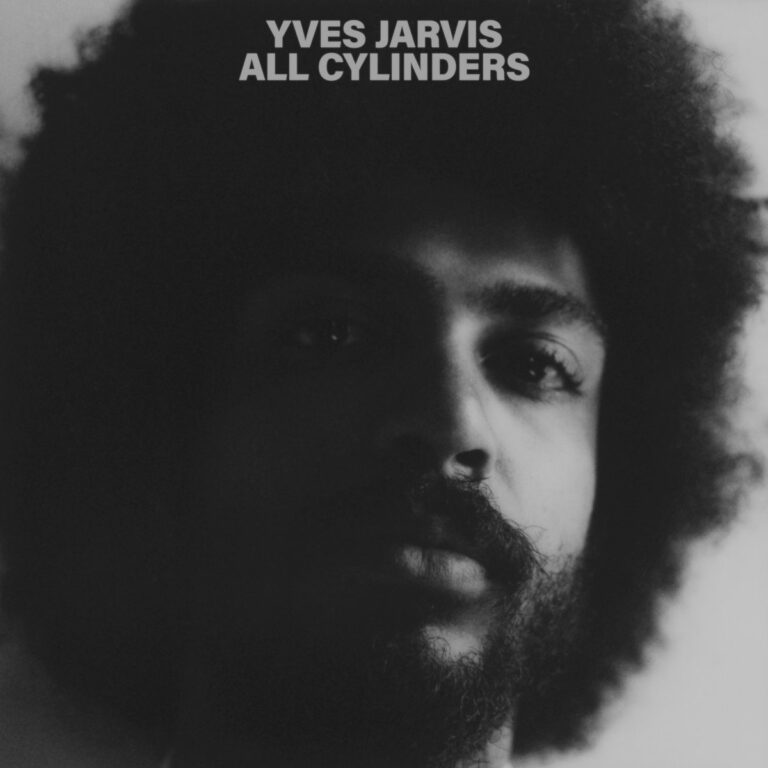
Having been part of the Grand Jury that selected the ultimate winner of the 2025 Polaris Prize, awarded to Yves Jarvis on Tuesday, September 16, at Massey Hall in Toronto, I am focusing on the winner.

All I can tell you about the Grand Jury is that I knew the identities of the three ultimate finalists, which you will never learn except for the winner—we are bound by secrecy, we signed a document to that effect. You should also know that no member of the Grand Jury knew on Tuesday who would ascend to the throne. All I can tell you beyond that are my impressions of Yves Jarvis’s recent work, which I have been following since his Montreal debut under the pseudonym Un Blonde.

Raised in Calgary and based in Montréal, Jean Sébastien Yves Audet, his real name, is a very special creature.

I interviewed him a few times, attended several of his concerts, and… grew a little tired of his changing career path, which was disconcerting at times. Of course, I always knew he was prolific and gifted: a seasoned multi-instrumentalist, excellent singer, very good arranger, lo-fi producer, good lyricist, conductor, improviser, architect of an absolutely unique landscape. Knowing him maybe a little too well, it took me a while to focus on listening to All Cylinders when it was released last February, now considered the best Canadian album by the Polaris community.

Then the long list was made public, followed by the short list, and I listened carefully to this album from the start of the elimination rounds. A real grower, this album has a wow factor that gradually reveals itself with each listen, so much so that I can now say that this album is quite simply excellent.

One observes the maturity achieved, the coherence of this craft in all this apparent jumble, whose order is revealed as one listens. Orchestral folk, high-level choral singing, psychedelic pop, orchestral soul/R&B, jazz, rock, fine instrumentation, all performed by the artist.

Like the best self-producers and one-man bands in the pop world, Yves Jarvis has sewn together all the pieces of his work, tied together all the components of his composite art, and thus reached an exceptional level.

Once again, Montreal takes home the Polaris! As for French expression, however, we’ll have to wait and see… or maybe we won’t. But that’s another story.

Serge Fiori’s Imprint (1952-2025)

by Alain Brunet

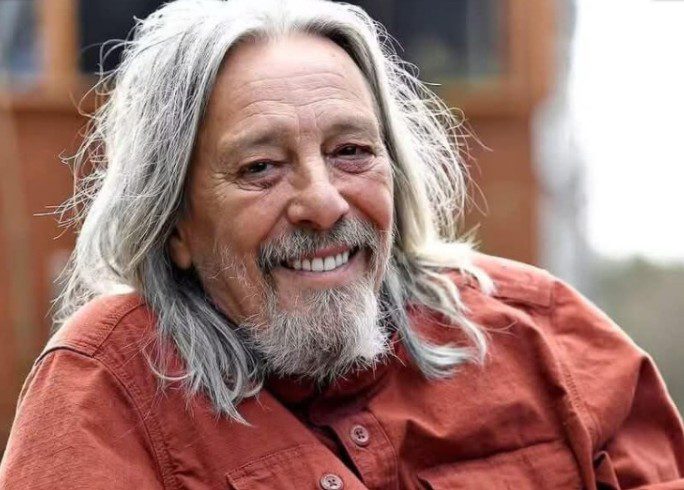
The discography of Serge Fiori, who disappeared into the cosmos this Quebec National Holiday, is not voluminous. Yet the Harmonium frontman’s qualitative imprint on our collective imagination is undoubtedly inversely proportional to his quantitative slimness.

Even in shock, we watch him.

Harmonium includes 3 studio albums released in 1974 (homonym), 1975 (Si on avait besoin d’une cinquième saison) and 1976 (L’Heptade). There was the dream tandem Fiori-Séguin in 1978 (200 Nuits à l’heure) and…there was this withdrawal from public life for most of his life, except for a few jolts like the homonymous album Steely Danesque, released in 1986.

Early in his life, Fiori struggled with fragile mental health, overwhelmed by the tides of anxiety. He was plagued by self-doubt, unable to cope with the pressure of too-quickly-acquired fame, “his heart not big enough for all the love” he was given. Long holed up in his home in Vieux Longueuil, which he had since left to settle in Saint-Henri-de-Taillon on Lac Saint-Jean, Serge Fiori had joined the transhumance of “everyone who had something to say”…

But hey, he did studio work, soundtracks, directing, meditation… Nothing exceptional, until his unexpected resurgence in 2014, a solo album crafted with the same old patte, with few aesthetic alterations. It was a mass success keb, a mass rehabilitation, a brightening of existence.

Then came the symphonic complements, Harmonium classics and inspirations by painter Jean-Paul Riopelle, arranged by Simon Leclerc and Blair Thomson respectively.

Few recordings created in a lifetime, and … yet Serge Fiori is still the object of a cult today magnified by his own death.

Why is that?

Because Fiori was the most gifted composer of his generation, when it came to chanson keb. Not the best lyricist, but the most talented composer, an exceptional melodist and harmonically superior. His colleagues came from folk, trad, folk rock and pop. He came from jazz and modern classical music, as well as psychedelia and progressive rock. Let’s not forget that his father Georges was a very good musician in the 50s and 60s, leader of a jazz-variety big band well-versed in Italian weddings, dance halls and other corporate festivities. Serge had fallen into the cooking pot, as you may have gathered…

I remember spending an afternoon with Fiori’s father and son at Serge’s house, discussing music, filial and paternal love. Very touching! I remember other fascinating discussions at his home, where we exchanged our favorite jazz and other modern music, and loved to identify our favorite musicians of the moment. Serge Fiori was a true connoisseur of music, as well as a delightful interlocutor… in addition to remaining the musician above the fray that he still was in spite of everything.

Even before he was in his twenties, he was a cut above other songwriters in French-speaking America. I was a senior in high school when the namesake was released. Big shock at the student café! The trio was folk in appearance, but we soon realized that the guitar chords, vocal harmonies and stylistic references were richer, well above average. Harmonium gradually became orchestral and… without question, the most musically evolved group in 70s keb song.

Fiori and Harmonium had perfected an unprecedented, world-renowned blend: a symbiosis of folk, folk-rock, progressive rock, jazz fusion and classically inspired chamber pop – with the support of arranger Neil Chotem, remember! These songs sometimes carried esoteric themes, a tad pompous, gurusque and mystical-sounding, we agree… But the music more than made up for it.

For a long time, I felt sorry for Serge Fiori’s mental health, his mal de vivre, his fragility, his inability to produce at the height of his talent. His lack of courage? When, later in life, I became more capable of empathy, my perception changed. Each of us has his or her own capacities, each of us experiences accidents differently from the inside, each of us has a singular trajectory. All that remains is the beauty. From Serge Fiori, there’s plenty left.

Polaris | No French Album to Win the Prize

by Alain Brunet

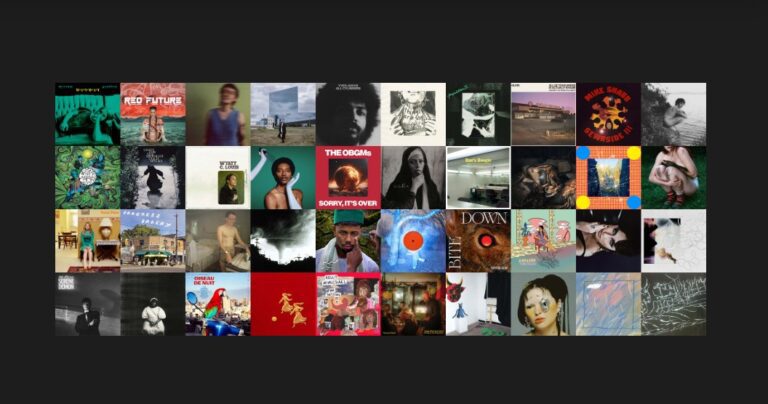
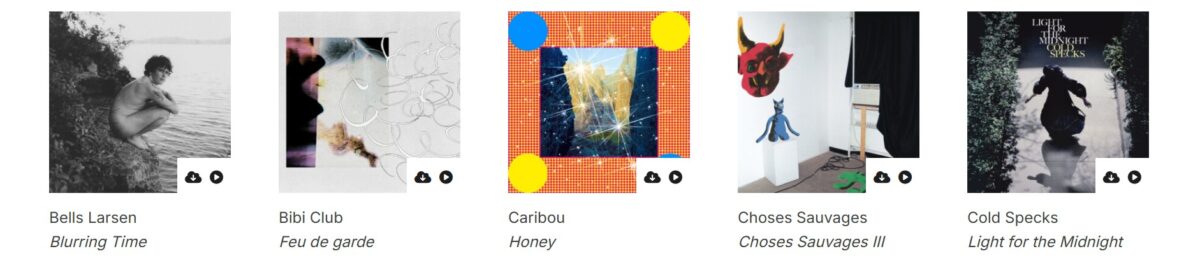
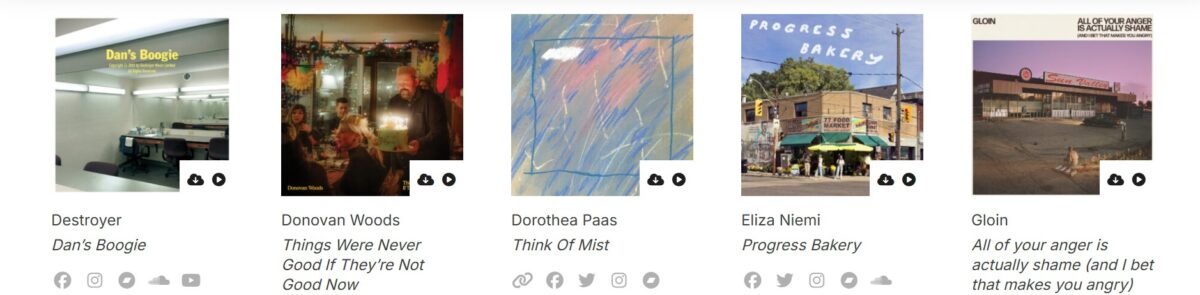
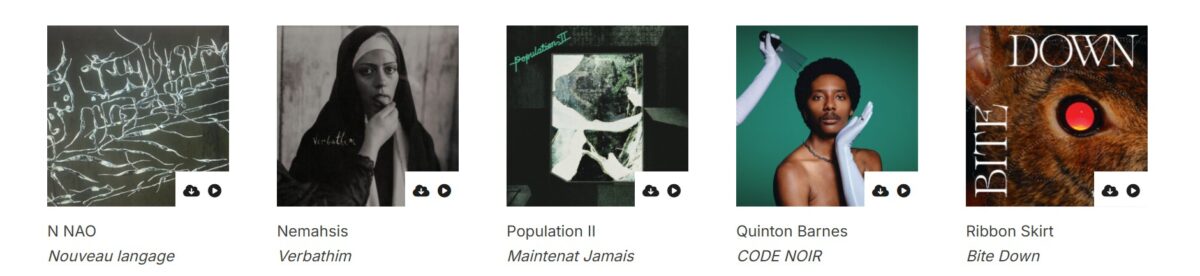
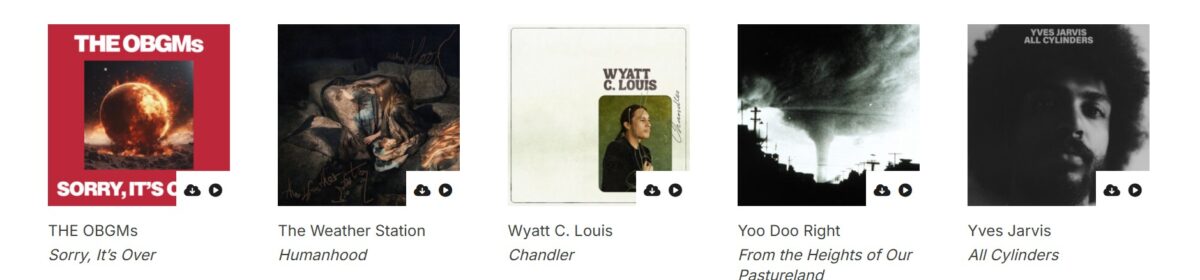
Journal d’un loup-garou (Lou Adriane Cassidy), Oiseau de nuit (Antoine Corriveau), Dogue (Ariane Roy), Feu de garde (Bibi Club), III (Choses sauvages), Abracadabra (Klô Pelgag), Nouveau langage (N Nao) and Maintenant jamais (Population II) are the French-language albums selected for the long list of the Polaris Prize, Canada’s most prestigious award for the “best Canadian album” of any style.

Having been a juror myself since the Polaris almost began, I won’t tell you who I voted for. But I pledge my shirt that none of these French-language albums will win the famous prize. Don’t get me wrong, I have no intention here based on some narrow, uptight nationalism. Rather, I propose a realistic observation, a pragmatic analysis.

For several years now, anything from white, French-speaking Quebecers – in other words, all the albums mentioned at the outset – has had little or no appeal to Canadian journalists speaking English or any language other than French.

Need we remind you that Anglo-Canadian music reviewers, unilingual with a few exceptions in the Rest of Canada (ROC), see NO coolness in these very good albums, because they don’t understand a word of these songs, which is more or less half the artistic quality of the work accomplished. What’s more, the image of French Quebec in the rest of Canada may not be at its best with the English-speaking ROC music-lovers inclined to the Polaris corpus for reasons we all know, especially since this community doesn’t know the nuances and doesn’t speak the language to tell the difference. So what’s going on? Only Population II and Antoine Corriveau could seduce some, because their musical proposals stand out.. To the point of making them an ultimate winner? Highly unlikely.

Now, everyone in indie franco Quebec knows that the hottest albums of the moment in Quebec are those by Lou-Adriane Cassidy and Ariane Roy. But… if you don’t understand the quality of the lyrics because you don’t speak the language, these albums become much less singular than they really are. Imagine a Richard Desjardins album in another language with exactly the same music… would we be seduced?

And that’s why French-language albums won’t win in 2025, once again, even though some of them will be on the short Polaris list soon to be made public.

So what’s the big deal? Every year since 2006, when the first Polaris Prize was awarded, Kebs journalists have been highlighting the Francophone selection on the Polaris long and short lists. To be more precise: in 19 years, only one Franco band has won, and that’s a long time ago: Karkwa, in 2010, which raised a few eyebrows here and there in the ROC.

Since then, NOTHING. Yes, of course, some excellent non-French Quebec albums have made it to the top, such as those by Pierre Kwenders, Godspeed You! Black Emperor and Backxwash.

As for native Kebs speaking French, NOTHING.

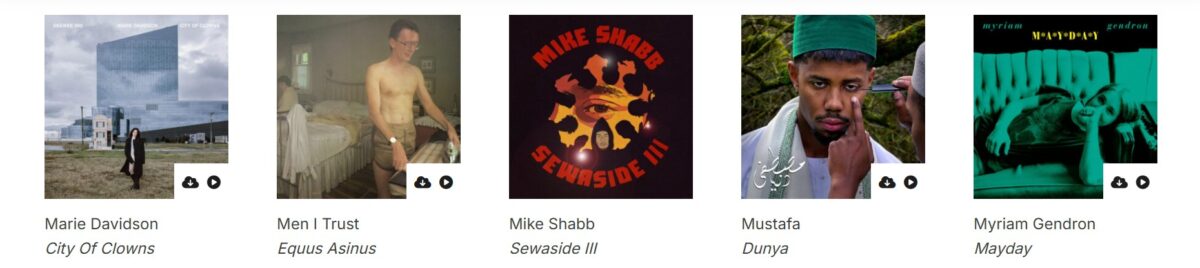
Nevertheless, the French-speaking world represents between a quarter and a fifth of Canada’s population – 11 million, or just over 25%. The Kebs francos won just over 5% of the Polaris Awards. Of course, we can’t claim to be exactly representative of Canada’s French-speaking population, but just one Franco winner in 19 years makes an impression on the imagination. Do you really think that’s going to change any time soon? Let’s not be naive. That said, it’s possible that Marie Davidson, a French-speaking Quebecer whose superb album City of Clown, expressed exclusively in English and an international award-winner since its fall release, will win the prize next September. For French, we’ll have to wait and see, barring a miracle.

TO LISTEN TO THE 40 ALBUMS ON THE LONG LIST, CLICK HERE

Canada At SXSW: Business As usual?

by Patrice Caron

We’re just a few weeks away from South by Southwest, the music, media, technology and film industry’s big event. Founded in 1987, the event has become a must for thousands of entrepreneurs, either to present their projects or to discover those of others. For the occasion, Austin, the capital of Texas, becomes the site of a carnival where locals flock to mingle with the mostly international guests and liven up 6th Street, the epicenter of the bacchanal, with a fauna that intermingles delegates with cockades, Jesus parades, twenty-somethings on the prowl, street vendors and artists, as well as the many musicians trying to unload their equipment through it all. At the same time, conferences, fairs, showcases and networking keep the delegates busy, most of whom are there to develop their businesses. The artistic side of the festival alone is worth the price of the roundel ($895 usd), but the raison d’être of this event is the business development side. That’s where its success lies, and many have been inspired by it ever since: M pour Montréal and Pop Montreal are just two examples.

I’ve had the good fortune and privilege of taking part in it for ten years or so, and it remains one of my finest experiences as a music lover and cultural worker. Thousands of musical groups together for a week, performing day and night, it was a dream. It nearly killed me too. Eventually, you have to get used to the fact that you can’t see everything you’d like to, and that it’s often better to let yourself be surprised by chance than to run to the four corners of the site, through the aforementioned fauna, to catch 10 minutes of the performance and have to make the same trip again for the next one on the list. I made some great discoveries, and I still miss that kind of crazy Friday night when you crawl back into bed, exhausted from so much stimulation, your ears ringing from all that’s gone on, and a smile on your face knowing it’s all happening again tomorrow.

It’s an experience I wish for all musicians and cultural workers. And if it develops into something interesting for them, it will have been worth the effort and the cost. Because it’s expensive, and the festival only provides a bare minimum for those who perform there, cheap accommodation is virtually impossible unless you spend the equivalent on transport, and that’s without dwelling on the difficulties of performing on American soil for foreign musicians with prohibitive visa costs. For Canadian musicians, there are a few funding programs for this sort of thing, but it’s all grants, paperwork and the like. You have to want it.

For a number of years, Pop Montreal, M pour Montreal and the Canadian Independent Music Association have been presenting showcases, BBQs and cocktails featuring Canadian artists in market development, with great success. The support of these organizations helps artists and the companies representing them find ways to make this investment a success, and ensures a certain professional presence at the events presented under these umbrellas. It’s a win-win situation for everyone involved, and it marks the presence of Montreal and Canada at a major event where a majority of industry players converge in an exceptional way. These initiatives are essential and should be supported as such.

The Canadian Independent Music Association recently announced that it was canceling its presence at the next edition, stating that the current political situation in the United States, prohibitive costs and the weak dollar had convinced them that the potential benefits were not worth the investment. Knowing that this is not the kind of thing that can be organized in 2 weeks, CIMA must have lost some money in the process, and will have to add this to the loss column. Is this an isolated incident or a trend?

For their part, M pour Montréal and Pop Montreal unveiled their official showcases a few days ago, featuring La Sécurité, Population II and Bon Enfant. Once again, it’s clear that this kind of thing doesn’t happen in 2 weeks, and that the wheels were in motion long before the U.S. elections and the revelation (ahem) that the new administration would make a 90-degree turn to the right once in power. And that Canada would be threatened with annexation and a trade war. In light of this new reality, we need to consider where we stand in terms of doing business.

We’re already in a bit of a bind with the models that have been imposed (Apple, Spotify and others), which channel part of the sums invested in creating Canadian content, fattening up a system that nonetheless disadvantages it, with a few exceptions, so we have to ask ourselves whether adding more makes sense. And begging for attention at a time when our very essence is being called into question may not be the right message to send to the world.

As we all know, boycotts have mostly a symbolic impact, and almost never touch the source of the discontent. But we’re in the symbolic business at the moment, and what happens next depends on where our representatives stand on the situation. If we want our defense of Canadian and Quebec identity to bear fruit, we have to set an example. Reconsider investments. Find other markets to develop. Change tools.

And abandon, perhaps temporarily, profitable habits like the Canadian presence at South by Southwest, because there are limits to playing the game with sore losers who change the rules along the way. And don’t let the Canadian citizen who takes twice as long to buy groceries because he doesn’t want to choose American products feel that there’s no point in worrying about it. Again, boycotts don’t affect the source, but they do affect others. We choose ourselves. It helps local producers, both manufacturing and cultural, and the money comes back here. Finally.

For decades, it’s been preferable for artists to be largely apolitical, and the polarization of recent years has reinforced this position. And unless you’re comfortable with incessant insults, or have an audience mostly aligned with these ideas, it’s understandable that many don’t want to be associated with things that might alienate some of their audiences. But it’s reached the point where identity itself is called into question, and ambivalence is no longer a position that can be explained. The reality is that living in Canada is now an important factor in our relationship with the world. To deny this is to deny ourselves. This doesn’t mean solidarity with our political representatives, but with our fellow citizens, who will all have to adapt to the new reality of a suddenly less friendly neighbor, no matter what political labels we’re saddled with. What counts today is that of Canada and Quebec.

The best way to make our voices heard is through those of our artists, who will at least have the benefit of uniting our voices and giving them volume, supporting our fellow citizens, and allowing them to choose for themselves. To support a culture that goes beyond poutine and field hockey, the only thing that has kept us from becoming the 51st state of the United States. It’s time for our political representatives to properly support these artists, because the future of Canada and Quebec depends on them. Let artists and cultural enterprises realize what’s at stake, and let citizens have the means to make a difference at a pivotal moment in our collective history. Our greatest adversary today is not only Trump and his minions, but ourselves.

Facebook – Move or Stay?

by Patrice Caron

The rise to power of the meta-barons in the U.S. has provoked all kinds of reactions, including a migration to a social network full of promise in protest at the new MAGA approach of the GAFAMS tycoons. That we’re still on what used to be Twitter isn’t too justifiable, given the radical transformation initiated in 2022, but Facebook, despite its censorship of Canadian media, has still retained a certain importance for millions of Canadians.

From day one, Facebook has been an imperfect product. In exchange for our lives/data, we get a social network that has become so important that an alternative, even a superior one, will never have the same buy-in.

The advent of the king of trolls has revealed that surprise, surprise, Zuckerberg loves money. And to make more of it, good intentions be damned. Not a huge revelation, but now we’re looking to at least try to resist, to protest, to be taken into consideration.

We vote with our feet. We let go. For the ex-Twitter, the bonze is a Nazi and uses his platform to troll the planet. It’s even insulting that our governments still use this platform to talk to us. What does it take for them to find something else? Make fax great again, like. But Facebook? Okay, the billionaire upstairs is a classless douchbag who would never be my friend. But to date, as far as we know, he’s not a Nazi and I’ve never seen a post from him or even a comment, I don’t follow him and unlike X, they don’t force his prose on us.

Because, for the moment, unlike X, when you do a bit of housekeeping, you see a lot of what you want on Facebook, except what they censor. The suggestions/advertisements and so on that abound are often related to things you’re already following. And unless you have a penchant for the wacko world, you don’t see too much of that content, depending on your friends. You’ll see music, film, and culture clips if that’s what you’re into, or doomsday preppers if that’s what you’re into. It takes time, and despite all the crap that sneaks in, it ends up being an environment you can relate to. The yin and yang of algorithms, sometimes it falls on the right side.

Quebec’s cultural particularity means that the network built on Facebook is pretty much the only thing we’ve got left. It’s the only thing that lets us talk to each other. Still.

Other media complement it, and banning them is the worst thing that could happen to this network. Not that Zucko doesn’t still want to censor wackos. Or that he’s going to kneel before the king of trolls. It’s about hammering the final nails into the coffins of those media outlets with the terminal cancer of… Facebook. It would be funny if it weren’t so sad.

It’s been over a year and there’s nothing to give any semblance of hope. The media that are still holding out are getting weaker and we know what’s coming. But what do we do in the meantime? Disperse and then what? Who does that serve? Divide and conquer, as they used to say.

The reasons for leaving are legitimate, but we’re losing important voices in a debate we need to have if a certain idea of Quebec is to continue to exist. We’re severing the link between those who give us our identity, the artists, and an audience that would otherwise be impossible to reach, and who also have other things to do than rebuild a network that will never be what they already have.

Do we give way to junk dealers and watch the ship sink while fiddling on a melting ice floe …? Or talk into the void until we tire of that too …? No. I want to see your photos on the beach in the Philippines, the show you went to see, and what you thought of the film you saw. I want to know what’s going on at night, even though I’ve got the FOMO and will probably spend part of my evening doomscrolling and thinking I should have. Knowing who’s been on “Tout le monde en parle” even if I never listen to it. Knowing who won the field hockey game even though I don’t give a shit. You know, knowing what my friends are going through, what they love, what they hate.

If tomorrow morning, everything ends up somewhere other than on a mega-millionaire platform, go. I have zero attachment other than practical for this thing and the bro riches can suck my left big toe. But it’s not true that I’m going to let them win without putting up a fight. Because their empires don’t exist if there’s nothing in them, and in the end, it’s all ours.

This is no time to shut up or run away, on the contrary. Everything is so intertwined that there’s no escaping it. Even if the sky seems bluer elsewhere, it’s still at the mercy of a rich man who loves money more than being able to breathe. We no longer dream of something that belongs to us, but of still having our place. To stay alive.

Don’t go, we need you.

JiC, Kendrick and the SB at Marie-Louise’s, Follow-up and End

by Alain Brunet

While preparing Saturday’s meal at the end of PM, I enjoyed the conversation between Jean-Charles Lajoie and my favorite SRC host, Marie-Louise Arsenault. Since anything can (indeed) happen, I was the first to be surprised that my rant, written spontaneously for PAN M 360, made it this far. That is, to the point of publicly defending the arrosé and conclusively demonstrating his personal culture. What’s more, in a resolutely Canadian radio tone. Cool!

Frankly, I didn’t know much about JiC’s private life or his inclinations towards art, but his level of language allowed me to deduce that no, JiC wasn’t at all uneducated. Rap ignoramus? Yes, from the outset… but less so than I felt at the end of the interview. This calls for a continuation and an end on my part.

Live on Saturday, JiC revealed, among other things, that he had frequented the contemporary dance scene in his early adulthood, not unlike Jean-Luc Mongrain, who is not as populist as he seems.

I also observed that he was more sympathetic and sensitive to rap than he let on in his column, which I criticized outright. In this very nice exchange with Marie-Louise, he told us that he had been made aware of the Kendrick Lamar phenomenon through his sons, and that he sincerely liked his performance… albeit not as inclusive as the star of his track, Lady Gaga.

Don’t worry, I don’t want to have the last word or dwell on these written or verbal jousts between two perceptions. I don’t relish the compulsive practice of this spectacle of media polemic, which is nonetheless useful in certain contexts such as this one.

So let’s review the construction of the text in question, which I had read carefully (yes, JiC) before publicly dissociating myself from it.

First, the exaggerated title, except for so many anti-rap whites who openly and loudly hated the halftime show: Lady Gaga outclassed Kendrick Lamar. It’s worth remembering that the title of a text guides its reading, transforms its perception. I know what I’m talking about: throughout my career, I’ve raged time and time again about having had a spectacular and misleading title imposed on me by a desk clerk. But JiC hasn’t raised this issue, so let’s assume he assumes his title.

Now, if that title is consciously chosen, everything that follows is open to interpretation:

“Not that the Compton icon, emancipated from this impoverished Los Angeles suburb was bad, on the contrary.”

JiC may be implying that Kendrick Lamar put on a very good show, but the title that precedes it tinges that statement with irony. And what follows reinforces this impression:

“But we have every right to expect a more spectacular performance on the big Super Bowl half-time stage. Personally, I want it to be big and splashy, with visual effects and pyrotechnics, I want it to be bigger than big. I also want it to be inclusive. Ever since the NFL ceded control of its Super Bowl halftimes to Jay-Z, I feel more like I’m being subjected to 13 minutes of propaganda than experiencing a moment of collective release at the heart of the biggest soccer party on the planet.”

Then it gets even more annoying.

If we follow this logic, Kendrick Lamar should turn into a lighter, more entertaining artist because he’s at SB. Bias…

For most of his minority detractors in America, palefaces who abhor hip-hop (including, it has to be said, many native Kebs), this performance was incomprehensible and lacking in special effects, and therefore “13 minutes of propaganda”.

After having blown the hot, here’s the cold from JiC’s side, a fine fox who knows how to please his mostly anti-rap sports fans and also some who recognize his real tastes and therefore his paradoxical posture which follows:

“Don’t get me wrong. Kendrick Lamar’s statement on Sunday night was fantastic. His line “The revolution will be televised, you picked the right time, but not the right guy” was worth the 15 minutes alone. And what can we say about his hammered charge against his rival Drake, whom he accuses of being a pedophile, Not Like Us, during which the legendary Serena Williams appeared in a “C.R.I.P. walk”, a darling of Compton like Lamar but also… Drake’s ex-girlfriend!”

Even with this insistence, supported by Kendrick’s Gil Scott Heron-inspired paraphrase (the revolution won’t be televised), it’s hard to understand the reviewer from the outset.

I conclude that JiC tripped without irony (after his clarifications at Marie-Louise’s) but considers that the occasion was not propitious for such a Kendrick stunt in a hallucinating historical context. The arrival of Trump, the USA cut in two, the free world cut in two, an international climate suddenly explosive.

So why not simply applaud such an intervention by the most brilliant rapper of his generation?

Performed in front of President Trump, who would have deserted the show, on one of the biggest platforms imaginable for such an exercise. Wow! Not inclusive and entertaining enough for the occasion? You bet.

Having said that, JiC acknowledges Kendrick’s finesse, which significantly lowers my level of ignorance after his radio-Canadian explanations, whereas my first perception was one of subtle mockery of the famous rapper, hence my own exaggeration at the time, I confess.

And so I now believe what he says:

“Basically, Kendrick Lamar’s powerful editorial confirmed his status as a hip-hop icon. History will record that he even did enough to push Donald Trump out of the stadium during his performance, enough to make Kamala Harris envious.”

OK, well received, but…

“The first rapper to single-handedly provide halftime at a Super Bowl game, his performance was nevertheless a far cry from the collective led by Dr. Dre and Eminem who smashed it all in 2022.”

Really?

As a die-hard NFL fan, I’ve been watching the SB half-time shows since I was a kid, a long time ago, when marching bands played on the field. For the LIX, at least, I didn’t see any choreography more conventional than the previous ones. I didn’t see Samuel Jackson steal the show, as JiC claims. I wasn’t short of special effects, given the content of the intervention. Rather, I applauded the show’s genuine dramaturgy, coherent construction and fully mastered artistry.

That’s why JiC’s conclusion, which justifies the title of his text, got me even more excited.

“…deploying all the emotion and power of her voice in front of citizens from all walks of life, everyday heroes, Lady Gaga embodied what the United States of America should be: united, inclusive, unifying.A great television moment that made me want to see the 5-foot-2-inch superstar rock the planet again in a future halftime show!”

Er…no. I like Lady Gaga, but you can’t compare her to Kendrick any more than you can compare Barbra Streisand to Bob Dylan… a complete unknown, needless to say.

So if you’re calling for more levity at the halftime show, you don’t invite Kendrick and you don’t invite popular artists like that. Of course, you can’t cram so much substance into every SB, but I think this time was ideal, all things considered. And the more I think about it, the more I believe that this performance will be remembered as one of the most important in six decades of SB.

I insist: it’s very rare that artistic substance of this level of excellence manages to produce such a subversive impact and thus catalyze the thinking of its adherents and opponents, a little like the deep divisions that are eating away at Western societies in this chaotic era that is dawning. Kendrick’s 13 minutes is a real grower: the more you think about it, the better it gets.

Well, let’s not get carried away… after further explanations from our star communicator, who explained himself quite well on the matter afterwards (except of course having assumed that I’d only read the title of his text haha!), I’d like to think that the columnist will agree with me more and more on this issue. No irony intended, JiC.

TO LISTEN TO THE CLIP ON “TOUT PEUT ARRIVER

TO READ THE ARTICLE THAT STARTED IT ALL

About Kendrick’s Reproval at Super Bowl LIX

by Alain Brunet

I stumbled across a scathing review of the Super Bowl halftime show by Jean-Charles Lajoie aka JiC, a host and sports columnist I respect – more to the point, I watch his daily show on TVA Sport quite often. Lively, intelligent, experienced, knowledgeable, big-mouthed, a great showman on TV and a great communicator.

And yet… a big mouth sometimes means outbursts and impertinence. As such, JiC should shut up about hip-hop, or at the very least humbly express an unfavorable opinion as a layperson, rather than wallow in the peremptory tone of his very bad column published this week in the Journal de Montréal. I invite all music fans to read this anti-rap piece.

“But we have every right to expect a more spectacular performance on the big Super Bowl half-time stage. Personally, I want it to be big and splashy, with visual effects and pyrotechnics, I want it to be bigger than big. I also want it to be inclusive.

Inclusive? Really?!!

“Excluded” from the party, JiC and so many white people his age (50+) haven’t yet grasped the fact that hip-hop has outrageously dominated Western pop music for the past two decades. That the majority of Westerners love this style without forcing it. That hip-hop has been around since the late 70s… Hello? That Kendrick Lamar doesn’t give a bad show just because he raps, but that he’s surrounded by exceptional artists, from Samuel Jackson as Uncle Sam to Serena Williams’ crip walk on Drake’s symbolic grave or SZA’s suave vocals.

Does that mean anything to you, SZA, JiC? The Grammys awarded to the singer aren’t enough to make you feel included, you who surely know Bruuuce, Robert Plant or Metallica? Not capab rap? If you don’t keep up with pop culture that’s totally dominated by soul, R&B and hip-hop, it’s understandable that you don’t feel you’re in the same game… and, all in all, it’s also understandable that you’re a total ignoramus of mass pop culture as it is today. Yes, I’m a bit tough, but your crust deserves to be generously smeared, as the Velveeta ad would have suggested… Granted, no one’s demanding that you don’t get it, but…an ignoramus expressing himself with authority and grandiloquence on such a media platform is becoming very ordinary.

Yes, JiC, you know Lady Gaga, you’ve heard her with the late Tony Bennett and maybe even with Bruno Mars last week at the Grammys. THAT’s inclusive, isn’t it? But not a single word about the superb New Orleans artists Terence Blanchard, Jon Batiste, Trombone Shorty, Lauren Daigle and Ledisi, invited before the kick-off, some of whom have visited us a few times in Montreal… to packed houses. And Lady Gaga, whom you rightly praise, is now known to nonagenarians on this continent.

But why speak out about art when you only know one artist on the SB halftime show?

The host and columnist adds: “Since the NFL ceded control of its Super Bowl halftimes to Jay-Z, I feel more like I’m being subjected to 13 minutes of propaganda than to a moment of collective release at the heart of the biggest soccer party on the planet.”

Now that’s some serious nonsense from JiC.

If Bruce Springsteen had sung some of his politically committed songs there, I bet a 10 he’d have found it very cool. Whereas Kendrick, one of the best songwriters in rap today (except for his stubbornness in playing this ridiculous testosterone game with Drake… who nonetheless opened hostilities), is accused of propaganda. What’s more, by a white man who clearly knows nothing about his masterful work. Unconscious bias? Yes, JiC, I’ll probably be labeled a woke 67-year-old. Well, to say…

An NFL maniac, I personally watched the SB on Sunday in a warm and welcoming lounge, populated exclusively by white men in their sixties and seventies. Guys of my generation whom I sincerely love and have known for decades. But some of them had JiC’s reaction. One of my friends even asked me to answer the question: “Why hip-hop at the Super Bowl? “So? At first, I was a little embarrassed. I can well understand, accept and respect this feeling, but it’s better to avoid antagonizing and breaking the mood. In a gathering of friends, for such a small detail of life, there’s really no need to make a fuss. But I confess I couldn’t hold back when another dear friend said it was the worst halftime show in SB history.

Oh yeah? OK. When you don’t really like hip-hop, you can legitimately express your displeasure… even to the point of issuing such a verdict?

The tone of this disapproval would probably have been different in the company of our children and our friends of the younger generations, in their twenties, thirties and forties… To my friends’ credit, their comments were much less intense than that of host Louis Lacroix, who tweeted that he had seen street gangs take control of his TV, referring to the half-time show. The poor man has since apologized for uttering such racist nonsense.

Well, no, it may not have been the best halftime show… but it certainly wasn’t the worst. Not the best 3D effects, but certainly not the worst. Maybe not the best choreography, but certainly not the worst.

As for the rap, Kendrick’s lyrics, the exceptional quality of which detractors ignore, we must remind the uninitiated that he is one of the most brilliant popular songwriters the USA has produced in 30 years.

His editorial stance on the SB halftime show was an opportunity to criticize the heart of this entertainment, without denying the pleasure of being there. That’s not what propaganda is about.

What’s more, Kendrick surrounds himself with some of the hottest musicians and beatmakers on the West Coast and beyond. And I can attest to the fact that he’s put on some of the greatest hip-hop shows ever presented in the world’s arenas and stadiums.

So when a white keb communicator (exactly as I am) expresses such ignorance, such contempt, I’m ashamed. But I forgive you, JiC, I love you to this day. You didn’t know what you were doing, as another JC said in other circumstances.

Diversity and inclusion are not punching-bags

by Frédéric Cardin

This is not a music concert review. Rather, it’s a commentary on a music concert review that appeared in Le Devoir on Thursday 23 January. So, what’s the point? Well, not to go back over the aesthetic appreciations, or not, of my eminent colleague (Christophe Huss, to name him), but rather over the underlying message that accompanied his text. 

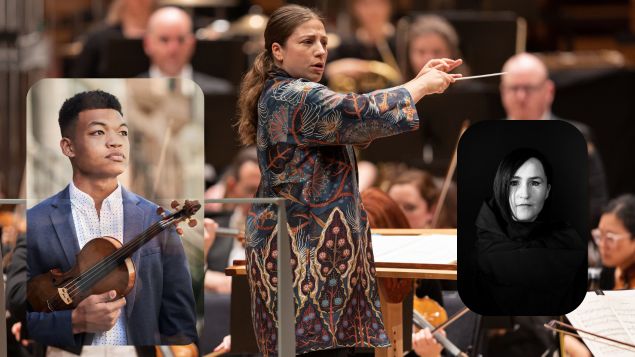
Mr Huss commented on the Orchestre symphonique de Montréal (OSM)’s Bruch’s Unforgettable Violin Concerto (so titled) concert, featuring Black american violinist Randall Goosby, Ukrainian conductor Dalia Stasevska, and also music by Bruch, Dvořák, Florence Price and contemporary Icelandic Anna Thorvaldsdottir. The critic didn’t like Thorvaldsdottir’s Archora score. So be it. Nor did he have kind words for the performance by the young violinist Goosby. Fair enough. That’s up to him as a critic, and Mr Huss goes a long way towards explaining the musical and analytical reasons for his subjective diagnosis. My aim here is not to question his opinions on the matter. I disagree with some of his observations and agree with others.

In all transparency, I’ll say this: I love Thorvaldsdottir’s music. Although Archora suffers from being a bit lengthy, I heard in it a very fine narrative discourse, supported by long, sustained waves of strings and brass over which interesting textural sonorities simmer or appear spontaneously, in an overall expressive and dramatic framework that plunges the listener into a kind of deep, dark oceanic abyss. One imagines oneself floating in enveloping eddies, regularly bitten by some invisible creatures. The final ascent towards a discreet but beneficial light reassures and soothes. A fine piece of contemporary music in today’s style, halfway between academic art music and film music.

Mr Goosby’s performance also seemed to me to be appreciable. Not the most luminous reading of Bruch’s Violin Concerto No. 1 in G minor, Op. 26, I agree, but through a sober, even cautious interpretation, I was pleased to notice several fine expressive outbursts and a fine, very precise technique. Of course, I also recognise that I heard Mr Goosby on Thursday evening, and Mr Huss heard him on Wednesday. Improvements may have been made in 24 hours. 

But all that is secondary. Mr Huss has his sensitivities, I have mine, which is normal and even necessary. The problem with my colleague’s text lies elsewhere.

Misleading amalgams, dubious innuendo.

What I found objectionable, not to say detestable, in Mr Huss’s article were the amalgams that I would describe as outright opportunistic, he allowed himself to make with the subject of ‘diversity’ in symphonic programming. I won’t rewrite his paragraphs, but the gist of the implication is that the woman Thorvaldsdottir’s music and the black Goosby were there because the OSM has fallen into the ‘ideology’ of diversity (or EDI) rather than remaining faithful to artistic purity. What’s more, the neighbouring Orchestre Métropolitain (OM) here in Montreal is paying the price today (reference to concert cancellations announced earlier this week) so the OSM should take note, or so insinuated Mr Huss.

Allow me to add a few caveats to this well-worn score, thank you.

It says in the text by my colleague that Randall Goosby ‘suddenly burst onto the scene in October 2020, at the age of 24, as Decca’s new violinist, having previously flown under the radar’. Without being the Queen Elizabeth Prize in terms of recognition, far from it, let’s just say that the young man played with a symphony orchestra at the age of nine (Jacksonville) and 13 (New York Phil, a Young People concert) and that he received an Avery Fisher Grant in 2022 (after his Decca contract, yes). He was also permitted to use a Stradivarius by the Samsung Foundation. If you look for other reviews of his concerts elsewhere on the web, you’ll find very positive reviews and reports of very happy and impressed audiences. It’s not confirmation of inherent genius, but I don’t see any blatant fakery either. 

Mr Huss adds: ‘We didn’t perceive from the Decca records that Goosby was a prodigy or a violin genius. The records didn’t fool us‘’. Perhaps because the repertoire chosen by the artist (and the record company) made room for marginal music, that the artist plays very well? His first album, Roots, was devoted to pieces by Black American composers, which are not well known and therefore less open to comparison by the priests and guardians of the classical repertoire Temple. His second album focused on the music of Joseph Boulogne, an exceptionally talented black composer and individual, almost exactly contemporary with Mozart. Here again, the repertoire is probably still ‘insignificant’ for some conservative purists, but it is nonetheless well-crafted, and in any case no less so than that of many other white European composers such as Vanhal, Cannabich or Reinecke. 

Randall Goosby is absolutely right to explore these areas of Western art music, which remain neglected for reasons of exclusivism and long-standing haughty contempt. Bach, Mozart, Beethoven, Brahms, Mahler remain at the top of the pile, but broadening the perspective does good and stimulates our aesthetic emotions with music that has deep roots and powerful meaning, as well as simply being good. 

For almost two centuries, no Baroque music was played. We had to insist on rediscovering some gems, but also some ‘average’ material that is still extremely enjoyable to listen to, again and again. 

In short, nothing in what I’ve just said makes Randall Goosby a musical genius of unbelievable originality that my colleague just didn’t recognise, but nothing either, nothing at all, leads one to think that his skin colour alone earned him a record contract and professional engagements.

Who’s being ideological, really?

There have been loads of ‘ordinary’ performers, hired by all the orchestras over the decades. For a long time, they were all white Westerners, or almost. In other words, either their skin colour mattered, and the current pendulum has swung back in a balancing act (confirming at the same time the long-denounced existence of ‘white privilege’ and ‘systemic racism’), or it didn’t, and so the hiring of average performers (I am NOT saying Mr Goosby is average, but am using the word for the sake of argument!) has never been a question of ‘ideology’, but rather an inevitable practice in view of the phenomenal number of concerts to be given all over the world.

In the final analysis, Mr Huss’s suggestions of some kind of ideological drift to explain the presence of a performer like Randall Goosby are ill-advised, even greatly exaggerated, outright wrong and above all unsupported by tangible evidence. 

I could use the same argumentative structures to arrive at the same conclusions regarding the presence of a score by Ms Thorvaldsdottir. I will also note the irony that Mr Huss liked the conductor, Dalia Stasevska, a woman. If there was any ideology behind this concert, he’ll have to admit that it got it right in this case. Mmmmm…

But I’ll end this section here to pick up on a second point in the Devoir article: the explanation of the Orchestre Métropolitain’s setbacks by, once again, the ‘ideology’ of diversity.

Concert cancellations = diversity in programming’s fault? Wait a minute…

Mr Huss catches the ball like an Ozzie Smith-era baseball shortstop. For him, the cancellation of two Orchestre Métropolitain concerts announced recently is like a gift from ‘Rudolph the Red-Nosed Reindeer’, which just goes to show how quickly he seized on it, as well as the opportunistic, but not so thoughtful, bias of the argument.

The Orchestre Métropolitain (OM) conducted by Yannick Nézet-Séguin announced the cancellation of the Amour fatal and Fiesta latina concerts a few days ago. In the first, music by Saint-Saëns, Bizet, Strauss… and a single, fairly short track by the French female Romantic Mel Bonis. In the second, Latin music. Gershwin, Bernstein (West Side Story) and the generally popular pianist Gabriela Montero. Does the ‘diversity’ of these concerts explain their cancellation? Was it a lack of ticket sales, or were the wider economic difficulties (which Mr Huss mentions, in his defence) forcing these cuts without necessarily blaming ‘diversity’? In my opinion, there is far too much vagueness to jump to conclusions that denounce the hold of an ‘ideology’, but do so in a way that could not be more… ‘ideological’!

In addition, the concerts that were not cancelled included works by Julia Adolphe (unknown to me), Emilie Mayer and Barbara Assiginaak. It’s true that they are surrounded by repertoire stalwarts by Mozart, Schubert and Tchaikovsky. But is that enough to prove a point?

Mr Huss hints at a case of ‘backlash’. The public, he says, are turning their backs on OM for its ‘ostentatious diversity’ in recent seasons. Yeah, well. Maybe?

But at Pan M 360 we’ve realised that there may be other reasons for the problem. For example: the productions of the GFN group, including the Orchestre FILMharmonique (the ultra-popular film-concerts), the Chœur des Mélomanes and other very varied, eclectic offerings, or those in the Candlelight series, are not only a great popular success but seem to be convincing some of the new audience that the OM (and the OSM) won over to migrate to them. This audience is also more ‘diversified’. Why are they moving elsewhere? We’d have to analyse that in depth. But we doubt that a strict return to programming based essentially on the same 30 or 40 absolute masterpieces, which we love dearly but which go round and round in cycles of 5 to 10 years, will bring them back. 

According to our observations, a diverse and apparently loyal audience also turns up at events organised by the Obiora ensemble, which is made up of musicians of ‘diversity’, the first and only of its kind in Canada, here in Montreal. So is there really a problem with unconventional programmes? Clearly not for everyone.

OM’s financial problems may also be explained by targeted investment choices, which can be a major burden on the organisation’s finances but are not linked to diversity at all. The forthcoming European tour will be expensive, for one. Some benefit evenings, grandiose and probably expensive, also reduce the margin of income from them, for another. And so on. My aim is not to tell the OM how to run its business, but rather to demonstrate that the problem can hardly be attributed solely to the programming of recent years and the presence in it of women, blacks, Aboriginals or anyone who doesn’t look like Bruckner, Schubert or pianist Wilhelm Kempff. It is a largely multi faceted problem and Mr Huss clearly hasn’t taken the time to look into the matter properly.

Far from being a fad, diversity is an irreversible movement

At PanM 360, we are aware that the classical music world is currently making efforts to include more ‘diversity’ in its programmes (composers, performers, musical styles visited by new works, etc.). These efforts are aimed at exploring a wider part of the human, artistic and intellectual experience that is scholarly musical creation. A part that more faithfully reflects the vastness of its individual variations. Sometimes the results are not convincing. Sometimes, quite. We do not deny the need for adjustments in the programming exercise. But we do not endorse simplistic deductions that conclude with an automatic equation associating ‘inferior quality’ with genre or ethno-cultural origin in classical music. We have heard enough concerts to know that mediocrity comes in all colours and origins, and has done so for much longer than the advent of a so-called ‘ideology’ on diversity.

Nor do we see how diversity as a principle explains the financial woes of certain institutions. Rather, we see a growing need and a potential audience ‘to work with’ more effectively and convincingly. A need that will not disappear, since the traditional demography of the West is undergoing a rapid metamorphosis in ethno-cultural terms. As for half of the traditional population of the West, the women, they will not soon return to a contemplative anonymity in the shadow of the other half. No traditional masterpiece is under threat. There is plenty of space for everyone. 

Diversity is a reality. We need to recognise it and embrace its possibilities. What methods can we use to play in harmony with it, without neglecting the historical peaks of human expression? What do we do with it, how, why, for whom? The debate is open, and should be. But its very principle cannot simply be called into question, still less be described as a ‘fad’. Everyone must be invited to the discussion. It must not be left in the hands of a few people who seem, at first sight, to have already reached a scornful and condescending conclusion. 

In so doing, Mr Huss has unfortunately confirmed another distressing cliché in the minds of certain angry ‘wokes’: that of the evil middle-aged white man, incapable of conceiving the world outside his own privileges, acquired and enjoyed without restraint over the last few centuries. 

Source : 

https://www.ledevoir.com/culture/musique/835483/critique-concert-fantasia-declin-empire-symphonique
Guy Landry (1967-2025) – Le dernier des Flokons Givrés

by Patrice Caron

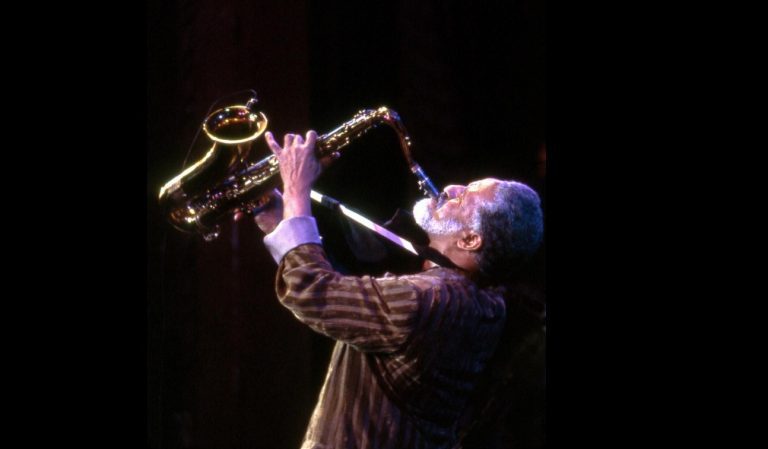
The man we thought invincible, unkillable and probably already sweating Satan, Guy Landry of Les Flokons Givrés, has hopefully finally found his Walhalla in early 2025.

He joins Bertrand Boisvert and Peter Boucher, his first Flokons Givrés acolytes, one of whom passed away in 2015 and the other in 2005. I’m not sure if they’re in the big orchestra in the sky, but if they are, it’s bound to stir things up a bit.

A legendary Montreal band from the late ’80s/early ’90s, Les Flokons Givrés were “difficult” from the start, with the larger-than-life personalities of Guy and Bertrand, who didn’t give a damn about the very concept of a musical group, using it as a vehicle to spit out all the evil they thought of the universe and fight their own demons.

Les Flokons Givrés was never an ordinary show, and there was a good chance that it was going to suck. Thanks to a legendary demo released in 1989, there was a demand and the band took advantage of it…to fuck up the momentum. We’ve lost count of the number of shows that ended in chaos, with amps farting, Guy playing non-stop, Bertrand hilarious/angry/indifferent and Banchon leaving, out of patience.

But when the magic happens, it’s communion, the audience screams out the lyrics, it revs up and the guitar saws us in half. This wasn’t the kind of thing that could happen at Foufounes, it had to be trashier, more minimal, more primal. It had to be trashy, minimal, primal. It was rare, it was stiff, but it had its effect.

The first demo, initially produced in small quantities and then double-copied thousands of times, made its way across Quebec and even Europe, by word-of-mouth alone. It established Les Flokons Givrés as a cult band, and in a way influenced a generation of French-speaking Quebec punks with their punk-metal closer to Discharge than to Bérurier Noir.

Active mainly between 1989 and 1992, Les Flokons Givrés embody the perfect crossover between punk, metal and hardcore, with a natural, flowing Québécois phrasing. If anthems like Plus rien à boire and Vedge à l’os give the impression that things aren’t flying high, L’escargot and Un skin c’t’un skin muddy the waters, revealing an intelligence and lucidity that, at the very least, pique our interest.

And despite the deliberately lo-fi means, musically, it still stands out from what was being listened to in the niche at the time. Not in virtuosity, but in intention, the internalization of influences and the unique version of them rendered by Les Flokons Givrés. They live what they say, and it shows in the music too.

It’s almost a shame that their biggest “hit” is a cover of Peter and the test tube babies’ Banned from the pubs, the famous Barré des foufs, but it’s so much in keeping with the idea of the Flokons, even more so when you know them personally, that the song has ended up belonging completely to them and being the first memory evoked by the trio.

Far from being Vedge to the bone, Les Flokons Givrés, despite their intrinsic nihilism, had a sense of formula, with evocative titles, something to say and the eloquence to express it. The rest of the band’s stories have fueled their legends, but basically, their repertoire stands on its own.

It was Guy and Bertrand’s strong personalities that forged this repertoire and the band’s trajectory, for better or for worse. Each continued to challenge reality after the Flokons imploded, in their own unique way, and are the subjects of many stories that can be told by the fireside at the end of a mush trip, with just enough distance to laugh and revive memories of the famous Flokons Givrés.

Otherwise, there’s still a “Best of” CD released in the early 2000s and a vinyl version released in 2011, with a very small print run. There’s also this tribute, released in 2024: https://studio1222.bandcamp.com/album/vedgis-revedgis-flokonum

There’s also this on youtube, while it lasts. You can also find most of the songs in audio only. For the time being.

On the stinking feud at the top of hip-hop: Kendrick vs Drake

by Alain Brunet

The recent release of GNX, a surprise album by the gifted Kendrick Lamar Duckworth, comes amidst the brouhaha of the nauseating feud between Kendrick Lamar and Drake that began a year ago. In October 2023, Drake’s song First Person Shooter involved rapper J Cole, with the latter asserting his membership of a “Big Three” that included Kendrick and Drake, the latter’s host. And then… there followed a spiral of diss tracks, designed to denigrate the speaker and dissuade the public from his relevance.

The latter rejected the proclaimed trinity and expressed his disagreement with Like That. And then J Cole, offended by this rejection, hit back with 7 Minutes Drill, criticizing Kendrick’s To Pimp A Butterfly, a jewel in Kendrick’s crown. Drake, who certainly doesn’t think he’s an orange, added another layer, claiming in Push Ups that many hip hop/soul artists are superior to Kendrick. Kendrick followed up with Euphoria, then Drake with Taylor Made Freestyle, indirectly linking Kendrick to the rise of Taylor Swift in order to denigrate his rival. In Drake’s Taylor Made Freestyle, it gets even worse: an AI reproduction of the late Tupac Shakur attacks Kendrick… while the latter hits back with 6:16 in LA and 8 AM in Charlotte.

The verbal pugilism escalated with Drake’s Family Matters , suggesting that Kendrick’s children were conceived by his best friend. Furious, Kendrick released Meet the Grahams , in which he implied that Drake was into underage girls and that he felt sorry for his son Adonis to have such a father. In Not Like Us, Kendrik described Drake and his pals as a brotherhood of pedophiles, plain and simple. And guess what, Drake went on to suggest that Kendrick’s married life was fraught with domestic violence and that he could no longer see his children.

Legal proceedings were initiated, and the confrontation continues to this day… While the knives fly lower and lower, Drake plans to be in Australia when Kendrick triumphs at the Super Bowl LIX intermission.Legal proceedings were initiated, and the confrontation continues to this day… Just a few days ago, we read in media that the Canadian rapper was accusing Universal Music Group (UMG) of charging Spotify discounted streaming rights on condition that the Kendrick’s single Not Like Us was recommended to its subscribers, as well as installing bots to falsely increase the number of listens.

While the knives fly lower and lower, Drake plans to be performing in Australia when Kendrick triumphs at the Super Bowl LIX intermission.

One more step and the guns come out?

If we go back to the source of the problem, let’s say that the qualities of Drake, J Cole and Kendrick are different, but I’m of the opinion that Kendrick Lamar Duckworth remains the mastermind of hip-hop, while Drake can’t wish for anything better than the championship of the generic extreme-center, while J Cole must be considered an undisputed master of flow but relatively conformist in form and content. It’s obvious to me that Kendrick’s substance is richer, more innovative, more refined, in text as in music and beatmaking. I’m still surprised by his mass success, an exception that proves the rule for an artistic proposal of this scope.

That said, I’m sorry to see his thick torso bulge, or even his emotional immaturity, to lend himself to such a childish game, to blow his lungs out in such a balloon of testosterone. Such a brilliant boy couldn’t avoid this alpha-male bullshit. Shame on him and his now lifelong enemies.

Subscribe to our newsletter

Inscription
Infolettre

"*" indicates required fields

Type of Suscribers