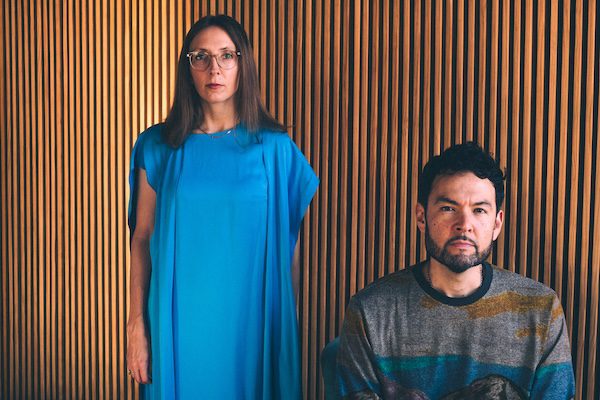
Mary Halvorson et Tomas Fujiwara
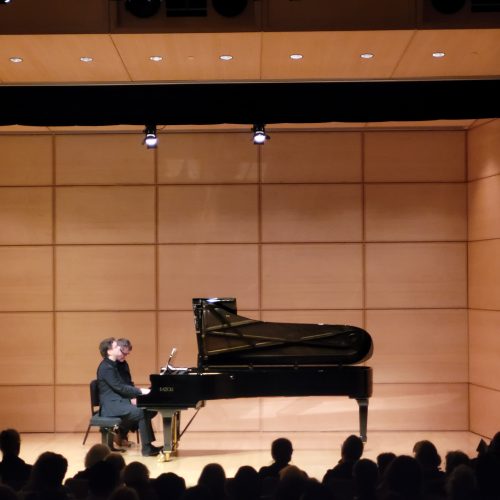
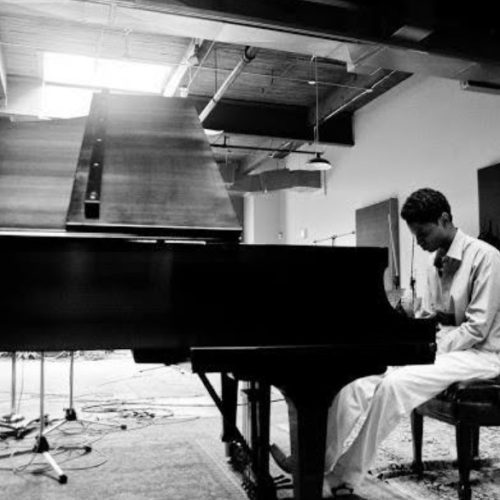
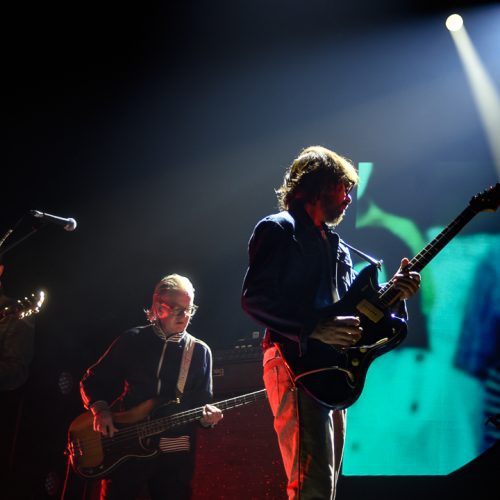
Le batteur Tomas Fujiwara et la guitariste Mary Halvorson collaborent depuis près de 20 ans. Iels se sont rencontré·es à New York au début des années 2000 et ont commencé à jouer ensemble au sein du sextet du cornettiste Taylor Ho Bynum. Depuis, iels sont devenu·es des collaborateur·rices régulier·ères, travaillant ensemble dans une multitude de projets dirigés notamment par Michael Formanek, Adam O’Farrill, Matana Roberts, Tomeka Reid, Ben Goldberg et Mike Reed, entre autres. Fujiwara fait également partie des groupes Code Girl et Amaryllis de Halvorson, tandis que Halvorson est membre des formations Triple Double et The Hook Up de Fujiwara. Leur projet en duo propose un nouveau répertoire nourri de près de deux décennies d’histoire musicale commune et de collaboration, présenté dans une formule épurée.
Drummer Tomas Fujiwara and guitarist Mary Halvorson have been collaborating for almost 20 years. They met in New York City in the early 2000’s, and first started playing together in cornetist Taylor Ho Bynum’s sextet. Since then they have become each other’s most frequent collaborators, working together in a myriad of projects led by Michael Formanek, Adam O’Farrill, Matana Roberts, Tomeka Reid, Ben Goldberg, Mike Reed and others. Fujiwara is also a part of Halvorson’s Code Girl and Amaryllis, and Halvorson is a member of Fujiwara’s bands Triple Double and The Hook Up. Their duo project showcases a new book of music built on years of history and collaboration in a stripped down setting.
Stretching the Unison
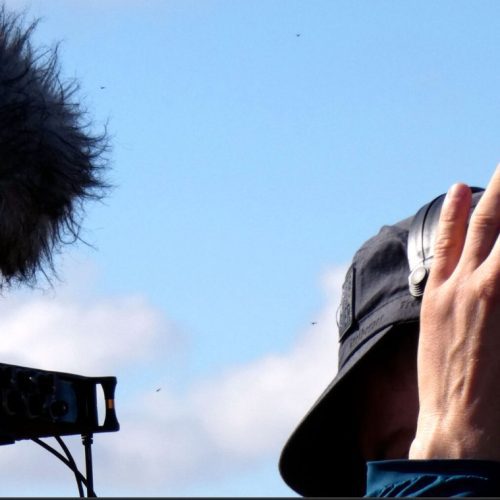
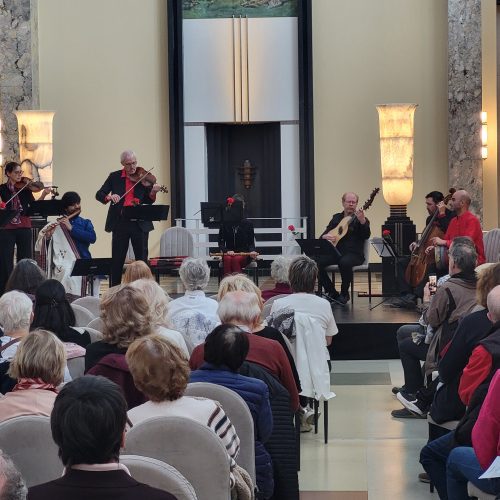
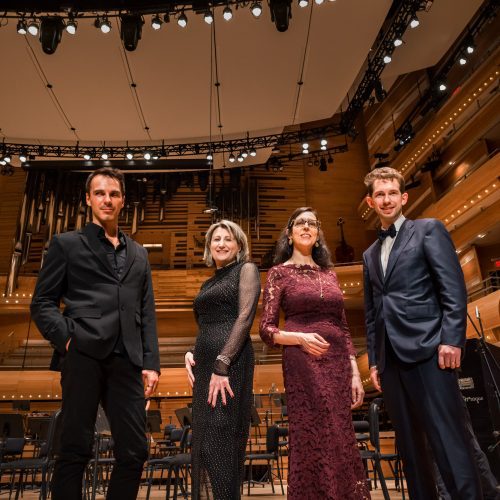
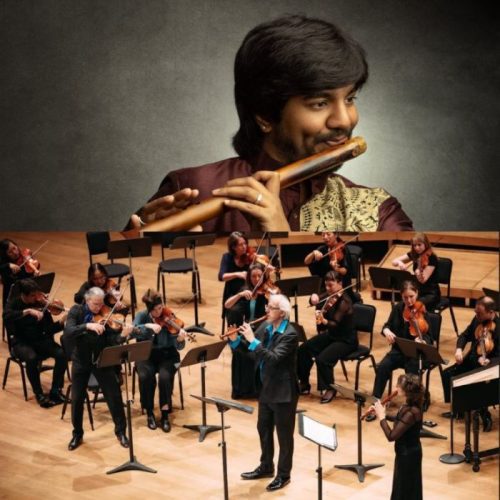
Dans Stretching the Unison d’Adam Kinner, quatre instrumentistes à anche se réunissent au centre de l’espace, entourés par le public. Plutôt que de considérer l’unisson comme un point fixe, les musiciens en repoussent et en étirent continuellement les limites, naviguant par l’intuition et l’écoute attentive entre de subtiles différences de rythme, d’intonation et de timbre. Conçue pour un espace acoustique doté d’une longue réverbération naturelle, l’œuvre transforme l’acte de jouer ensemble en une expérience à la fois cohésive et vulnérable, invitant le public à prendre part à un champ d’attention partagé.
Stretching the Unison is a project that explores the limits of unison and sets musical performance within a wider field of attentiveness and listening practices. The musicians, all playing reed instruments, face each other in the center of the space and focus on tonal blend and subtle differences as they seek unison. Unanchored to metric time, the ensemble performs layered melodies along with a sensation of group listening that is as cohesive as it is fragile. The result is a performance in which the audience, seated around the circle of musicians, bears witness to a musical process, called to attention in the open field of listening, time and intuitive play.
Quatuor de contrebasses Nicholas Caloia
Le contrebassiste et compositeur montréalais Nicolas Caloia présente el sonido se aleja de nosotros (Le son s’éloigne de nous), un nouveau quatuor pour quatre contrebasses (Adriana Camacho, Pablo Jimenez, Andres Bohorquez, Nicolas Caloia), initié lors d’un séjour à Mexico en 2025. Inspirée par la pensée musicale radicale du compositeur du début du XXe siècle Harry Partch, l’œuvre réaccorde les quatre contrebasses selon leurs harmoniques naturelles respectives, créant un paysage microtonal ancré dans la justesse naturelle. Ses rythmes émergent des interprétations individuelles des musiciens de phrases tirées des écrits théoriques du compositeur mexicain du début du XXe siècle Julián Carrillo, faisant dialoguer la rigueur de la composition avec l’intuition poétique et l’expression collective.
Montreal bassist and composer Nicolas Caloia presents el sonido se aleja de nosotros (the sound moves away from us), a new quartet for four double basses (Adriana Camacho, Pablo Jimenez, Andres Bohorquez, Nicolas Caloia) begun during a 2025 visit to Mexico City. Inspired by the radical musical thought of early 20th-century composer Harry Partch, the work retunes the four upright basses according to one another’s natural harmonics, creating a microtonal landscape rooted in just intonation. Its rhythms emerge from the musicians’ individual interpretations of phrases drawn from early 20th-century Mexican composer Julián Carrillo’s theoretical writings, bringing rigorous compositional procedure into dialogue with poetic intuition and collective expression.
POUR ACHETER VOTRE BILLET, C’EST ICI!
Ce contenu provient d’Arts in the Margins et est adapté par PAN M 360