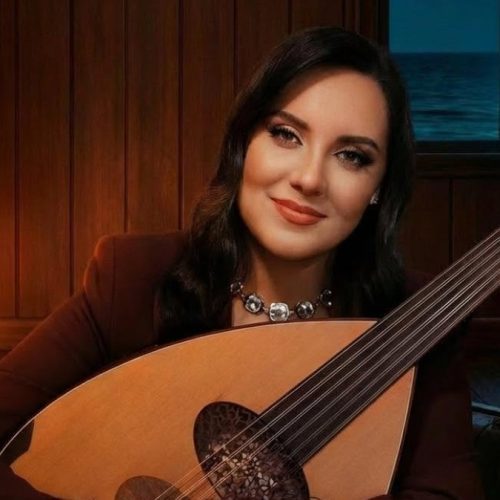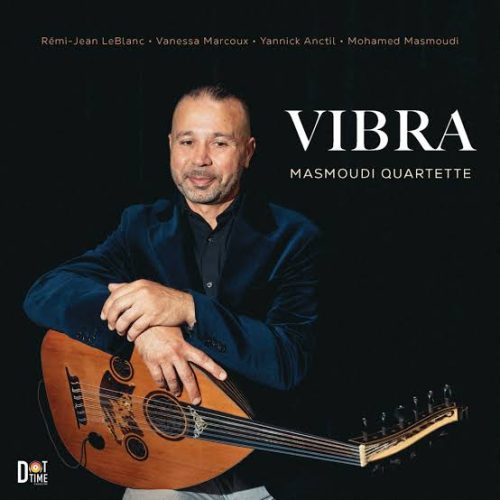
After the very beautiful Villes éternelles (Eternal Cities), the Montreal oud player Mohammed Masmoudi returns with a second album of virtuous crossovers between Arabic and Western classical music, and jazz, in a second opus named Vibra. A title that refers to the universal vibrations that Masmoudi says he was influenced by and which also constitutes the title of his launch concert (Vibrations universelles) on Friday, November 6, 2026, at the Bourgie Hall in Montreal. The vibrations in question refer to the Pythagorean concept of connections between all elements of the universe, which present themselves in the form of hums, represented by music and identifiable through mathematics (yes, Pythagoras, do you remember your math classes where we learned his famous theorem?). All this is fascinating, and you can learn even more by reading the interview I conducted with the musician.
INTERVIEW WITH MOHAMMED MASMOUDI
Musically, Vibra resonates like a benevolent dialogue between musical genres, which end up respectfully uniting, sometimes exchanging their identities, but without losing them, and above all enriching each other, creating a holistically inspiring whole.
There is geometry in the buzzing of strings; there is music in the spacing of spheres.
Attributed to Pythagoras
One notices the beauty and melodic ease of Masmoudi’s constructions, the introspective atmospheres, tinged with subtle expressive poetry, which occasionally soar with more vigour and energy. Masmoudi very intelligently intertwines the musical structures and principles of the various genres visited: the longa, the samaï, the maqams, originating from Arab culture, the scales and the classical Western harmonic system, jazz improvisation. In Le Tango du Derviche (The Dervish Tango), he even dares to combine the famous, sultry Argentine rhythm with the ecstatic and mystical dance of a whirling dervish, rooted in Sufism. Unfortunately, the movements cannot be perceived in the recording, but it is likely to be very interesting to see on stage, in combination with the music.
I notice the quality of the balance between the equal temperament of the piano (very Western) and the inherent sinuosity of certain phrases of the violin and the oud, instruments more easily imbued with typically Arabic microtonality. No awkward dissonance, as is sometimes the case in this kind of encounter.
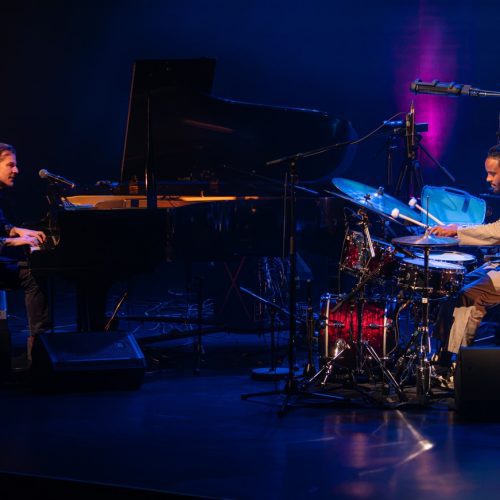
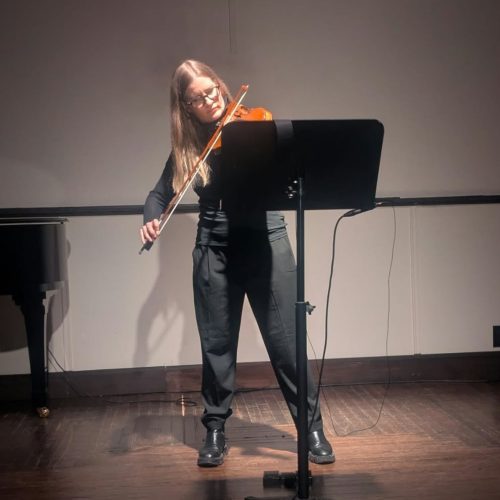
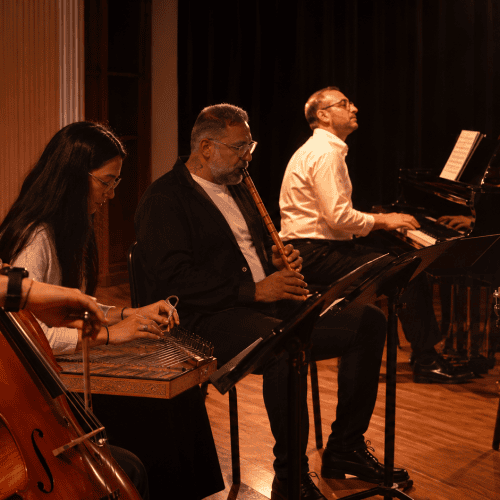
Masmoudi’s playing is marked by beautiful virtuosity without any showiness. Vanessa Marcoux, a very versatile artist, equally familiar with Western classical playing as with improvisation and non-European traditions, is pleasantly singing, sometimes shivering, very credible, while Yannick Anctil beautifully replaces Guillaume Martineau (present on Villes éternelles) on the piano, thanks to his light and precise touch. Rémi-Jean Leblanc builds solid harmonic and rhythmic foundations to allow all these people to take off.
Vibra is an album of great beauty, and with a purity of intention that can only move any curious and aesthetic music lover.
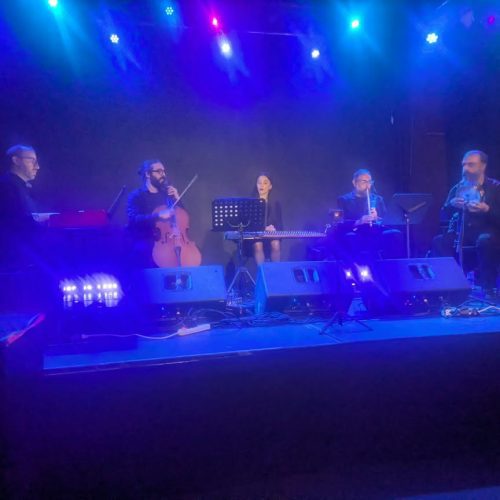
The Masmoudi Quartet is offering its album launch concert on Friday, November 6, at the Bourgie Hall.