Additional Information
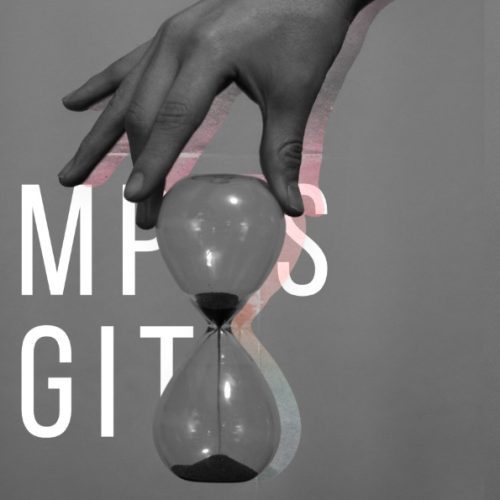
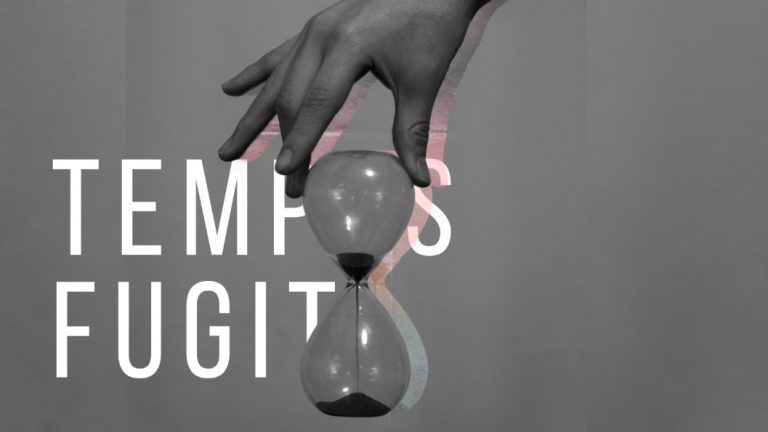
With Tempus Fugit, Voces Boreales invites its audience “to experience time differently”. The program presented here truly spans time, from the Renaissance to the 20th century, from Lobo, Britten, Poulenc, and Chilcott to John Cage and his historic 4’33’’, based on the concept of silence transformed into music. This is precisely what makes such a program so compelling—it reminds us that great creativity endures through the centuries, despite all the trials and tribulations of the human experience. You are invited to this powerful program this Saturday at the Chapelle Notre-Dame de Bonsecour, the content of which is explained and championed here by Andrew Gray, artistic director of the choir.
PAN M 360: How can works from the 17th, 19th, 20th, and 21st centuries be brought together in a single program? That’s part of the mission of Voces Boreales, isn’t it?
Andrew Gray: What could a 17th century composer possibly have in common with one writing music today?
That’s what we love exploring at Voces Boreales. Bringing together music from different periods in original, adventurous concert programs is at the very core of Voces Boreales’ mission.
We discover how music writing centuries ago can still speak to us today, while contemporary pieces carry forward historical traditions.
PAN M 360: What is the common thread connecting the works on the program? What is the connection to the current context within a historical framework—beyond a concert “where every moment counts: time that flies by, time that stands still, time that soothes, unsettles, and transforms”?
Andrew Gray: The central theme connecting these works is how humans perceive, measure, and experience the passage of time.
Beyond the poetic side of it, the program also looks at how music has evolved over the centuries and how those changes reflect the way people experienced time in different periods of history, right up to today. For example:
– The Eternal vs.The Finite: The spiritual and cosmic understanding of time reflected in works such as Lobo’s, rooted in the late-Renaissance tradition.
– The breakdown of traditional structures: Mid-20th-century works by composers such as Cage and Poulenc reflect an era marked by global trauma, shifting perspectives, and the questioning of established forms and conventions.
– And a more introspective, contemporary perspective: The 21st-century works explore a more internalized experience of time, reflecting a society increasingly struggling to find silence and stillness in a hyperconnected, fast-paced world.
This historical trajectory illustrates how choral music shifted from a communal expression of cosmic or spiritual order toward a more intimate, psychological exploration of the individual’s inner world.
PAN M 360 : Why include John Cage’s famous statement in this specific program?
Andrew Gray: John Cage’s 4’33’’ challenges everything we expect from a musical performance, inviting us to experience time, silence, and the very act of listening in a completely different way.
In this work, the performers remain silent for exactly four minutes and thirty-three seconds. With no musical notes being played or sung, the audience’s attention shifts to the ambient sounds of the concert hall: breathing, movement, the occasional cough.
It acts as an artistic palette cleanser. It challenges the audience to recognize that “time that stands still” is still full of life and vibration. It creates a physical and acoustic bridge between highly structured historical polyphony and contemporary textures.
Perhaps most importantly, 4’33’’ turns the focus toward the audience itself. As with much contemporary art, the work becomes as much about our individual reactions as it is about the piece itself. How do we experience silence? Are we comfortable with it? And what happens when an entire concert hall shares four minutes and thirty-three seconds of simply listening?
PAN M 360 : Can you explain how the choir prepared for each of the works, given that vocal techniques and choral aesthetics differ from one era to another?
Andrew Gray: Preparing for a multi-era program requires a highly adaptive ensemble capable of modifying their vocal tract, breath support, and tone delivery on a piece-by-piece basis. The singers are specifically chosen for their ensemble experience, vocal flexibility, and virtuosity.
For early music, the choir adopts a straight-tone aesthetic with minimal or highly controlled vibrato. Singers prioritize pure tuning so that vertical chords ring with absolute, clean resonance.
For the mid-20th century repertoire by Britten, Poulenc, and Vaughan Williams, we require a warmer, more romantic vocal production with rich timbres, precise diction for complex poetic texts, and the flexibility to handle sudden chromatic shifts and dramatic changes in volume.
In the more contemporary world, works by Peña Laguna, Saindon, and Knaggs frequently require extended vocal techniques. Singers must pivot from traditional singing to spoken-word elements, glissandi, body percussion, clusters, breathing effects, and unconventional timbral textures.
PAN M 360: Can you briefly the work by Luis Ernesto Peña Laguna, Ke (ma) bi ?
Andrew Gray: Luis Ernesto Peña Laguna is a Cuban-born Canadian composer and Voces Boreales’ 2026 composer-in-residence. Based in Montreal, where he is pursuing a doctorate in composition at the Université de Montréal, he has developed a distinctive musical language inspired by spirituality, cultural heritage, and the exploration of vocal textures.
Written in 16 parts, Ke (ma) bi, meaning “earth (without) beginning or end” in the Taíno language, draws inspiration from Taíno cosmology. The composition begins with a number: 43,200 — the number of seconds in 12 hours, marking the boundary between light and darkness, day and night. The work features a rolling 9/8 time signature and repetitive intervals of the second, third, and fourth, all exact fractions of the number 12. Through these musical elements, Peña Laguna explores the imperceptible connections between the past and present, the living and the dead, mankind’s attempts to measure time, and the eternal.
We are very grateful to the Conseil des arts de Montréal for supporting his residency.
PAN M 360 : Please give us a brief overview of Voces Boreales’ activities this season.
Andrew Gray: On December 18, Winter Magic offers our own take on the traditional Christmas concert. Performed by our vocal octet, VB8, it’s an invitation to slow down and enjoy a moment of peace and beauty in the glow of candles during one of the busiest times of the year.
In February, for Black History Month, we’ll be collaborating with Frédéricka Petit-Homme and VB8 on a concert dedicated to gospel music and African American spirituals. At the heart of this project is an important question: how can we approach these musical traditions with the respect and care they deserve?
We close the season on May 28 and 29, 2027, with Lessons of History, our most ambitious project yet. This concert explores some of the great tragedies of the past century, from the Second World War and the Holocaust to Canada’s residential schools and Tiananmen Square. Through music, we confront some of humanity’s darkest chapters, inviting reflection and collective reckoning while ultimately moving toward hope and resilience. Each work will be accompanied by a documentary image, creating an immersive, multidimensional experience that brings music and history together.
We’re also working on the highly anticipated release of Joby Talbot’s Path of Miracles, an extraordinary work recorded under the expert guidance of the celebrated Martha de Francisco, a true master of her craft.
It’s a season that reflects what Voces Boreales is all about: exploring the power of the human voice to connect, challenge, move, and inspire.
PAN M 360 : For informational purposes, what is the connection between the Montreal Choral Institute and Voces Boreales?
Andrew Gray: The Montreal Choral Institute (MCI) is the organization behind Voces Boreales, its professional choral ensemble. The distinction is primarily organizational and legal: the MCI is the registered nonprofit and charitable organization, while Voces Boreales is the artistic identity through which most of its activities are presented. Both were established by conductor Michael Zaugg in 2006.
PAN M 360 : You also serve as artistic director of Les Petits Chanteurs du Mont-Royal and are the founder of the educational choral project Sing Montréal Chante. Are there any connections between these organizations you’re involved with?
Andrew Gray: There is a very natural connection between these organizations, particularly when it comes to musical education, artistic development, and the joy of singing together.
Sing Montréal Chante introduced the youngest children to the joy of singing and performing at the primary school level. Les Petits Chanteurs du Mont-Royal provides intensive, high-level musical training for youth ages 8 to 18 yrs, while Voces Boreales represents the professional end of that journey, bringing together some of the finest adult choral singers.
These connections aren’t just theoretical: one of the sopranos performing in Tempus Fugit will be singing her first concert with Voces Boreales, 15 years after she firsts tarted singing with me at the Chœur des enfants de Montréal. We also have 3 former Petits Chanteurs du Mont-Royal singing in the ensemble.
The foundations we develop with young singers – healthy vocal habits, focus on precise musicianship, and high artistic standards – are the same we value at the professional level in Voces Boreales.
For me, it’s about creating a sense of community and continuity. Young singers can see that there is a path from their first experiences singing in a classroom to performing at the highest professional level, right here in Montreal.
Program
| Alonso Lobo (1555-1617) | Versa est in Luctum |
| John Cage (1912-1992) | 4’33” |
| Luis Ernesto Peña Laguna | Création |
| Benjamin Britten (1913-1976) | Choral Dances |
| Francis Poulenc (1899-1963) | Le jour m’étonne et la nuit me fait peur |
| Ralph Vaughan Williams (1872-1958) | Silence and Music |
| Marie-Claire Saindon | Common Silence |
| Elizabeth Ekholm | Hope |