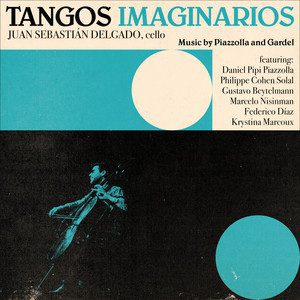
There is a meticulous and attentive search for expressive finesse in this album by the Quebec cellist (of Argentine origin) Juan Sebastian Delgado. The young artist reveals himself to be a subtle, intelligent commentator, imbued with delicate yet authentic emotions.
Through eight pieces from the repertoire of Astor Piazzolla and Carlos Gardel, he casts a different light on tango, far from the clichés for inattentive tourists (well, mostly, see further down). Take Oblivion by Piazzolla, here sketched with barely outlined strokes, like fragments of memory that gently manifest themselves. El día que me quieras by Gardel, carried by the inspired piano of Gustavo Beytelmann, on which Delgado comments on the well-known melody with great modesty, but from which a convincing expressive force emerges.
Escualo (which means shark), composed in 1979 by Piazzolla, unfolds a nervous energy, in which we witness a discourse that shifts to a superbly constructed fragmented pointillism, between the two manifestations of the groovy theme. Delgado is exciting, as well as Daniel “Pippi” Piazzolla (Astor’s grandson) on drums and Federico Diaz on electric guitar.
Buenos Aires Hora Cero is here played in a Stick&Bow version, a duo that includes Juan Sebastian with his partner Krystina Marcoux on marimba. A brilliant piece originally played by Piazzolla’s quintet, which was already a brilliant exercise in the sonic and melodic deconstruction of traditional tango. The piece is dressed in different attire in this duo format, with different colours, a bit more organic due to the marimba and its unique textures, but without betraying the audacious character of the original work in the slightest.
More traditional music lovers will recognise Piazzolla’s typical style in Jeanne y Paul, with the scratches and glissandos, but also the opulent melodic lines, passionately unfolded by the cello and the bandoneon (Delgado and Pippi Piazzolla, always very precise in tone and expressive playing).
The last two pieces of the album create a striking contrast with the rest. The cello stands alone against the electro beats of Philippe Cohen Solal, former member of Gotan Project who, you might remember, had offered us electro lounge tango about 25 years ago. It does indeed sound like an inheritance from Gotan. The result is not as convincing as the rest of the program, though. Even if it features effective cinematic impulses, the end result is far from offering the same textural complexity, the same expressive and coloristic depth of the six other pieces. Of the two (Apasionado and Por una cabeza), the latter succeeds the most, mainly due to its iconic melody, played here in an almost ethereal, ghostly manner. Entertaining, but not at all the same musical pleasure.