On Thursday, the Lovemusic collective presented Protest of the Physical at La Chapelle scène contemporaine. It was a daring concert that explored the intersection of the body and music. The result? A diverse program performed with great sensitivity by the collective’s members, though it occasionally missed the mark.
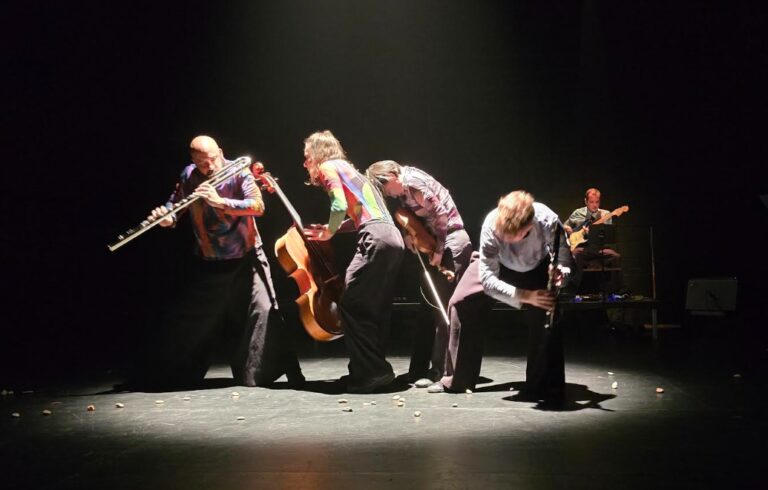
The concert opens with “In die Ferne, dem Berg zu” by German composer Annette Schlünz and choreographer Anne-Hélène Kutujonsky. In my view, one of the concert’s highlights, the piece begins with the musicians dropping a handful of pebbles onto the floor. The relationship between the pebbles and the musicians is certainly ambiguous, but the pebbles hold a certain significance for the performers. Once they have taken their places at their instruments, the group’s artists mingle on stage, continuing to breathe as if their instruments were part of them and their breath emanated from them.
The piece ends as it began—with the guitar—using glissandos to guide the dancers’ movements as they search for their precious stones.
Hands, Drum—Three Bones by composer Nik Bohnenberger continues the concert. This piece is designed to be interactive, with the audience expected to perform the movements displayed on screen in order to alter their own listening experience of the piece. While some effects do not impact the listening experience itself, the biggest issue arose in the attention paid to the musicians during the piece—which was very little. Constantly distracted by the screen, the listener must therefore choose between listening to the piece or following the instructions displayed on the screen.
Seed, a piece by composer Bethany Younge, is certainly interesting from a conceptual standpoint. Featuring musicians who seem alienated from their instruments, we can sense the tension they share with them. The musical aspect thus unfolds along these same lines, where what is played stems from the very movement of these bodies on stage as they resist their instruments.
Inferno, by composer Helmut Oehring, concludes the concert. Blending music and sign language, the piece is a real slap in the face. As the cellist begins the piece by bowing her strings in sync with the soundtrack, a crescendo builds until she unleashes her instrument while letting out a series of screams. When the other musicians join in, the piece undergoes a drop that marks the beginning of the second section, performed entirely in sign language. A third section, blending body percussion and instrumental playing, reaches its climax as all four perform at the peak of their abilities, reintroducing—this time on the clarinet—the cries of despair heard earlier.