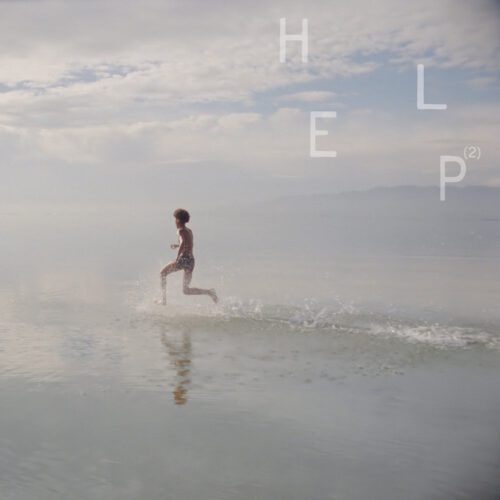
To help children during the Bosnian war conflict, way back in 1995, Brian Eno put together an initiative he called HELP, one of the most celebrated charity records ever made (raising £1.25 million for emergency support) featuring contributions from Oasis, Blur, Radiohead, Massive Attack, Portishead, Sinéad O’Connor, Paul McCartney, and more.
The story behind HELP the record, and its recording is now reserved for legend: all of the songs were recorded on one single day, Monday 4th September 1995, mixed the following day, and released to the buying public a few days later, on Saturday 9th September. The idea to record it in 24 hours came from John Lennon, who, when discussing his 1970 record Instant Karma, said that “Records should be like newspapers,” reflecting events as they are happening.
Now, 31 years later, while new war conflicts seem to pop up every few months and more children are affected, we have HELP (2) featuring some of the biggest names in alternative music today: Arctic Monkeys, Big Thief, Olivia Rodrigo, Cameron Winter, Fontaines D.C., Wet Leg, Damon Albarn, The Last Dinner Party, etc. The HELP (2) initiative is a super important one, and I hope it makes at least a fraction of the money (with our new streaming generation) that HELP made, but let’s give it an objective critique.
The whopping 23-song record begins with “Opening Night,” a new song from Arctic Monkeys (their first released one since 2022). It sounds quite similar to the orchestral crooning rock we heard on Tranquillity Base Hotel & Casino, and its milquetoast follow-up, The Car. I’m definitely not the audience for new Arctic Monkeys, so this opener kind of just brushed over me. Next, we have “Flags,” a collab with Damon Albarn (Blur, Gorillaz), Grian Chatten (Fontaines D.C.) and spoken word artist/rapper, Kae Tempest. The result is a freaky indie rock trip-hop vibe, and Chatten’s vocals, while brief, are definitely the highlight.
Later on, we have a hushed Velvet Underground cover in “Sunday Morning” by Beth Gibbons (who contributed to HELP with Portishead). It’s a beautiful cover, Gibbons’ voice like ice, but maybe weird to include since the original is about Lour Reed’s love of heroin… Moving on, we’ve got “The 343 Loop” by King Krule, but it remains a listful instrumental. “Parasite,” by English Teacher and Graham Coxon (Blur), was a nice surprise as it starts as a hypnotic indie track and transforms into an orchestral shoegaze number, with Lily Fontaine’s vibrato vocals. Big Thief’s “Relive Redie” could have easily been on their U.F.O.F. or Two Hands albums, before they dove into more of a country-rock vibe on Dragon New Warm Mountain I Believe In You and the latest, Double Infinity.
If you’ve read me before, you know I usually love Fontaines D.C., and this new track, “Black Boys on Mopeds,” might be one of the most powerful tracks I’ve heard from them since Dogrel, back when they really had something to say. Starting as an acoustic chord indie burner, lyrically, it destroys the myth of England, touching on rampant racism and police violence as Chatten delivers some true vocal piss and vinegar.
The Carnegie Hall wonder boy, Cameron Winter, gives us a pretty OK track in “Warning.” With strident horror movie strings backing him up, his vocals seem quite ad-libbed and don’t have too much staying power. His Tom Waits-esque rambling near the outro is full of dread and fun, though.
What’s left? A lot, and I’m not going to cover everything. Young Fathers’ “Don’t Fight The Young” brings a modern noise pop vibe, with the production sounding like the Scottish group is setting everything on fire. Last but not even close to least is Olivia Rodrigo’s “The Book Of Love.” This track really surprised me, because her music has always felt a bit too poppy for my taste. But this track is a slow burn, with Graham Coxon hopping on guitar. So there you have it HELP (2) is a huge record, with a great initiative attached to it, so try and buy it. Screw Spotify.