What can we do in these troubled times, when our bearings are being shattered daily, one by one? Dance. At least, that’s what Harry Styles suggests, whom I’ve been following since his debut in 2010—my preteen daughter was a huge fan of One Direction, whose (highly predictable) boy band hits invaded our living room, kitchen, bedroom, car, and more.
This pop overload, which was rather annoying as far as I was concerned, nevertheless led me to observe that young Harry stood out from his colleagues for his greater creativity and his desire to assert a real artistic uniqueness. A bit like Justin Timberlake had done previously, after making his mark with NSYNC.
Never enough, however, to make the difference between a more refined pop star and a genuine agent of change. Of course, creative pop is rarely sought after in this arena reserved for a few multimillionaire protagonists whose special effects, audiovisual immersion, and image-making represent the real creative challenges.
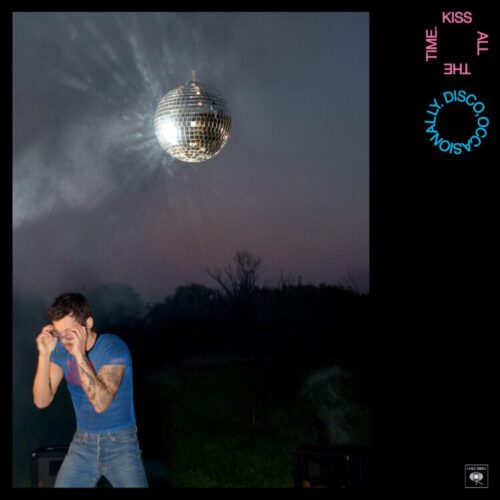
The new album, Kiss All the Time. Disco, Occasionally, doesn’t change the game: the handsome guy with barely queer looks is nothing exceptional here. It’s no surprise that The Guardian, Pitchfork, and The New York Times gave it low or very average ratings of around 60%, while La Presse de MTL remains prostrate at 90%. What to make of it all?
Let’s be clear, it’s not a bad album. It’s an album vaguely intended for the dance floor, an album that flirts with dance-pop, dance-punk, synth-pop, pop-funk, and straight-up pop references, all effectively polished by producers Kid Harpoon and Tyler Johnson, with whom Harry Styles has been working for quite some time now.
The drums (real or synthesized) play a central role in several of the tracks on the album. Harry Styles also ventures into ballads with the orchestral “Coming Up Roses” (thanks, Jules Buckley) and the chamber folk ballad “Paint By Numbers.”
The lyrics remain fairly close to general and personal observations, ranging from respect for his mother to his friends’ American girlfriends. Without any deep commitment, shocking statements, flashes of poetic creativity, or anything particularly special.
Harry Styles’ fans will argue that this album represents an effort to remain true to himself, above the fray, impervious to the pressure of fans or the comments of armchair critics. If it makes them happy, then yes, Harry Styles does display a certain independence of spirit. He does his job well, and this commitment to dance music will be the pretext for a huge arena disco for hundreds of thousands of devotees who will obviously pay fortunes to be there and never regret it.