Additional Information
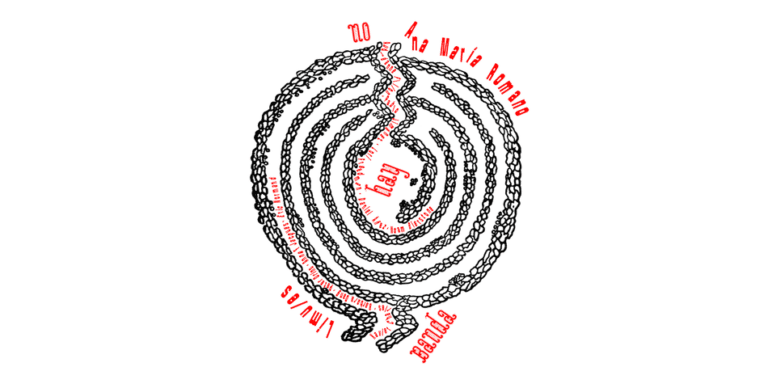
The Montreal ensemble No Hay Banda presents a creation by Ana Maria Romano on Sunday, March 15, 2026, at La Sala Rossa, on the occasion of the fourth edition of La Semaine du Neuf, from Le Vivier. The title nadie nos quita lo bailado (no one can take away what we have danced) refers to a well-known saying in the Latino community, which means that no one can ever take away what we possess inside. I quote here the official definition of the project:
A meeting of bodies, memories, dreams, and sensibilities that intertwine through listening and curiosity. This work brings together sound universes nourished by personal stories, connections with instruments, emotions, trust, and cultural exchanges. It is an invitation to breathe, imagine, create, transform. A space where conversation, meticulousness, subtlety, vulnerability, the small, the fragile intersect. A bet on the presents, the pasts, and the futures that connect us and speak to us.
This being a double bill concert, the Limules ensemble will offer us a dive into completely free and spontaneous collective improvisation. I spoke with Noam Bierstone, percussionist, and Daniel Áñez (Ondes Martenot) from No Hay Banda, as well as Éric Normand, bassist of Limules, to learn more about the program and what adventurous music lovers can expect.
PanM360: Hello, gentlemen. Let’s start with the creation of Ana Maria Romano’s piece. Who is she, and what can you tell us about her music?
Daniel Áñez (No Hay Banda): Ana Maria is one of the key figures of the recent contemporary music scene in Bogotá (Colombia), which emerged in the early 2000s. She is fundamentally an electroacoustic artist. There was a period when she created acoustic pieces at the end of the 90s and 2000s. After that, she exclusively switched to electro for about twenty years. She is the director of a festival called En Tiempo Real. At first, it was a festival of electro-acoustic sound art, but at some point, she transformed the festival into a feminist artistic platform. She is a pioneer in Colombia. It was the first organization there to take on an entirely feminist vocation, I think.
Her own electro-acoustic pieces talk about feminism, talk about women. Recently, she has started taking commissions, but these are collaborative commissions.
That’s what we’re going to do with her. For now, we have only held workshops where we shared feelings, where we shared questions, where we did collective listening. We shared field recordings, which will be used.
She arrived in Montreal about a week ago to build the piece with us, for a week and a half.
PanM360: So there’s quite a bit of improvisation?
Daniel Áñez (No Hay Banda): Yes, we believe there will still be a lot of room for improvisation in what is to come. She will play the computer with us. She will be doing electroacoustic work and manipulations, combining recordings we’ve made so far, with soundscapes already created.
There will also be a cello with Audrey-Anne Filion, Pablo Jiménez on double bass, Lori Freedman on bass clarinet, Noam Bierstone on percussion, and myself on Ondes Martenot.
Anna-Maria will be on the electroacoustic. We will be six.
PanM360: So, she no longer limits herself to just electro in her compositions? Why?
Daniel Áñez (No Hay Banda): I imagine people have asked her to create works. For my part, I know that I begged her for years to write an electroacoustic piece. Then, it never materialised. I think this project was the way to finally fulfil the order I wanted to place with her.
PanM360: Tell me about the work.
Noam Bierstone (No Hay Banda): There will be an immersive electroacoustic space with six speakers surrounding the audience, in addition to the band playing. We will mix immersive electroacoustic ideas with the performance of acoustic instruments.
PanM360: Why this title? Is there dancing?
Noam Bierstone (No Hay Banda): Not dance as such, but there might be some movement. That said, the title also refers to the individual baggage that each person, musician, or female musician in the group has, and that they bring to the piece. The piece is based on the individual experiences that everyone brings and which create a collective experience. Ana Maria often uses popular references as titles for her compositions. No one can take away what we’ve danced, it means that no one can take away our memories, our experiences. That’s what belongs to us deeply.
PanM360: Will you be in Rimouski (Qc) on March 13th as well?
Noam Bierstone (No Hay Banda): Yes, because this project is a collaboration with Tour de Bras, from Rimouski. For a few years now, we’ve been inviting Tour de Bras projects to our place, and then they invite us to theirs. We have a lot of respect and admiration for Tour de Bras’ work in contemporary creation and improvisation music in smaller communities outside Montreal.
PanM360: How does this creation fit into Ana Maria Romano’s feminist approach that you were talking about earlier?
Noam Bierstone (No Hay Banda): Her feminist reflection leads her to want to destroy all these monolithic, patriarchal figures that construct Western classical music. The idea of collaboration is based on the premise that collective knowledge is as important and fundamental as the creation of the composer genius, often male of course.
Among the characters she has highlighted in her previous works, there is the witch, this person condemned, burnt because she had a knowledge that was different, a collective knowledge. That’s one of the things she wants to convey in this piece.
PanM360: Regarding Limules, what is it, and how long has it been around?
Éric Normand (Limules): We’ve barely been around for a year. These are all people I’ve been working with for almost 20 years, and whom I’ve brought together. It’s improvisation, but I call it chosen improvisation, in the sense that we know each other very well. There is still an implicit direction, even if it is completely improvised and we won’t say anything about the music before playing. These are musicians who master what could be called the “extended language.” This group is a dream for me. It’s the perfect group, the ideal group.
PanM360: And what does it look like, in terms of sound, style?
Éric Normand (Limules): It’s not going to be free jazz, far from it. We are in the texture, in the listening, in the close listening. One could say that it is something very heartfelt, which does not mean that there are no moments of energy, of contrasts. It’s a sharing, really a co-creation, and spontaneous. As I said, we won’t say a word about the music. We have so much trust in each other that we don’t want to plan anything. With this group, for me, there is no risk factor. I know it will be very satisfying.
PanM360: Even in spontaneous creation, can there be themes, guidelines?
Éric Normand (Limules): No, our philosophy is that anything is possible as long as you start from nothing. If we start from something, we limit ourselves and create a hierarchy. First of all, someone has decided something. For us, it’s completely collective. There is no choice possible. It’s music.
PanM360: Wow. We’re going to have a lot of fun.
Éric Normand (Limules): Oh yes!
PanM360: Thanks, guys.
No Hay Banda: nadie nos quita lo bailado
NO HAY BANDA
Geneviève Liboiron (violin)
Audréanne Filion (cello)
Pablo Jiménez (double bass)
Lori Freedman (basse clarinet)
Daniel Áñez (ondes Martenot)
Noam Bierstone (percussions)
Ana María Romano (artistic direction, electronics)
Limules
Xavier Charles (clarinet)
Barbara Dang (piano)
Peter Orins (drums)
Audrey Lauro (alto saxophone)
Anne-F Jacques (objects)
Éric Normand (electric bass)