Sunglasses on, eyes fixed on the back of the room. “This one’s about my lawyer and my wife.” Microphone pressed against the long hairs of his mustache, he begins to mutter like Gainsbourg after a few vermouths.
Maybe I’m deaf after doing the whole Tavern Tour without earplugs, but I can’t hear a word he’s saying except for a few bits about anal sex and fascism. The connection between the two remains a mystery. There’s no need to understand all the lyrics; his more Italian side—lively and physical—tells the story for them.

He approaches us, removes his sunglasses, and unbuttons his blouse, revealing a striking display of gold chains and curly fur. One moment he dances subtly with sensual grace, the next he tears his heart from his chest. He seems self-conscious about his sins, yet always returns to that mischievous little smile, proud to tell us that in the end, he emerged victorious. The performance keeps us smiling, but it’s only when the music stops that that smile truly explodes into laughter.
Like a drunken uncle, Bernardino confesses to us.
“The stage is therapy, and you’re just as sick as I am being here.”
Each song is a dedication, the fruit of a story gone wrong; a date filled with remorse with Gigi, a microphone stand thrown into the crowd under a cloud of anger. Bernardino Femminieli is a broken man, but honest at least.
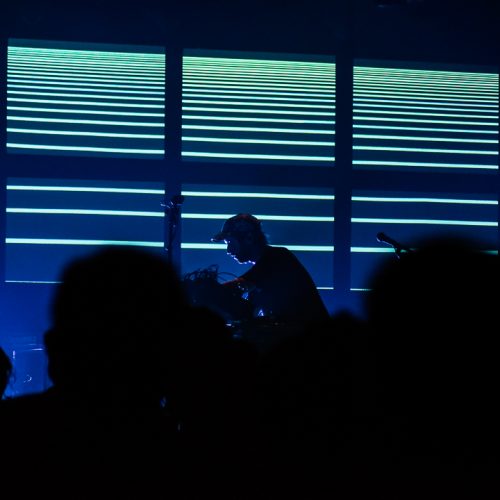
“I could get violent tonight,” he says, explaining how the feedback from the poorly adjusted microphone, combined with alcohol, has already pushed his already fragile mental state to the brink of violence. “He was a friend, but you know, I think there are lasting effects.” With a morose look, he returns to his mixing console to launch into a kitschy, upbeat rhythm typical of the 80s. The ridiculous contrast sends the room into fits of laughter. This time he grunts deeply in Italian: “Te quiero.” By constantly alternating between music and stand-up, Bernardino Femminieli has seen his persona transcend mere performance to become, before our very eyes, a true cult figure.
Behind this facade of dark humor, there is something thoughtful in the character of Bernardino Femminieli. A Dadaist-style critique subtly emerges through his provocative remarks.
His poems take the form of detailed stories that highlight the conflicts of interest within power, police corruption, and the paradoxes of monogamous love. He never preaches directly. He prefers the shaky confession, the overblown sentence, the incongruous image. It is these excesses that expose the hypocrisy of the structures he evokes.
We laugh at him, but we also laugh at what he reveals within us.