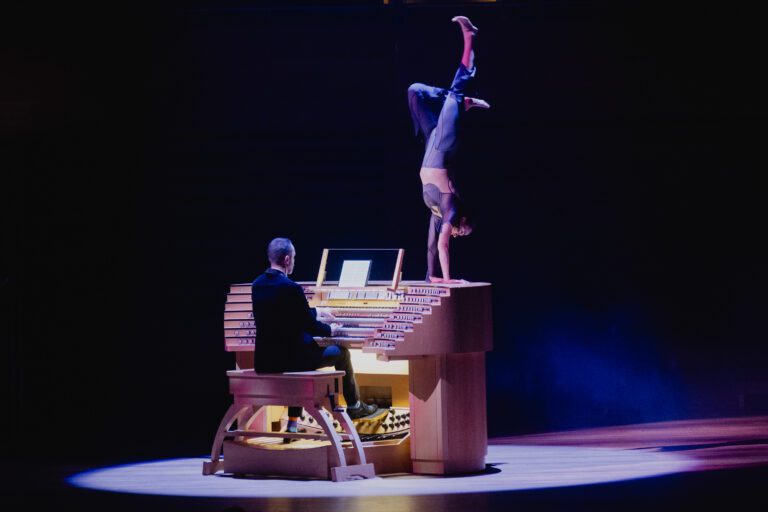
A very beautiful idea to combine the organ with the arts of the circus! At first glance, one might think that it is the organ that needs the acrobatics of the other to increase its visibility and popularity. But once seated in the packed Maison symphonique here in Montreal, and paying attention to the “vibe,” one realises that quite a few people were there to enjoy the organ and the music offered in the program. Particularly the excerpts from the music of the film Interstellar by Christopher Nolan, which Hans Zimmer memorably dressed with a score of minimalist/epic colours, where the organ takes a lot of space. On its own, this film music has contributed more than any “democratisation” activity to give a new “coolness” to the king of instruments.
In short, the large audience seemed to be waiting for it. And there was no disappointment, the soloist Jean-Willy Kunz showcasing his most beautiful and grand gestures to powerfully fill the entire hall. The final resonance had no time to unfold before the thousands of people were already applauding.
100 years of organ music
Beyond this iconic music, the audience was able to hear a selected journey through the last hundred years at the organ: the Cortège et Litanie by Marcel Dupré (1922), the Banquet céleste (1928) by Messiaen, works by Philip Glass (Mad Rush and Études 6 and 8), Spiegel im spiegel by Arvo Pärt, and two pieces I was not familiar with: the Toccata Andromeda (1999) by Paul Halley and the very recent Limina Luminis (2023) by Olivia Belli.
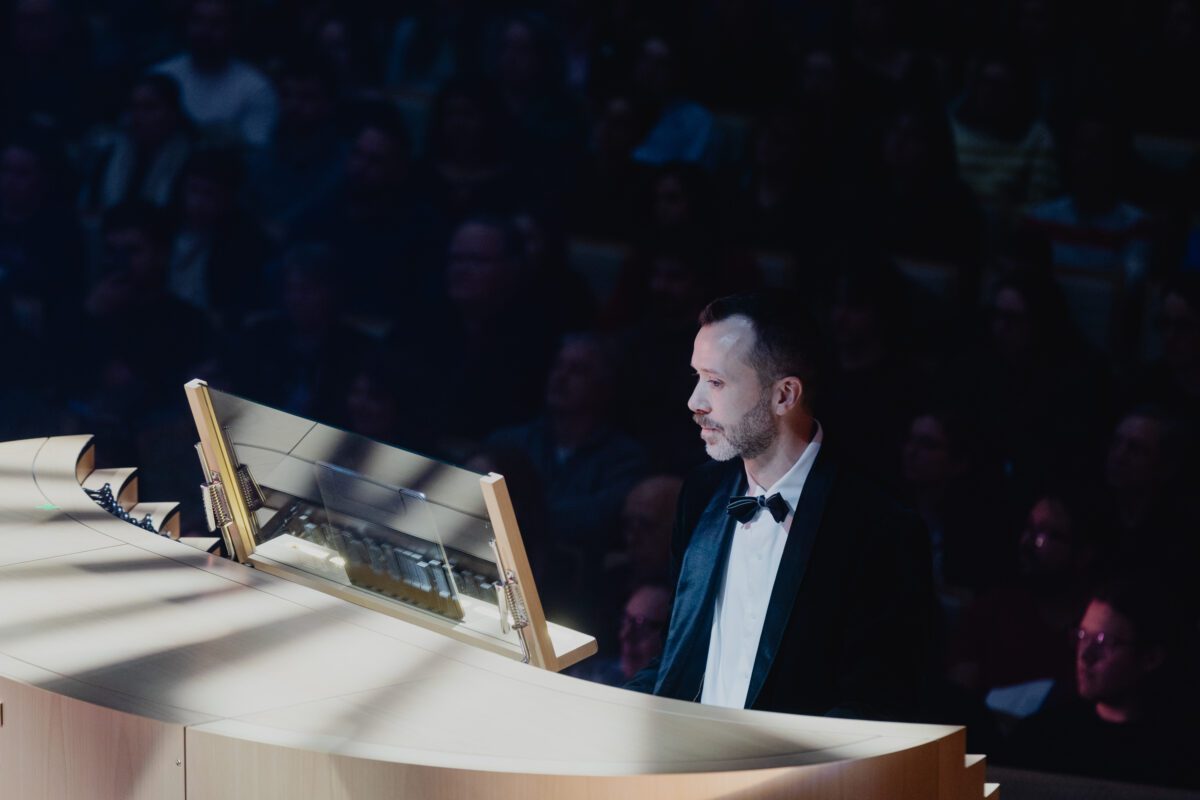
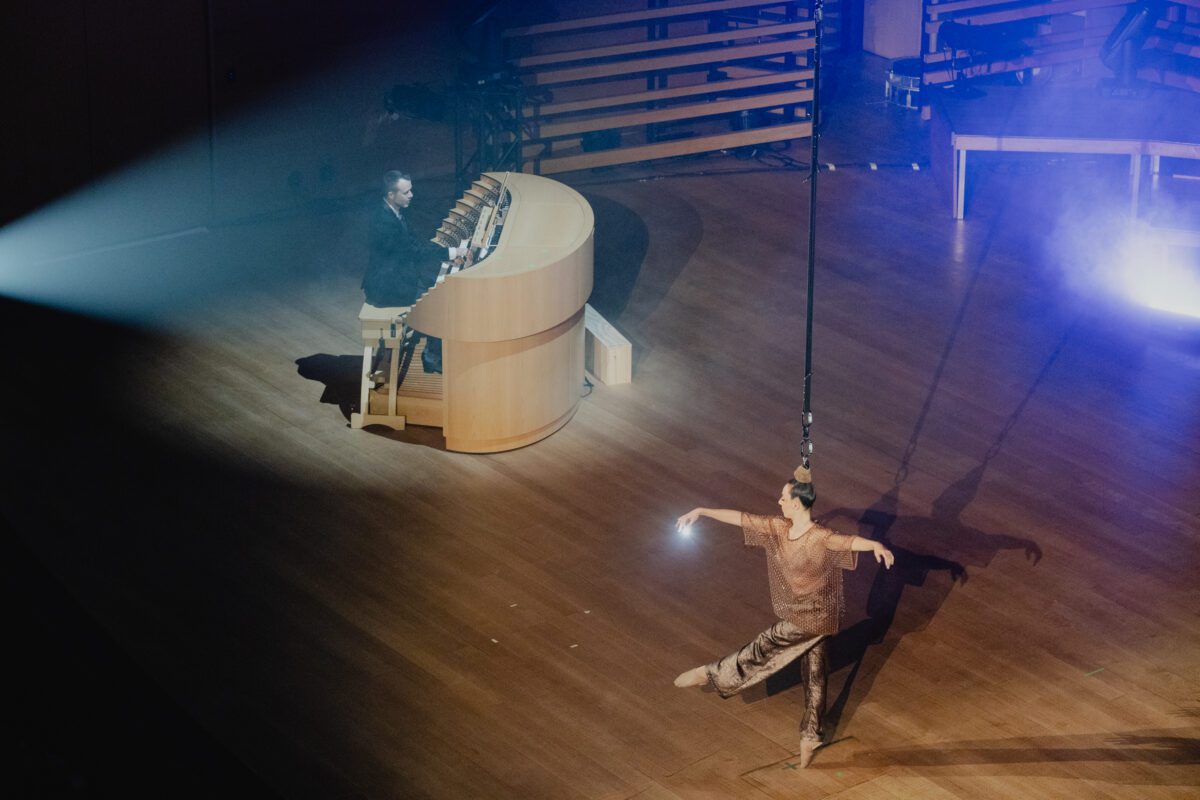
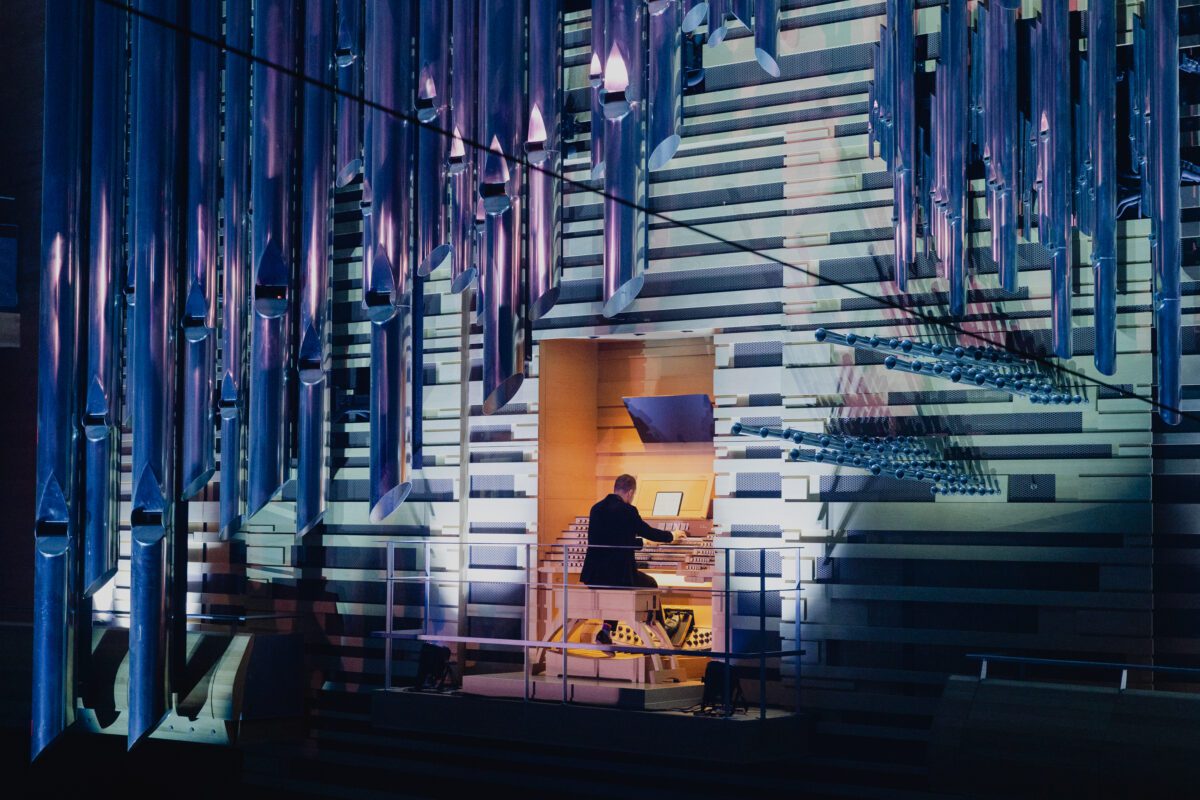
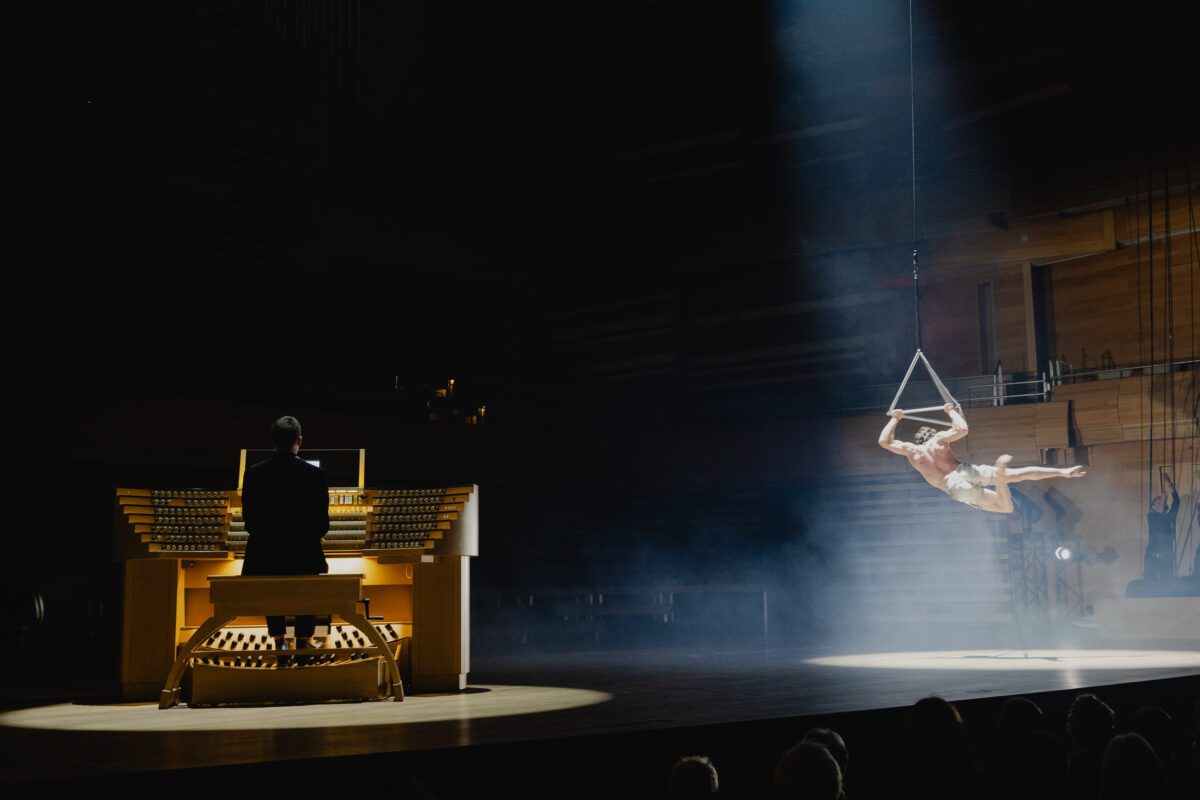
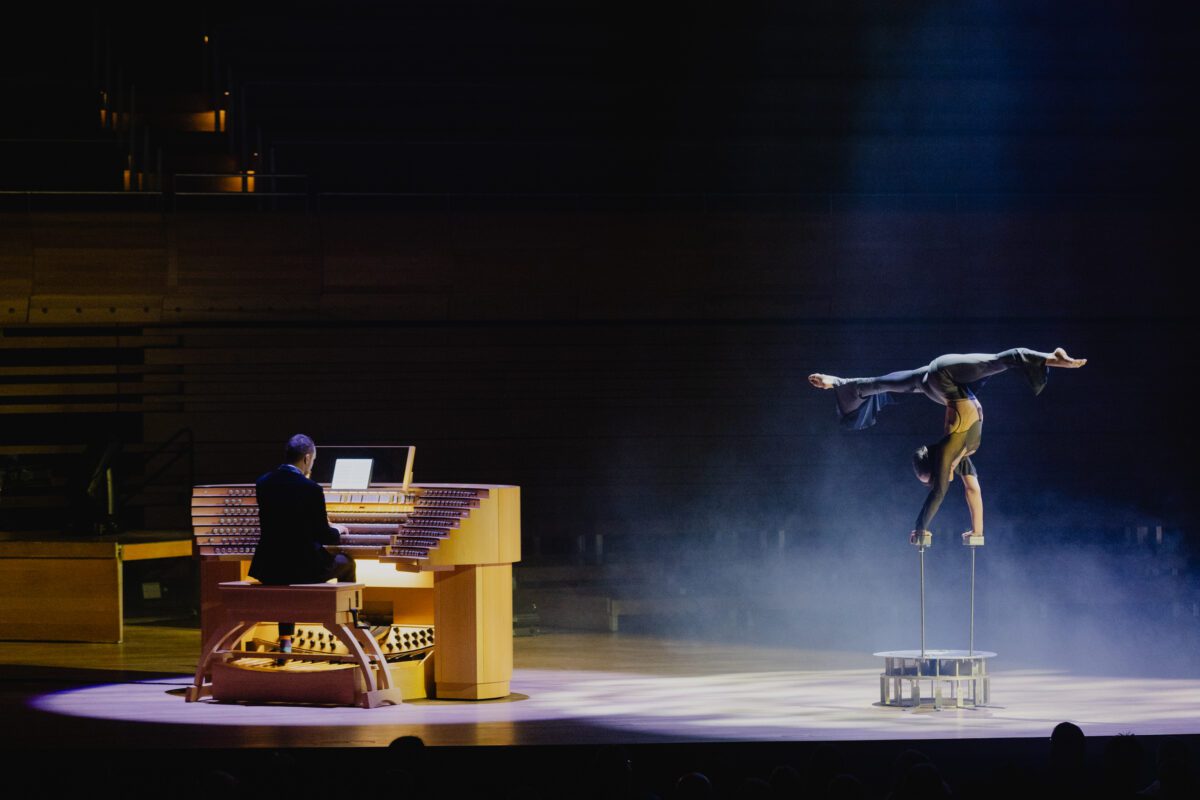
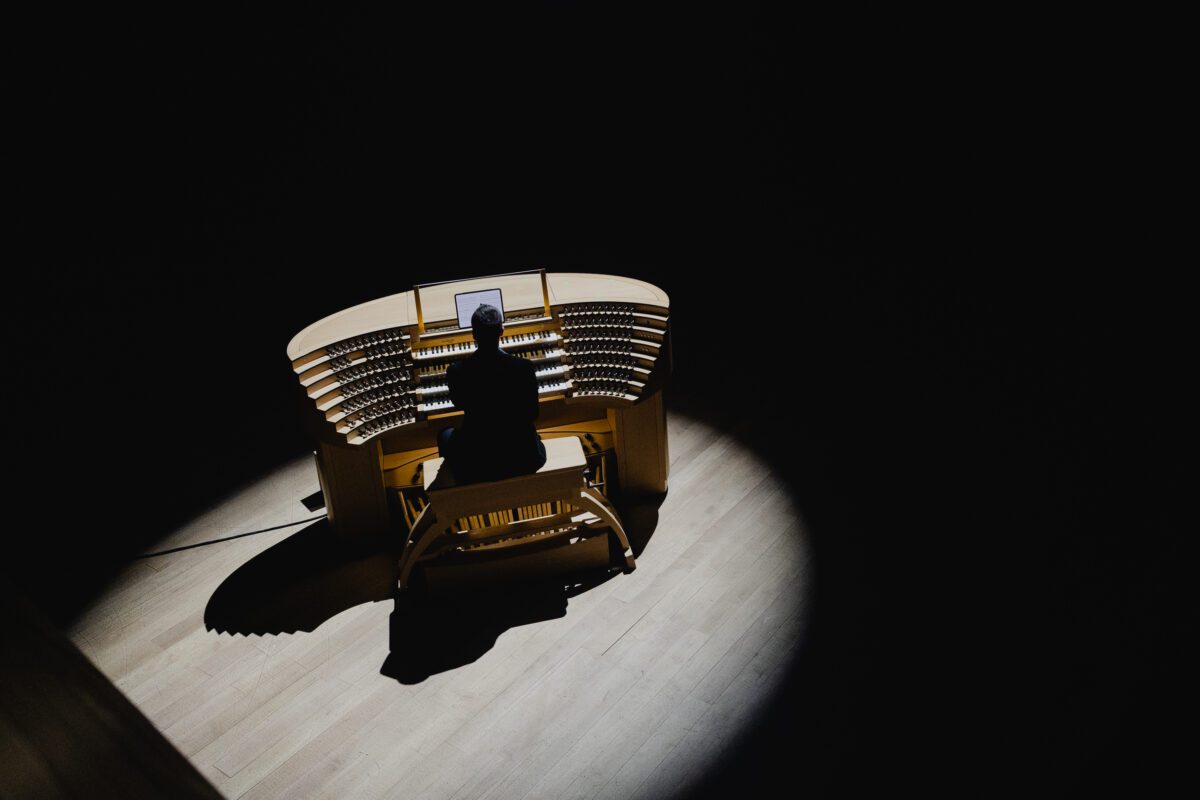
crédit photo: Gabriel Fournier
Symbiotic acrobatics
The acrobatics offered by Cirque Le Monastère were quite classic, but their union with the music brought a touch of often seductive poetry. I was particularly struck by the very beautiful hair suspension act on bungee, which, with Pärt’s ethereal music, lifted the audience with it into a very appealing and serene weightlessness. Also, the MultiLED cable act, in which Manolo Gonzalo twirled to a Glass Etude, had a rather attractive cyber-chic vibe.
The Cyr wheel number was perfectly suited to fit with Glass’s Mad Rush and its fluttering arpeggios in perfect harmony with the swirling rounds performed by artist Cléa Perion. Camille Tremblay dared to do something that probably no one had done before: a balancing act partly performed on the organ keyboard! Jean-Willy Kunz did not seem too thrown off by it. The finale, with all the artists gathered and Olivia Belli’s post-minimalist music, offered a satisfying conclusion.
The designers of the show had the good idea not to feel the need to accompany each piece with choreography. Thus, Cortège et Litanie, Le Banquet céleste, and part of Interstellar could be appreciated simply as music, played on stage by Jean-Willy Kunz. The organ therefore did not serve exclusively as a mere backdrop, but rather as an equal partner with the circus.
A beautiful idea, simple and effective, successfully executed.