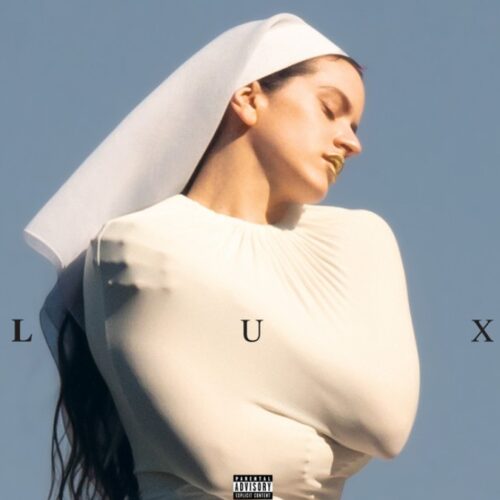
Rosalía’s LUX has garnered almost universal acclaim, though the album has piqued the interest of the ostentation and pomp brigade, who are considering questioning its creator for overusing resources to serve a concept that is thinner than it appears. The Catalan diva may indeed displease proponents of a rougher, less polished pop-rock, who might see it as a torrent of recycled mystical-philosophical and orchestral elements, at the expense of visceral emotion. She may embody the excessive grandeur abhorred by purists of raw, basic expression, who prefer all the garages of this world to this symphonic hall that could potentially contaminate them.
Without watering it down, without distorting its core essence, bringing an album of such ambition to fruition is not without risk. A song remains a song, with its chord progressions and melodies belonging to a limited set of possibilities. Where does the singularity lie, and where does the capacity to elevate souls beyond their raw expression reside? Creative salvation lies in the timbre of the voice, in its inflections, its stylistic choices, its execution, its instrumentation, its instrumental arrangements, and its beatmaking. When it comes to transforming pop songs into a more complex whole, especially an electro-symphonic one, a delicate balance is essential.
Yes, LUX is exuberant like Iberian culture; this flamenco flamboyance is centuries old, there’s really no reason to be embarrassed by it. Rosalía is not Björk, although she comes close; she is not FKA twigs; she is not Beyoncé; she is certainly not the oligarch Taylor Swift who sucks up everything generic in the known universe and microwaves it for her millions of devotees who are none the wiser.
Rosalía is Catalan, and this gifted, passionate artist embraces the strong flavors and rich textures of her culture. If you see any excess in this, don’t travel to Catalonia! The stylistic borrowings are ambitious, drawing from Romanticism and symphonic modernism. Catalan rumba and flamenco are certainly present in LUX, but not overly so in this 15-song offering, which is definitely not the soundtrack to a bullfight. The electronic elements here serve to support the instrumental music, not the other way around, though they are nonetheless important to the work. Reggaeton and rap are also skillfully integrated. The participation of highly talented artists (Caroline Shaw, Angélica Negrón, Estrella Morente, Björk herself, etc.) is certainly not the result of chance or professional opportunism. Rosalía is not the first to transcend her songs through such an ambitious, almost pharaonic approach, but one cannot deny that this work remains deeply embodied.
We haven’t finished dissecting this LUX album, but everything indicates that it will end up at the pinnacle of Western critical pop in 2025.