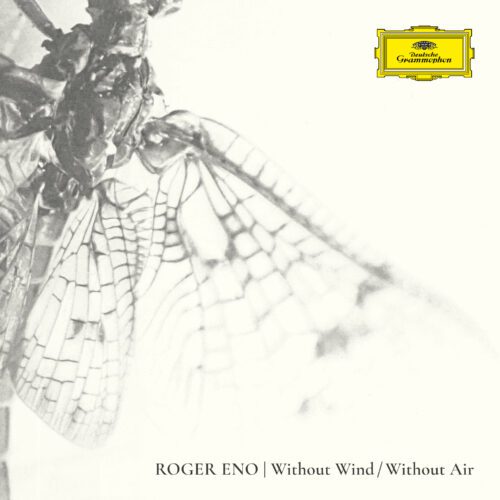
Without Wind, Without Air is the third encounter between the British multi-instrumentalist Roger Eno and the German yellow label, the undisputed realm of classical music, Deutsche Grammophon. The title refers to the fragility of the human condition and, in the context of the climate crisis, becomes (according to Eno) a warning.
Here, Eno seems to gain confidence as a “classical” composer by returning to a more orchestral sound than the previous, The Skies, they shift like chords… and by exploring with greater acuity the multiple capabilities of a larger orchestra than in The Turning Year. He also dares some dissonant passages, which may surprise those who are well acquainted with this ambient pioneer and his albums from the 1980s-1990s. For example, the surprising opening track, “Forgiveness,” with its sometimes almost atonal choir supported by a slow double bass pulse, acrid clarinet and lush strings, immediately transports you to a mysterious, almost unsettling world. It reminds me a little of the more tranquil moments of Peter Sculthorpe’s fabulous “Earth Cry,” for didjeridoo and orchestra. It segues into “Mist,” and another expressive clarinet, here languid, over a backdrop of tinkling synth chords. A haze evocatively constructed and beyond the conventional ambient exercise. “Tapestry” has a Satie-esque Gnossienne side, over which he layers Grace Davidson’s orientalizing soprano, still dressed in warm, but slightly sombre strings. It’s a bit Hans Zimmer in Gladiator. It continues like this for an hour, with a few episodes of neoclassical zen, with Eno himself at the piano.
The prevailing gentleness of the dynamic language still manages to convey the strong conviction of its author in the suggestive power of his art. In an interview, Eno revealed that he gave the musicians a lot of space, with more intuitive than directive instructions. For example, to some, he would say “make it squeaky,” without any further details about the notes themselves. It’s a dangerous game, which involves great trust on the part of the creator, but a good understanding of the style and desired final effect on the part of the performers.
The final result will probably convince those who have been following the artist for a long time, but also others who are more generally attracted to a somewhat cinematic contemporary neoclassicism.
A convincing album.