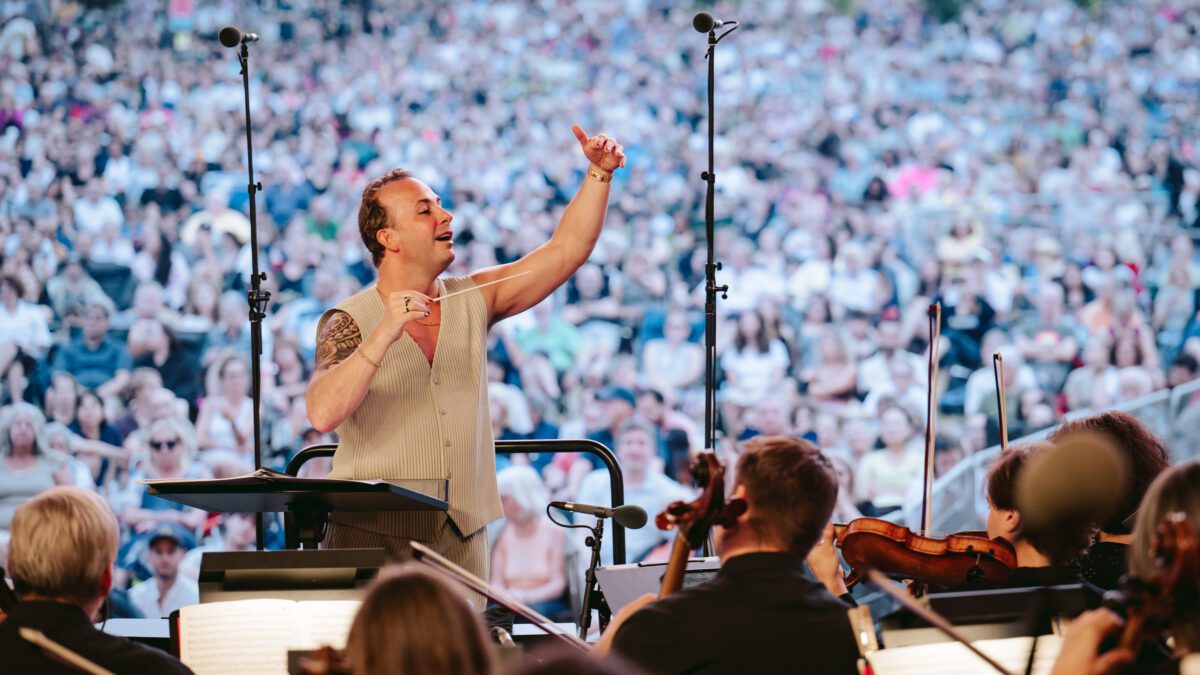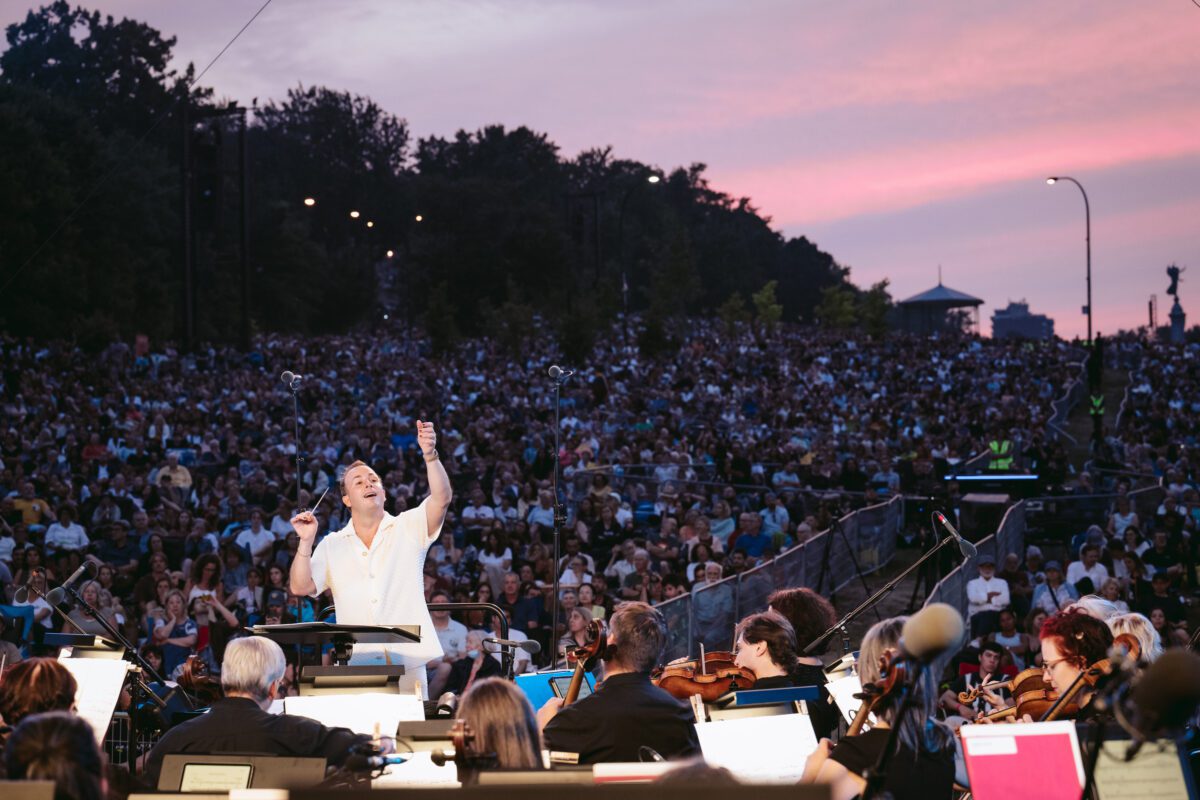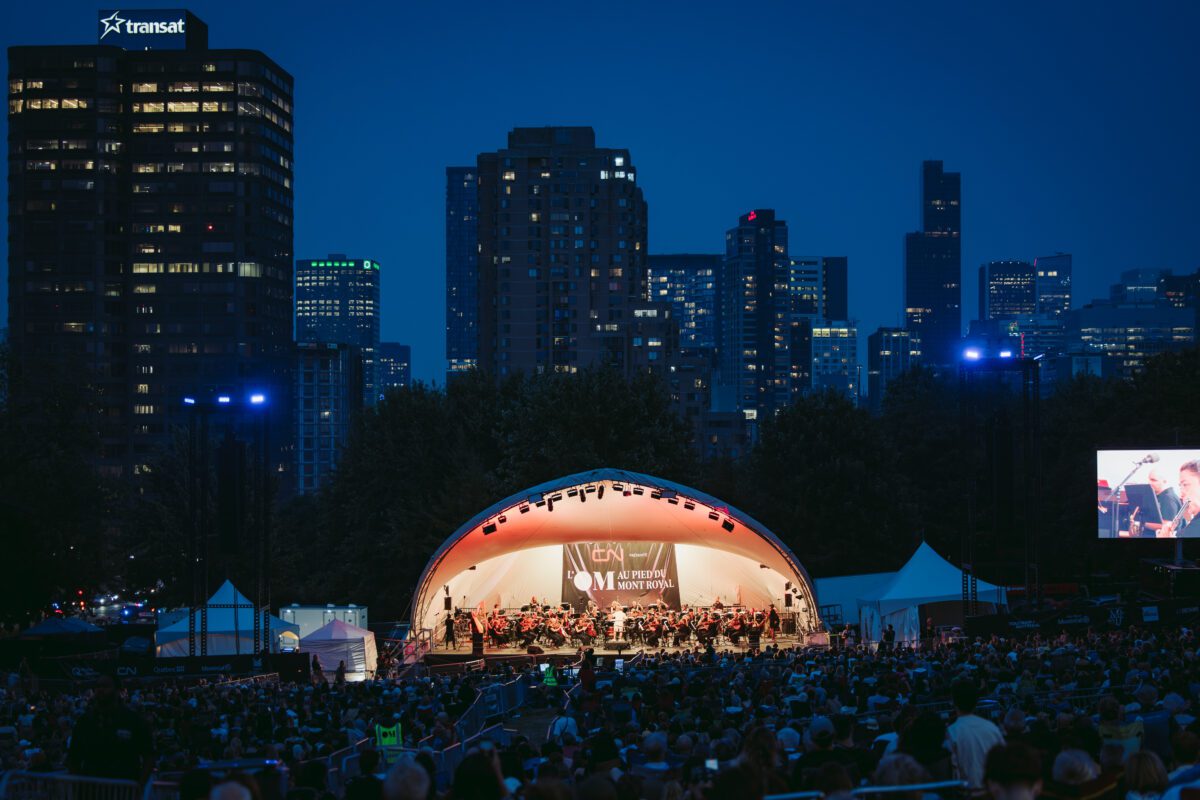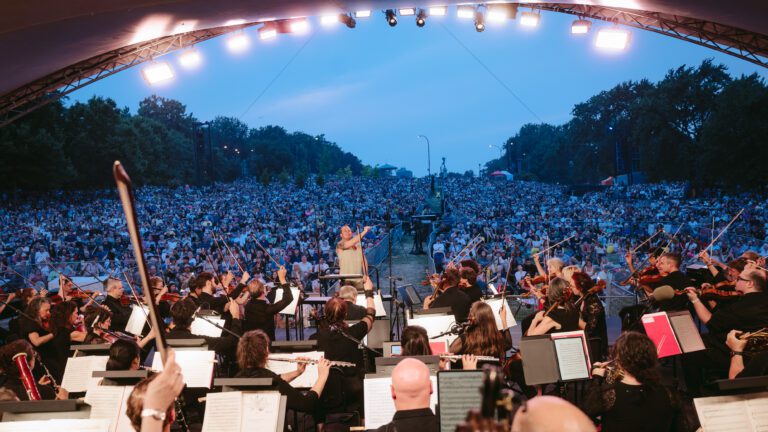
When we go to the annual OM concert at the foot of Mount Royal, we don’t go there to play the knowledgeable music lovers, who seek the sonic sublime and the magic of colors in its maximum fullness. For that, you have to go to the Maison symphonique. Or, if you want to do it outdoors, at the Lanaudière Amphitheatre, a model of its kind. Here, what we are looking for is more of a sense of collective communion. In this sense, the mandate is still well fulfilled and the objective achieved by the Montreal orchestra. A large crowd, reflective of the city, united in all colors, styles, ages, social classes, gender identities, politics, etc., gathered on the slopes of the mountain at sunset and as night fell, offering a dreamy panorama of the city’s skyscrapers behind the scene, and the splendid nature of the Mount, on the side.
In this kind of meeting, the sound quality is what it can be, that is to say, pushed by generous amplification so that we can hear the notes played by the orchestra as loudly as possible and over a vast distance, but without generating unpleasant distortion. A difficult equilibrium. Comments gleaned here and there after the evening indicate that some connoisseurs deplored the fact that what we had heard did not exactly correspond to what we heard at the Maison symphonique. That’s obvious, and as I just said, that’s not the goal.
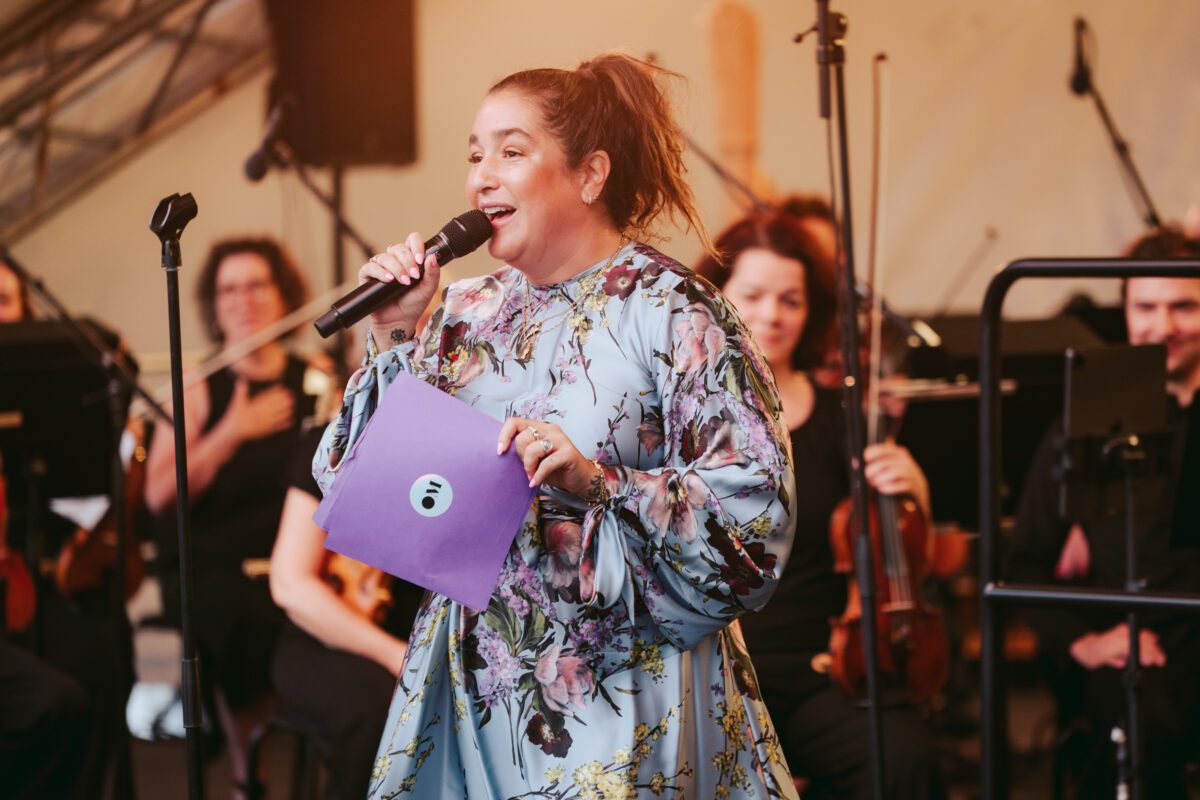
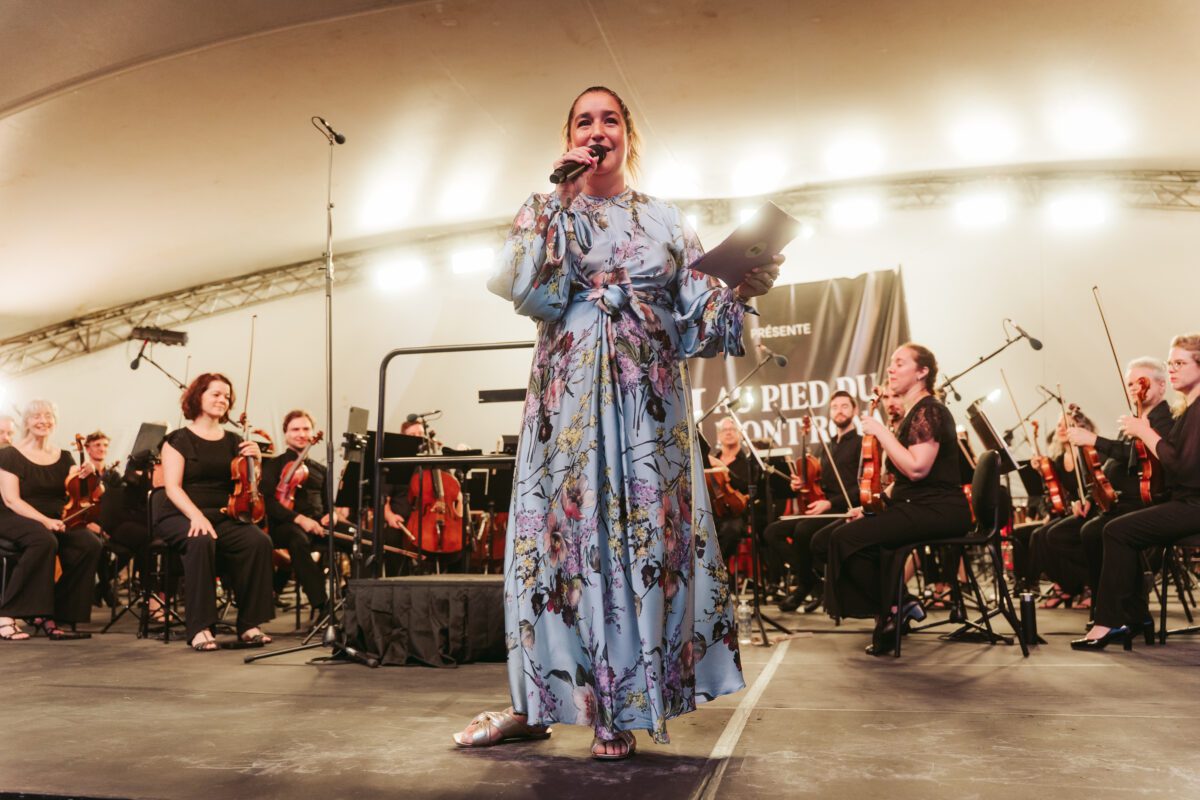
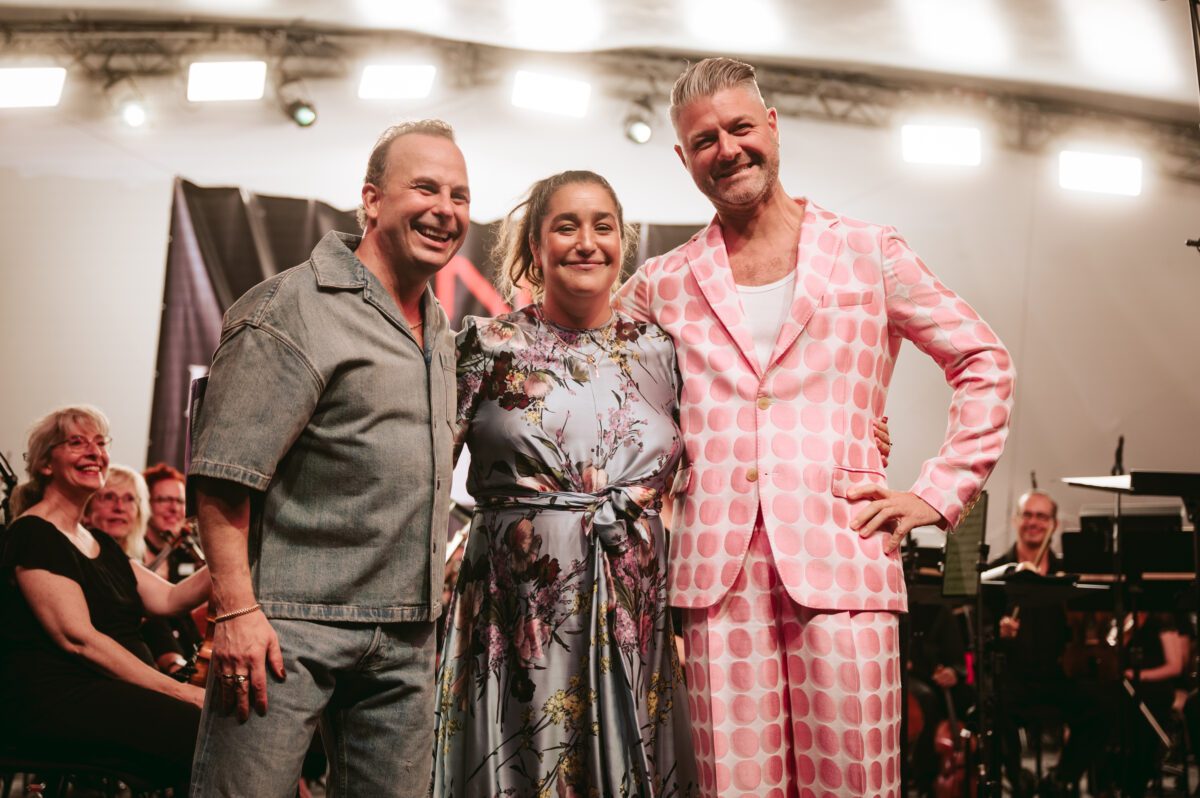
From the start (and after a pre-concert appetizer in the form of a tribute to Pierre Péladeau, the patron who allowed this orchestra to exist at the beginning, despite the presence of the more glorious OSM), the colors were announced with a greeting about Yannick as the “most beautiful human being put on earth by God” (nothing less), about Montreal as the most beautiful city in the Universe and the OM as the best orchestra in the world. We know that the host Mariana Mazza (replacing Kim Thuy, which necessarily disappointed many people, the two personalities being at opposite ends, Kim Thuy all elegance and delicacy, Mazza a go-getter, even vulgar) was laying it on thick and fully assumed the chauvinistic swelling of the announcements. But we smiled, and we especially appreciated it in the sense that, indeed, Montreal has something special, an energy, a personality, even a soul that instills in many of its inhabitants, and many non-natives, a rather strong devotion. We gave each other a big collective hug, a bit exaggerated, but benevolent.
As for the music, the program was very relevant in its eclecticism: the Italian Symphony by Mendelssohn that offers a very appropriate summer sparkle and memorable melodies, easily appreciated by anyone, even those who never listen to complete symphonies in normal times. A pretty piece by Augusta Holmès, L’amour et la nuit, in a romantic, almost cinematic style, was followed by a Quebec work by Hector Gratton (1900-1970), inspired by folk melodies, Dansons le carcaillou (which no one dared to do, fortunately). The classical portion concluded with the magnificent Firebird by Stravinsky, yet another score whose melodic features and colorful, grandiose style had all the makings of a film score for unfamiliar ears. A seductive factor, then, and fully appreciated by the crowd.
The Orchestra played well, to the extent that, once again, we are outdoors and the nuances and details tend to get lost. The specialist and regular concert-goer in me wants to salute the beautiful listening offered by this very large audience (50, 60 thousand?).
The finishing touch, the “cherry on the cupcake,” was provided by the immense Pierre Lapointe, probably the most refined and easily “classicizable” of Quebec singer-songwriters of the last 20 years. He sang three songs from his album Dix chansons démodées pour ceux qui ont le cœur abîmé. Three magnificent pieces with finely woven lyrics, melancholic tunes and rich and flavorful orchestrations (provided by the excellent Antoine Gratton). We were here in the great French song, at this level of musical excellence where words and notes fuse together.
The now well-established tradition of playing Beethoven’s 5th (the theme of the 1st movement) in disco style ensured a festive departure for the audience, who thus had the opportunity to sway and especially stretch their legs before returning home and saying to themselves (that was the goal) that, a classical concert, is fun.
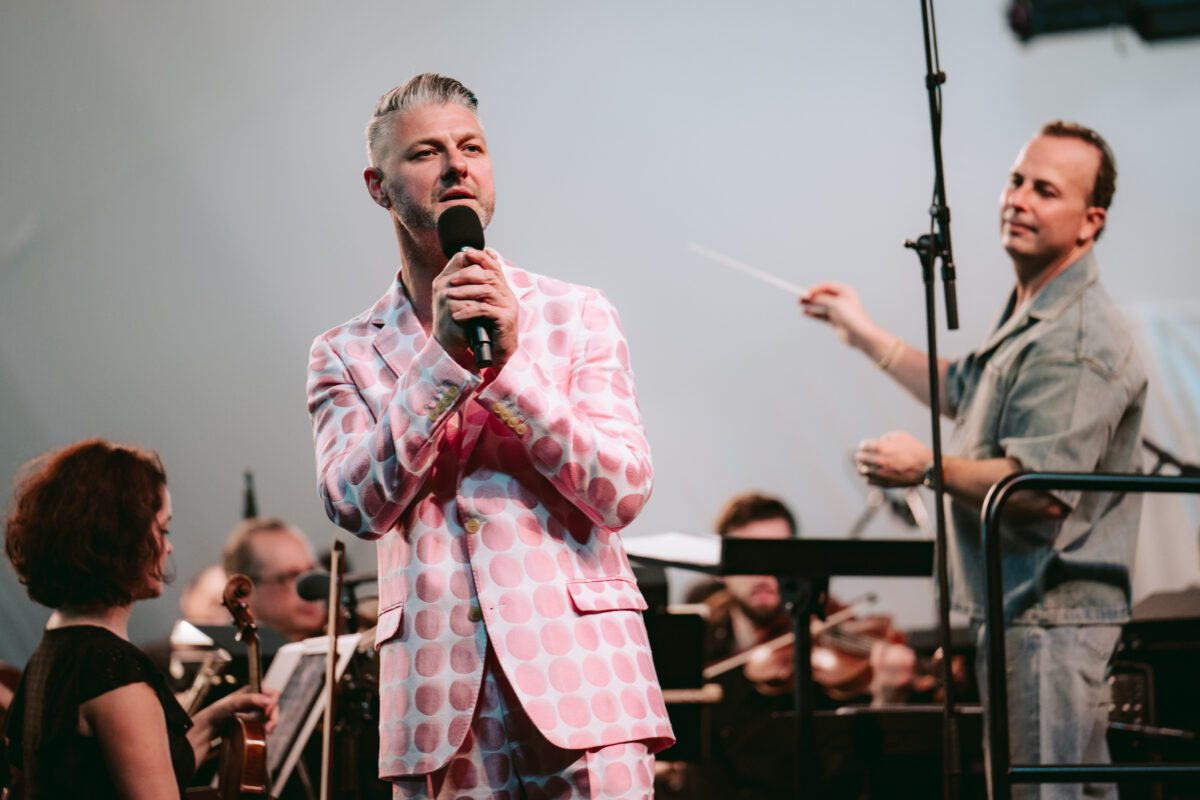
The nitpickers will surely grumble by criticizing the largely amplified sound recording, Yannick Nézet-Séguin’s frequent changes of attire (a bit too much), Mariana Mazza’s animation (somewhat out of sync with a typical classical concert, but still, and often, funny), or even the program itself, but none of them will probably have succeeded in democratizing the symphonic concert and classical music, even the most accessible, with such effectiveness. That is why we must recognize that the OM knows how to do it and is still succeeding in its gamble to unite an entire city and its inhabitants around its product.
The OM and Yannick Nézet-Séguin have placed classical music at the heart of Montreal’s life and spirit, eliminating multiple disparities and offering a unifying narrative, acquired and appreciated by everyone, and “anyone in between.”