classique / musique contemporaine / période romantique

OSM : Emanuel Ax joue Beethoven

par Rédaction PAN M 360

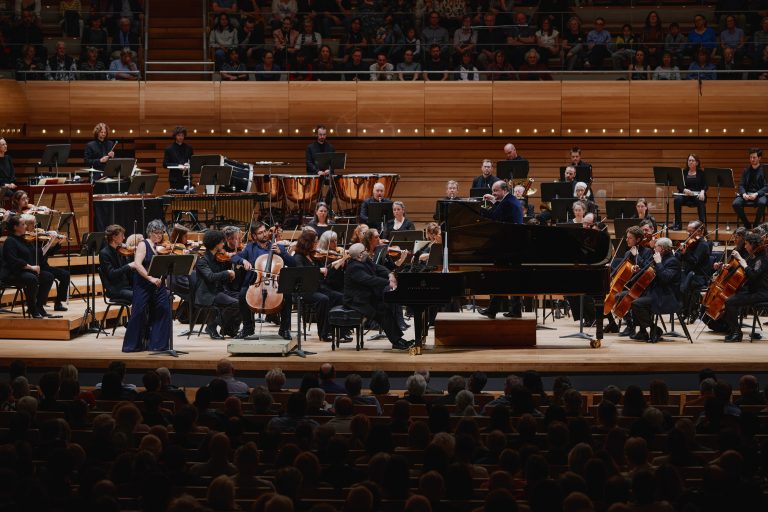
Laissez-vous emporter par le talent du pianiste Emanuel Ax, gagnant de huit Grammy Awards, qui insufflera toute sa sensibilité au Concerto n° 3 de Beethoven, une œuvre fascinante à la croisée du romantisme. Plongez ensuite dans l’épique Symphonie n° 5 de Prokofiev, composée pendant la Seconde Guerre mondiale, où chaque note résonne comme un triomphe éclatant. Assistez à la naissance d’une œuvre de la compositrice Isabella Gellis, étoile montante qui se distingue par la finesse et l’éloquence de son écriture.

Let yourself be swept away by the masterful touch of eight-time Grammy winner Emanuel Ax as he brings his deep sensitivity to Beethoven’s Piano Concerto No.3, a fascinating bridge between the elegance of Classicism and the passion of Romanticism. Then, dive into the grandeur of Prokofiev’s Symphony No.5, a wartime masterpiece brimming with triumphant energy. The evening also features the world premiere of a new work by rising star Isabella Gellis, renowned for her refined and expressive compositions.

Programme

Isabella Gellis, Création – commande de l’OSM
Ludwig Van Beethoven, Concerto pour piano no 3, op. 37 (34 min)
Sergueï Prokofiev, Symphonie no 5, op. 100 (46 min)

Program

Isabella Gellis, Premiere – OSM commission
Ludwig Van Beethoven, Concerto for Piano No. 3, Op. 37 (34 min)
Sergei Prokofiev, Symphony No. 5, Op. 100 (46 min)

POUR ACHETER VOTRE BILLET, C’EST ICI!

Ce contenu provient de l’Orchestre symphonique de Montréal et est adapté par PAN M 360

classique / jazz / période romantique

OSM : L’orchestre selon Duke Ellington et Rachmaninov

par Rédaction PAN M 360

Plongez dans l’univers vibrant de Harlem de Duke Ellington et voyagez à travers la puissance émotionnelle de la Symphonie n° 3 de Rachmaninov. Stravinsky, de son côté, jette un regard vers le XVIIIe siècle pour sublimer le violon dans son Concerto, magnifié par la captivante Alina Ibragimova. Ce programme musical vous propose une expérience où la musique symphonique dévoile une large palette de couleurs orchestrales. Un véritable kaléidoscope sonore qui mêle jazz, énergie et émotions pour une soirée alliant des univers musicaux riches et variés!

Step into the exciting world of Duke Ellington’s Harlem, then journey through the deep emotions of Rachmaninoff’s Symphony No. 3. The violin takes centre stage as Stravinsky looks back to the 18th century in his Concerto, brought to life by the captivating Alina Ibragimova. This program explores the full spectrum of orchestral colour, blending jazz, energy, and heartfelt expression. A dazzling musical adventure through diverse musical landscapes!

Programme

Duke Ellington, Harlem (18 min)
Igor Stravinsky, Concerto en ré majeur pour violon (22 min)
Sergueï Rachmaninov, Symphonie no 3, op. 44 (40 min)

Program

Duke Ellington, Harlem (18 min)
Igor Stravinsky, Concerto for Violin in D Major (22 min)
Sergei Rachmaninoff, Symphony No. 3, Op. 44 (40 min)

POUR ACHETER VOTRE BILLET, C’EST ICI!

Ce contenu provient de l’Orchestre symphonique de Montréal et est adapté par PAN M 360

baroque / classique

OSM : Le meilleur de Bach par Latry

par Rédaction PAN M 360

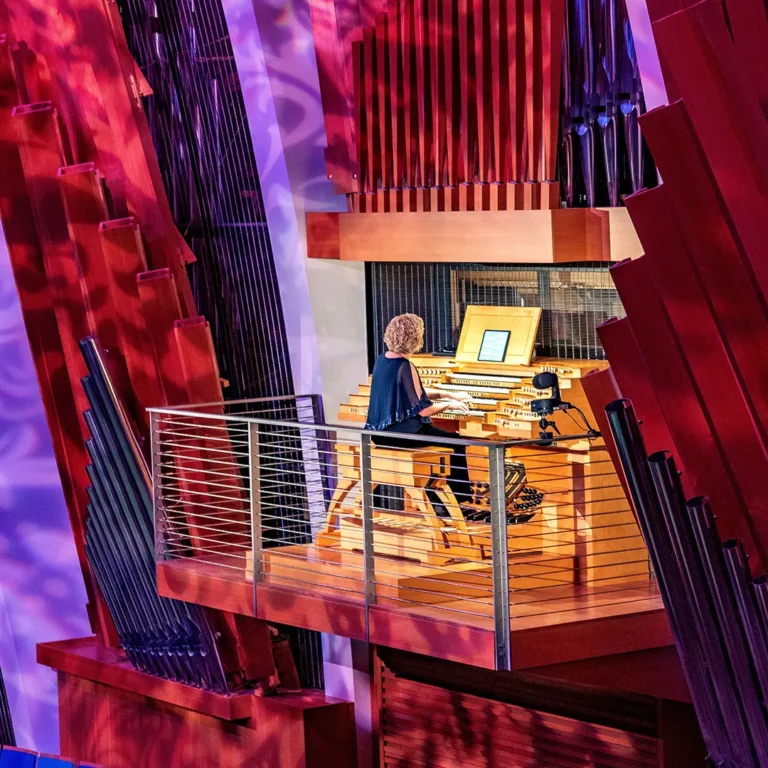
Avec Bach, rien n’est jamais ordinaire : tout est magistral. Compositeur de génie, pédagogue infatigable, artisan méticuleux, il savait tout faire avec les orgues – les accorder, les réparer, les dompter… et surtout les sublimer. Une grande partie de son œuvre leur est intimement liée, au point d’avoir inspiré, siècle après siècle, l’école française de l’orgue. Olivier Latry, figure majeure de l’instrument, célèbre ce génie total à travers l’art de la transcription : Bach revisité par Bach lui-même, puis réinventé par Dupré, Duruflé, Vierne ou Widor. Une joyeuse démonstration de puissance, d’invention et d’admiration, où l’orgue devient orchestre, cathédrale et terrain de jeu. Récital d’orgue (sans orchestre)

With Bach, nothing is ever ordinary—everything is monumental. A visionary composer, an tireless teacher, and a meticulous craftsman, he mastered every aspect of the organ: tuning it, repairing it, commanding it… and above all, elevating it. A significant part of his output is intimately tied to the instrument, to the point of inspiring the French organ tradition century after century. Olivier Latry, one of the instrument’s leading figures, celebrates this all-encompassing genius through the art of transcription: Bach reimagined by Bach himself, then reinvented by Dupré, Duruflé, Vierne, and Widor. A joyful display of power, creativity, and reverence, where the organ becomes orchestra, cathedral, and playground all at once. Organ recital (without orchestra)

Programme

Johann Sebastian Bach, Chaconne, extraite de la Partita pour violon nᵒ2, BWV 1004 (trans. Henri Messerer) (16 min)
Johann Sebastian Bach, Choral « Jesus bleibet meine Freude », extrait de la Cantate BWV 147 (trans. Maurice Duruflé) (3 min)
Johann Sebastian Bach, Sinfonia, extraite de la Cantate BWV 29 (trans. Marcel Dupré) (5 min)
Johann Sebastian Bach, Aria « Mein gläubiges Herze », extraite de la Cantate de la Pentecôte, BWV 68 (trans. Eugène Gigout) (3 min)
Johann Sebastian Bach, Sicilienne, extraite de la Sonate pour flûte, BWV 1031 (trans. Louis Vierne) (3 min)
Johann Sebastian Bach, Chœur final (Schlusschor), extrait de la Passion selon Saint Matthieu, BWV 244 (trans. Charles-Marie Widor) (6 min)
Johann Sebastian Bach, Concerto en la mineur, BWV 593 (11 min)
Johann Sebastian Bach, Prélude et fugue en ré mineur, BWV 539 (7 min)
Johann Sebastian Bach, Choral « Kommst du nun, Jesu, vom Himmel herunter », BWV 650 (4 min)
Johann Sebastian Bach, Toccata et fugue en ré mineur, BWV 565 (9 min)

Program

Johann Sebastian Bach, Chaconne from the Partita no. 2 for Violin, BWV 1004 (trans. Henri Messerer) (16 min)
Johann Sebastian Bach, Chorale “Jesu bleibet meine Freude” from the Cantata BWV 147 (trans. Maurice Duruflé) (3 min)
Johann Sebastian Bach, Sinfonia from the Cantata BWV 29 (trans. Marcel Dupré) (5 min)
Johann Sebastian Bach, Aria “Mein gläubiges Herze” from the Pentecost Cantata, BWV 68 (trans. Eugène Gigout) (3 min)
Johann Sebastian Bach, Sicilienne from the Flute Sonata, BWV 1031 (trans. Louis Vierne) (3 min)
Johann Sebastian Bach, Final Chorus (Schlusschor) from the St. Matthew Passion, BWV 244 (trans. Charles-Marie Widor) (6 min)
Johann Sebastian Bach, Concerto in A minor, BWV 593 (11 min)
Johann Sebastian Bach, Prelude and Fugue, BWV539 (7 min)
Johann Sebastian Bach, Chorale “Kommst du nun, Jesu, vom Himmel herunter”, BWV 650 (4 min)
Johann Sebastian Bach, Toccata and Fugue, BWV 565 (9 min)

POUR ACHETER VOTRE BILLET, C’EST ICI!

Ce contenu provient de l’Orchestre symphonique de Montréal et est adapté par PAN M 360

classique / période romantique / Piano

OSM : Le grand retour de Lang Lang

par Rédaction PAN M 360

Le phénomène Lang Lang revêt, l’espace d’une soirée, les atours d’un empereur. Dans le Concerto n° 5 de Beethoven, il déploie une virtuosité flamboyante, souveraine, qui semble s’affranchir de toutes les pesanteurs. Sous le geste visionnaire de Rafael Payare, cette quête de lumière se prolonge dans l’Ouverture n° 2 d’Emilie Mayer puis culmine dans la Symphonie n° 2 de Sibelius, cri d’émancipation d’un peuple écrasé. De l’Europe napoléonienne à la Finlande sous tutelle russe, la musique devient au final un espace où l’esprit refuse de se soumettre. Une soirée où l’art rappelle que la liberté est d’abord une force intérieure.

For one unforgettable evening, the phenomenon that is Lang Lang takes on the mantle of an emperor. In Beethoven’s Piano Concerto no. 5, he unleashes a dazzling, sovereign virtuosity that seems to transcend all weight and constraint. Under Rafael Payare’s visionary direction, this quest for light continues with Emilie Mayer’s Overture no. 2 and reaches its summit in Sibelius’s Symphony no. 2—a cry of emancipation from an oppressed nation. From Napoleonic Europe to Finland under Russian rule, music becomes a space where the spirit refuses to yield. An evening where art reminds us that freedom is, above all, an inner strength.

Programme

Emilie Mayer, Ouverture nᵒ 2 (10 min)
Ludwig van Beethoven, Concerto pour piano nᵒ 5, op. 73 (38 min)
Jean Sibelius, Symphonie nᵒ 2, op. 43 (43 min)

Program

Emilie Mayer, Overture no. 2 (10 min)
Ludwig van Beethoven, Piano Concerto no. 5, op. 73 (38 min)
Jean Sibelius, Symphony no. 2, op. 43 (43 min)

LES BILLETS POUR CE SPECTACLE SONT ÉPUISÉS!

Ce contenu provient de l’Orchestre symphonique de Montréal et est adapté par PAN M 360

classique / noël / pop-rock

OM : Des airs de fêtes à la Maison symphonique

par Rédaction PAN M 360

Le retour tant attendu Des airs de fêtes de l’OM! Sous la direction de Yannick Nézet-Séguin, ce rendez-vous festif explore le sens des fêtes à travers les générations, des classiques d’antan aux incontournables d’aujourd’hui, entre jazz, gospel et mélodies de Noël. Avec la présence d’artistes exceptionnels, dont Louis-Jean Cormier, Dominique Fils-Aimé et Elisabeth St-Gelais, ce concert haut en couleurs et en émotions célèbrera toute la magie des fêtes.

The highly anticipated Holiday Melodies returns to the OM! Conducted by Yannick Nézet-Séguin, this festive program explores the meaning of the holidays across generations, from timeless classics to today’s standards, including jazz, gospel and Christmas melodies. Featuring exceptional artists such as Louis-Jean Cormier, Dominique Fils-Aimé and Elisabeth St-Gelais, this joyful and moving concert celebrates all the magic of the season.

POUR ACHETER VOTRE BILLET, C’EST ICI! (19 DÉCEMBRE)

POUR ACHETER VOTRE BILLET, C’EST ICI! (20 DÉCEMBRE)

Ce contenu provient de l’Orchestre métropolitain et est adapté par PAN M 360

baroque / classique / Piano

Sir András Schiff | L’absolu Bach à la Maison symphonique

par Rédaction PAN M 360

Peu de pianistes contemporains ont exploré les œuvres pour clavier de Jean-Sébastien Bach de manière aussi fascinante que Sir András Schiff. Avec humilité et maîtrise, Schiff captive son public par sa relecture de l’une des œuvres les plus mystérieuses de Bach. Une expérience hors du temps, entre mystère et révélation.

Few contemporary pianists have explored Johann Sebastian Bach’s keyboard works in such a fascinating way as Sir András Schiff. With humility and mastery, Schiff captivates his audience through his reimagining of one of Bach’s most mysterious works. A timeless experience, suspended between mystery and revelation.

POUR ACHETER VOTRE BILLET, C’EST ICI!

Ce contenu provient de Place des Arts et est adapté par PAN M 360

bossa nova / Brésil / pop symphonique

Jobim Sinfônico à la Maison symphonique

par Rédaction PAN M 360

Afin de célébrer le 100e anniversaire de naissance d’Antônio Carlos Jobim (Tom Jobim), né à Rio de Janeiro, l’Orchestre national de jazz de Montréal vous invite à une soirée qui n’a jamais eu lieu auparavant — et qui ne se reproduira peut-être jamais. Quatre artistes brésiliens monteront sur la scène de la Maison symphonique aux côtés de plus de quarante musiciens : Daniel Jobim, petit-fils du maestro, Joyce Moreno, Zé Renato, et Mario Adnet — chanteur, arrangeur et guitariste. Ensemble, ils donnent vie à plusieurs pièces tirées des quatre grands albums de la maturité de Jobim — Matita Perê, Urubu, Terra Brasilis et Passarim — ainsi qu’à quelques-unes de ses plus belles chansons : Águas de Março, Wave, Tempo do Mar, Dindi, The Girl from Ipanema. Ce ne sont pas seulement les chansons que vous connaissez déjà par cœur. Ce sont aussi les chansons que Jobim a composées lorsqu’il a cessé de vouloir conquérir le monde pour tenter de comprendre le Brésil — ses forêts, ses fleuves, ses oiseaux, sa tristesse, sa beauté impossible. Venez entendre ce que Jobim entendait. Venez entendre à quoi ressemble le Brésil quand il rêve.

To celebrate the 100th anniversary of the birth of Antônio Carlos Jobim (Tom Jobim), born in Rio de Janeiro, the Orchestre national de jazz de Montréal invites you to an evening that has never taken place before — and may never happen again. Four Brazilian artists take the stage of the Maison Symphonique alongside more than forty musicians: Daniel Jobim, the maestro’s grandson; Joyce Moreno; Zé Renato; and Mario Adnet — singer, arranger, and guitarist. Together, they bring to life several pieces drawn from the four great albums of Jobim’s maturity — Matita Perê, Urubu, Terra Brasilis, and Passarim — along with some of his most beautiful songs: « Águas de Março, » « Wave, » « Tempo do Mar, » « Dindi, » « The Girl from Ipanema. » These are not only the songs you already know by heart. They are also the songs Jobim composed when he stopped trying to conquer the world and began trying to understand Brazil — its forests, its rivers, its birds, its sadness, its impossible beauty. Come hear what Jobim heard. Come hear what Brazil sounds like when it dreams.

POUR ACHETER VOTRE BILLET, C’EST ICI!

Ce contenu provient de Place des Arts et est adapté par PAN M 360

baroque / classique

La Passion selon saint Matthieu de Bach à la Maison symphonique

par Rédaction PAN M 360

La Passion selon saint Matthieu de Bach est un monument du répertoire sacré, où musique, récit et méditation ne font qu’un. Un chef-d’œuvre bouleversant. La Passion selon saint Matthieu de Bach est une fresque musicale d’une intensité rare, où récit, chœurs et airs solistes se répondent dans une tension dramatique saisissante. Présentée dans son intégralité par l’Ensemble Caprice et l’Ensemble ArtChoral sous la direction de Matthias Maute, cette interprétation promet une expérience puissante, immersive et profondément émouvante. Un grand moment de musique à vivre — une expérience à partager.

Bach’s St Matthew Passion stands as a monument of the sacred repertoire, where music, narrative, and meditation become one. A profoundly moving masterpiece. The St Matthew Passion is a musical fresco of rare intensity, in which narration, choruses, and solo arias respond to one another in gripping dramatic tension. Presented in its entirety by Ensemble Caprice and Ensemble ArtChoral under the direction of Matthias Maute, this interpretation promises a powerful, immersive, and deeply moving experience. A great musical moment to be lived — an experience to be shared.

POUR ACHETER VOTRE BILLET, C’EST ICI!

Ce contenu provient de Place des Arts et est adapté par PAN M 360

classique / période moderne

OSM : Petrouchka de Stravinsky : entre danse et traditions

par Rédaction PAN M 360

Petrouchka, c’est toute la magie de la marionnette qui soudain prend vie, avec son lot de charme, d’espièglerie et de maladresse touchante. Stravinsky y déploie un théâtre sonore d’une inventivité folle, nourri de l’audace de ses complices d’origine – Fokine, Benois, Diaghilev – qui avaient rêvé un spectacle brouillant les frontières entre pantins et êtres humains. On entend encore dans la partition cet esprit avant-gardiste : une foire russe éclate en couleurs vives, les marchands crient, les orgues grincent et parmi la foule surgissent trois marionnettes qui se débattent avec des sentiments trop grands pour elles. Entre humour, rusticité et illusion poétique, Petrouchka reste un enchantement où la fantaisie tourne au vertige.

Petrushka is pure magic—the puppet suddenly coming to life, brimming with charm, mischief, and touching awkwardness. Stravinsky creates a sonic theater of wild inventiveness, fueled by the audacity of his original collaborators—Fokine, Benois, Diaghilev—who dreamed of a spectacle blurring the lines between puppets and humans. That avant-garde spirit still resonates in the score: a Russian fair bursts into vivid colors, merchants shout, barrel organs creak, and among the crowd appear three puppets struggling with emotions far too big for them. Between humor, rusticity, and poetic illusion, Petrushka remains an enchantment where fantasy spins into vertigo.

Programme

Violet Archer, Prelude-Incantation pour orchestre (12 min)
Wolfgang Amadeus Mozart, Concerto pour violon nᵒ 5, K. 219 (31 min)
Igor Stravinsky, Petrouchka (1947) (34 min)

Program

Violet Archer, Prelude–Incantation for Orchestra (12 min)
Wolfgang Amadeus Mozart, Violin Concerto no. 5, K. 219 (31 min)
Igor Stravinsky, Petrushka (1947) (34 min)

POUR ACHETER VOTRE BILLET, C’EST ICI!

Ce contenu provient de l’Orchestre symphonique de Montréal et est adapté par PAN M 360

néoclassique

OM : Dream Requiem à la Maison symphonique

par Rédaction PAN M 360

Le Dream Requiem de Rufus Wainwright réinvente la tradition des grandes messes pour les morts en y insufflant une force visionnaire. À la solennité du texte liturgique s’unit « Darkness », poème de Lord Byron écrit en 1816, où le monde s’effondre après une catastrophe climatique. Une réflexion puissante sur le deuil collectif, l’urgence de solidarité et la nécessité d’une transformation humaine et sociale. Autour de la narration par Rufus Wainwright lui-même, une fresque monumentale prend vie dans ce qui constitue sa toute première présentation canadienne : l’OM, le Chœur Métropolitain, les Petits Chanteurs du Mont-Royal et la soprano Angel Blue, réunis sous la direction de Yannick Nézet-Séguin. Une rencontre entre poésie et musique qui questionne notre époque et prolonge la tradition des grands Requiem.

Rufus Wainwright’s Dream Requiem reinvents the tradition of grand requiems by infusing it with visionary power. The solemnity of the liturgical text joins “Darkness,” Lord Byron’s 1816 poem depicting a world collapsing after a climate disaster. A profound reflection on collective mourning, the urgency of solidarity and the need for human and social transformation. Around Wainwright’s narration, a monumental scene emerges: the OM, Chœur Métropolitain, Petits Chanteurs du Mont-Royal and soprano Angel Blue, united under Yannick Nézet-Séguin’s baton. A dialogue between poetry and music that questions our present and preserves the tradition of the great requiems.

Programme/program

WAINWRIGHT, Dream Requiem

POUR ACHETER VOTRE BILLET, C’EST ICI!

Ce contenu provient de l’Orchestre métropolitain et est adapté par PAN M 360

chant lyrique / classique / période romantique

OM : Héroïnes et passions lyriques à la Maison symphonique

par Rédaction PAN M 360

Certains personnages traversent les siècles et inspirent les plus grands créateurs. Manon Lescaut, héroïne du roman de l’abbé Prévost, est l’archétype d’une passion fatale : amoureuse, séduisante, mais vouée à un triste destin. La soprano Sarah Dufresne nous transporte dans l’univers de cette figure mythique en mêlant les arias de deux adaptations célèbres, celles d’Auber et de Massenet, pour en tracer le fil psychologique. Autour de Manon, Keri-Lynn Wilson dirige l’OM dans des pages orchestrales de Clémence de Grandval, figure marquante de l’opéra qui a su se tailler une place dans un milieu alors essentiellement masculin. Puis, deux fresques symphoniques signées Tchaïkovski et Wagner nous entraînent dans les passions tragiques de Francesca da Rimini, héroïne de La Divine Comédie, et d’Isolde, amante mythique de Tristan.

Some figures endure through the centuries, inspiring the greatest artists. Manon Lescaut, the heroine of the Abbé Prévost novel, embodies tragic passion: smitten and seductive, yet doomed to a cruel fate. Soprano Sarah Dufresne brings this legendary figure to life by combining arias from two famous adaptations, by Auber and Massenet, to map out her psychological journey. Alongside Manon, Keri-Lynn Wilson leads the OM in orchestral works by Clémence de Grandval, a pioneering female composer who carved a place for herself in a predominantly male world. Tchaikovsky and Wagner’s symphonic masterpieces then carry us through the tragic passions of Francesca da Rimini, heroine of The Divine Comedy, and Isolde, Tristan’s mythical lover.

Programme

AUBER et MASSENET, Arias de Manon Lescaut
GRANDVAL, Pages symphoniques d’opéras
TCHAÏKOVSKI, Francesca da Rimini
WAGNER, Tristan und Isolde : Prélude et Liebestod

Program

AUBER and MASSENET, Arias from Manon Lescaut
GRANDVAL, Symphonic pages from operas
TCHAIKOVSKY, Francesca da Rimini
WAGNER, Tristan und Isolde: Prelude and Liebestod

POUR ACHETER VOTRE BILLET, C’EST ICI!

Ce contenu provient de l’Orchestre métropolitain et est adapté par PAN M 360

classique / latino / tango nuevo

OSM : Dansez avec Piazzolla

par Rédaction PAN M 360

Piazzolla a bouleversé le tango en lui insufflant une liberté nouvelle : un souffle urbain, nerveux, poétique, où le bandonéon devient le narrateur d’émotions brutes et d’élans mélancoliques. De l’adieu bouleversant d’Adiós Nonino à l’énergie du Concerto Aconcagua s’esquisse un langage riche, moderne, incandescent. Maria de Buenos Aires, avec ses éclats de théâtre et de mystère, prolonge cette exploration de la capitale argentine sensuelle et hantée. Gemma New réunit pour cette soirée deux maîtres du bandonéon, William Sabatier et Rómulo Larrea, ce dernier figure essentielle du tango au Québec, afin d’honorer autant l’héritage argentin que son épanouissement montréalais. Une immersion vibrante, où passion, rythmes lancinants et émotion vive se rencontrent. Soirée festive! La Maison symphonique revêtira ses plus beaux décors pour vous faire vibrer au rythme du tango. Restez après le concert pour profiter du plancher de danse et de musique live!

Piazzolla revolutionized tango by infusing it with a new freedom: an urban, edgy, poetic breath where the bandoneon becomes the narrator of raw emotions and melancholic surges. From the heartrending farewell of Adiós Nonino to the energy of the Aconcagua Concerto emerges a language that is rich, modern, and incandescent. María de Buenos Aires, with its flashes of theater and mystery, deepens this exploration of a sensual, haunted Argentine capital. For this evening, Gemma New brings together two masters of the bandoneon—William Sabatier and Rómulo Larrea, the latter a key figure in Quebec’s tango scene—to honor both the Argentine heritage and its flourishing in Montreal. A vibrant immersion where passion, hypnotic rhythms, and raw emotion converge. Late-Night concert! The Maison symphonique will be decorated in its finest to get you moving to the rhythm of tango. Stick around after the concert to hit the dance floor and enjoy live music!

Programme

Astor Piazzolla, Adios Nonino (orch. Sabatier) (6 min)
Astor Piazzolla, Concerto pour bandonéon et orchestre Aconcagua (20 min)
Carlos Gardel/Alfredo Le Pera, El día que me quieras (3 min) *
Hector Stamponi/Enrico Maria Francini, Pedacito de cielo (2 min) *
Astor Piazzolla, Preparense (3 min) *
Anibal Troilo, Responso (3 min) *
Romulo Larrea, Montréal bleu (4 min) *
Mariano Mores, Tanguera (2 min) *
Eladia Blazquez, Sin Piel (arr. Joner) (3 min)
Astor Piazzolla, Chiquilin de Bacchin (arr. Joner) (4 min)
Rosita Piuma Velez/Himero Manzi, Desde el alma (arr. Joner) (4 min)
Astor Piazzolla, Vuelvo al sur (4 min)
Astor Piazzolla, Maria de Buenos Aires : « Yo soy Maria » (4 min)
*Œuvres interprétées par l’Ensemble Romulo Larrea (sans orchestre)

Program

Astor Piazzolla, Adios Nonino (orch. Sabatier) (6 min)
Astor Piazzolla, Concerto for Bandoneon and Orchestra Aconcagua (20 min)
Carlos Gardel/Alfredo Le Pera : El día que me quieras (3 min) *
Hector Stamponi/Enrico Maria Francini, Pedacito de cielo (2 min) *
Astor Piazzolla, Preparense (3 min) *
Anibal Troilo, Responso (3 min) *
Romulo Larrea, Montréal bleu (4 min) *
Mariano Mores, Tanguera (2 min) *
Eladia Blazquez, Sin Piel (arr. Joner) (3 min)
Astor Piazzolla, Chiquilin de Bacchin (arr. Joner) (4 min)
Rosita Piuma Velez/Himero Manzi, Desde el alma (arr. Joner) (4 min)
Astor Piazzolla, Vuelvo al sur (4 min)
Astor Piazzolla, Maria de Buenos Aires : « Yo soy Maria » (4 min)
*Work performed by the Romulo Larrea Ensemble (without Orchestra)

POUR ACHETER VOTRE BILLET, C’EST ICI!

Ce contenu provient de l’Orchestre symphonique de Montréal et est adapté par PAN M 360

Inscrivez-vous à l'infolettre

Inscription
Infolettre

« * » indique les champs nécessaires

Type d'abonné