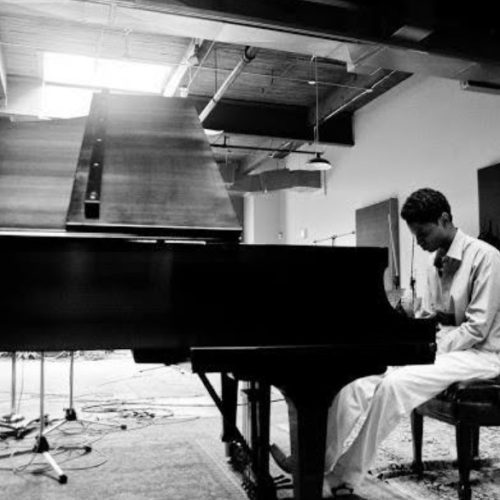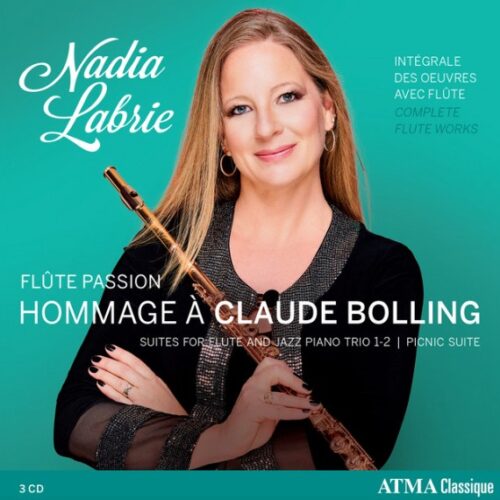
Born in 1930 and deceased in 2020, French pianist, composer, and conductor Claude Bolling was a prominent figure in the musical landscape of France. A prolific composer, accomplished jazz musician, and skilled improviser, he also composed for film. Today, his music continues to touch generations of Quebecers: the Ciné-Cadeau classics Lucky-Luke à Daisy Town and La ballade des Dalton bear his mark. Among his greatest successes are his compositions for flute, which are the subject of this article.
In 1975, Claude Bolling recorded his Suite for flute and jazz piano trio with the famous flutist Jean-Pierre Rampal. In 1980, the duo became a trio, joined by guitarist Alexandre Lagoya, and recorded the Picnic Suite on LP. In 1987, the Bolling/Rampal duo reunited to record Suite for Flute and Jazz Piano Trio No. 2 on vinyl.
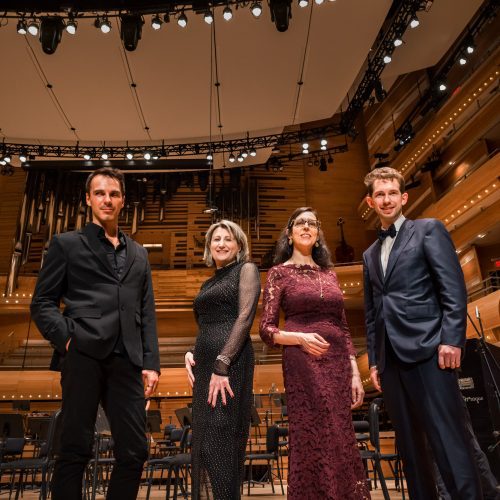
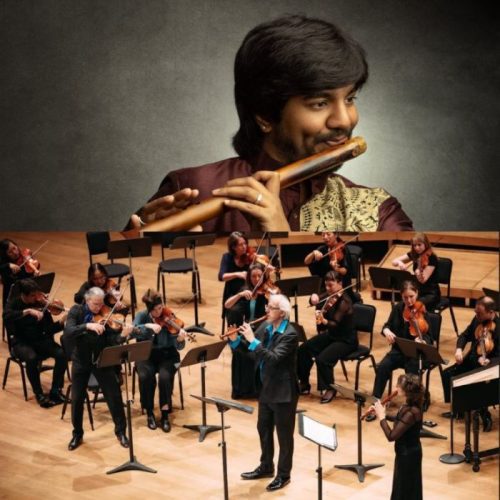
Blending jazz and classical influences, these compositions topped the charts, enjoying both critical and popular success. Suite No. 1 was even nominated for a Grammy Award. Fifty years later, Quebec flutist Nadia Labrie offers us a fresh take on Bolling’s flute compositions. A contemporary interpretation of a work to discover or rediscover.
Action.
Suite No. 1: The flute opens the dance, rustic and sunny, immediately joined by the piano, then the double bass and jazz percussion. We are pleasantly surprised by the unexpected combination, where the freshness of the flute plays cat and mouse with the smoky bar atmosphere evoked by the jazz sounds. Bolling’s experience as a composer for the big screen is also palpable. The alternating tempos, calm and frenzied, the intertwining of piano and flute, which exchange melodies and rhythmic motifs, the evocative trills, the haunting notes, all evoke movement, life, images.
La Sentimentale from Suite No. 1 is a striking example. It begins with a slow, gentle melody that clearly evokes a field of flowers, almost abandoned, where the leaves of the trees rustle softly. A wide, meditative shot with a bluish image grain. In the middle of the segment, there is a brief interlude where the double bass takes center stage, foreshadowing a change of scene. Then comes a new rhythmic figure, galloping and energetic, taken up in unison by the flute and piano. The camera pans, revealing a dusty road and an old car rattling along, carrying a group of laughing young people. The motif develops in various variations; we imagine the camera following the old car and its passengers, revealing the landscape, a cliff, the turquoise sea. The rhythm slows down, the piano begins a new melody, the flute becomes soft and caressing, stretching out the notes: the camera slowly flies away. Aerial shot. The car disappears behind the rolling hills in the distance. We can still sense its presence by the dust it kicks up. The film’s title appears in a crossfade. Cut!
Suite No. 1 continues, and now La Javanaise begins. With a frenzied tempo, after the prelude, here comes the action! But enough with the images. It is clear that Bolling’s compositions stimulate the visual imagination. It is narrative music that draws the listener into its story.
Each of the three sequels can thus be thought of as its own film, its own story, while still retaining a common unity and a certain sense of nostalgia. The first sequel is the most rural of all, evoking the old-fashioned countryside of certain regions of France or Italy. A feel-good film, reminiscent of Pagnol, where people run in white linen dresses among wild olive trees: romantic, with a certain je ne sais quoi of naivety.
Suite No. 2 is more playful, starting with a mocking piano and a skipping flute: from a sunny family film, we now find ourselves in some kind of detective comedy, aboard some Orient Express, passengers on the train of modernity. The jazz sounds here are more assertive and energetic (L’Intime, the penultimate segment, is a telling example) without losing the evocative power of the flute, its poignant, nostalgic aspect.
Closing the album, the Picnic Suite is a rather striking change of scenery. If we were traveling through the European countryside aboard a fantasy train, we have finally arrived in the city. Here, the flute no longer evokes the rustling of the zephyr in the tall grass, but rather the brief respite of a public park amid the urban traffic (see segment number 4, Fantasque, which indulges in a chaotic flight of fancy). The jazz festivities of a nocturnal romance that began in the last hours of the day, which will play out “Before Sunrise” between smoky bars. The guitar joins in, playful and languid, an addition that brings a welcome variety to the last segment of this triple album. The music is at its most jazzy here, with classical influences becoming more discreet.
Let us now take the time to conclude and roll the credits. Nadia Labrie is a concert soloist, as evidenced by the many awards she has received. Her playing is masterful and expert. The audio recording of the various instruments is crystal clear and captures the musicians’ performance in every detail. Bolling’s sense of melody is thus revealed with clarity in this new interpretation. All of this makes for a very beautiful ensemble. However, there are a few differences, which I find noteworthy, compared to the versions originally recorded by Bolling himself. Overall, Flûte Passion: Hommage à Claude Bolling is virtuosic, presenting a more polished, more restrained performance than the albums by Bolling, Rampal, and Lagoya. The clarity with which the instruments are rendered and mixed here is also exemplary, but the performance perhaps loses some of the original warmth of the 1975, 1980, and 1987 recordings. The difference in audio quality, it must be said, also plays a part in our perceptions. It’s up to each listener to discover the version that suits them best, but Bolling’s flute music is well worth discovering!