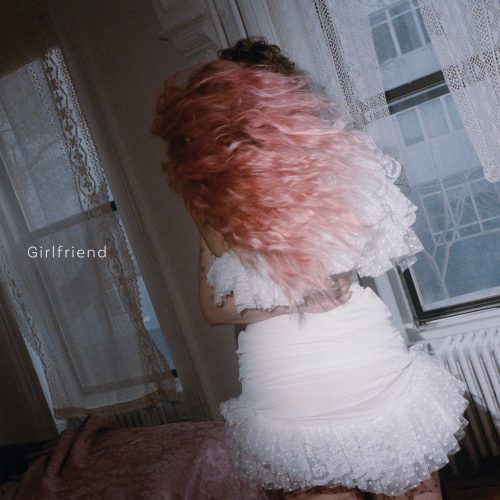
On her third album, Grace Ives refines the personal-chaos narrative that defined Janky Star into something sleeker yet no less intimate. Girlfriend unfolds as a retelling of her life over the past few years – substances, complicated relationships, self-sabotage, and the disorienting promise of Los Angeles – coming together in her signature tilted, textured pop. Her hooks are as catchy and clear-cut as ever, while her production – still anchored in drum machines and sequencers – feels more deliberate than in past works. It’s bedroom pop under a glaze of real-life experience.
The opener, “Now I’m,” arrives as a soft exhale. Built on acoustic guitar and a delicate vocal, it plays like a quiet inventory of the selves she’s shed, feeling both peaceful and untethered. That calm is quickly destabilized by “Avalanche,” where her world begins to fracture. The track is sharper, more volatile; it gathers momentum through arpeggiated synths, a distorted bassline and ticking hi-hats. It is incredibly dynamic, with her voice soaring over top of the slightly panic-inducing arrangement.
“Fire 2” stands out as one of the album’s most transportive moments. Starting with a muted club/UKG beat, the song dissolves into a hazy pool of piano and strings, as if the song itself were melting into liquid. The glitchy, reversed backing vocals feel like an ode to FKA twigs’ ethereal pop. “Drink Up” and “Stupid Bitches” tap into a vaporwave-adjacent vibe, existing as a sort of love child between Sky Ferreira and George Clanton — a blend of nostalgia, dreaminess and emotional depth.
The album reaches its climax with “My Mans,” a sweeping crescendo where her voice floats over a bed of aching strings. It’s melodramatic, cinematic. It feels like an emotional release after an album spent going back and forth between detachment and confession.
Girlfriend doesn’t offer resolution so much as it builds a beautiful world full of fairly typical 20-something experiences. She seamlessly creates a mood and feeling that stays with you, lingering like perfume on fabric: elusive, intimate, and unmistakably her own. It is cool-girl-pop in the truest sense; it doesn’t abide by the rules of contemporary chart music, but rather prioritizes texture and personality over perfection. Ives embraces her flaws and failures as a kind of aesthetic principle, positioning herself in a different world from the hyper-curated “clean girl” monoculture.