Additional Information
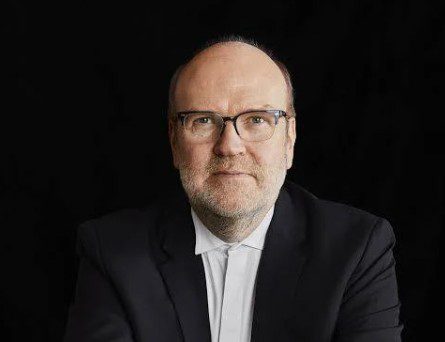
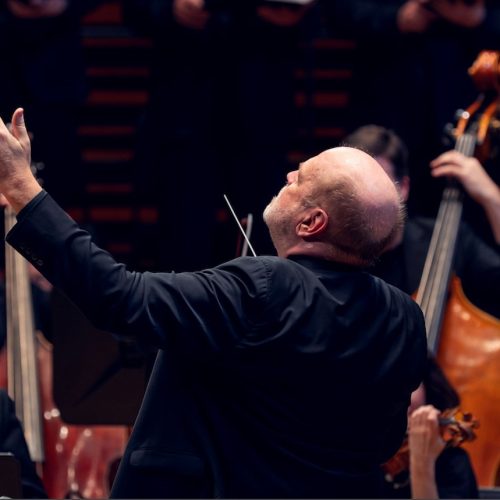
Since taking the helm of Ensemble ArtChoral (formerly Arts-Québec), conductor and artistic director Matthias Maute has embarked on an ambitious project: to bring together in a recording series the a capella choral repertoire from the Renaissance to the present day. An epic spanning more than six centuries of musical styles. With seven of the planned eleven volumes already released, PAN M 360 collaborator Frédéric Cardin sat down with Matthias Maute to discuss the project’s progress in the wake of the most recent catalog releases, Baroque I and Moderne.
PAN M 360: What motivated you to launch a series on the history of choral singing, from the Renaissance to the present day?
Matthias Maute: It all started during the pandemic: no more concerts, no more audiences… but still music! We said to ourselves: if we can’t sing live, let’s sing for history. The result? A digital library of the a cappella repertoire, from the Renaissance to the present day. A musical journey through time, with no masks and no quarantine!
PAN M 360: On what criteria did you base your choice of repertoire, which is so huge?
Matthias Maute: I followed my ear and my heart: I needed that magical spark, those works that transport us and give us a unique experience. Basically, if it gives me the shivers or makes me want to sing in the shower, it’s a good candidate! But we didn’t want to restrict ourselves to the “coup de coeur”: we also delved into our research to find pieces that truly embodied their era and style. The result? A repertoire that tells a story, not just a series of beautiful melodies!
PAN M 360: You’ve divided the Baroque into two volumes, obviously because of the length of the period. But we can also speak of two different stylistic fields represented by these two volumes. How would you describe the fundamental difference between these two Baroque periods?
Matthias Maute: The 17th century was the Baroque era in full swing: composers explored, experimented, dabbled in new forms and played with musical surprises. A veritable laboratory of ideas! The 18th century marks a more mature, structured Baroque, where balance and mastery take center stage. We move from exploration to accomplishment, with longer works full of tension and controlled contrasts. In short, if the 17th century is the free, adventurous spirit, the 18th century is the genius who refines his art!
PAN M 360: In Moderne, you’ve clearly chosen not to visit the avant-garde/experimental and atonal repertoires. Why is that?
Matthias Maute: This digital library is aimed at millions of choristers worldwide. So we wanted a repertoire that was demanding, but singable! The atonal avant-garde, fascinating as it is, remains the preserve of a few specialized ensembles. And let’s be honest: today, the vast majority of choral compositions remain tonal, because composers are well aware that few choirs are willing – or able – to go purely atonal!
PAN M 360: The series is said to span 11 volumes. Seven have been released so far. Will there be a Contemporary volume? And what will the other themes be?
Matthias Maute: There will be some surprises, but now’s not the time to reveal everything! What I can say is that one of the next volumes will be devoted entirely to the works of two Montreal composers: Jaap Nico Hamburger… and myself! I can’t wait to share it with you!
PAN M 360: Which pieces do you most regret not having been able to include in the published volumes?
Matthias Maute: Everything I would have liked to have recorded, but couldn’t find a place for on record, ended up coming to life in concert! In other words, I’m delighted. With one exception: the music of Ana Sokolović… but it’s only a matter of time, as we’ll soon be singing it in concert at the Maison symphonique!
PAN M 360: What is your assessment of your arrival at the helm of what was (for a long time) the Ensemble vocal Arts-Québec?
Matthias Maute: My encounter with the singers was a real revelation. The multiple, stimulating projects have produced results that I’m still enthusiastic about. Every time I stand in front of the choir, my heart beats faster – I love the way they sing. The voice is a language that touches our innermost being. If I had to sum it up, it would be this: many people have been touched by the magic of the human voice. I’m one of them too. And I don’t think even the backing singers were left out!