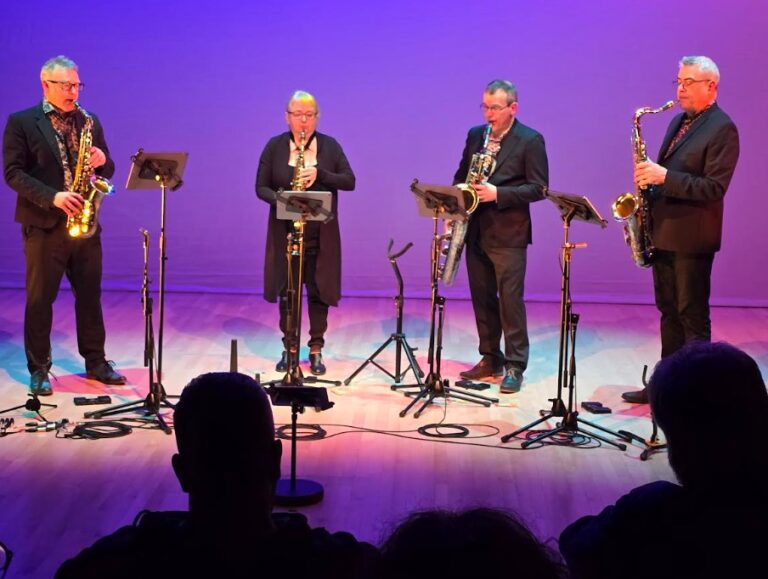
“Tout ce qui m’épouvante” is a program inspired by a poem by Guillaume Apollinaire and, as you can well imagine, by the dark conjuncture that needs no explanation here. The theme of horror was the keynote of this top-quality performance, courtesy of the Quasar saxophone quartet, celebrating 30 years of exploratory practice.
Thus, the Semaine du Neuf has been in full swing since Saturday. Presented at the Wilder Building, the first program featured the North American premiere of three Lithuanian works: Calligrammes (Kristupas Bubnelis), Trauma (Mykolas Natalevičius), Azaya (Egidija Medekšaitė), and Saxopho(e)nix für Saxophontrio by Vykintas Baltakas. These Lithuanian works were joined by The Saxophone Quartet/While Flying Up by Ukrainian composer Alla Zagaykevych, who was in residence at Le Vivier during the 2022-23 season. Performed first, Asaya by Egidija Medekšaitė, is a work based on an electronically generated drone (a direct evocation of the Predator military drone) and supported by drones produced in real time by the saxophonists as an introduction and conclusion. These drones constitute the bed of a river of linear frequencies harmonized by four saxes (soprano, alto, tenor, baritone) alternating between consonance and dissonance, peaceful and harmonious sounds broken by chaos and tragedy. A video by Lukas Miceika supported the message.
Mykolas Natalevičius’s Trauma is an almost direct evocation of post-traumatic stress disorder, musically embodied by a succession of relaxations and tensions, consonances and dissonances, emphasized by the performers. Needless to say, the extended techniques allow for the production of low and high harmonics executed as long, continuous exhalations, relayed by the performers. The work’s linear calm embodies the hope for healing; its dissonant shifts obviously express the trauma.
Vykintas Baltakas’s Saxopho(e)nix für Saxophontrio is inspired by the phoenix rising from the ashes, a sort of optimistic metaphor for the context that occupies and preoccupies us. The tenor sax is excluded from the trio work. This work for saxophone trio is expressed first as a series of waves that sometimes form a unity and construct short harmonic motifs according to a discourse not unlike circular breathing. Other moments in the work contrast continuous sounds with other shaggy sounds emitted by the saxophones, atonal melodic fragments that illustrate its rough edges. Interesting, certainly, despite this impression of déjà vu in the territory of contemporary music.
Alla Zagaykevych’s The Saxophone Quartet/While Flying Up is a richly ornamented work, whose melodic discourse perfectly matches the generally atonal constructions of the sounds gathered together. Without producing any aesthetic shock because it falls within the vocabulary and lexicon of contemporary sounds, this work proves to be very subtle; we observe its frank, soft, or corrosive sonorities, its simple lines or its multiphonic passages. In fact, all these sounds find their place where they should be and demand great rigor from its performers. Very successful. Finally, Calligramme by Kristupas Bubnelis, a Lithuanian composer living in New York, is the result of a concept where the notes climb and tumble onto an obviously imaginary battlefield. This jerky, almost wild discourse focuses on contrasts and extremes. The percussive effects of the pads on the metal, the direct exhalations, the corrosive sounds and other frequencies resulting from “normal” playing or extended techniques follow one another. The work concludes with melodic twists towards the high and low registers, virtuoso and spectacular.
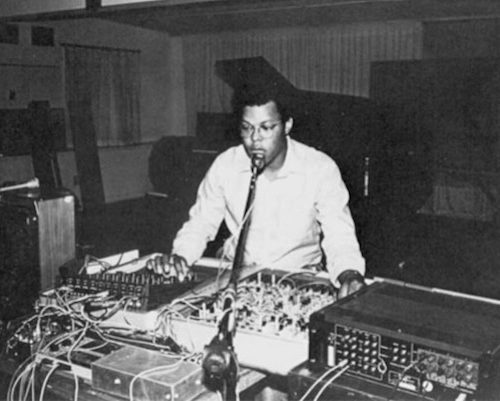
Semaine du Neuf began on Saturday with the screening of an art film, a performance by Toronto cellist Amahl Arulanandam of The Holy Presence of Joan D’Arc, a work composed by the late African-American composer Julius Eastman (1940-1990). The interest of this screening lies in the split screen, the superposition of strings from the same cello. It is indicated that this method results from 4 hours of synchronized video sequences and arranged on the multiple squares of the split screen. The composer Clarice Jensen thus proceeded to the transcription of an archival recording since the score had disappeared. Based on a melodic-harmonic discourse all in staccato, dominant from beginning to end, interspersed with melodic lines both silky and dissonant. This is an excellent idea to pay tribute to this artist who was forgotten for ages, who died in anonymity and whose talent has been resurrected by several players in the world of creative music, three decades after his death.