latino / Reggaeton

POP MTL | Latin Night at Piccolo Rialto, Almost Hot

by Alain Brunet

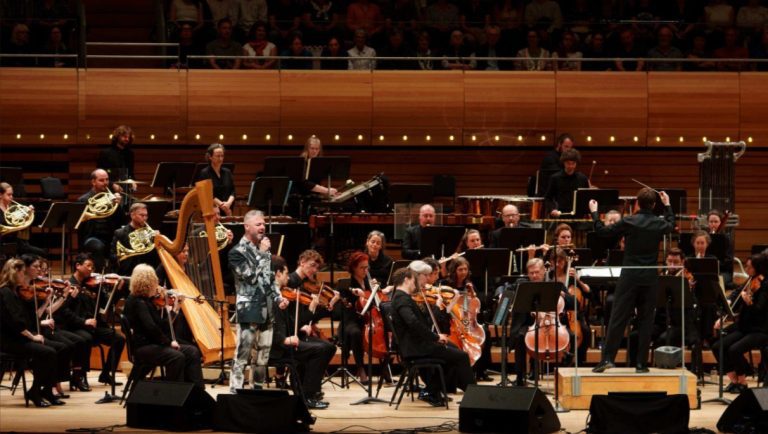
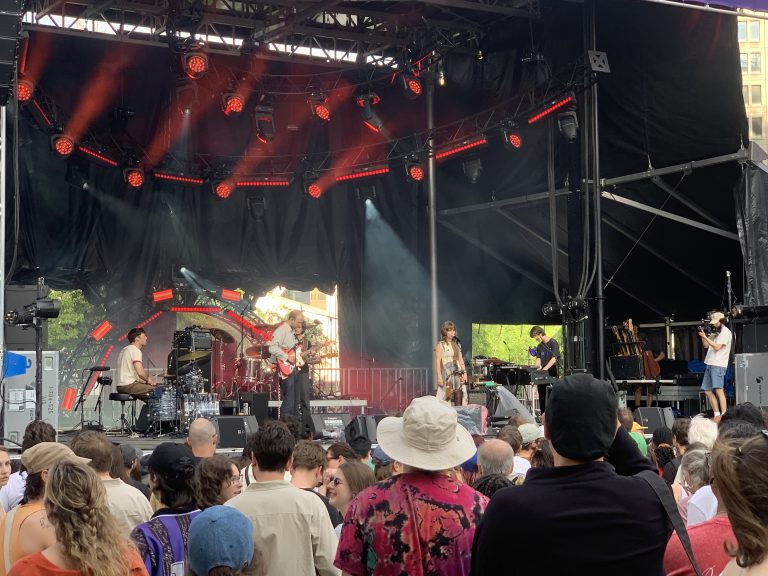
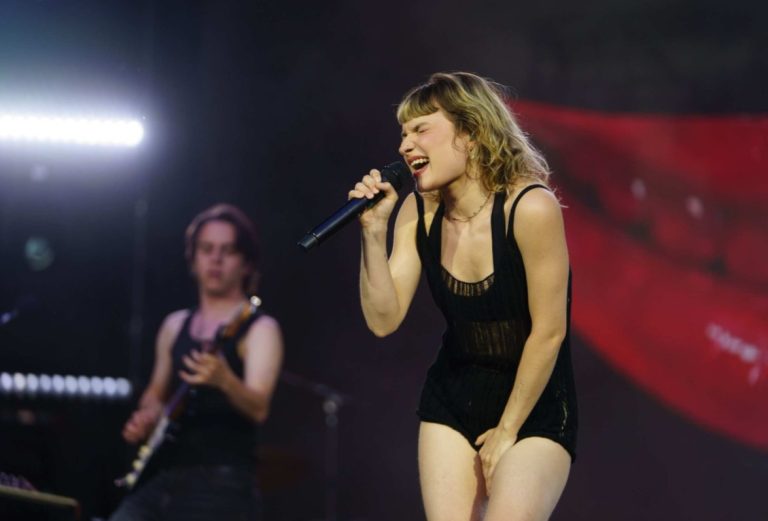
We were expecting a torrid night at the Piccolo Rialto, lasting until the wee hours. It was less hellish than expected. The highlight of the night was Isabella Lovestory, who is said to have just crossed the wall in New York, where she is about to be propelled even higher.

A Montrealer originally from Honduras, she plays a more hardcore reggaeton style, often played much faster, with clearly atypical sound effects despite her pop inclinations. Isabella also plays heavily on Latin kitsch, given her sexy midinette look, wiggling around the four corners of the stage.

More rap than singing, her vocal delivery is certainly fiery, but a tad muddled, disheveled, a little lost in the maelstrom. Not bad, we agree, but we’re waiting for the special effects! With a budget that matches Miss Bombshell’s ambitions, we’ll replace the inflatable animals, the Valentine’s Day balloons, and this world of softcore doggies adorning the stage, including the main person concerned. Special mention to her excellent and very creative DJ, the New Yorker Ali RQ, to be watched closely.

An hour earlier, we had arrived in the basement of the Rialto for Jashim, who shines in the Montreal underground for his reggaeton deconstructions and his Afro-Colombian non-binary stance. However, his onstage offering was more conventional than his recordings, which are completely refreshing for their originality and aplomb. Barely half an hour on stage, Jashim left stage right, after a sexy guest provided a counterpoint with her much more neutral, decidedly gender-neutral look.

Publicité panam
Art Rock / expérimental / contemporain / J-Pop / noise / pop psychédélique

POP MTL | TEKE::TEKE Still And Always Unclassifiable

by Marilyn Bouchard

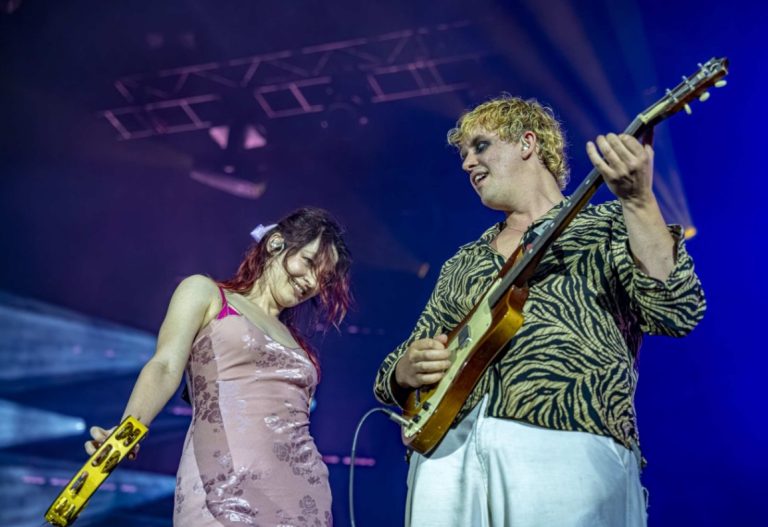
Montreal band TEKE::TEKE delivered a concert that lived up to the expectations of their ecstatic crowd this Friday, September 26th at the Rialto Theatre as part of their appearance at POP MTL. Presenting a collection of their inspired discography, they played through their albums Hagata, Shirushi, and even Jikaku (EP), not to mention the favorite Ezio’s Family, featured on the new Assassin’s Creed.

Flamboyant costumes, eccentric masks, projections of geometric or cloudy figures: we understand that the seven accomplices offered a crazy performance where the energy was at its maximum, both on stage and in the audience.

We were treated to original solos from Yuki Isami on the transverse flute, a complex score from Étienne Lebel on the trombone and some moments of raw power from Maya Kuroki on vocals, who was magnetic. Japanese inspiration… unclassifiable!

Inhabiting the stage like her home, sometimes dancing in a contemporary manner and sometimes shouting into the megaphone, she took us on a tour of the plays Meikyu, Setagaya Koya and Ai No Kozuna with passion.

In front of around a thousand people having a blast on the dance floor, the Rialto was transformed into a place of festive trance, worthy of the biggest festivals.

Publicité panam
Punk / Rock

POP MTL | Kasador Sets The Stage on Fire

by Marilyn Bouchard

The four friends from Kingston didn’t wait long to set the stage alight at the Hémisphère Gauche this Thursday, September 25th as part of POP MTL. It was in front of an audience of around thirty people and a black stage backdrop bearing their name that the gunners of Kasador, bearers of Ontario rock & roll, opened their late-night performance.

They immediately warmed up the atmosphere with Youth, immediately setting the crazy tone and the supercharged energy of their performance. They played excerpts from Broad & Bloom, Youth and their most recent EPs Kasador I and II with intensity, passing through Could’ve Loved You, Talk About It and Skeleton Park.

The fun and complicity between the members was palpable and Cameron, visibly amused, offered us some well-aimed kicks in the air to mark the accents of Stephen’s percussive playing. Halfway through, the crowd began to loosen up with them just in time for the most danceable, culminating with R.I.P Me Down for an anticipated finale. A short but electrifying concert, which made us forget the rain by offering us 45 minutes of raw emotion and gentle rock.

Publicité panam
Americana / Folk Rock

POP MTL | The Codas Make New Friends

by Marilyn Bouchard

The Codas, invited by POP Montreal as part of their Counterfeit Cowboy Tour, gently embarked on the Left Hemisphere stage this September 25. From Kingston, Ontario, just like their friends from Kasador, their relatively new appearance (2019) in no way takes away from the prominent place they have carved out for themselves on the Canadian independent scene.

They drew on material from their EPs Chasing Sun and Is This Us, leaving out none of the most popular: Habit, One Foot out the Door and Eyes Closed were on the list.

Through the unique folk-rock songs tinged with Americana, the initially shy audience grew closer, becoming captivated and attentive to their rich vocal harmonies and Braden’s charismatic sensibility.

The musicians also surprised us with two recent singles, Last Call and Poison, making this performance unique for early fans. We were treated to an inspired solo, surprise electric violin arrangements, as well as several beautiful three-part moments that were worth the detour. With this performance full of emotion and hypnotic melodies, The Codas did not fail to seduce new ears and rock Montreal.

Publicité panam
Folk Rock / Indie Pop / Pop-Rock

Pop MTL | Erika Hagen Incants Ghosts at Rialto

by Florence Cantin

As the opening act for Michel Pagliaro, I discovered Erika Hagen and her first solo album, Pouvoirs magiques, released last April. A lovely succession of firsts for a Wednesday evening—that’s what Pop Montréal is all about, basically.

Those who shun the first parts can go to hell.

In this new project, the ardor of punk meets the roughness of garage-folk, all carried by a rock and indie-pop base. Hagen’s poetry is particularly evident in the contrast between resistance and nostalgic tenderness. It’s a world where ghosts are friends, gently slipping between the walls of our apartments. Magical powers don’t exist, despite all our superstitions and good intentions. Women are free to scream, spit, break things, run, and much more.

The dreamlike riffs are completely magnified by Louis-Solem Pérot’s bass. He serves the songs with a rare pop agility, exploiting the simplicity of the notes to add a texture that adds richness to the whole. Then there’s a dazzling playfulness to Hagen’s playing. She surprises us with unexpected breaks in rhythm. Her unique way of addressing the audience keeps us on the edge of our seats.

I’m thinking in particular of Anita, a song dedicated to her late grandmother: “Anita, you won’t come back, you’ll drag your wool skirt through all the cities of Europe.” Beyond the music, her throat tight with emotion, she presents us with portraits and stories that enter through the ear, and soon, we find ourselves seeing them take shape before our eyes. The virtuosity of her writing has a lot to do with it. She is superb to see in concert.

Photo: Louis Longpré

Publicité panam
Darkwave / EDM / Electro-Punk

POP MTL: Slash Need: No stage, No Chairs, No Borders.

by Loic Minty

The crowd formed in a wide semi-circle around Slash Need, held at a distance by the volcanic presence of the singer Dusty Lee. They walked on hot coals at the edge of the periphery, holding with wide eyes the dumbfounded stare of the audience. Behind them, what looked like a mad scientist (Alex Low) with aviator glasses was turning the knobs on screeching filters, which turned acid basses into growling animals. It was a primordial whole, combining sensuality and anger not only through their music, but also in their daring attire and performance. One of the members walked through the crowd with flashlights and a stocking over their head, blinding the phone cameras and enclosing us in the moment. It was clear there was no escape. A sample rang out after their first song: “you came here to have fun, to dance? Well those were the last guys.” 

It was a much-needed reminder that music doesn’t only serve to entertain or to sell. Slash Need is the opposite of an anesthetic; they are what they say. And in a world of aesthetics where identity is trivially displayed, they carry the torch of bands like Suicide or Pussy Riot, who turned their backs on likability to make something real. Just because, why not? 

Despite being combatant, their performance was welcoming to the body’s physicality. Everyone was dancing, at least to some degree, over the contagious sequenced basslines and drum machine rhythms. Between this and the lyrics literally screaming to “feel your body”, the entire experience amounted to a grounding sense of self. In the end, the message was quite positive. Behind a violent delivery was a tender care for the audience, in the desire to remove them from the mind’s cage.

électro-indie / Electronic / indietronica / Jazz Fusion / Psych-Funk

POP MTL: A European Speakesy Bar, A Thousand Kilometres Underground with TUKAN

by Léa Dieghi

Last night at Bar Le Ritz PDB, TUKAN took flight on the Quebec scene, deploying an array of multicoloured feathers and sounds. And it was as part of POP Montreal 2025 that the Brussels-based four-piece band came to rock the Montreal dance floor.

The concert, opened by Canadian band Poets’ Workout Soundsystem, got off to a furious start. This band, which is very mysterious on social media, is a well-kept secret on the Montreal music scene. Performing with minimalism in their staging (two people, a projector, a microphone, a drum machine, a tracksuit), Bar le RitZ PDB immersed itself in the energy of rebellious poetry. The beats are as simple as the stage design, but what matters is the message. Resistance, anti-capitalism, communion. Whether you like the format or not, the message seems, nowadays, to come from a feeling that many share. A necessary message: we are not alone, even in the chaos of this society that seems to divide us all. This shouted slam, set to an electronic backdrop, was a kind of catharsis before TUKAN’s show, which quickly took over.

Drums, synthesizers, guitar, piano, analogue machines… TUKAN is the meeting point between four individuals, between different sounds, instruments and genres, but also between them and us. As the performance progresses, the audience cannot remain stoic in the face of the complicity between the members, which translates into music. They seem to communicate through sound, one speaks, the other responds. The sounds flow with a certain simplicity, and soon it’s as if we’ve been transported far away from the North American continent. This performance, a hybrid of jazz, post-rock, psychedelic and electronic music, transports us to a speakeasy a thousand miles underground in Europe.

Dim lighting, dancing bodies, four passionate, sublime artists. It’s groovy, danceable, sometimes transcendental and dreamy. You can definitely feel the European touch in this crossover of genres. Playing several tracks from their latest album Human Drift, released in 2025, as well as older ones, they took us on a journey through their universe for an evening. And for a moment, I missed Europe. Fortunately, music can be exported, and these artists have the opportunity to come and play, whether at a festival or not, here at home in Montreal. It was TUKAN live for POP MTL, and it was good, really good!

Rock / rock n’ roll

Pop MTL | Pag at The Rialto

by Florence Cantin

Wednesday evening, we entered the Rialto as if we were descending into a church basement. The atmosphere resembled that of a clandestine assembly. Barely a handful of spectators had turned out for Erika Hagen’s opening act, then stayed for Michel Pagliaro… The motley crowd, ranging from twentysomethings to octogenarians, was lined up in two rows of chairs arranged in a half-moon. Gripped by a parasocial nervousness, everyone waited feverishly to see if their memory of Pag would match the performance that was about to begin.

“Come on, I feel like I’m in the Grand Canyon,” Pag says, annoyed by the sound, before moving on completely. “That’s rock and roll!” he adds, introducing his band before the first note even hits.

No nasty surprises. Proud behind his sunglasses, Pag is true to himself, legendary and full of voice. After the third song, Dangereux, the atmosphere heats up. The Rialto fills up. The sedentary crowd abandons their seats to head upstage. It sounds like a ton of bricks, a concrete setlist, just hits, obviously. Good for us, since in this style, any kind of half-measure is prohibited.

Guitarist Corey Diabo knows all the notes. The gentlemen play air guitar, hoping to catch Diabo’s eye during his many solos. The most dashing of them smiles: “You need to relax and let yourself go, young people!” The invitation to dance is unequivocal. I join them.

Far from the Jonquière riots, the army wasn’t invited this time. Fifty years later, less beer is sold, but songs that, like Pag and his voice, bear the marks of time beautifully.

Photo: Charles-Antoine Marcotte

Africa / Haitian / Kora

Jean Jean Roosevelt and Ballaké Sissoko: A Haiti-Mali Connection

by Sandra Gasana

It’s not often that African communities, as diverse as they may be, and the Haitian community come together in the same space for a performance. Well, that was the case last night, during the concert at Balattou featuring Haitian artist Jean Jean Roosevelt and his special guest Ballaké Sissoko, a kora virtuoso from Mali.

The evening began with a solo performance by Jean Jean Roosevelt, playing guitar and vocals, during which he performed “Dessine ta destin”. Clearly, his fan club was well and truly present at the Balattou, as they could be heard singing along to the artist’s most popular songs, such as “Agoye” and “Acclimatisation”.

“Tonight, I am not alone, I have the honor of welcoming Ballaké Sissoko,” he announced to a standing ovation, before singing “L’Île de Gorée.” Very humbly, the kora master sat down at his instrument, before mixing it with Jean Jean’s guitar. Time stood still, silence reigned in the performance hall, apart from a few noisy spectators who disturbed their neighbors nearby.

On several occasions, Jean Jean involved the audience, who played along quite well. He is one of the few artists who has contributed to bringing African and Haitian peoples closer together. This initiative is a concrete example. One could feel the complicity between the two artists, and at times, Ballaké would make sounds like “yeah” when Jean Jean sang, seeming to approve of what he was hearing.

Then it was Jean Jean’s turn to leave us with Ballaké so he could have his solo moment as well. And off we went again for a soaring session. His fingering on the strings of the kora was both dazzling and soothing, his body movements following the rhythms of the sounds emitted by his instrument.

My favorite moment will be the song in which he pays tribute to his 13-year-old daughter, Maimouna, who was born prematurely. We didn’t want the song to end, and when it did, the audience rose to their feet for a second standing ovation.

“Behind this concert, there is a woman who made it all possible. She knew Ballaké, she put us in touch, and today we are here!” Jean Jean told us between two songs, before introducing us to a certain Nadine.

The concert ended with a return to the duo format of the two artists, between guitar and kora, and this time Jean Jean had two microphones at his disposal, switching from one to the other according to the desired effects. In the song “Libres ensemble,” he also inserts Lingala, the language spoken in the Democratic Republic of Congo, another indicator of the artist’s curiosity and artistic openness. He seemed very moved after the song, which calls on Africans to visit Haiti. He ended strongly with “Pinga,” which got the Balattou moving before closing the evening. All the kora and West African music lovers in general were present and rushed to Ballaké Sissoko for photos while Jean Jean’s fan club rushed to greet their favorite artist. We should have more of these spaces of communion between Africa and Haiti, rather than seeing them as silos. One thing is certain: Jean Jean Roosevelt will be one of the precursors.

Photo Credit: Peter Graham

Contemporary / danse

Benevolent sisterhood of Les Veilleuses (the Watchers) at Bourgie Hall

by Frédéric Cardin

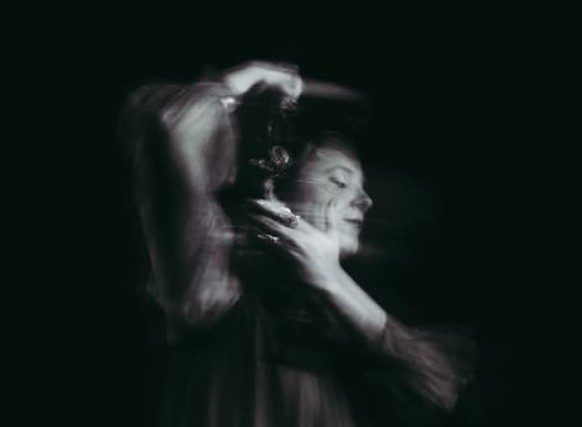
Nine women on stage, in a kind of grand theatrical gesture where all facets of a rich and complex sisterhood are evoked. From (mostly) benevolence to abandonment, from exclusion to reconciliation.

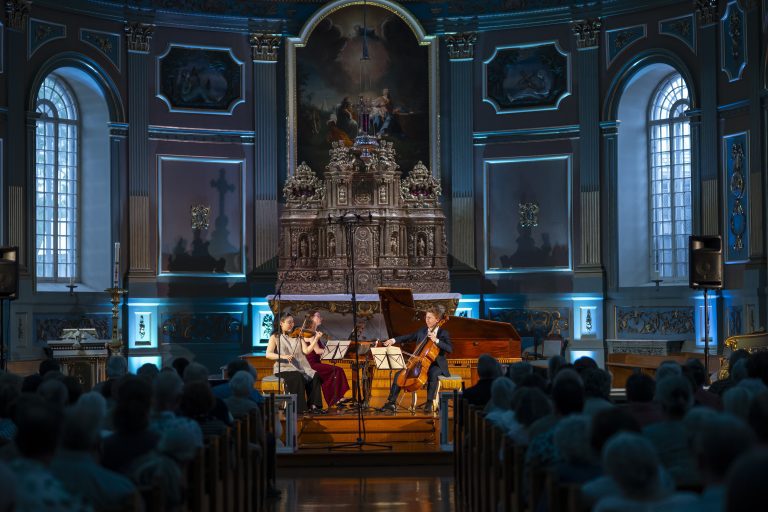
Les Veilleuses (The Watchers), by Simon Renaud (choreography and conception) and Romain Camiolo (music), thus rose on Wednesday evening at the Bourgie Hall of the Montreal Museum of Fine Arts. A rare incursion of the classical music hall into the world of dance (the first? I can’t confirm it…), but a very nice success. It must be said that the Veilleuses show is as much choreographic as it is musical. Six of the nine performers are singers in real life: Marie-Annick Béliveau, Salomé Karam, Kathy Kennedy, Elizabeth Lima, Hélène Picard and Ellen Wieser. They teamed up with professional dancers Marie-Hélène Bellavance, Nasim Lootij and Ingrid Vallus.

Of course, the dancers were not asked to sing fully, nor the singers to perform too acrobatic contortions, but the staging clearly aimed to integrate all the participants into a single community, that of these women of various sizes and builds, though not too heterogeneous. In a rather abstractly suggestive way, these women went through the hour-ish of the show to express different states of mind and above all the means to face them together, sometimes disunited, or to share them among all.

The play unfolds at a slow and measured pace. These women move in a world of mutual feeling that takes the time to express itself and be welcomed. It is the music that serves as a powerful bond for the psycho-emotional whole of the performance, supporting the visual coherence of the costumes, which are dresses of different chromatic hues related to yellow-orange-brown-ochre. The said music, all vocal (except for a pre-recorded electro drone acting as a harmonic cushion) and essentially tonal, is of course performed by the group’s singers, who act both as the emotional embodiment of each individual unit but also as a coalescence of the group relationship. Camiolo’s score is beautiful and seems to progress, at least that’s the impression I got, according to a historical chronological evolution.

At the very beginning, the voices take on a collective appearance of a Greek chorus, in a modal-type expression that subtly evokes something very ancient, perhaps archaic. Further on, one hears something like a mediaeval air. Further on, it gets closer to folk or popular song. But these are brief moments, emerging from a more ample and sustained framework of long melodic lines that would not displease several current composers working in neo-mystical choral music. On a few occasions, the harmonies tighten, until they reach saturation and a rough screech. It is in these moments, as the composer pointed out in the interview I conducted with him and the choreographer about the show (INTERVIEW TO LISTEN TO HERE), that the women of this symbolist sorority seem to drift away from each other and dissolve their bonds. The tactic is simple, but effective.

Ultimately, Les Veilleuses is a fairly accurate and poetic look at the strength, but also the perils, of a female community that has, for millennia now, had to stand together in the face of adversity and hold hands in bright episodes.

Les Veilleuses is a beautiful and complete show, complex but not hermetic, and above all perfectly suited to a wide range of engagements: in dance festivals as well as music or transdisciplinary proposals. A perfectly adequate launch for the Bourgie Hall’s Arts croisés (Crossed arts) series.

Les Veilleuses is a coproduction between Amour Amour, Salle Bourgie, Chants Libres and Corpuscule Danse

Electronic / Experimental / Experimental / Contemporary / Experimental Rock / indietronica

Pop Montreal 2025 I múm’s Hypnotic Mood and Underlying Silence

by Loic Minty

The crowd filled the hazy Théâtre Fairmount. Comprising long-time fans of the cult band and the usual Pop Montreal music lovers, the crowd was hungry for something out of the ordinary. Since its conception in the original wave of indietronica, múm has been known for its eclectic clash of personalities and an explorative approach, especially in its live performances.

Last night’s show did not quite live up to the expectation of more free-form music, but the band still managed to create a unique atmosphere which could lose yourself in. Slow tempos, industrial electronic samples, and shoegazey guitars gave off that uncanny 90’s trip-hop feeling—the kind of moodiness that is both an elixir and a poison, that you want to rest in, but not too long. Thankfully, it was well emotionally balanced and featured lighter, melodic pieces that brought up the mood; the cello player’s stage presence was elegant and captivating.

But between moody orchestration and high, airy voices, it felt as if there was something missing in the mix, perhaps the absence of bass, that made the rhythms feel hollow. Even though everyone was in the pocket and the drummer had a great understanding of dynamics, the songs all had an underlying silence that maybe did not fit well with the space. Oddly enough, while one of the members played the melodica, I imagined being next to the ocean or somewhere in an Icelandic forest.

Although the music itself did not fully connect, there was not one member who was not giving it their all, and at the end of the day, it’s the passion and dedication that fans relentlessly show up for. múm is clearly dedicated to their craft and looks like a very interesting bunch with potential to think outside the box; it would be unwise to underestimate their artistry, as their live show will only continue to evolve after the recent release of their new album, History of Silence.

Disco / disco funk / Indie / Indie Folk / Indie Rock

Foxwarren live is Disco, but Soft Disco

by Stephan Boissonneault

About a week ago, the Canadian baroque pop prince, Andy Shauf, was back in Montreal, only this time it was with one of his first real bands, Foxwarren. Named after a very tiny town in Manitoba, Foxwarren graced the Theatre Fairmount stage to support their second album, 2. My party and I were a bit late and only caught the tail end of the opener, Allegra Krieger, but the whole last song I heard was stripped back and emotional. As Krieger wielded her finger-picked electric, I felt the kinship with another alt indie singer songwriter, Margaret Glaspy—at least her earlier EP work.

Foxwarren opened their set with the slow disco tinged 2 opener, “Dance.” Shauf was on rhythm guitar and the sampler, which he used for some 808 drum action and samples of old ’50s and ’60s romance movies, which you can hear all throughout 2. I honestly could have done with more movie sampling live, that we hear on the album, as it ties a nice bow on the whole thematic feeling. Still, Foxwarren put on a hell of a show. The rest of the band: Dallas Bryson, brothers Avery Kissick & Darryl Kissick, and Colin Nealis, all played with the kind of chemistry that they have been a band for decades, well, at least two decades. The stage banter was really minimal, save for a few “hellos,” and “thank yous” from the quiet and docile Shauf.

Nealis is a newer addition, but the core four-piece Bryson, the brothers Kissick and Shauf have been making music together before Andy Shauf’s huge critically acclaimed 2016 album, The Party. Highlights of this live show were definitely the funky “Deadhead,” my personal favourite on 2, “Yvonne,” and of course the band hit, “Sunset Canyon.” We also got an encore of Andy Shauf’s “Green Glass,” a song I never thought I would hear live. Yes, Foxwarren deserves all of the praise, even outside of the Andy Shauf connect.

Subscribe to our newsletter

Inscription
Infolettre

"*" indicates required fields

Type of Suscribers