Contemporary Jazz / expérimental / contemporain / Free Improvisation

FIMAV 2026 | أحمد [Ahmed] Raises the Debate

by Michel Rondeau

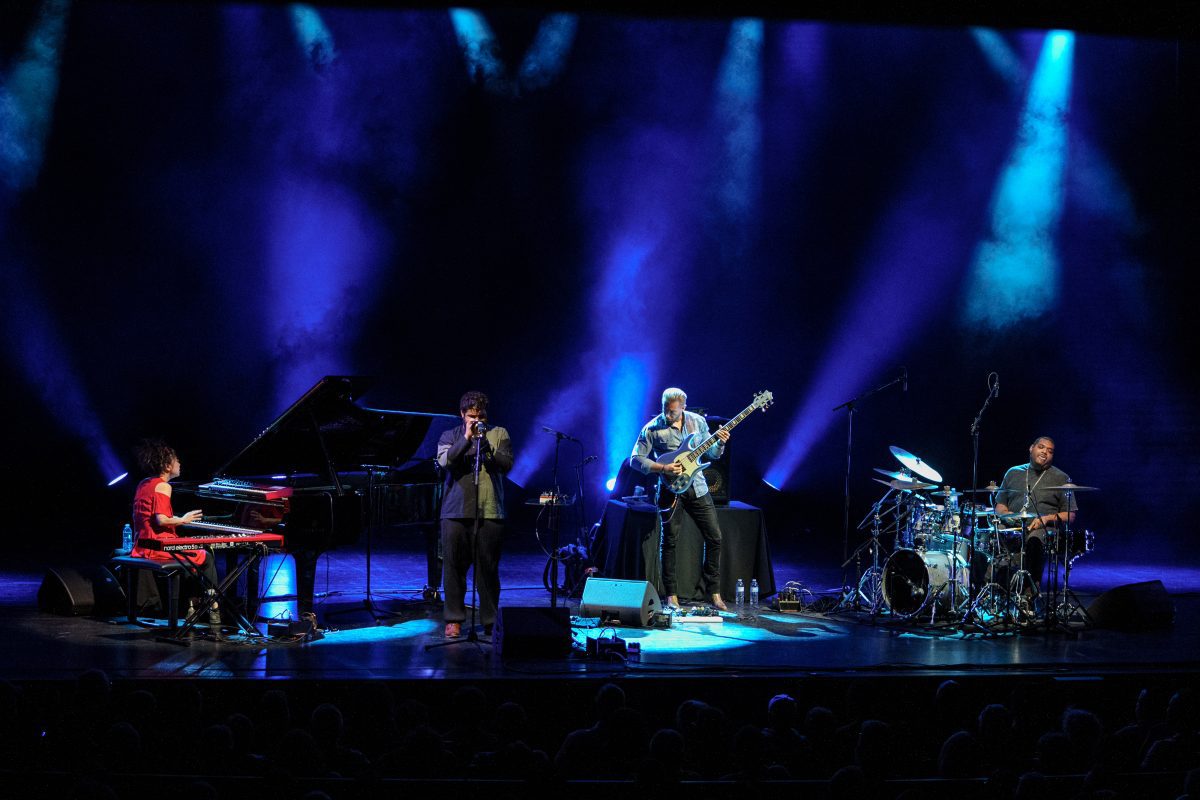
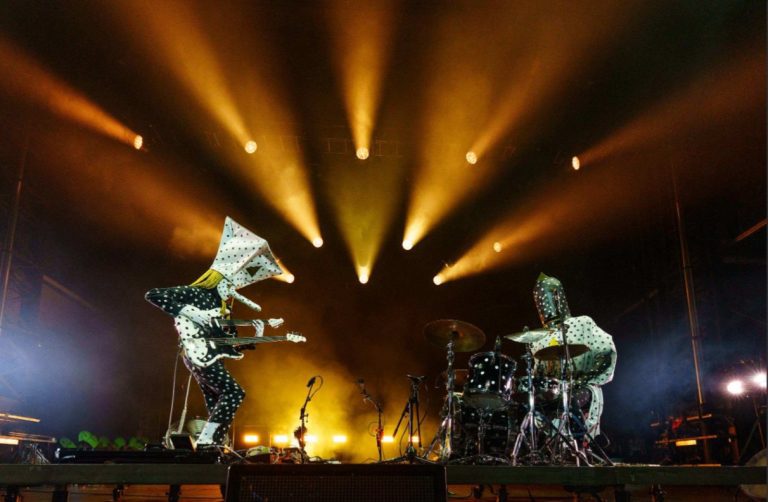
أحمد [Ahmed] : They are four musicians from the United Kingdom, alto saxophone, piano, double bass, drums. After making a name for themselves with their own covers of the little-known bassist Ahmed Abdul-Malik and recording half a dozen of his tracks, the quartet is now tackling the work of Thelonious Monk, putting it through their own wringer, which I will try to illustrate.

They began by stating part of the theme of the piece Evidence. I say part. Quickly, this fragment – ​​in which we find a concentration of Monk’s inflections – is, so to speak, atomized, dynamited and pulverized into shrapnel, which the saxophone then begins to manipulate, to permute in every possible way while the drummer propels the music, supported by a double bassist who, for the next hour, will do nothing but keep time by plucking his strings and a pianist who will just as tirelessly strike the same notes throughout.

On the one hand, we are left with a limited melodic material, which is explored and permuted at a frenetic pace, sustained to the point of exhaustion, while the rhythm section continues imperturbably forward, though it seems more like treading water. Reduced to almost nothing, Monk’s theme swirls around itself like electrons around their nucleus or a moth obsessively circling a lightbulb.

Is it due to the thinness of the musical material? To the fact that the piano and the double bass are limited to the same gestures with variations, certainly, but infinitesimal ones? Whatever the reason, instead of being swept away by the music thus generated (it was not the first time that I had exposed myself to [Ahmed]’s style), I remain on the sidelines, a spectator, unable to take part in the jubilation.

And I’m not the only one. Taken aback by my reaction, I asked around among the audience as they left the theater and was quite surprised by some of the comments. I wouldn’t go so far as to say the audience was divided on the issue, but they were far from unanimous.

A hoax? A sham? While I may not enjoy it, a good number of people loved it. Certainly, this approach provokes reactions and, if only for that reason, deserves closer examination, requiring careful consideration of the entire process.

A few final words on the performance of Ahmed’s pianist, Pat Thomas, who performed solo the previous day:

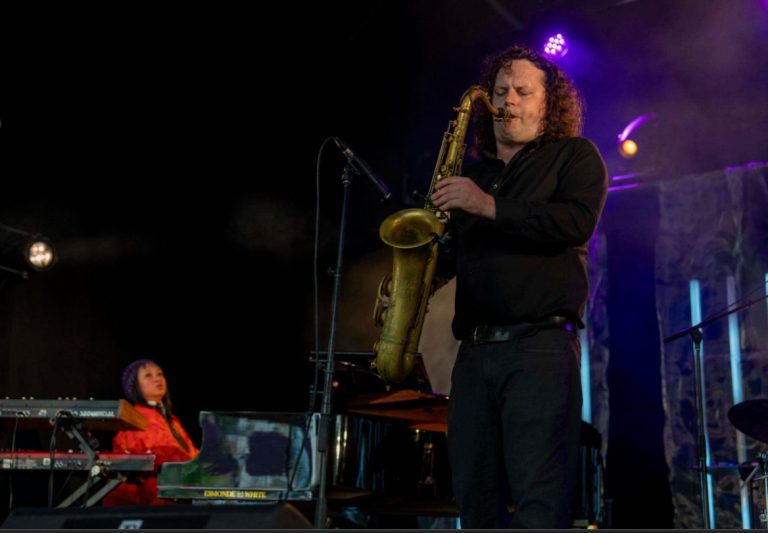
Pat Thomas is one of those largely self-taught musicians who have developed a unique sonic world, with a distinctive style, a signature sound, but also a freshness stemming from a lack of pretension and a constant desire for playful exploration. With a style that is sometimes tachist, sometimes unrestrained, but always forward-looking, surprises await at every turn.

The exercise of performing a solo piano recital of improvised music is a perilous one, as it is accomplished without a safety net. Generally, it is the musicians who give it their all who fare best. And in the case of Pat Thomas, the result is a sincerity and transparency that make one forget the sometimes slightly clumsy aspect of his raw art.

Contemporary Jazz / expérimental / contemporain / Free Improvisation

FIMAV 2026 | Yves Charuest Meets With Prominent British Colleagues

by Michel Rondeau

Alto saxophonist, bassist, and drummer Yves Charuest, John Edwards, and Mark Sanders (Quebec – United Kingdom) are seasoned veterans of improvised music. With them, you know your ears are in good hands and you won’t be bored, as they seem to have retained, despite their long careers, the same enthusiasm and energy they had in their early days.

What never fails to fascinate when attending concerts by musicians of this caliber is the sheer ingenuity and inventiveness they possess. At times, their compositional process seems to operate like an internal combustion engine, one new idea invariably followed by another, and then another, constantly drawing us into new vortices, new constructions. This is especially true since Edwards takes a mischievous delight in peppering the performance with ruptures and unexpected turns of all kinds, only to propel his bandmates onto a new path, only to immediately veer off in a completely different direction.

And it’s a jostling, a soaring, a wild ride, a tumble… relentless. These guys, when they make music together, they’re bursting with energy, and the pleasure they take in playing is contagious.

Photo Credit: Martin Morissette

Contemporary Jazz / Free Improvisation

FIMAV 2026 | Queen Mab, Renewal of Vows

by Michel Rondeau

Queen Mab (Quebec, Ontario): two old friends in conversation, 40 years after their first public performance. They chat, they quibble, they gossip. Sometimes they get carried away, argue, comment. Scattered passages give way to denser ones. The clarinet speaks abundantly while the piano cuts through, stands firm, bathed in a theatrical light. From time to time, at the end of a soaring or boisterous passage, a moment of silence, a pregnant silence, a guarantee of what’s to come, settles in, fully respected by the listeners, then thickens before slipping away, chased by a new incantatory assault, another page of dialogue with the stars.

All of this is linked and coiled and uncoiled, overturned and projected into the air before landing back on its feet to better disappear, vanishing into the darkness of the cabaret’s velvet drapes.

expérimental / contemporain / Free Improvisation

FIMAV 2026 | John Oswald and Plunderphonics… An Improv Game to Be Refined

by Michel Rondeau

For three nights in a row, John Oswald invited us to a musical game. A soundtrack composed of a dozen excerpts from well-known songs (as much in French as in English) ranging from Carl Perkins’ Blue Suede Shoes sung by Elvis to Céline Dion performing with her characteristic vigor All By Myself (yes, that song which borrows a melodic motif from Rachmaninov’s Piano Concerto No. 2) via Tino Rossi and his unsinkable J’attendrai, Goldfinger powerfully sung by Shirley Bassey or Louis Armstrong’s What a Wonderful World.

Modifications were made to this framework each evening, although several pieces returned to the program. For the purposes of the exercise, three ad hoc quartets were formed. The first included double bassist Pablo Jiménez, violinist Joshua Zubot, cellist Peggy Lee and Ben Grossman and his hurdy-gurdy; the second, tenor saxophonist Sakina Abdou, percussionist Toma Gouband, violinist Adrianne-Munden Dixon and pianist Marilyn Lerner; the third, tuba player Julie Houle, harpist Sarah Pagé, double bassist John Edwards and guitarist Eric Chenaux.

Each band learned the setlist at the same time as the audience and did their best to “accompany” the successive excerpts—that was the rule of the game—but perhaps it would have been better if they had been able to do so a little in advance, to prepare themselves a bit. The musicians often seemed disarmed and struggled to play along. Nevertheless, amidst the rather unrestrained musical melee, some passages that held together did occasionally emerge.

The performance unfolded each evening with the same uneven rhythm, veering from rough drafts to brief, coherent moments of clarity, all bathed in a joyful, carnival-like atmosphere. The problem is that the significant element of surprise quickly wears off, especially since the plot varies very little from one night to the next. Perhaps some additional preparation for the game would be advisable if John Oswald intends to run it long-term.

Photo Credit (Friday night) : Martin Morissette

Publicité panam

Contemporary Jazz / expérimental / contemporain / Free Improvisation

FIMAV 2026 | Hammer, Roll and Leaf, Ideal Balance, Total and Complete Satisfaction

by Alain Brunet

Friday evening at FIMAV, the trio concert by alto and tenor saxophonist Sakina Abdou (France), pianist Marta Warelis (Poland), and percussionist Toma Goumand (France) was a complete and utter success. The audience was thoroughly satisfied with the balance between established references and their contemporary extensions, between the traditions of jazz and modern improvised music.

This European trio, Hammer, Roll and Leaf, took us through a tightly packed hour of music that was both coherent and open to randomness.

Each of these artists distinguished themselves with their own unique approach, whether it be the virtuoso motifs and exemplary articulation of the pianist (especially her clusters of notes triggered by hands close together on the ivory keys), the phrases imagined by the saxophonist or the absolutely organic support of the percussion – with the addition of small stones and other branches of shrubs to extend its vocabulary.

We cannot conclude that the proposal is unique in its overall execution (which is by no means a requirement), but rather that there is exemplary communication between these three artists, at every level of intensity in the program. This is what we can call symbiosis without exaggeration.

Photo Credit : Martin Morissettte

Contemporary / Contemporary Jazz / Jazz

FIMAV 2026 | Darius Jones Fluxkit Vancouver: Complete Bliss

by Michel Rondeau

We had the chance to first hear separately the two groups brought together here, the Darius Jones alto saxophone trio and the Josh Zubot Strings ensemble, a string quintet (only the double bassist of the trio and the alto player of the quintet are missing), to hear them separately and to be able to appreciate them in all the vigor of their respective visions, in order to properly measure the right balance of the assembly.

Darius Jones and his Fluxkit Vancouver program (USA, British Columbia) effectively combine all the qualities of both, and these are all present; only the way they are distributed and showcased sequentially throughout the performance differs. The compositions remain solid, their arrangement into suites creates a strong framework, and the interplay of the strings, drummer, and horn player is equally impressive.

The festival-goer is swimming in pure bliss.

Contemporary Jazz / Free Improvisation / Modern Jazz

FIMAV 2026 | Darius Jones: Exceptional Trio, Exceptional Concert

by Michel Rondeau

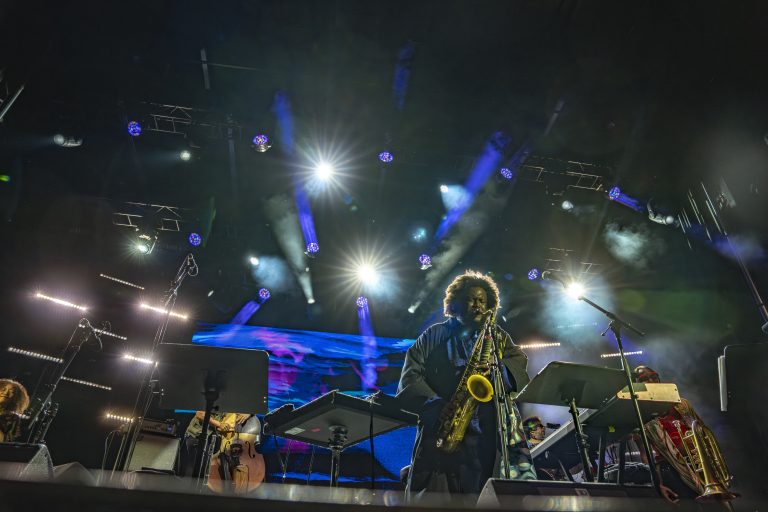
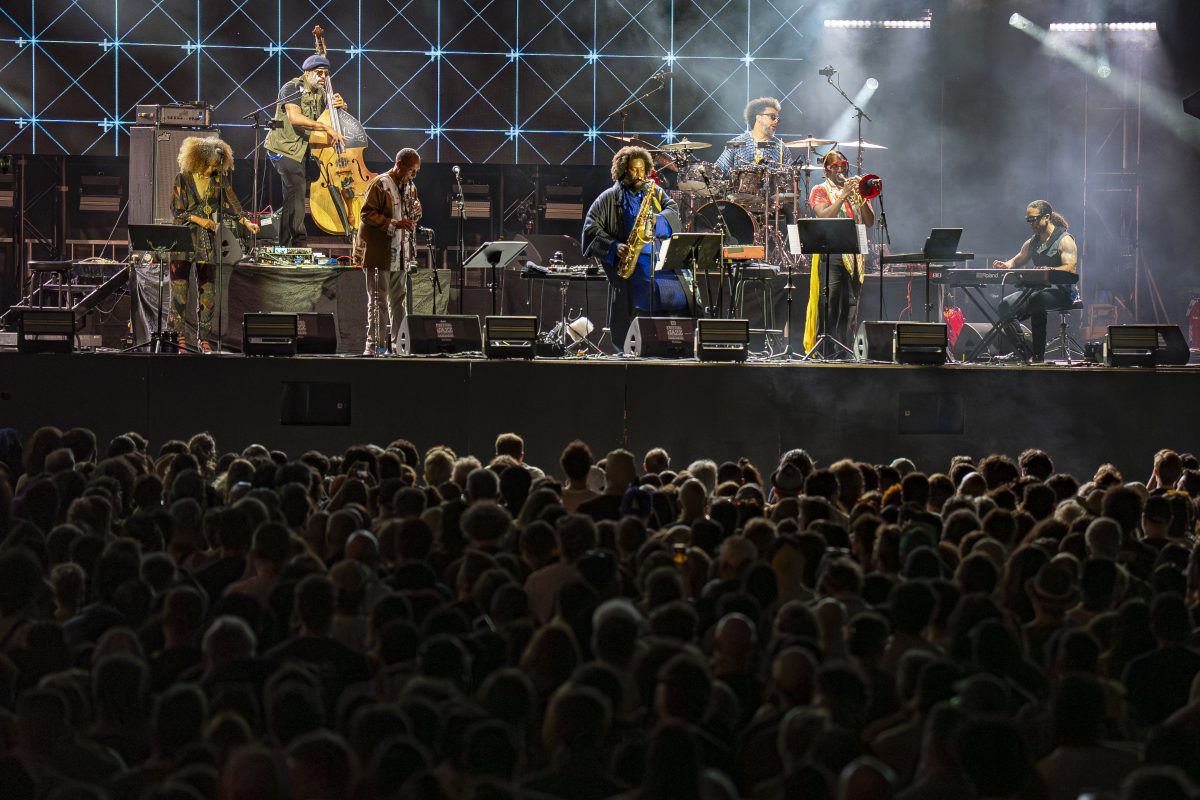
Alto saxophonist Darius Jones is an exceptional musician, but since he’s not one to show off or try to impress with acrobatic feats, you have to listen carefully to realize it. The material on the album Legend of E’Boi (The Hypervigilant Eye) had already hinted at this, and the resulting album was magnificent.

On this first evening of the 42nd FIMAV, one quickly realized the depth of his playing – both in terms of his compositions, with their deep roots, and in terms of his articulation – which, simply through his different ways of making his instrument resonate, carries within it the entire history of jazz, from Sidney Bechet to Albert Ayler. But the most beautiful thing is that this heritage brings him to life without ever resorting to excess, exaggeration, or caricature.

Darius doesn’t need to lay his soul bare to communicate his feelings; he always maintains a certain restraint, a sense of introspection. He presents himself as sensitive and vulnerable, yet retains his composure as a man facing existential and emotional turmoil. Connecting with his world is also soothing, so direct and authentic is his playing, and so frank and heartfelt his music, stripped of any artifice or gimmick.

His musicians, drummer Gerald Cleaver and bassist Chris Lightcap, demonstrate the same restraint, but also great agility which they put at the service of the pieces according to what they exactly need, a propulsive charge here, a hushed atmosphere there… to give them their full meaning and charge.

Contemporary / Contemporary Jazz / expérimental / contemporain / Free Improvisation / Noise

FIMAV 2026 | Josh Zubot Strings: Maximum Relevance, Maximum Delight

by Alain Brunet

In its program, FIMA described the West Coast string quintet as dazzling, performing the music of violinist Joshua Zubot, whose world premiere suite was commissioned by FIMAV. Needless to say, Josh Zubot took the commission very seriously, as we were treated to the perfect distillation of his virtuosity.

Former Montreal resident and very active musician Josh Zubot, back in his native British Columbia, was surrounded on Friday by his brother Jesse, a violinist whose reputation precedes him, having been a pillar of the international propulsion of the great Inuit artist Tanya Tagaq, as well as the renowned cellist Peggy Lee, bassist James Meger and violist Meredith Bates.

This suite was so fresh it didn’t even have a title yet. A first listen allowed us to appreciate its cohesion, inspiration, and relevance. Josh Zubot stared at the floor, offering us a telegraphic intro to THAT, while he waited to find a title for it.

What I personally admire about Josh Zubot is really the balance he achieves between high virtuosity, mastery of several musical references, contemporary jazz, contemporary classical, noise music, onomatopoeia, blues, rock and other folk music, a complete and dynamic lexicon but distinct from the vast corpus of current music.

The whole thing was served up at different tempos, with different axes of communication between instruments, different stylistic moments, different degrees of gentleness or violence, in short, a convincing concentration of human existence expressed by a composer who had reached full maturity.

I wasn’t aware of these qualities in Josh Zubot, whom I saw perform many times when he lived in Montreal. I wasn’t expecting such high-quality writing and such exacting standards for his seasoned performers. Except for the violist, this ensemble shone the following Saturday alongside Darius Jones, whose chamber music they have left its mark on with their own unique style and the exceptional quality of their individual and collective playing. I eagerly await the album from this string quintet and the concerts to come wherever music lovers are receptive to such offerings.

Photo Credit: Martin Morissette

Publicité panam
Electro / House / Techno

Palomosa 2026: Doss Makes the People Come Together 

by Helena Palmer

Despite Palomosa being undeniably targeted to the chronically online, Doss’ set really felt like she was bringing the people together, back to real life, back to feeling real things. She played later on in the evening, and everybody’s booze + other had kicked in by this point, so people were mingling in the crowd, dancing with strangers, handing out cigarettes. It was a warm night made warmer by all the moving bodies. 

Her set was made up of club, party-girl music, mixing in her own songs including my personal fav “Look.”

The standout point in the set was when she played Madonna’s “Music.” Hundreds of people dancing along as Madonna’s voice soars over a bassy 4×4 beat, singing “music makes the people come together.” And it literally does. Despite clubby music being repetitive and simplistic, there’s something so pure and sincere about the way we react to it. If you’re feeling tired or sad, get dancing to some Doss, and you’re sure to forget about all of it. )

Electronic / House

Palomosa 2026: MGMT Gives Us Nothing New

by Helena Palmer

The reality of seeing a band that you love do a DJ set is that you probably don’t want to see them do a DJ set. I’ve been a fan of MGMT for over a decade, seeing them live 10 years ago was completely moving and I still rate it as one of the best live shows I’ve ever been to. I know artists are allowed to evolve and take up new hobbies, but I don’t know why Palomosa or the artists themselves insist on having awesome artists do DJ sets instead of live performances. Maybe it’s just me and my personal preferences, but not everyone has to be a DJ. 

Did I dance? Sure. But there was nothing particularly noteworthy about the music they were playing. I wasn’t able to lose myself in it like I had at the previous sets I had been to. 

I know MGMT’s whole thing is that they sort of started as a joke, making incredible music veiled under persistent irony. They became big in the 2010s and the music they played last night did have a sort of LMFAO sheen to it (whether or not they actually played LMFAO, I’m not sure, but you get the point). So maybe they were doing something ironic or working on a vibe that I just didn’t ‘get’. Either way, it was a bit of a disappointing end to the night.

Photo by BIGLAUR Photographie

Carnatic / Electronic / expérimental / contemporain / Free Improvisation / Free Jazz

FIMAV 2026 | Amirtha Kidambi: musiques séduisantes, prolixité militante

by Alain Brunet

À n’en point douter, Amirtha Kidambi est une chanteuse aguerrie et une authentique leader. Sa prestation de jeudi au FIMAV nous l’a confirmé, quoique… Sa voix de contralto fesse dans l’dash, se fond simultanément dans un maëlstrom contrôlé d’harmonium (vu la culture carnatique d’Amirtha, dont les parents sont tamouls, originaires de l’Inde méridionale), synthétiseurs et effets (le groupe au complet), saxophones (Alfredo Colon, soprano, Matt Nelson, ténor), contrebasse (Lester St.Louis) et batterie (Jazon Nazary).

Les ingrédients de cette musique sous la bannière Elder Ones, principal véhicule de Kidambi, constituent un mélange typique du jazz d’avant-garde, singularisé par l’usage du bourdon de l’harmonium comme on l’observe souvent dans la musique classique indienne, bourdon imbriqué dans le groove collectif.

Les ingrédients de la lasagne sont tous savoureux, chaque artiste ici concourt à une œuvre improvisée : la voix n’est pas que chantée, elle est aussi fournie d’onomatopées et de vraies trouvailles texturales, telle est aussi la démarche des collègues de la chanteuse. Ainsi on construit pour chaque pièce un groove sur un patron rythmique relativement linéaire, assortie de thèmes mélodiques et d’explorations typiques du free-jazz pour chacun des instrumentistes.

L’énergie est contagieuse, mais la proposition devient un tantinet linéaire une fois qu’on en a identifié les tenants et aboutissants.

Cette énergie aurait été plus contagieuse si la chanteuse américaine, authentique militante de gauche dont l’art est intimement lié à son engagement politique, ne nous avait pas servi d’aussi longs discours politiques sur des enjeux qui faisaient déjà consensus dans la salle. Non pas qu’il faille réprouver cette posture anti-colonialiste, anti-suprémaciste, ainsi-ICE, anti-ultrariches, anti-Trump et plus encore, mais un tel concert n’a pas besoin d’aussi longues diatribes pour que passe le message. Malheureusement, c’était visiblement too much pour plusieurs festivaliers parce que ça freinait l’élan musical de cette rencontre avec le public. Mais bon, on ne peut conclure à un mauvais concert pour autant, vu la qualité des protagonistes et la justesse du propos.

Crédit photo: Martin Morissette

Publicité panam
Bass Music / Deep House / DJ set / House / hyperpop / Pop

Palomosa 2026: Hannah Diamond Brings The Pinkest DJ Set Ever

by Helena Palmer

Palomosa did a smart thing by moving the festival from the end of the summer to the beginning. Everyone has been waiting for months to put on their cuntiest outfits and get outside. Instead of burnt out and broke, people are now entering the festival excited and energized. Jean Drapeau was flooded by a sea of micro shorts, biker boots and a chorus of “we needed this”. 

Hannah Diamond’s sunset dj performance perfectly encapsulated the ecstasy of the occasion. Her pink hair matched the pink sky. Her mix was made up of euphoric, major key hyperpop songs. The fast pace beats and cutesy vocals made way for a completely blissed out vibe. 

Hannah loosened the crowd up and really set the tone for how the night was going to go. The whole crowd had let their hair down in reckless abandon. Behind her, about 50 people were dancing in the booth. I think anyone could go up there, but it made her look even cooler having all her fans dancing in a circle around her. It was the perfect start to the night, and I’m not kidding when I say, we needed that. Thank you, Hannah Diamond.

Photo by Felix Bonnevie

Subscribe to our newsletter

Inscription
Infolettre

"*" indicates required fields

Type of Suscribers