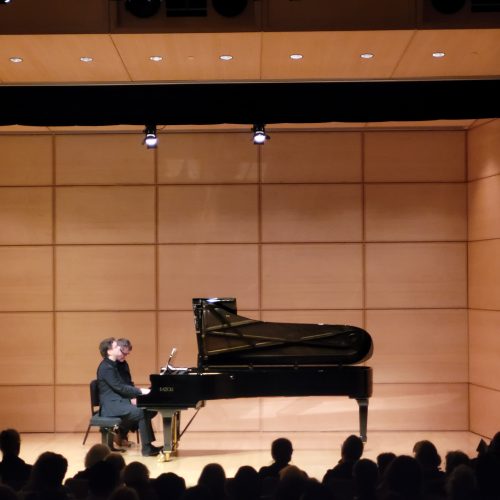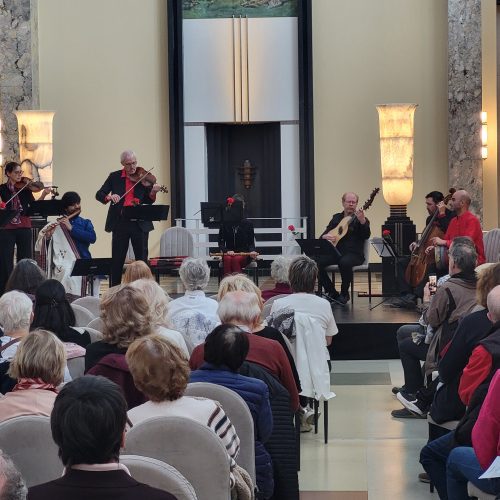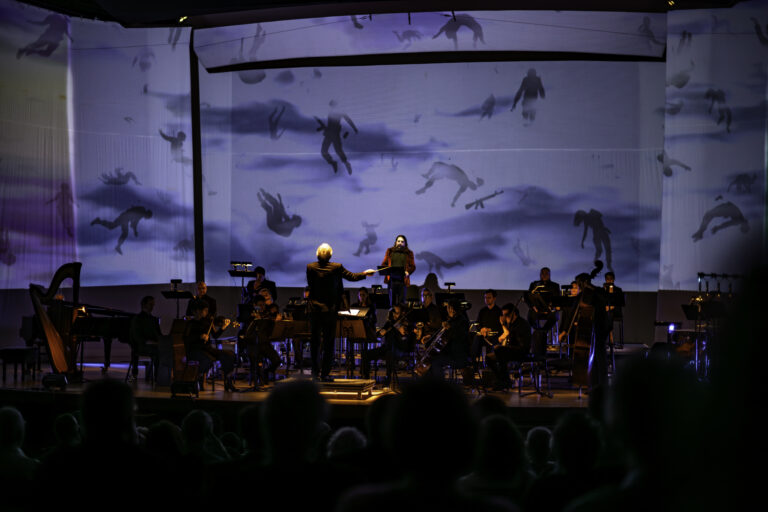
A moment I’d been looking forward to for a long time took place yesterday in Salle Claude-Champagne at the Université de Montréal: a performance of Viktor Ullman’s opera Der Kaiser von Atlantis. Well, almost what I expected, as it was a concert version, enhanced, that said, by some very fine video projections. Der Kaiser is a great masterpiece in a small format (not even an hour), a fundamental opera of the 20th century that almost disappeared under the carelessness of the Nazis, but survived for decades under an old mattress. Follow the link below to find out part of the story.
WATCH THE INTERVIEW WITH CONDUCTOR MATHIAS MAUTE ABOUT DER KAISER VON ATLANTIS (in French)
Der Kaiser tells a simple story: Emperor Overall (what an appropriate name) wages war on all his neighbors. He boasts that he has Death on his side, “under his banner”, and that with it, no enemy can survive. Death, fed up with being used like this, decides to go on strike. With no one left to die, war becomes pointless, and no one fears the evil imperial dictator. So much so that even people fall in love across enemy lines. Overall is in despair when Death appears to her and proposes a deal: she will resume her service on condition that her first victim is the Emperor himself. In a final gesture of redemption, the Emperor accepts, for the good of all. The direct reference to Hitler and fascism is obvious (minus the redemption), and serves as a powerful, hyper-focused symbol and indictment of the absurdity of megalomania. Ullmann died in Auschwitz in 1944. He never realized that his subject never had the strength of character of the fictional character.
Ullmann’s score is marvelous. An absolute masterpiece of eclectic modernism, typical of a certain style of the 1920s, 30s and 40s, which dared to mix atonal music, late Romanticism, jazz, popular music, consonance and dissonance. In short, what we’re used to today, a century ahead of its time.
The fifteen-strong chamber orchestra features a portable organ, banjo, guitar and classical strings, woodwinds and brass. The music is sparkling with motifs and snatches of melody that are juxtaposed and swiftly strung together, without ever giving the impression of amalgamating into a shapeless soup. On the contrary, ultra-smooth lines, drawn with a scalpel, sometimes anticipating those of Shostakovich. Ullmann keeps us constantly on our toes. A modernism that is often cynical, that squeaks and plays tight in corners, but full of humor and contagious vitality.
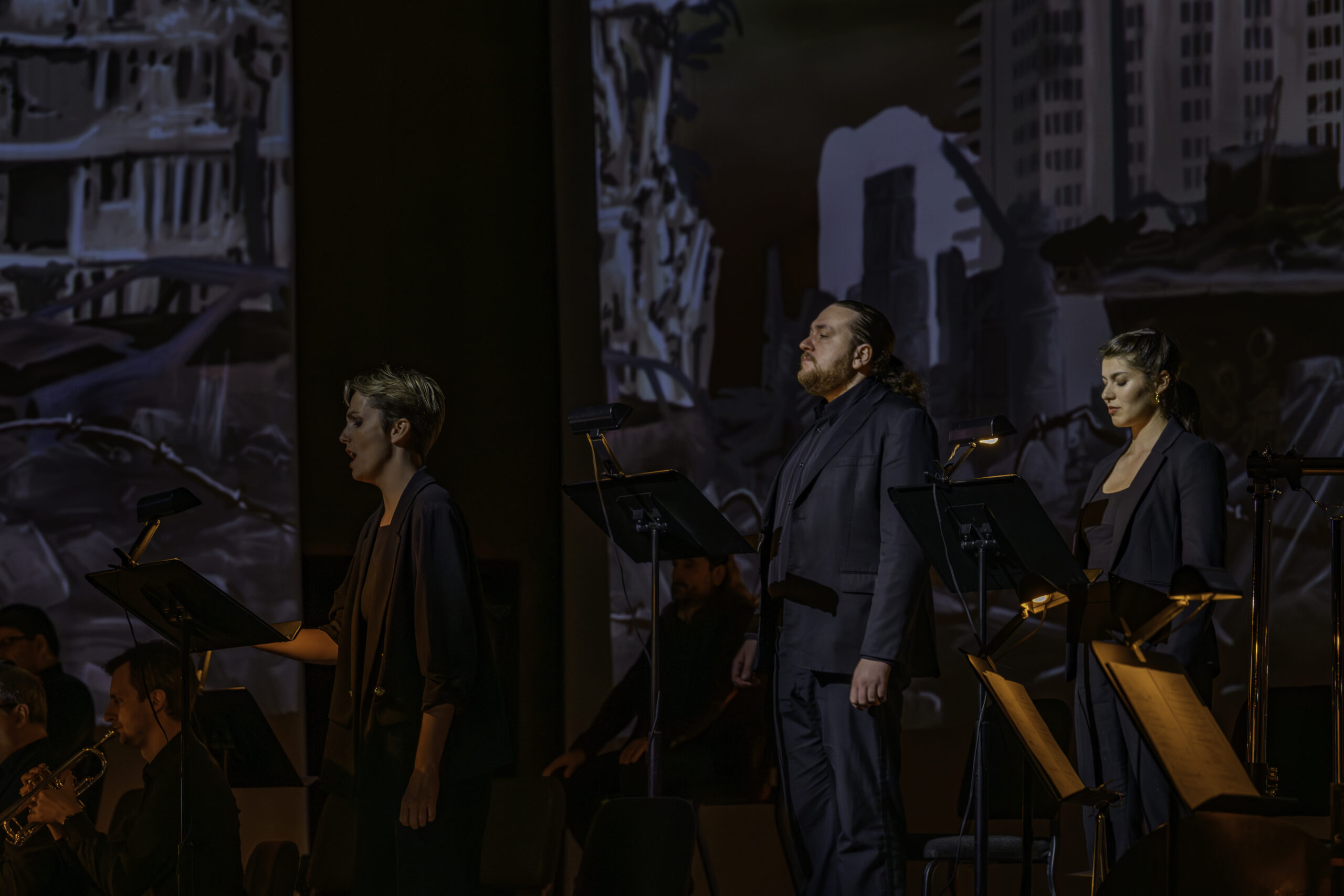
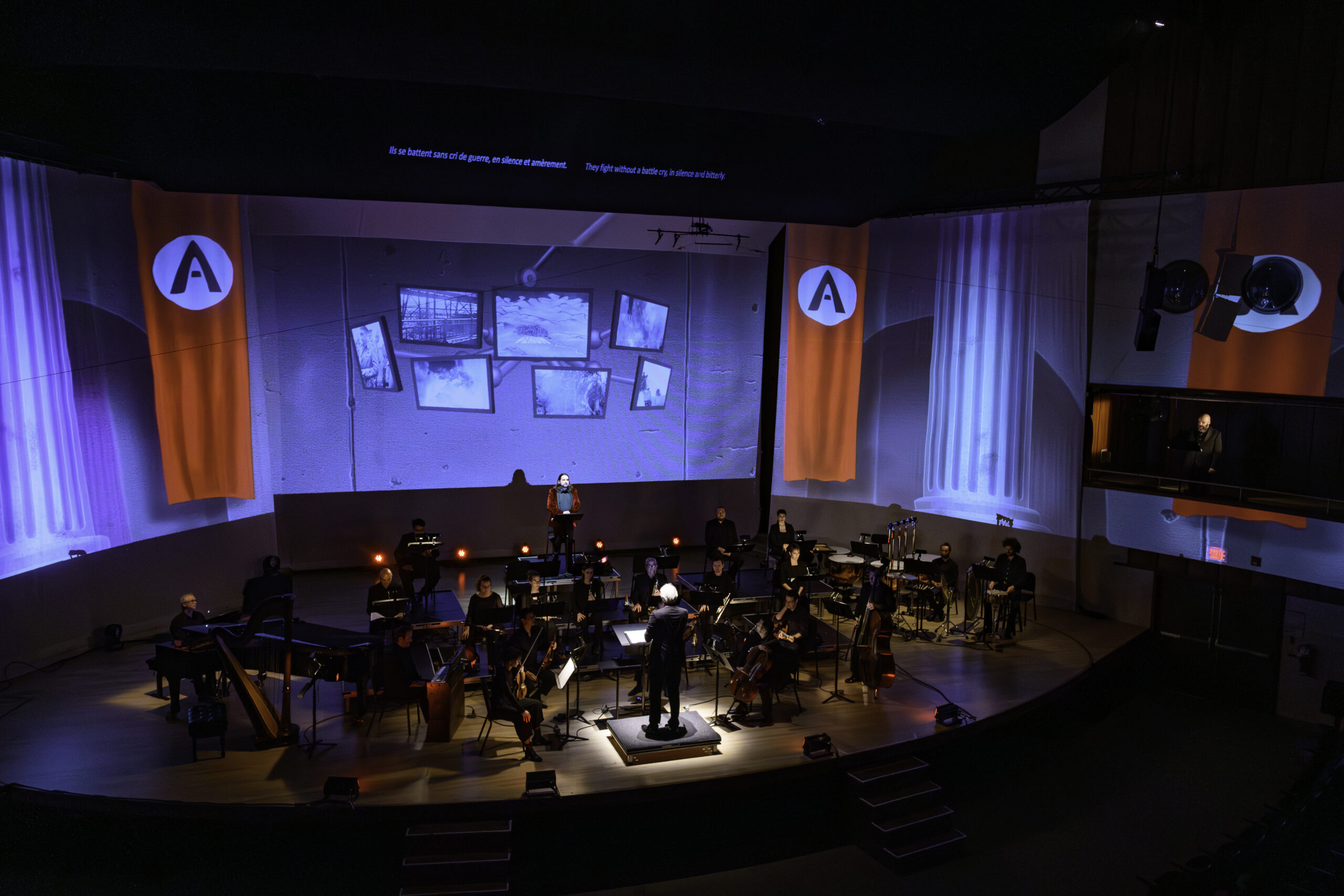
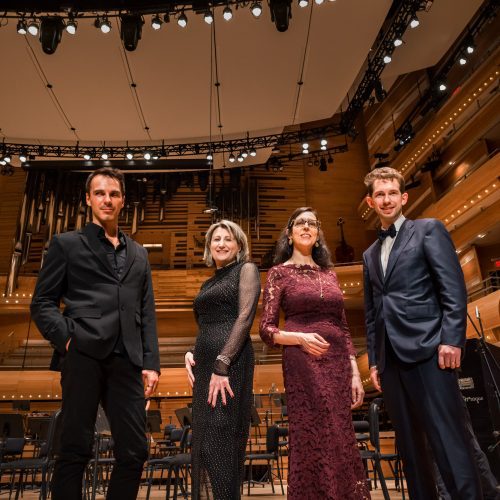
The vocal side is divided between scansions and singing. Frédéric Caton (Death) gives a fine performance, a purring bass, very much in character. Florence Bourget in the role of the Drum, with magnificent projection and a pleasant timbre. Éric Laporte as Harlequin (symbolizing Life) is adequate, but a little thin in the treble. Pierre-Yves Pruvot plays the Emperor Overall, and his grandiloquent vibrato is blessed with a character who can live with it. I’m not sure I’d have liked it in any other context. Le Haut-Parleur, the national radio station, is conducted ”imperially” by Tomislav Lavoie, but in a German that lacks clarity. Emmanuel Hasler and Sophie Naubert are very decent in their small roles as soldiers.
This was a concert version, but ”augmented”, as I said, by video projections, combining beautiful, partially animated illustrations by Maxime Bigras and a montage of archive films by Matthieu Thoër, of Lumifest en cavale. Without this visual dimension, the experience could have seemed arid. All that remains now is to hope for a real stage production in the not-too-distant future.
I disagree with a colleague who regrets the absence of costumes in a concert version. What’s the point of “graying” singers in Halloween when they’re condemned to remain stationary? It would be ridiculous. Anyway…
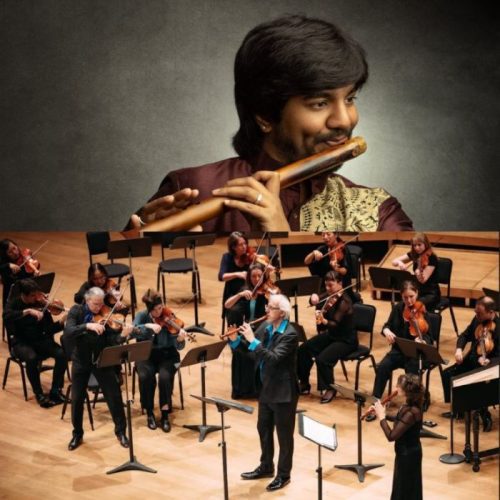
The concert ended with the presentation of Montrealer Jaap Nico Hamburger’s Symphony for Chamber Orchestra No. 1 “Remember to Forget”. A fitting complement, the underlying theme of this symphony being that of one train heading for death (1st movement) and another heading for liberation, or life (2nd movement).
The link with opera was also made with Hamburger’s music, which bears some resemblance to Ullmann’s, although it is built on a much more linear discursive architecture. No sudden, even violent leaps between opposing affects, textures and rhythms. Rather, the music is fairly consonant, albeit with occasional atonal outbursts, set to a steady pulse, illustrating the train’s progress. Depending on whether the train is heading for life or death, the atmosphere changes, of course. Hamburger would make an excellent film composer. Hamburger’s parents survived the Allied landings in 1944. After the murdered Ullmann, this man’s permitted existence is a positive conclusion. One train to death, another to life.
It’s a shame that Salle Claude-Champagne was only partially filled. Was it the program or the hall itself? Not its acoustics, which were excellent, but rather its location. A cul-de-sac (literally) devoid of any form of amenity in a wide radius around it (zero restaurants, bars or activities of any kind). A dormitory district. What a pity, it sounds so good.
The fact remains that such an operatic treasure, still too hidden, absolutely must be mounted and shown everywhere. It can serve as a powerful anti-totalitarian document as well as an introduction to modern opera and musical language. Its very short duration, its archetypes that can be understood by all, and the infinite possibilities it offers in terms of staging, are all elements that make it an absolute must in the art of music. It’s not what the Festival Classica will fill its coffers with, but the cultural and social importance of this kind of proposition is noteworthy. The vision and courage of the Classica team are to be commended, despite the very modest means at their disposal to realize this project. Sponsors who support this project should know: your investment will go far beyond a monetary rebate.
Bravo and thank you for daring.