Au-delà du mythe
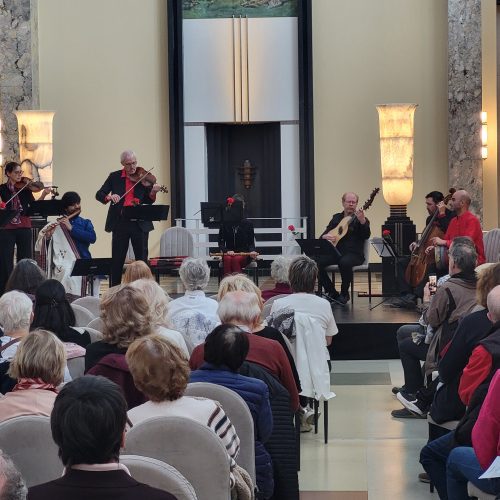
Antonio Salieri et Wolfgang Amadeus Mozart : deux noms que la légende a opposés, mais que l’histoire révèle comme des contemporains qui s’estimaient mutuellement. Paul Agnew réunit ces compositeurs dans un programme qui célèbre l’effervescence du classicisme viennois.
La noblesse du cor
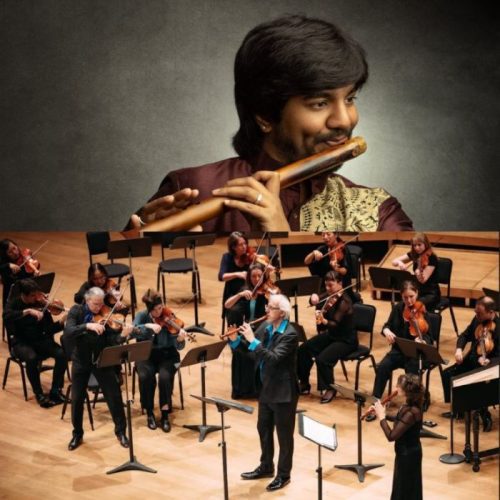
Louis-Philippe Marsolais prête sa sonorité chaleureuse aux deux concertos pour cor du programme. Le Concerto n° 2 de Mozart témoigne de l’affection particulière du compositeur pour cet instrument, tandis que Haydn offre dans son Concerto n° 2 en ré majeur une page d’une élégance enjouée.
Haydn le visionnaire
La Symphonie n° 47 « Le Palindrome » de Joseph Haydn révèle l’humour et l’ingéniosité formelle du compositeur. Son menuet, qui se lit dans les deux sens, témoigne de cette inventivité ludique qui caractérise le génie haydnien.
Boccherini et le diable
La musique de Luigi Boccherini enrichit le concert avec sa Symphonie n° 4 « La casa del diavolo », inspirée du ballet Don Juan de Gluck. Les variations sur le fameux thème du fandango créent une atmosphère dramatique qui contraste avec la grâce des œuvres du programme, offrant une dimension théâtrale captivante.
Beyond the myth
Antonio Salieri and Wolfgang Amadeus Mozart: two names that legend has pitted against each other, but which history reveals to be contemporaries who held each other in high esteem. Paul Agnew brings these composers together in a program that celebrates the effervescence of Viennese classicism.
The nobility of the horn
Louis-Philippe Marsolais lends his warm tone to the two horn concertos on the program. Mozart’s Concerto No. 2 testifies to the composer’s particular affection for this instrument, while Haydn offers a page of playful elegance in his Concerto No. 2 in D major.
Haydn the visionary
Joseph Haydn’s Symphony No. 47, “The Palindrome,” reveals the composer’s humor and formal ingenuity. Its minuet, which can be read in both directions, testifies to the playful inventiveness that characterizes Haydn’s genius.
Boccherini and the devil
Luigi Boccherini’s music enriches the concert with his Symphony No. 4 “La casa del diavolo,” inspired by Gluck’s ballet Don Juan. The variations on the famous fandango theme create a dramatic atmosphere that contrasts with the gracefulness of the other works in the program, offering a captivating theatrical dimension.
Programme
A. SALIERI
Ouverture (Armida)
W.A. MOZART
Concerto pour cor n° 2 en mi bémol majeur, K. 417
Ouverture (La Betulia liberata, K. 118)
F.J. HAYDN
Symphonie n° 47 en sol majeur, Hob. I:47 « Le palindrome »
Concerto pour cor n° 2 en ré majeur, Hob. VIId:4
L. BOCCHERINI
Symphonie n° 4 en ré mineur, op. 12 La casa del diavolo
Program
A. SALIERI
Overture (Armida)
W.A. MOZART
Horn Concerto No. 2 in E-flat Major, K. 417
Overture (La Betulia liberata, K. 118)
F.J. HAYDN
Symphony No. 47 in G Major, Hob. I:47 The Palindrome
Horn Concerto No. 2 in D Major, Hob. VIId:4
L. BOCCHERINI
Symphony No. 4 in D Minor, Op. 12 La casa del diavolo
POUR ACHETER VOTRE BILLET, C’EST ICI!
Ce contenu provient des Violons du Roy et est adapté par PAN M 360