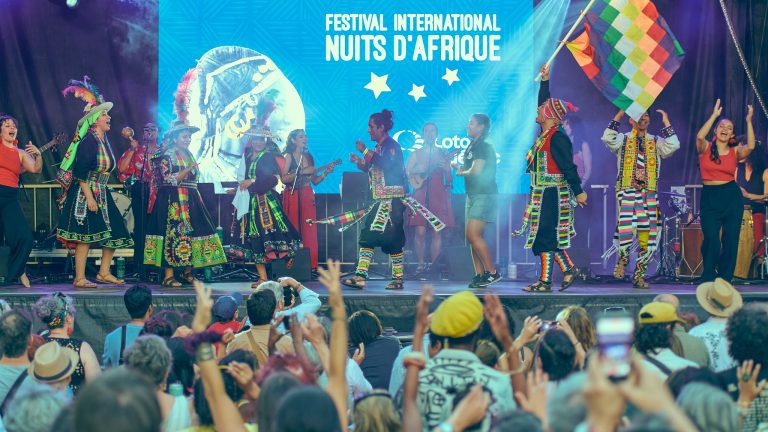
Thursday, July 16, the musical collective Somos Más filled the Scène Loto-Québec at the Festival International Nuits d’Afrique. One by one, each woman took the stage, performing body percussion and harmonizing their voices. Singers from Peru, Chile, Bolivia, the Dominican Republic, El Salvador, Brazil, and Morocco shared their talent, and we had no idea what was coming next.
They performed songs spanning a variety of musical genres, including rancheras, cumbias, festejo, and Chilean and Bolivian folk music. Some were original compositions by members of the group, while others were songs that many Latin Americans would recognize from their childhood. For me, these genres were the soundtrack to parties, road trips, family reunions, and the most important ritual in my family, which took place every weekend: cleaning. Somos Más transported me back to these everyday moments that, now that I live so far from home, have become cherished memories.
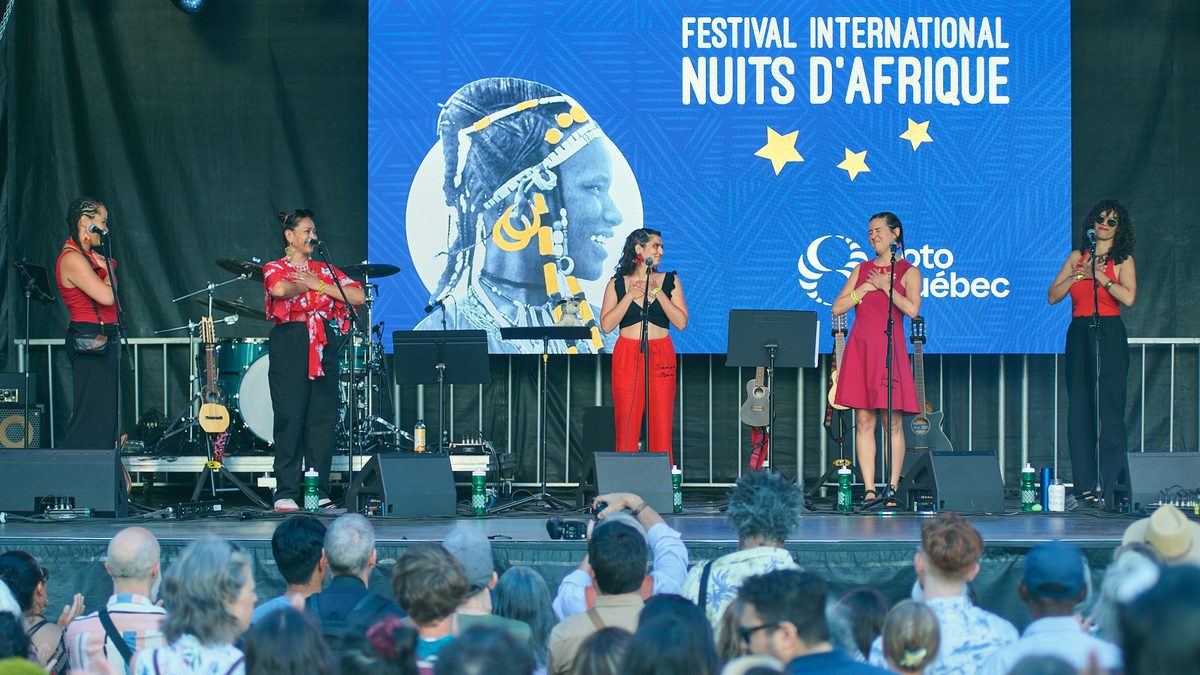
Photo Credit: Ivan Arturo Escobar M
I was deeply moved to witness these women, who all, for different reasons, ended up in Montreal and created this beautiful project together. They reminded me that, even though Latin America is a vast and diverse region, we can still connect by recognizing ourselves in one another’s realities.
Somos Más offered an intimate performance. We could see the complicity, sisterhood, vulnerability, and solidarity they spoke about in their interview. Whenever one member stepped into the spotlight, the others supported her with their voices and instruments, but I could also see how proud they were of whoever was leading or performing a solo. The percussionist, who recently joined the group and is of Moroccan origin, captivated me with her talent and remarkable versatility as she effortlessly followed the group’s exploration of multiple musical traditions.
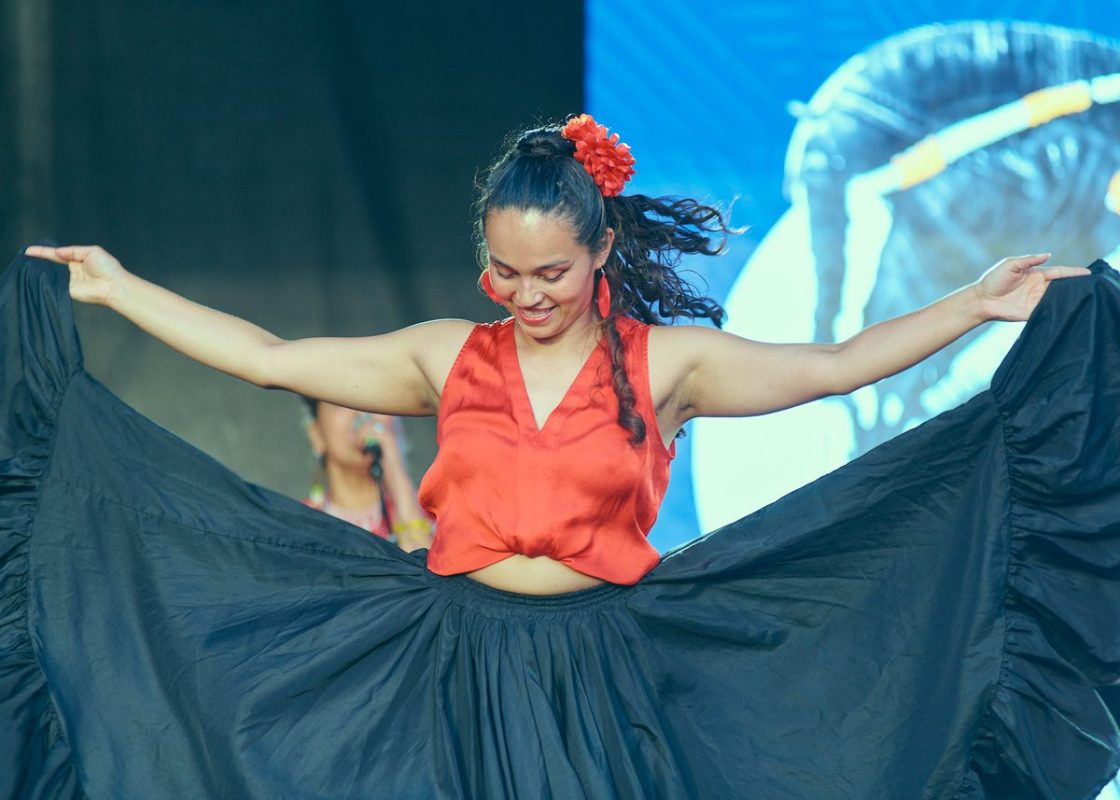
Photo Credit: Ivan Arturo Escobar M
As the performance unfolded, I never knew what to expect. I felt a comforting warmth, as though I were at a house party with my closest friends, alongside deep admiration for each artist’s authenticity and a sense of wonder with every surprise they brought to the stage.
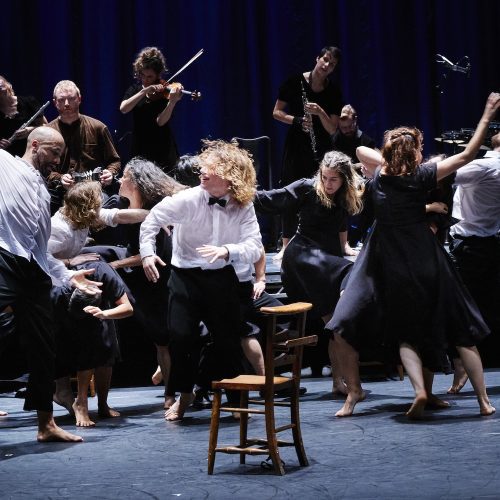
Somos Más collaborated with dancers Carmen and Paula from Girovago Productions, who accompanied the group with cumbia and contemporary dance before leading an interactive moment that invited the audience to dance as well. The dancers’ graceful movements and warm presence helped us connect even more deeply with the music of Somos Más. The group also collaborated with Centro Cultural Kusiy, whose performers presented the Bolivian dances saya and tinku. Stomping their feet in rhythmic unison, the Kusiy dancers grounded the music, connecting it to the earth and to the Indigenous roots of Latin America.
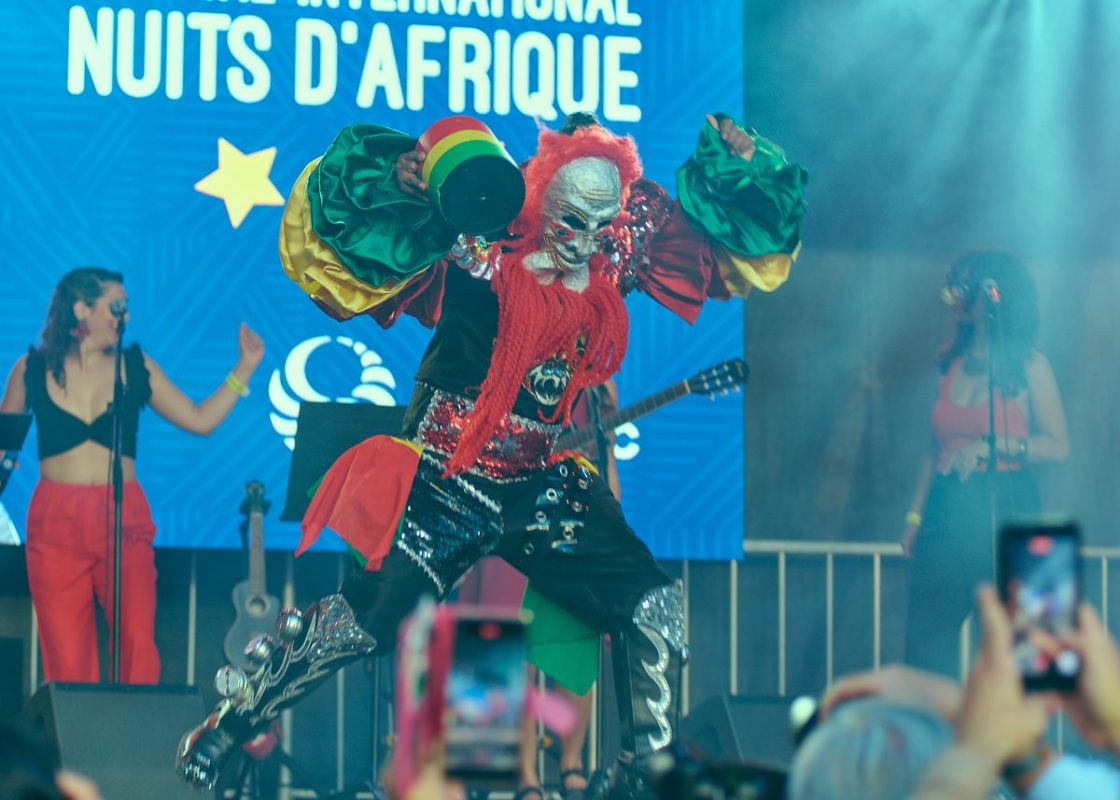
Photo Credit: Ivan Arturo Escobar M
For the finale, all of the dancers joined Somos Más to perform a medley of three beloved Latin American songs: Cariñito, Canción y Huayno, and Adiós Pueblo de Ayacucho, with part of the lyrics sung in Quechua. One of the Kusiy dancers moved across the stage carrying the Wiphala flag, a symbol representing the Indigenous nations of the Andean region. It was a powerful closing, bringing together musicians, dancers, and singers in a celebration of Indigenous peoples, whose cultures are essential not only to Latin American history but also to the very DNA of its present-day identity.
I experienced this performance as an invitation to embrace these connections. Whether through a shared love of music or a shared connection to Latin America, we can lean into one another through solidarity, community, and art.
Photo Credit: Ivan Arturo