Additional Information
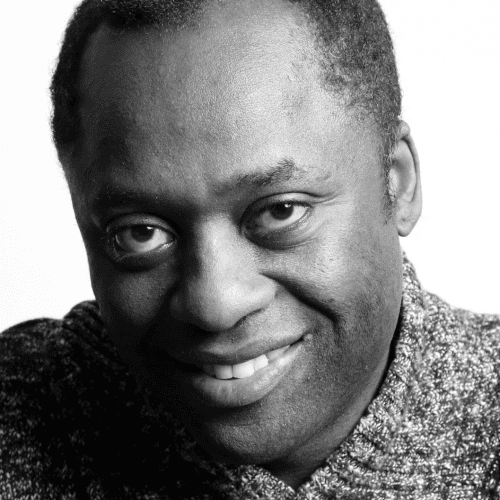
The singer, balafonist, and guitarist from Guinea-Bissau, Kimi Djabaté, grew up in a musical village. Indeed, his hometown of Tabato is a small town where most of the inhabitants live off music and have been griots for generations. The artist, who is now based in Lisbon, released the album Dindin in 2023, an album I have praised highly right here on this site.
CRITIQUE OF DINDIN, KIMI DJABATÉ’S ALBUM
On April 2, 2026, Kimi Djabaté will give a concert at the Balattou club in Montreal, a first for the artist in our city, who was invited by the singer Maritza (who asked him to accompany her at her own event on April 1 at the Lion d’Or). For his evening at Balattou, we are even told that Daby Touré will be on stage with Kimi! An evening that I am personally very much looking forward to. I talked with Kimi about his youth completely dedicated to music, his coming in Montreal, his collaboration with Madonna, and many other things.
**Thanks to Jacob Edgar from Cumbancha/Putumayo who served as an interpreter, as the interview was conducted in Portuguese.
DETAILS AND TICKETS FOR KIMI DJABATÉ’S CONCERT AT BALATTOU ON APRIL 2, 2026
PanM360: Hello Kimi. It’s a first in Montreal. But have you ever been to Canada?
Kimi Djabaté: Once, in Edmonton, for a single concert.
PanM360: You grew up in a small village in Guinea-Bissau called Tabato, a village of musicians (griots). Everyone there plays music… You hardly had a choice…
Kimi Djabaté: It’s true that Tabato is a village of griots. It is somewhat the destiny, the social obligation, of its inhabitants to play music. I was surrounded by music throughout my youth. Griots are required to learn at least one instrument and to tell stories with their music. For me, it was the balafon (a type of traditional West African xylophone) that has been my passion from the very beginning.
When I was five to eight years old, my parents would take me to play at wedding ceremonies, for example. I became something of a local sensation, they found me very cute with my instrument that I handled quite well. And then, the orders multiplied. Sometimes, I found it difficult. I was woken up at night to travel and play. I brought in income for my family that way, you understand. Sometimes, I wanted to be a child like the others. I never learned to play football (soccer)…
PanM360: A story like Mozart’s… Have you ever felt like giving up?
Kimi Djabaté: No, never. Nevertheless, around my teenage years, I started listening to Africa 1, a radio station from Gabon. There, there was a program broadcast every week, from 2 AM to 4 AM, and I discovered all sorts of other music. I used my money to buy batteries for the radio so I could listen to my show! Then, my passion was somewhat rekindled. But no, I never really thought about not making music.
PanM360: You are a griot from Guinea-Bissau. Here in Montreal, we have several griots from Mali or Senegal. Are there significant differences between the traditions of these different countries?
Kimi Djabaté: Not really. All the culture of the griots comes from the ancient Mandingo Empire (or Mali Empire), which encompassed the entire region during the European Middle Ages. It was the colonial forces who subsequently divided this entire region into various countries and brought new languages. For the rest, the sources, the codes, remain the same. In fact, we still frequently speak the same native language, Manding. In fact, it is the language of Touré (Lamine), the director and owner/founder of Balattou!
PanM360: At this concert, will you mainly be playing Dindin?
Kimi Djabaté: Yes, especially, but also a few songs from previous albums. Daby Touré, who is based in Montreal, will also come on stage with me. It’s a great honour. We will also play a concert in Toronto. And then, we might also play a few new songs, which we might have had time to work on in Montreal, as I will be there for a few weeks.
PanM360: Tell me about your collaboration with Madonna…
Kimi Djabaté: It was through mutual friends that we met. Madonna spent some time in Lisbon. We met at a private concert for French friends. She is a big fan of African music. Subsequently, I was invited to her birthday parties, and then she asked me to play a piece on her album Madame X. It’s called Ciao Bella. I sing, and Madonna does the backing vocals behind me!
PanM360: That is nice! We can’t wait to see you in Montreal and Quebec for the first time.
Kimi Djabaté: Me too, I can’t wait to be there. That reminds me that, many years ago, a Quebecer came to study the balafon in our village! His name was Sylvain Panneton. He even recorded a cassette. I don’t know what happened to him. If he can ever come, that would be really nice.
PanM360: The message is sent! Thank you.