Additional Information
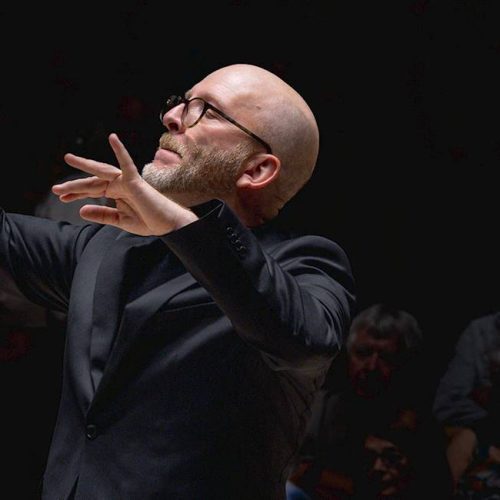
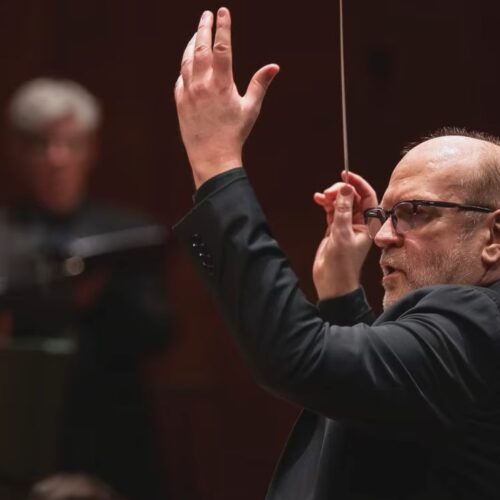
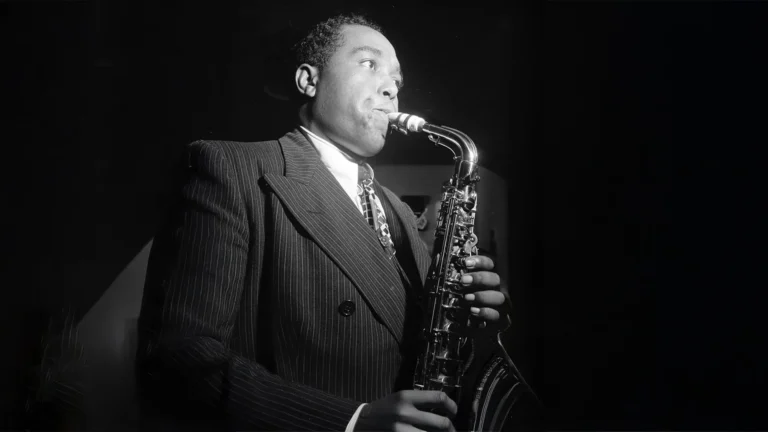
The National Jazz Orchestra (ONJ) will perform on November 27 in a unique format at the Cinquième Salle of Place des Arts. To pay tribute to the legendary Charlie Parker With Strings, a unique blend of bebop saxophone and strings, the ONJ will be composed primarily of strings. Four Montreal saxophonists will share the role of Charlie Parker, aka Bird. Our contributor Michel Labrecque discussed this with Samuel Blais, himself a saxophonist, who will conduct the Orchestra.
PAN M 360: Charlie Parker is a monument of 20th century jazz, what can you tell us about him for those who may be less familiar with him.
Samuel Blais: Charlie Parker didn’t live long; he died at 34. He was one of the great instigators of bebop. His importance is immense, indescribable. He is taught in all the major universities. At the time bebop was created, it caused a scandal. Louis Armstrong once said of Parker that his music wasn’t jazz because it was so different from what he was doing. Before that, jazz was more of a dance music, with less improvisation. His influence is endless.
PAN M 360: This episode where he performed with a string ensemble is really very special. How did it go?
Samuel Blais: In fact, it was the producer and impresario Normand Granz, someone who was very important to the history of jazz; he discovered Oscar Peterson, among others. He also produced an album by the singer Billie Holiday with a string ensemble. Charlie Parker was a lover of classical music, particularly Igor Stravinsky. When he heard Billie Holiday’s record, he told Granz, “I’d like to do that too.” So, several sessions were organized starting in 1949. These were small string ensembles. For our concert on the 27th, we’ll have the chance to have many more musicians than Bird ever had. There will be about twenty string players, including a harpist, as well as oboe and French horn. It will be something never heard before!
PAN M 360: This cross between Charlie Parker and strings is a very small episode in his history, but one that marked this era.
Samuel Blais: It was a huge commercial success for a jazz album. Some tracks were even played on the radio. It’s worth noting that, for the recording sessions, producer Normand Granz had found some excellent classical musicians. But this intimidated Charlie Parker. There were times when he left the sessions without playing a single note. It was a dream for him; he finally achieved it, and these recordings have become landmarks in jazz history. They include many standards, such as “Just Friends.”
PAN M 360: For Thursday’s concert, there will be not one but four saxophonists to reinterpret Bird.
Samuel Blais : We’ll have André Leroux, Alexandre Côté, Jean-Pierre Zanella, and Rémi Bolduc, four of the best saxophonists in Quebec. My job was to listen to the repertoire and assign each piece to one of the four. We’ve kept the original arrangements, but of course, the saxophonists will improvise, and we don’t want them to imitate Charlie Parker. We’ll also play “They Didn’t Believe Me,” which was written for Charlie Parker but which he never performed. So, saxophonist Rémi Bolduc will have free rein to do whatever he wants.
We have chosen twelve pieces from this repertoire, which I hope will be a hit. For me, it will be a great pleasure to conduct this ensemble, and I warn you, I’m likely to have a huge grin plastered on my face, as we say in Quebec, throughout this entire concert.