Additional Information
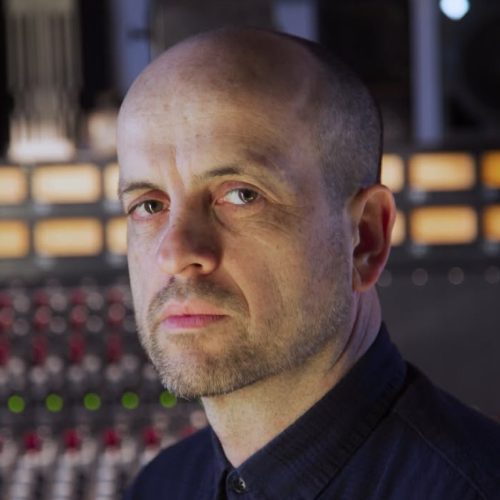
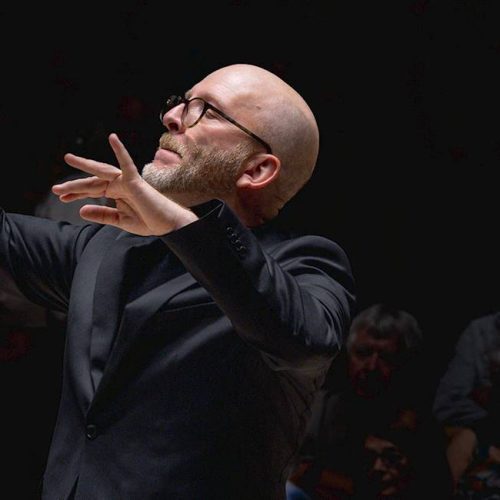
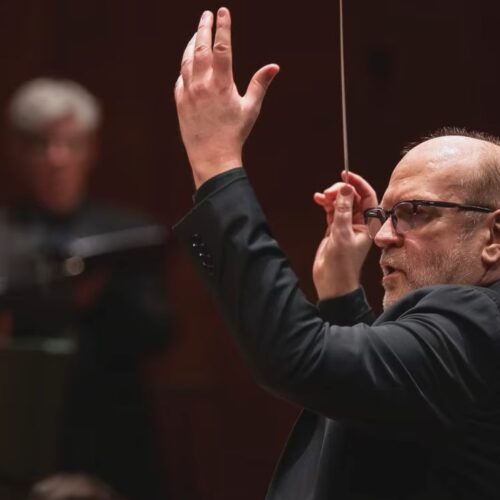
Ahead of Vibrations Festival 2025, an event that will include a symposium in addition to several musical performances, we at PAN M 360 spoke to Joao Lenhari, the director of the UdeM Big Band. The ensemble is set to perform at the Outremont Theatre on October 16th and will celebrate its forty-fifth anniversary, with students and members of the department sharing the stage. Ahead of the show, we spoke about his plans for the future of the ensemble, some musicology, and a few career highlights.
PAN M 360 : The UdeM Big Band has been under your direction since 2023. What are some long term and short term goals for the ensemble? Is there anything you were particularly happy to have achieved with the ensemble already?
Joao Lenhari: Good question. What I can tell you is that my long-term project with the UdeM Big Band is to increasingly spark the interest of younger generations in playing in a big band. We all know about the rise of artificial intelligence in music, and I value human knowledge. At the university level, I want to continue the legacy of excellence at the Université de Montréal. To achieve this, short-term goals are essential, and my aim each year is to help students challenge themselves and grow together. Jazz is democratic — we’re always interacting and engaging with different musical perspectives. However, within a large group like a big band, we need to dedicate ourselves to achieving the best possible musical result. By doing this, I’m confident that all the students who have been part of the Big Band with me will carry this experience with them throughout their lives. That is my greatest goal as a professor: to prepare my students for success in the professional world and, most importantly, to teach them to conduct themselves properly and ethically.
Yes, I have some accomplishments that I’m very proud of since taking over the Big Band: the concerts with our international guests — who are major names in jazz — and the recording of the UdeM Big Band’s fifth album. In fact, I’d like to take this opportunity to say that you’ll soon hear news about this album, which pays tribute to the female singers of jazz. The album will be called Intemporel Vol. II – Hommage à la Voix Féminine. Stay tuned — it’s our surprise anniversary gift to the public.
PAN M 360: I see there are some great selections on the program, including arrangements of Monk, Gil Evans, and Benny Golson, as well as several composers from the Tin Pan Alley era. As a director and performer of big band music, what is your favourite era? Any favourite composers?
Joao Lenhari: I don’t have a specific period that I favor more. All periods are important and contain wonderful works. It’s worth mentioning that most of the arrangements we’re going to perform are essential for the musical development of young musicians. I chose them precisely to give students the opportunity to explore different styles of arranging and to encourage individual research in order to interpret the pieces as coherently as possible. With my knowledge, I can highlight specific interpretive elements from each era — things like vibrato, attack, blend, note endings, time feel, and many other aspects relevant to each period.
So, to briefly answer your question: I don’t have a preference for any particular era, but I can tell you that I am crazy about Thad Jones!!!
PAN M 360: When considering Brazilian musical styles and their influence on jazz, it seems that samba and bossa nova from the 1960s are the most cited examples. As someone well-versed in both jazz and Brazilian music, are there any other Brazilian styles that you think were important in the development of jazz? Are there styles you think people should be more familiar with?
Joao Lenhari: As everyone knows, Brazil is a vast country, so we can say there are many “Brazils” within Brazil. The styles that gained the most international recognition were samba — first with Carmen Miranda during the U.S. government’s “Good Neighbor” policy era — and later bossa nova, especially with the Getz/Gilberto album and the Carnegie Hall concert in 1962. I also believe that Milton Nascimento’s music is extremely important for the development of modern jazz, particularly due to his close relationship with Wayne Shorter. Hermeto Pascoal’s music, which is classified as “universal music,” also had a strong influence on jazz. As for musical styles, I believe that once we see music as something divine and elevated — not just a commercial product — everyone should open their minds and listen to as many styles as possible, absorbing the unique elements of each one. Ultimately, music is infinite, and everything we can absorb and appreciate is beneficial for everyone.
PAN M 360 : As a seasoned arranger of music, what are the best ways one can become effective and quick in their writing? What skills would you say are essential when writing for film and television?
Joao Lenhari: First of all, it’s essential to listen to a lot of music. I believe that learning music should be like learning a new language: we first learn the sounds of the words, then how sentences are built, and finally how to organize those sentences into a text. Writing an arrangement follows a similar process — first, we hear a sound in our minds, then we choose the elements we want to include, and finally we organize them.
I like to say that theory is a tool to help us express what we have inside in an organized way. But what truly matters for an arranger is what they carry within — their creativity, their ability to make a simple musical passage evoke emotion according to their vision.
I think this also answers the question about music for film or TV: you need to watch the scene many times and feel the emotion you want to convey through the music. Music is present in everything, and as an arranger, I enjoy bringing out small details that may be imperceptible but make a huge difference.
PAN M 360 : I couldn’t help but notice that you’ve accompanied Roberto Carlos on several occasions. It occurred to me that those less familiar with Latin music may not grasp his enormous popularity in Brazil and in Spanish-speaking Latin America. How would you explain his significance to someone unfamiliar with his work?
Joao Lenhari : You really did your research on me! haha I’ve had the great pleasure and honor of working with Roberto since 2008. My last tour with him was in the summer of 2024 in the United States. Since then, I haven’t been able to coordinate my schedule here in Montreal to travel to Brazil for the concerts. What I can say about Roberto is that he is simply the greatest singer in the history of Latin American popular music. You could say he’s the Frank Sinatra of Latin America — he’s sold more records than The Beatles in the region, which is incredible. I’ve had the privilege of traveling to more than 25 countries with him, and thanks to that work, I’ve met many people, experienced the culture of various places, and learned a lot about the traditional music of each country. I can highlight the live concert at the iconic Copacabana Beach in Rio de Janeiro for more than 500,000 people and the show in Jerusalem in 2011, these two concerts were very special for me.