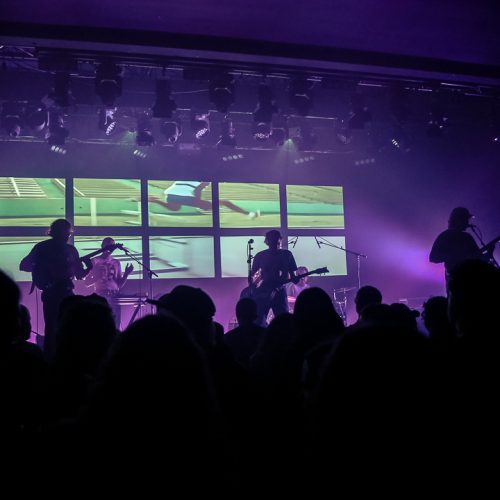
Thursday evening, a unique event at the Théâtre Maisonneuve: Max Cooper’s Lattice 3D/AV, sold out. Renowned for his immersive audiovisual experiences, the British artist returned to Montreal with a performance that, far from the expected spectacular, proved to be introspective and deeply contemplative.
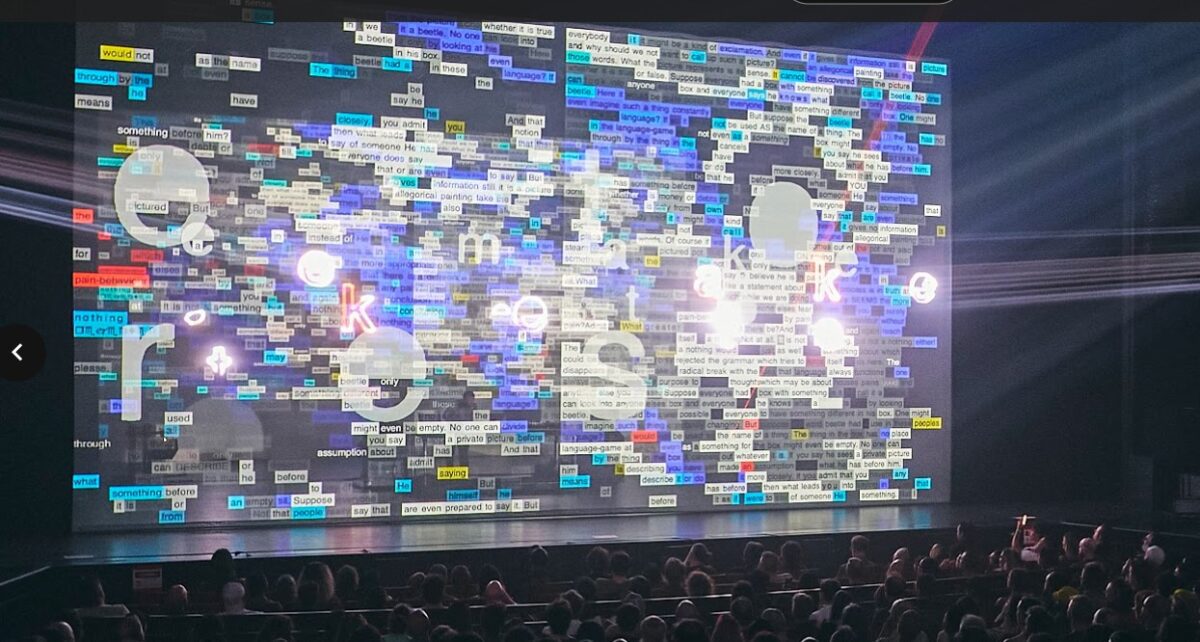
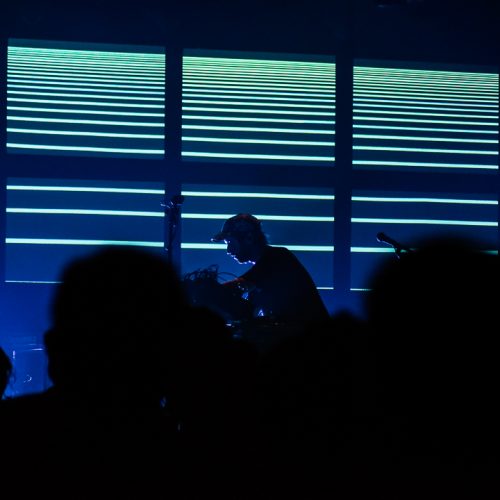
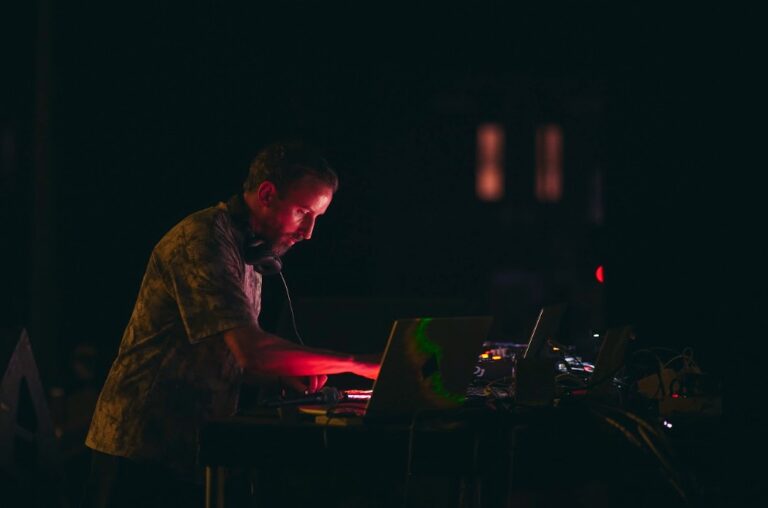
From the very beginning, the scenography imposed its clarity. There was no mystery: Cooper was positioned on stage, facing the audience, with his setup clearly visible, framed by two screens: one behind him, the other in front, semi-transparent, sometimes pierced by light, sometimes masking the artist’s figure. This deliberate transparency set the tone: here, nothing to hide, everything to reveal. The show would focus less on dazzling than on the porosity between sounds, images, and consciousness. Lattice 3D/AV, designed with Architecture Social Club, is described as his most ambitious live project, combining projections, semi-transparent layers, lasers, and lights sculpted in space. But rather than a sensory surge, the experience unfolded in a slow build-up. The visuals, at first, vibrated in layers of shifting colors, fluid textures, and measured rhythms. The music moved forward with restraint, almost weightlessly, creating a hypnotic continuum. It was a far cry from the festive frenzy of some other MUTEK evenings, and that was precisely the strength of the show.
Then a pivotal moment: the appearance of the text. Projections of raw sentences, emerging as the intensity increased. This use of words, rare in Cooper’s performances, became the defining element of the set. The faster the tempo, the more the characters scrolled, until it created a paradoxical impression: that of finding ourselves face to face with the racing of our own thoughts, in a digital mirror of our saturated daily lives. The visual then took over the music, and the music, in turn, let itself be guided by this mental rhythm.
It was at this moment that the effect was fully revealed. When the text stopped being projected, another shift occurred in the room: as if freed from a weight, the audience began to dance. The last fifteen minutes of the show took a more physical, more embodied turn, proof that the experience had worked, that the text had captured attention to the point of suspending the body, and its withdrawal had opened the space to the liberation of movement.
This choice echoed Cooper’s new project, On Being, which was released in February 2025. The album, born from hundreds of anonymous confessions collected online, directly questions what it means to “be” today. The responses, ranging from the most intimate pain to the purest declaration of love, served as the raw material for a work that translates the contemporary human experience into sound and image. These fragments of thought materialized in the visual space, making tangible the weight of collective speech.
In two hours, Cooper offered much more than a concert. He orchestrated a form of expanded listening, where spectators became witnesses to a shared inner landscape. In the effervescent context of MUTEK, where the temptation is to rush from one room to another, this introspective interlude suggested a valuable counterpoint. A slow breath in a festival that is often experienced at high speed. This reminds us that immersion is not only about technology and visual performance, but also about shared vulnerability. Behind the lasers and semi-transparent screens, it is our humanity that is revealed as fragile, dense, and multiple.
Photos: Bruno Aiello Destombes