A few months ahead of schedule, British folk singer Laura Marling released her seventh album Song for Our Daughter. Another very beautiful and intimate offering from the prolific artist, who’s decided to sprinkle a bit of sweetness over the grey mood cast by the global coronavirus pandemic. It should be noted that at the beginning of April, Marling had cancelled a tour in the United States and Europe due to the crisis. “Only the strong survive,” she sings on the fourth track here. A coincidence? We doubt it. Certainly disappointed by the singer-songwriter’s inevitable decision to curtail her tour, her many admirers will at least be able to take comfort in these ten delicate and radiant songs. Although she was planning to release this record in the summer, the young thirty-something chose to share her work earlier. It has an obvious kinship with the Californian folk universe of the 1960s and 1970s, like that of the legendary singer Joni Mitchell: a sober, accurate and melodic acoustic guitar playing that accompanies a precise and gentle voice. The piano and strings occasionally add a layer of emotion (“Song for Our Daughter”). Although the Londoner no longer lives in the Los Angeles area, this album contains all the traces of the territory. For example, the luminous and exciting “Strange Girl”, reminiscent of the work of another woman charmed by that part of the country, the American singer Sheryl Crow. And what about “Held Down”, which could easily evoke the Pacific or the Santa Monica hills? Produced in collaboration with her old comrades Ethan Johns and Dom Monks, this graceful, intimate, and moving album is another pure beauty to further fill out the impressive discography of this timeless singer. Recall that she has already delivered little gems such as I Speak Because I Can, Once I Was an Eagle, Short Movie or Semper Femina. Song for Our Daughter may not be a masterpiece, but it’s a warm invitation that we really need.
Latest 360 Content

Interview Classical/classique
Guillaume Côté’s A Midsummer Night’s Dreams: the choreographer talks about his intimate relationship with music
By Frédéric Cardin
Concert review classique/Classical
SQMC/Chapelle Historique du Bon Pasteur: Discovering Quebec’s contemporary music
By Pietro Freiburger
Interview
Akousma| Felix Deufel introduces us to the uncharted sonic richness of the Arctic
By Michel Rondeau
Interview Classical/classique/Electronic
Akousma | Les Artefacts sonores de Roxanne Turcotte
By Alexandre Villemaire
Interview Electronic/expérimental / contemporain
Akousma | The Audréanne Filion and Myriam Bleau Duo: Where Reality and the Virtual Merge
By Michel Rondeau
Interview Electronic/expérimental / contemporain
Akousma | Exzald S, la violence du calme
By Alain Brunet
Concert review Caribbean
Mois du Créole 2026 | Richy Jay: Keeping Konpa and Zouk Alive in Montreal
By Juliana Cortes
Interview arts numériques/Classical/classique/Électronique
Akousma | Melanie Zhou: Shaping Sound, Expressing Emotion
By Alexandre Villemaire
Interview arts numériques/Classical/classique/Électronique
Akousma | Alex Brisson et l’exploration musicale du feedback
By Alexandre Villemaire
Concert review Classical/classique
Caprice at the 9th Floor: a pleasant meeting between Baroque and Carnatic music
By Frédéric Cardin



Concert review Classical/classique
Arion: Cinderella has fun and unleashes her magic
By Frédéric Cardin
Interview Caribbean/Piano
Mois du Créole 2026 | David Bontemps: Between the Piano and Dessalines’ Legacy
By Sandra Gasana
Concert review Classical/classique
Azrieli Prize 2026: The Four Pillars of the Temple
By Frédéric Cardin

Interview Classical/classique
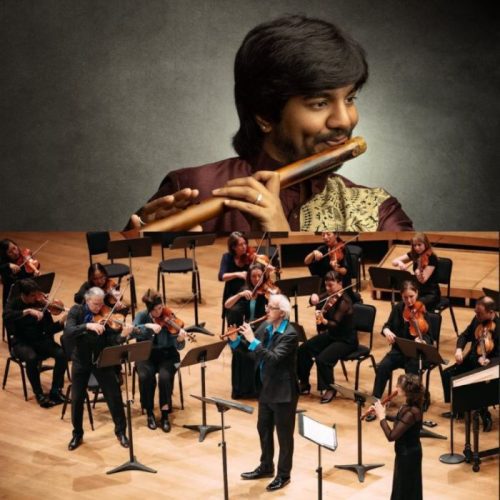
Ensemble Caprice at the 9th: Dialogue with Carnatic India
By Frédéric Cardin
Interview Classical/classique
A resurrected and vocally spectacular Cinderella at Bourgie Hall
By Frédéric Cardin
Interview Caribbean
Mois du Créole 2026 | Pierre-Roland Bain: A Look Back and a Look Ahead
By Sandra Gasana