Additional Information
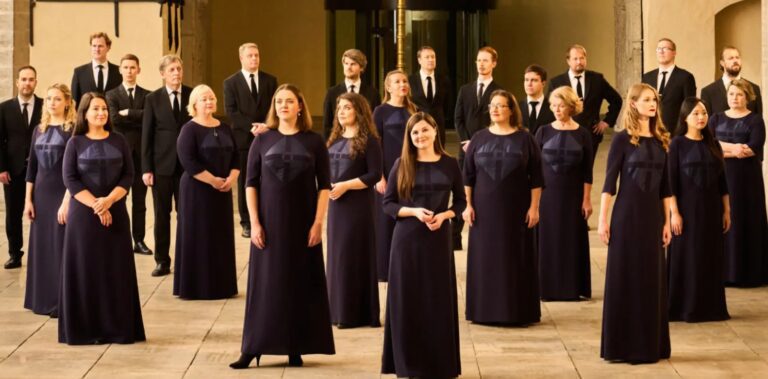
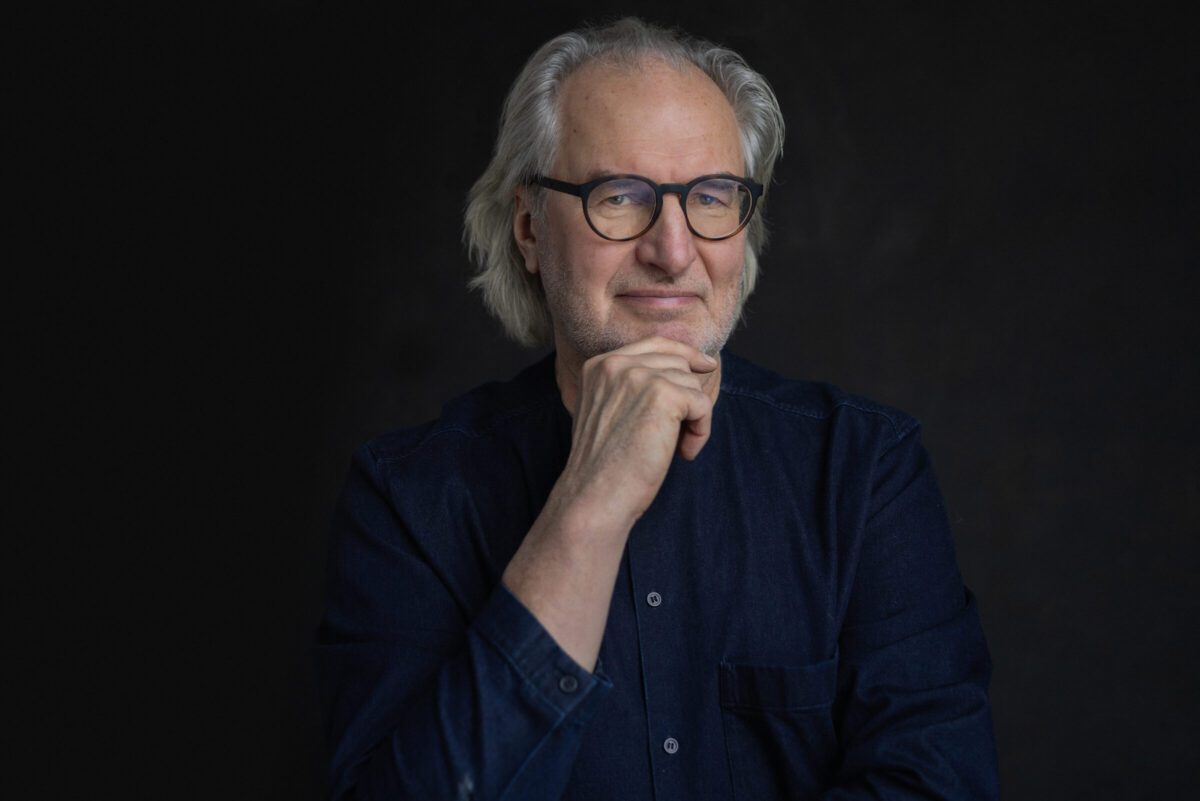
The upcoming visit of the renowned Estonian Philharmonic Chamber Choir to this continent includes a stop in Montreal on Sunday, February 15, at the Maison symphonique, hence this interview with Tõnu Kaljuste. The Estonian musician is both a choir director and conductor of international renown. Among his many honors are five Grammy Award nominations, including one for “Best Choral Performance” for Arvo Pärt’s album Adam’s Lament in 2014. In 2019, our interviewee won the International Classical Music Award for his recording of Arvo Pärt’s symphonies with the NFM Philharmonic Orchestra Wrocław. Considered one of the greatest specialists in Arvo Pärt’s music, if not the most eminent for his stage performances, Tõnu Kaljuste explains his artistic connection with the composer, now 90 years old, and how these works coexist on stage with those of the American Philip Glass, as well as Estonians Veljo Tormis and Evelin Seppar.
PAN M 360: You perform works by Arvo Pärt, as well as Luciano Berio, Eveline Shepard, Vejo Tormis, and Philip Glass. First, let’s talk about your relationship with Arvo Pärt, the most famous Estonian composer of our time. We know that he is always involved in concerts by orchestras that play his works. Is that correct?
Tõnu Kaljuste: It used to be, but not for the last two years. I visited him at his home recently, but he hasn’t been coming to concerts or production meetings.
PAN M 360: Does he still live in Estonia?
Tõnu Kaljuste: Yes, he lives in Estonia, near a center named after him in Laulasmaa.
PAN M 360: Can you summarize the history of your relationship with him?
Tõnu Kaljuste: It started in the late 1980s. He had heard Te Deum performed on Estonian public radio, and we met after he asked me to record the work on the ECM label. I had already recorded his music for ECM, and Te Deum was the second recording. That was it. In 1992-1993, we recorded Te Deum in Finland, in a church. After that, we went to Perth, Australia, for a festival featuring Arvo Pärt’s music. From then on, we began working together on a regular basis.
PAN M 360: A long-standing relationship based on trust and friendship!
Tõnu Kaljuste: Yes, but it is a professional friendship. We are not close friends; our connection is based on work. Our most intense relationship with his music coincided with the recording of his Fourth Symphony. You can find all the stylistic characteristics of his art in it, from the beginning to the end of the performance. I remember when we played this symphony in Stockholm, I realized that this work embodied not only the life of Arvo Pärt, but that of a generation of European composers from this great region who changed their style during the 1980s and 1990s, towards more consonant music, such as Penderecki, Gorecki, Kancheli, and others.
The Estonian Philharmonic Chamber Choir worked with the Estonian National Symphony Orchestra in Tallinn. In Canada, however, we are coming with the choir alone, even though several of Pärt’s works were conceived for both orchestras.
PAN M 360: How have you evolved as an interpreter of his work?
Tõnu Kaljuste: People don’t always change their interpretation deliberately, but life experiences can vary: the context of the performance and the performers themselves, for example, lead to changes in interpretation and bring new ideas, particularly regarding articulation. In the context of my Pärt Festival in September, we explore these new avenues of interpretation of his work.
PAN M 360: I invite you to comment on the complete program that will be performed in Montreal.
Tõnu Kaljuste: Yes. You could say that we will be performing Arvo Pärt’s best a cappella music. We will be performing various short cantatas and other large pieces. Of course, there are different styles of interpreting Arvo Pärt’s music.
The second half of the program is inspired by my own perception of the situation in the world, which is connected to pieces such as “Tormis” and “Pagan.” .” It was a historic moment in Europe when people came from Sweden to Finland to baptize the Finns, which generated conflicts between different ideologues on the subject of foreigners coming to change others in a country.
Tormis avait été enregistré précédemment par les King Singers mais lorsque j’ai entendu cette version j’ai demandé à Tormis d’en faire une version version chorale plutôt que pour trois chanteurs.
More closely connected to Berio’s folk inspirations, the second piece in the second part was also written for the King Singers. I made a version for choir and soloists. When I presented this version to Berio in Italy, he was very pleased with it. He initially believed that a choir could not perform this work, but my arrangements convinced him, given the result in terms of expressiveness, among other things.
There is also a connection between these works by Tormis and Berio in that they like to use the human voice not only in a classical way but also in a folk way, thus expressing different colors of the human voice through older musical forms, excluding vibrato or even including the evocation of crying or sounds produced by breathing.
As for Philip Glass’s excerpt Father Death Blues, taken from his chamber opera Hydrogen Jukebox, we recently performed it in Estonia. I think this performance was very successful because the work is closely connected to the current global atmosphere. I think the work was written during the Vietnam War… And since we are back to militarization and armed violence, this work is rooted in our current events. I think it’s good to conclude our program in this way.
PAN M 360: The coherence of this program is noteworthy. Arvo Pärt, arguably the most important living composer of sacred music in the world, is openly inspired by his mystical beliefs, whereas the other composers featured in the program are not, or to a lesser extent.
Tõnu Kaljuste: I see this program as a mirror of different ways of perceiving and experiencing reality. Philip Glass has his own vision of spirituality, and this diversity of thought must be expressed through his works, which are linked to different beliefs and philosophical visions. You know, in this opera by Glass, a character talks to different gods, telling them that none of them could stop the war, and that only humans could do so, if it were possible. Which is in itself a powerful message.
Glass’s words are not linked to any religion, whereas for Arvo Pärt, it is very different. This illustrates how human beings perceive the reality around them, through pain, anger, discourse, or prayer… I therefore see the first part of the program as a meditation based on different stories, while the second part is closer to social or political awareness in the current climate. Personally, I am connected to both visions of the program through my personal view of spirituality. Spirituality can be found in both worlds.Glass’s words are not linked to any religion, whereas for Arvo Pärt, it is very different. This illustrates how human beings perceive the reality around them, through pain, anger, discourse, or prayer… I therefore see the first part of the program as a meditation based on different stories, while the second part is closer to social or political awareness in the current climate. Personally, I am connected to both visions of the program through my personal view of spirituality. Spirituality can be found in both worlds.
Works
- Pärt, The Deer’s Cry
- Pärt, Nunc dimittis
- Pärt, Dopo la vittoria
- Pärt, Kontakion, Ikos, Prayer After the Canon
Intermission
- Luciano Berio, Cries of London
- Evelin Seppar, Iris
- Veljo Tormis, Piiskop ja pagan
- Glass, Father death Blues
- Artists
- Estonian Philharmonic Chamber Choir
- Artistic Director and Principal Conductor: Tõnu Kaljuste