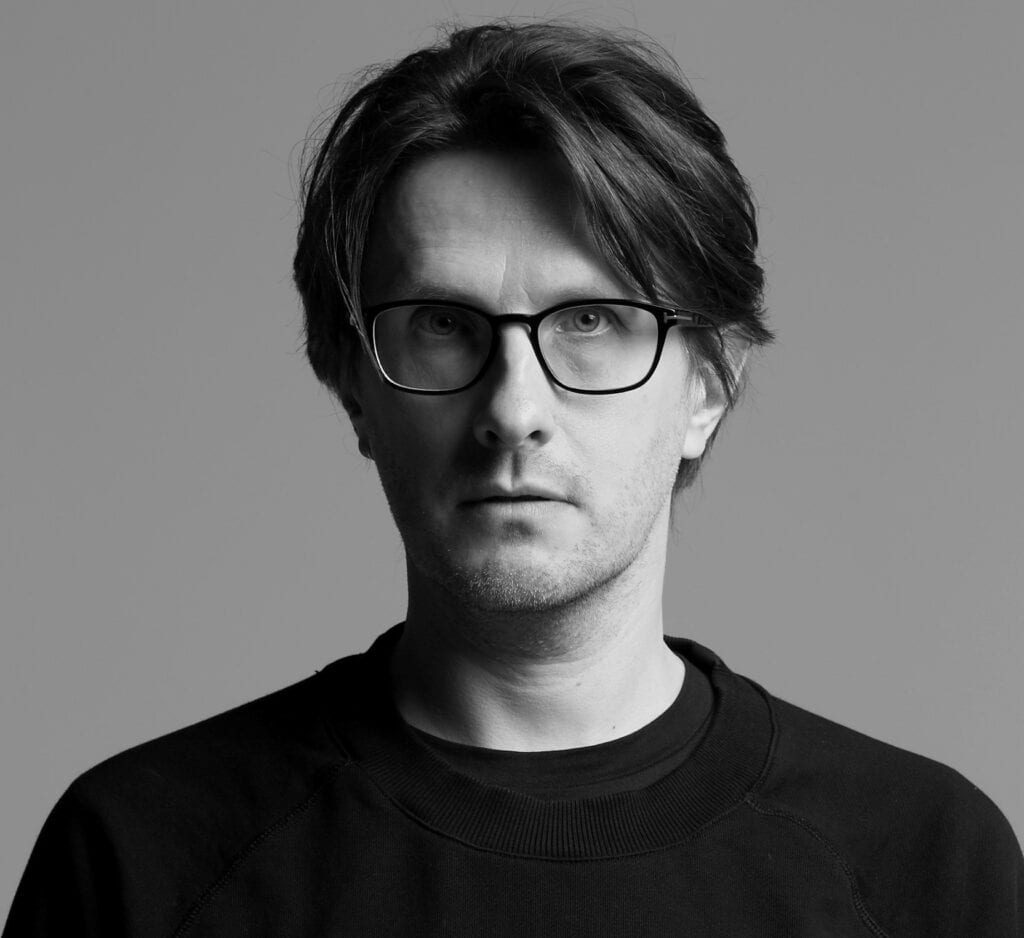
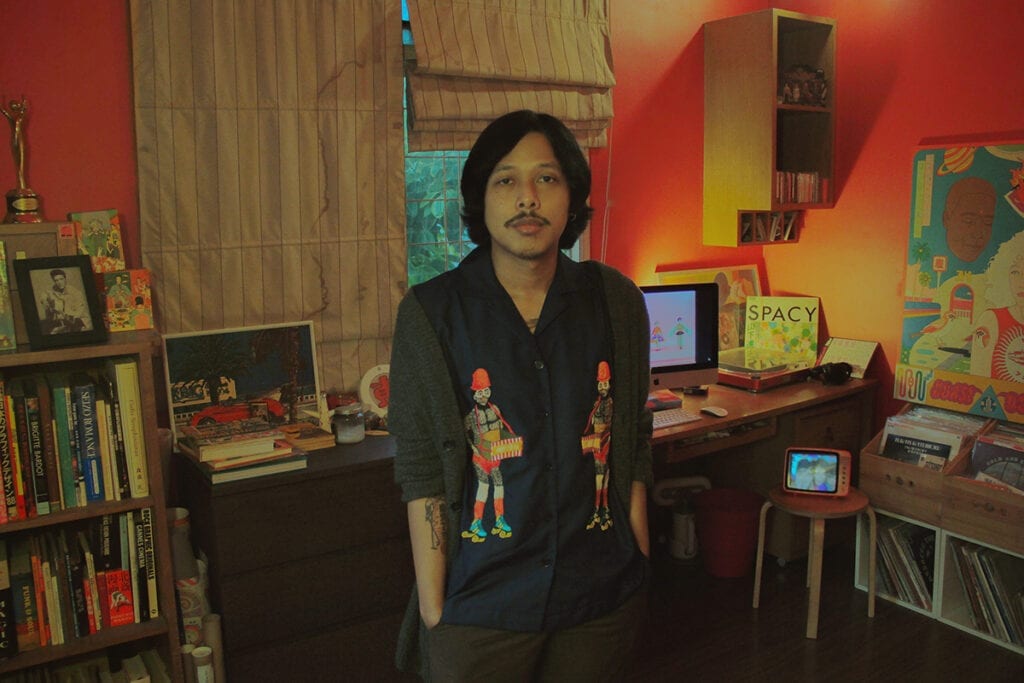
Sienna Dahlen (Photo: Ricardo Hubbs)

Dóttir is a female duo, a magnificent encounter between the emerging electroacoustician Véro Marengère and the renowned singer, composer, improviser, writer, and jazzwoman Sienna Dahlen. Two sound universes, two generations, two approaches, a common Nordic ground. This is certainly one of the highlights of the now-virtual programming of the Off festival de Jazz, presented in Montreal this weekend. 

Sienna Dahlen generously responded to our questions.

PAN M 360: Can you describe your interests in electronic music? Bands, artists, styles?

SD: Honestly, I haven’t listened to a lot of “electronic music” in my life! Over the past six years or so I have checked out people like Nicolas Jaar, Nils Frahm, James Blake, etc., and I love the ambiances that they create. Radiohead has always been a source of inspiration for me too. I tend to need more than just a “deep beat” to keep me interested in a piece of music, so melody, production, space, movement, direction, vibe, harmony to a certain degree, and colour are all of interest to me in this style. In general, I love experiencing darkness as a beautiful place to be, and artists that create this sensorial effect in their music have always attracted me. To a certain degree, this has also been a theme in my own work, whether it’s in the songs I’ve written and recorded over the years, or in this new project.

PAN M 360: What is your vision of jazz meets electronic, compared to those examples? Some jazz artists are interested to electronic instruments since the late sixties – all the musicians around Miles Davis during the In A Silent Way, Bitches Brew period, etc.; Soft Machine in the UK; Weather Report, Return to Forever, etc.; acid jazz in the 90’s: Galliano, Ronny Jordan, Groove Collective, Stereo MC’s, Gilles Peterson, etc.; drum & bass with jazz in the late ’90s – Roni Size, etc.; musicians recording for Jazzland Records in the late ’90s and early 2000s – Eivind Aarset, Nils Petter Molvaer, etc.; electro-jazz musicians: Cinematic Orchestra; hip-hop jazz electronic producers – JDilla, Terrace Martin, Flying Lotus – and so much more…

SD: I enjoy and have enjoyed listening to many of the bands/artists you’ve listed here… Miles, Nils Petter Molvaer, Weather Report, and Cinematic Orchestra, among others. I would add Sidsel Endresen and Bugge Wesseltoft to the list as well. I don’t really have a vision of what jazz meeting electronica should sound like. I am simply a result of all of the different experiences I’ve had. My work with people like Christine Duncan and other Toronto-based composers/musicians is where I was first exposed to spontaneous musical creation, extended vocal/playing techniques etc., and it was there that I was given a chance to explore my voice in a plethora of various ways. My work with DJ MHBee (Marie-Hélène Brousseau) in our duo Klardrøm saw me mixing those improvising and vocal techniques with pedals, beats, synths etc., bringing the electronic side of things into the mix. My background in jazz has taught me how to hear deeply. Creating contrasts, exploring timbre, improvising, knowing how to support and lead, etc. are all factors that guide my musical vision. In Dóttir, I have a desire to keep things raw and uncensored. This is not to say that I’m not always trying to put 150% of myself into this music but I’m excited by the possibilities of imperfection. I’m not concerned with my voice or the music sounding pretty. Sometimes it does, and that’s great too, but I’m trying not to make it a priority. I’m striving to tap into my authentic, primal response to the moment and to somehow sculpt something out of it that makes sense to me rather than imposing some sort of pre-constructed, intellectual direction on the outcome. 

PAN M 360: Is Dóttir – which means daughter in Icelandic, right? – a confluence between electroacoustic, experimental, ambient, and improvised music?

SD: It does mean daughter, and yes, I would say you’re onto something there…

PAN M 360: Tell us about your musical partner, Véro Marengère. Where is she from? Where is she based? What are her own tastes in music? What styles? 

SD: Véro is originally from Gatineau and she’s currently based in Montreal. We haven’t known one another for that long – we met in January of this year, thanks to Kathy Kennedy – so I’m reluctant to comment on her musical tastes but she has an extensive background in composing and performing electroacoustic music. Her bio says that she’s “finding a balance between digital processing and organic sources”.

PAN M 360: Can you describe some of your working sessions? The gear involved, each contribution, the whole spirit of this project.

SD:  The music on Mûremers comes from two or three jams that we did just prior to the lockdown back in March. In general, we enjoy the idea of playing and recording ourselves in a simple, low-fi, low-pressure fashion. We didn’t set out to create an album of this music however, which is why it has so much life to it I think. We simply wanted to document our explorations. Once we began to listen back to our sessions, however, we realized that there were many special moments, some long, some short, some explosive, some gentle and harmonious, some naïve and funny, some sad and brooding. We covered a lot of emotional ground in a short time! I have a very basic set-up. I use two TC Electronic guitar pedals that have delay, reverb, looping, and reverse functions on them, along with an SM 58A Beta mic. I also played some melodica and acoustic piano in our sessions. Véro uses various kids’ toys that she has inserted pick-ups into, several mini beat machines, controlled feedback techniques and pedals, as well as her voice at times. Because we didn’t plan to mix and release this music as an album, my mic and her sounds were all going through one channel on her mixer which made things a little tricky in the post-production stage, but we embraced the process and decided to accept “what was” as “what would be”. I added extra vocal parts to a few pieces and in some areas we layered bits from other moments in our jams to create a varied collage of sound but most of what one hears on the album was how it came out initially.

Véro Marengère

PAN M 360: Does this project have something to do with free jazz, but the textural spectrum is much wider than what we hear from acoustic or electric instruments?

SD: I feel that we’re sitting a good distance away from free jazz (as I know it) in this project. Certainly improvisation plays the largest role in what we’re doing though. My pedals are digital but I’m pretty sure most of Véro’s machines are analog. I also sometimes like to use an unaffected vocal sound alongside affected vocals through pedals so having two mics on hand is ideal. 

PAN M 360: Is it an issue for this musical path, often redundant in free improvisation with “traditional” jazz instrumentation?

SD: We’re not trying to fit into any category and therefore we’re not trying to adhere to any style. It’s not an issue for us. Not yet, anyways! 

PAN M 360: Is there a dramatic structure in those 10 pieces? How did you imagine this “storytelling”?

SD: As I mentioned, we did not set out to create an album or a story with this music. The narrative surfaced on its own and I believe it’s rooted in the mysterious beauty of nature and the absurdity of human behaviour. I think we all have recurring “themes” in our lives and as creators we often use art to express some of those themes. I try to always tune into whatever sort of emotional string is being plucked in me in any given moment and if I feel that spoken words are needed to enhance the story, for example, I will read from the various poems and texts I’ve written over the years but in a way that strives to feel fresh and new. Sometimes I’ll just start speaking, not aware really of what is going to come out. In other cases, I will draw out certain words or lines from books that have inspired me. 

PAN M 360: Are there some other musicians involved in the live version of this new record? 

SD: We will be playing with Claire Devlin (saxophone) and Ana Dall’Ara-Majek (theremine) for the Off Festival show, but otherwise we haven’t discussed involving other people in this project. 

PAN M 360: Can you see some precise achievements in this project? 

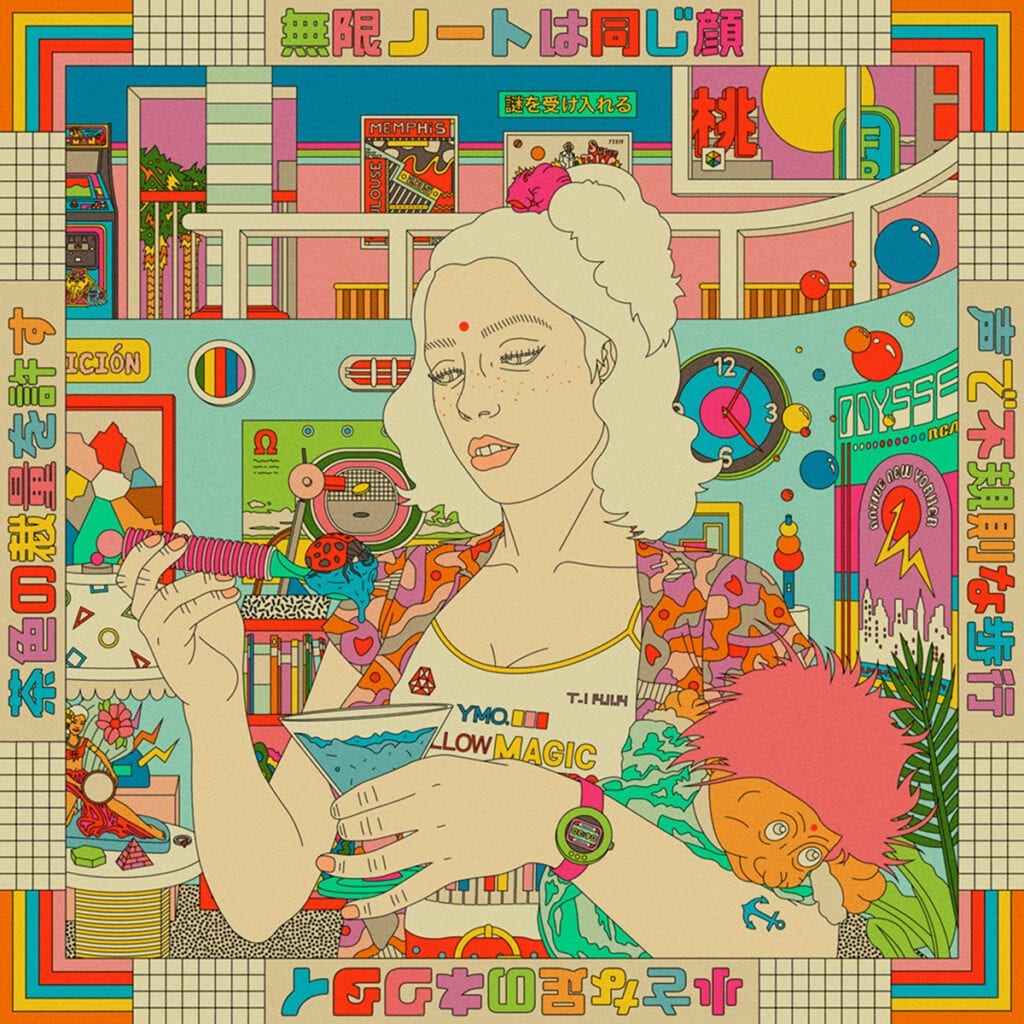
SD: From a work-ethic standpoint, I’m proud of the fact that we took the time to complete this project from a distance during the lockdown. The album was performed and produced entirely by us, including the cover image which Véro created, and this process was a first for me. I’m also glad that we are willing and able to bring this music to the public (!). The fact that L’Off Festival de Jazz booked us and Jeunesse Cosmique has agreed to help us with the release is really encouraging. From a playing standpoint, I’m proud of our ability to continually remain open to our internal voices and to greet those impulses with gratitude and confidence. I feel that Véro and I have fairly different musical backgrounds, along with a substantial difference in age, and yet we are somehow able to find common musical ground and inspiration, which is really gratifying and inspiring. 

PAN M 360: What about those apparently key words: Dottir? Mûremers?

SD: Because we both identify as women and we wanted an unconventional sounding name from a Nordic part of the world, Dóttir seemed fitting. As for how we chose Mûremers as a title, given that we’re a bilingual duo, we initially tried to find a bilingual title for the album. After going through several lists of titles though we eventually settled with Mûremers, which we thought some anglophones might mistakenly pronounce as “murmurs” and our music can sound like that at times so we liked that connection. In addition to this, we wanted the title to capture the organic and fluid nature of our music, hence “mers”, which also sounds like “mères” (and Dóttir, as you know, means daughter), so that was an interesting play on words as well. And finally, “mûre” refers to the fact that we feel that this music is ripe and ready to be experienced… and we love blackberries too!

SEE THE SHOW
October 3rd at 6 pm on L’OFF Festival de Jazz de Montréal‘s Facebook Page

A resident of his native Calgary at the time, Jean-Sébastien Audet gained attention under the pseudonym Un Blonde before migrating to Quebec, where he became known for his atypical approach to the territory of avant-pop. In 2018, he abandoned Un Blonde and chose Yves Jarvis. He’s on his second album under the pseudonym (and on the Anti- and Flemish Eye labels), and the material from Sundry Rock Sound Stock is the subject of an audiovisual performance broadcast on Pop Montreal.

“Yves Jarvis,” he explains, “is shorter and easier to pronounce in both languages than Jean-Sébastien Audet, my real name… which has never been an option for my career. When I started the project in Calgary in 2014, the name Un Blonde appeared in a group context. So Yves Jarvis describes the solo approach to my career better. On my birth certificate, Yves is my grandfather’s name and Jarvis is my mother’s last name… so it’s also my real name.” 

Jarvis’ albums and performances are iconoclastic. The choruses of his songs are linked by long sequences, bridges of sorts, many of which deliberately go beyond the harmonic and melodic conventions accepted by pop music, long since become redundant in this respect. On stage, the artist triggers structural changes in real time and constantly transmutes his repertoire. No change of direction is planned in the programme.

“I still like to experiment, even if the song form is traditional,” he confirms. “I like this slightly offbeat with abstract parts, I always want to change the context. I also like the impulse of the moment, I want the music to move. In live performance, it has always been important for me to stay tuned to my impulsive side and initiate changes in real time. I love working like that.”

To help us better understand his style, Yves Jarvis doesn’t hesitate to cite his pop, indie pop, electronic, Brazilian, and experimental influences, an archi-eclectic mix at the source of such a special approach. Here’s a brief selection :

“I have been influenced by a number of artists and styles: Brazil’s Walter Franco, Italy’s Franco Battiato, Jamaica’s The Upsetters (Lee ‘Scratch’ Perry) and the Kingstonians, Robert Fripp and King Crimson, the American country singer and guitarist Kacey Musgraves, the American songwriter Bonnie ‘Prince’ Billy, the rock band Guided by Voices, the first albums of Kanye West, David Byrne, Brian Eno…”

After long episodes of experimental freedom, brevity was the order of the day when Sundry Rock Sound Stock was created.

“It was very important for me to create long and expansive songs with bridges for experimentation. This time I wanted 10 very original songs, with lots of interesting fragments, but I wanted them to be more fluid and concise. In the end, there are fewer experimental sequences, so that people grasp the point better. My previous albums were easier to digest with headphones, but with this one I think it also works in cars, kitchens, living rooms… in any context.”

Yves Jarvis has himself chosen to be concise.“I didn’t receive any pressure from the record companies (Anti- and Flemish Eye) for that, there’s a lot of freedom in this album,” he says.

The recording sessions were conducted in the environment of the Tree Museum, located in the Musoka region of Ontario.

“I spent the quarantine period at my parents’ home in Montreal, and I’ve been living at the Tree Museum since July, so I plan to stay there until the beginning of winter. Most of the material was recorded there, most of my videos were shot there. Why the Tree Museum? Because my girlfriend’s aunt is the manager and gave us an artist residence there. It’s really ideal, there’s a lot of space. Last year, my girlfriend and I did an installation there together, we presented performances on the grounds around the museum – my girlfriend is also an artist; Romy Lightman, who with her sister Sari forms the experimental folk group Tasseomancy. She and I have a very exciting new project that we’ll be starting soon.”

Sundry Rock Sound Stock is a more compact album, but total freedom was nevertheless at the heart of the creative process:

“I wanted to live a production experience without walls. I often set up my studio outside, around the Tree Museum. I recorded and filmed what I was playing there, it became the foundation of this production. I developed other songs on tour, the lyrics came out of me in front of the audience. I worked alone as on my previous albums, I played all the instruments, I produced everything. This time, however, there are fewer overdubs, the focus is more precise. The catchphrases, melodies and chord progressions were better circumscribed, I improvised around them during the recording. I love the studio and recording experience, it’s an ecstatic practice for me, a great pleasure that I renew daily.”  

As for the lyrics, Jarvis likes brevity and an anti-conformist stance.

“Generally speaking, the themes of this album are against authoritarianism and the establishment, it was already prevalent in my previous lyrics. I express this position in general and abstract terms, I present them in the form of poetic reflections. My immediate and everyday reality is my main source of inspiration, there’s also a lot of self-criticism in it. From a formal point of view, I love to write in aphorisms, briefly.”

As for the concerts… we will have to wait until the end of the pandemic, with a few exceptions.  

“I would really like to collaborate with musicians, I have people in mind but I don’t know what will happen in the future… For the moment, I prefer to create in the studio, I’ll do it until the end of the crisis. For Pop Montreal, I recorded an audiovisual performance on a boat. I play on the water, it’s pretty cool.”

“When I was younger, in high school, I often spent my nights writing. I would wake up in the morning with big black circles under my eyes, so my friends called me ‘the raccoon’.” 

The year 2020 was a banner year for Raccoon. After being named Radio-Canada’s Hip-Hop Revelation 2020-2021, and publishing a monograph on systemic racism, he unveiled his third album, Le set up.

“This is a very good year for me, I realized that I got more attention than I thought,” says Shamyr Daléus-Louis. “However, the fact that it was a tough year for everyone was a bit detrimental to the branding.”

The quarantine caused by the COVID-19 pandemic is also at the source of the concept of Le set up.

“During the lockdown, there was a lot of negative energy in my head,” he explains. “I imagined it was like a big trap that we fell into. I remembered where I’d been and thought I’d seen worse.”

The rapper from Pointe-aux-Trembles wanted to push this trap concept as much on the substance as the form of the album. Working notably with French producer 94showtime, Raccoon has somewhat modified the mood of his music to make it more accessible.

I felt I didn’t want to do anything too aggressive, too dark,” he says. The productions that 94showtime sent me were very upbeat, very soul, very pop. It allowed us to make an antithesis in the music, with heavy subjects and a light atmosphere. »

In early summer, as a major movement for racial equality was taking shape here and elsewhere, Raccoon released the song 19-2 “in support of the troops who were demonstrating”.

“I come from a housing project in Pointe-aux-Trembles,” he explains. “Given the large majority of black boys living there, we were often subject to profiling. I wanted to be a model, to say that we can also use rap to talk about that today.”

However, the rapper abandons the issues of systemic racism and police brutality on Le set up, which is intended to be more introspective. 

“It’s really a project that concerns me personally,” he says. “Gentil pour un noir was an album to introduce myself. Le set up is more for those who already know me: here are eight tracks while waiting for the rest.”

Although he considers that he may eventually have to leave la Belle Province to make a living from his trade, Raccoon proudly defends the Quebec hip-hop scene. 

“I think we have the most complete rap scene. It’s wonderful, what’s happening with keb rap. The disadvantage we have is that we lack structure, and people who talk about us. We’re brand new and fresh, it’s normal that it takes a little time.”

From a personal point of view, Raccoon feels that he still has a lot to do in his career to move to the next level – and with that, the pressure that comes with his growing notoriety. 

“I can’t stay an emerging artist all my life,” he jokes. “My career is evolving and I’m under a bit of pressure to fill rooms and really make it.”

While waiting to make like Loud, his favourite local rapper – Raccoon is “fascinated by winners” – who boasts of only playing to full houses, Raccoon reminds us of his desire to remain authentic in his quest for success.

“My goal is to be the best, the one who sells the most,” he says. “I want to go as far as possible while remaining myself, with as little compromise as possible.”

A gifted singer, author, instrumentalist, composer, and improviser, culturally omnivorous, Thanya Iyer was born on the island of Montreal. Her family comes from southern India, and she’s been handed down the culture of the region. This is one of the transcultural materials of her cyber-songwriting art, a superb blend of human sounds and songs that was discovered in the middle of summer via Kind, an eminently appealing album on the Topshelf label. Her appearance on Pop Montréal should be noticed, needless to say.

PAN M 360: You grew up in the suburb Pierrefonds, where a large part of the Indian community in the greater Montreal area resides. First, tell us about your cultural origins and your Montreal journey into adulthood.

THANYA IYER: My parents immigrated to Canada in the ’70s and ’80s. My father’s from Mumbai, my mother grew up in Kerala. At a very young age, I learned the piano, then I studied Carnatic singing before switching to the Indian violin. There’s so much to learn! As a teenager, I formed bands and started writing songs. Then I enrolled at Vanier College to study the violin, and I met some great people there. Something always led me to music.

PAN M 360: Did you continue your studies in music at university?

TI: I did a major in music and another one in science, I have a bachelor in psychology. It took me a long time to get there because I was touring, recording, and composing during my studies, which I completed almost three years ago. When the quarantine happened, I started a music therapy program at Concordia University. Music is a powerful healing factor for so many illnesses! Last year, I had the opportunity to teach music and engaging songwriting to young people, which allowed me to heal myself because I was part of the process. Music therapy is a one-year program, possibly two. We’ll see when the shows will happen again… The core of my being is artistic? Yeah I think so. I love what the psychology program gave me, but I love performing, interacting with the audience is such a great feeling.

PAN M 360: How did this passion for music become a profession?

TI: In 2008, I started playing in different bands, writing songs, and with this band, six years ago. We played a lot in Montreal, small tours in Quebec and Ontario, and then we were invited to the United States for some film festivals. Then we realized we had to get a visa, which we did. We then traveled all over the United States and Canada until the pandemic.

PAN M 360 : Your music is not necessarily Indian, you’re inclined, rather, to mix a lot of things together. What is your vision?

TI: There is a bit of Indian music in my singing and violin playing, but this cultural heritage is only part of the sound; my songs and music mix everything I’ve learned. However, I have to remind you that Indian classical music always includes an element of improvisation and I was soon interested in musical improvisation. When I was a student in CEGEP and university, all my friends played jazz, I was even more seduced by the beauty of creating here and now, with what’s inside of me. I think that an important part of the sound of my songs comes from this freedom to improvise, even when we play live. With Daniel (Gélinas) and Alex (Kasirer-Smibert), who are my bandmates, I’m constantly imagining new motifs and melodic elements, the arrangements of my songs are constantly changing. Sometimes I make a mistake and the audience may never know because it’s part of the overall sound. And so yes, improvisation is an important part of it all.

PAN M 360: More specifically, who does what in your group, and how do you create together?

TI: Alex plays the electric bass, the saxophone, and works on electronic sounds; Daniel plays the drums and other percussion, he also programs the drum machine; I sing, play the violin and keyboards. Usually I give them a song and then we improvise a lot around its structure. The shaping happens by playing with each other, or even in concert. For Pop Montreal, we invited our friend Sophie, who creates beautiful visual projections, the music and the images generate a beautiful immersive universe. On other occasions, we invite artists who lead their own projects, for example, the guest horn players in my album. Yes, I love brass and woodwinds! And I’m actually getting into string arrangements, I think there will be a lot of them on my next album. 

PAN M 360: You like open forms. So there’s no question of sticking only to the versions of your recordings?

TI: We have different versions of my songs even though there is a basic form for each one. There’s always room for change, these things revolve around a form that we try to keep open. When COVID is behind us, by the way, I plan to present three different evenings at Café Résonance: one with strings, one with brass, one with a choir. It will be a real celebration, we won’t have to worry about anything.

 PAN M 360: There’s great formal work in your music. What about the lyrics?

TI: I don’t have songwriting models, my lyrics express what I feel… feelings and reflexions from my inner world. I feel something, I sing it! There are some metaphors in there but not so much, it’s still pretty straightforward in general. It does me a lot of good to express myself in this way, it’s very healing for me to do that! So I don’t think my songs fit into any model. Some of them are really composed, some of them are just one sentence, those songs are a lot like mantras. In the next album, I think that the lyrics will be a little bit longer.  

PAN M 360: By the way, how is your multi-genre and cross-cultural art perceived by people in your home community?

TI: Older people, friends of my mother’s for example, might tell me that they don’t get it.  On the other hand, many younger people and musicians from the Indian community understand and appreciate. So I can count myself lucky, because I always feel the support of the community. Very often in my concerts, I see a large group of fans of Indian origin. Having said that, my goal is really not community-based, even though I share a lot with artists of Indian origin living in Canada.

PAN M 360: How do you see yourself through your multiple identities?

TI: This is something I should think more about. I am very connected to Montreal… I can see myself as a settler who immigrated here, living on someone else’s land. That’s why I try to see where we are and remember who we are. But for sure, Montreal is my home. It’s really great to live here, it’s the best!   

Photo: Jean-François Cyr

Sé Montreal, sé Haiti, sé Creole, sé kompa, sé electro cumbia, sé tradition mixed with very contemporary music. Released on March 25, Fwonte’s recent eight-track album, Danser avec mes démons, can finally be heard in a concert hall. The artist was just waiting for an opportunity to infect people with his smartly crossbred music – Pop Montréal will be the launch pad for this record released at the beginning of the pandemic. Kerns Olibrice, alias Fwonte, is one of the festival’s guest artists, and he’s very happy to be part of it. 

“When I saw what was happening around the planet,” he says, “I decided not to have too many expectations for the new album. Things were going to happen eventually… I just had to be patient. I released my album, just as it was supposed to be. I was pretty sure it would find its way, pandemic or not. Anyway, I didn’t expect my album to produce a global explosion. In spite of the crisis, people interested in my work found and heard the new songs… In fact, they listened more to these songs than to those of my previous projects. The majority of people said that this is my best album (laughs). That’s good (laughs). I want to take another look at tradition, I want to take my Haitian culture further, somewhere else, I want to shed new light on the music of my native country.”

Photo: Jean-François Cyr

Danser avec mes démons, for the first time

Due to the crisis caused by the coronavirus, the album was never presented as a stage show.

“This will be the first time I share my new songs in front of a live audience. I’ve never played at the Rialto, but I know the place well. I’ve already been there to attend different concerts. For my show, the audience will be limited to about 30 people. I think they will be standing, as long as they respect the sanitary measures. What I do is danceable. I just hope people can move around a little bit! I think there’ll be enough space for them to have fun, despite the restrictions.  Normally, at my shows, people are moving from start to finish…”

In order to share the songs from the album Danser avec mes démons, Fwonte will be accompanied by two people on stage: “A DJ will take care of the sequences, while another will be in charge of percussion and drums. I’ll take care of the vocals and the atmosphere. I might have some fun on the drums here and there. In fact, I’ll adapt to this particular crowd. One thing is certain, this 30-minute concert will allow me, in amore limited context, to evaluate how people react to my new songs, in concert…”

Photo: Jean-François Cyr

Eventually, Fwonte would like to present a large-scale show that would be ideal for certain festivals.  

“To celebrate the tenth anniversary of my arrival in Montreal, I’ve been working on a mega-show concept including Afrobeat dancers and several musicians (including the addition of an electric guitarist and a keyboardist). I also asked for help from some producers. Because of COVID-19, however, I put this project on hold. It will come…”

Fwonte’s most recent musical work, at once dark and joyful, is made with respect for Haitian traditions, certainly, but it’s infused with a good dose of avant-gardism that will allow most spectators to find something they like during the performance scheduled for the Pop Montreal festival. At least we hope so. Better yet, we believe it.

At the Pop Clubhouse (Rialto), Friday, September 25, 6 p.m. 

Photo: Jocelyn Michel

French chanson, electro-pop, disco, funk, krautrock, space rock, French Touch, jazzy balladry. Is the poetic-techno journey of performer Marie Davidson over? Isn’t the electronic component of the album Renegade Breakdown tenuous for an artist associated with the sharper edges of digital creation? 

Nevertheless… listen carefully to the previous recordings of the musician, writer, composer, and performer. Several popular styles that can be spotted in the mix of her new opus were already present beforehand. This time, however, the pop lights flash much brighter.

Are they likely to dazzle, or blind?  

No matter what fans of the Montrealer and her two acolytes from L’Oeil Nu will think, the choice is perfectly clear – as evidenced by this conversation with Marie Davidson, Pierre Guerineau (Essaie Pas, Feu Saint-Antoine) and Asaël Robitaille, producers of Renegade Breakdown, officially launched on September 25 under the labels Ninja Tune (world) and Bonsound (Canada).

PAN M 360: We crossed paths a few months ago and found out about your admiration for Fleetwood Mac, which might surprise many. Where does this taste of pop come from?

Marie Davidson: I’ve been listening to Fleetwod Mac since I was 17, it’s really nothing new. I can tell you almost everything about Stevie Nicks! (laughs) As a music lover, I really know jazz. Our song “Just In My Head”, by the way, is a jazzy ballad that pays tribute to those influences. Also, I became aware of contemporary music because of D. Kimm (my mother) when she was performing poetry shows with avant-garde instrumentalists.

Pierre Guerineau: Well beyond electro, we listen to all kinds of music – rock, punk, French chanson, jazz, classical, etc. For several years we explored electronic sounds, rhythms, textures, but we always remained fans of good songwriting. 

Asaël Robitaille: For my part, I have a background in composition, Serge Provost’s class at the Conservatoire de Musique de Montréal, I know contemporary music from the classical tradition, then I branched out into prog, jazz fusion, ambient, film music, and more.

PAN M 360: When an artist associated with cutting-edge trends goes pop, how should they go about it? Is there a risk of losing out on all fronts, on the cutting edge and on the mainstream? 

PG: We’ve discussed this among ourselves and indeed, we concluded that we’d ignore this risk. Before this album, we’d worked on the rhythms, the textures, the sound design, we wanted to go back to song creation. So our refinement acquired in electro is at the service of solid songwriting. We know that this is our strongest work.

MD: Yes, it’s very different from previous albums, but we were willing to take the risk. In terms of audience reaction, it’s out of our control. By maintaining the same style to absolutely please the audience, the music can lose its soul. I’m known for not compromising, neither are Pierre and Asaël. We’ve done the work, we like this album. We know that Renegade Breakdown can seem slightly disparate, but we find a real cohesion. The link is my voice, my stories, my expression. 

PG: There’s a variety of genres in this album, we don’t have a problem with that. People listen to all kinds of music today. People are thirsty for it. Personally, I get bored after three or four songs when an album is monolithic. What stands out is honesty, sincerity, hard work, integrity.

AR: There’s not as much risk as that, it seems to me. The first two singles on the album are closer to club music, they are a bridge between what we know about Marie and what follows. It’s a culmination, I think, of the work done in previous years.

PAN M 360: What is the distinction between Marie Davidson, L’Oeil Nu and Essaie Pas ? 

MD: After New Path, we decided to put the Essaie Pas duo on indefinite pause. I had signed for two albums with Ninja Tune under my name, I couldn’t change the deal to the second one. But the people at the label knew that the second album would be recorded with a band, they were really excited about the idea. 

PG: So there’s Marie the frontwoman and there’s a band behind her, L’Oeil Nu. What’s different from the previous recordings is that Marie’s voice and writing are behind the songs.

AR: There is a distinction to be made between Marie and L’Oeil Nu. Already in 2011, Pierre and I started this project. We had then undertaken to create a song each night inspired by the European soundtrack of the ’70s – Vladimir Cosma, Ennio Morricone, Francis Lai, Serge Gainsbourg, etc.

PG: We’d recorded demos that remained dead letters, with a few exceptions. Then we started talking about a pop project with Marie. 

MD: That was in 2015. We finally started work on January 5, 2019, we worked on it for a year and a half.

PAN M 360: In Essaie Pas and Marie Davidson’s solo projects, we observe elements of French pop, electro-pop and other mainstream sources in which you dip your electro experiments. This time, the pop side is more present than ever. How did you organise all this?

MD: We didn’t look for a style or a type of instrumentation, we looked for energy and expression itself. If we felt something, it was okay. For example, “Worst Comes To Worst” is disco funk, “Renegade Breakdown” is disco rock, “Center of the World” is influenced by Robert Wyatt’s album Rock Bottom, among others. You can hear Pink Floyd as much as you can Mylène Farmer or the Skatt Bros. It’s the expression of our pop universe.

PG: That was the idea: we would make a pop/songwriting album, and it took all these forms. But it’s still who we are, it’s done in our own way. 

PAN M 360: What was your methodology? 

MD: Until now, my work has been based on creating rhythmic and melodic sequences. This time, I wanted to get out of the loop and bring back “real” instruments. I would come in with my melodies and lyrics, and they would play the rest. I hardly played any instruments but we were always together in the studio. 

PG: So Marie would record the skeleton of the songs with her dictaphone and come with us to the studio. Relatively limited means forced us to use virtual instruments, in part.

AR: Specifically, the harmonium, woodwinds and strings are virtual, while the keyboards, guitars, bass, and drums are real for the most part. 

PG: Asaël plays several guitars and keyboards, Guillaume Éthier (Chocolat, Bernardino Feminelli) plays drums, and with producer Dominic Vanchesteing we worked on some band sections… Studio Crow, Jackson Macintosh, bass and guitar, Asaël, guitar and keyboards, Yair Elazar Glotman, double bass. 

MD: Jesse Osborne-Lanthier joined us, he took part in the arrangements, mixing and post-production.

PG: When you’ve been working for several months on an album, it’s good to have the ear of someone you trust. It’s always a great help, and that was Jesse’s role.  So we created hybrids, with real instruments and with virtual instruments. At the end of the day, we really like this postmodern side.

PAN M 360: The lyrics to Renegade Breakdown‘s ten pop songs aren’t too rosy, are they?

MD: I had a lot to tell about my life over the last few years. These songs talk about my artistic career, my work, my relationships, including my relationship with Pierre, and also my relationship with myself. Among other things, I talk about my feeling of isolation. Very often I was alone on tour, alone in my hotel room, alone at the airport, alone in the club, alone with drunk or high people, alone in the line of toilets, alone at customs with my equipment, alone with myself. It’s also an intention to get to the point, to be more intelligible and more vulnerable. For example, the track “Lead Sister” pays tribute to Karen Carpenter (The Carpenters), who died of anorexia. It has something to do with my personal background; I used to be anorexic, I’ve been in remission for several years, but it’s always going to be sensitive. 

PG: For “Lead Sister”, we worked a bit like Gainsbourg, that is to say, by transposing a classical melody into the public domain. We took up the Adagio by the Italian baroque composer Allessandro Marcello. When Marie arrived with the text, it set the tone, we treated it with inspiration.

MD: It’s a nightmarish song. Anorexia can lead to death. It’s the descent into hell for the quest for perfection and performance, it’s so destructive! In addressing the obsession that killed Karen Carpenter, this song stems from the spirit of the album Working Class Woman.

PG: That’s why we’re taking “Lead Sister” and “My Love” from self-deprecation to self-love and remission. It moves me enormously.

AR: In fact, this sequence was better positioned at the end of the album, because it’s a death followed by a resurrection. 

PAN M 360: This album has three songs in French and one bilingual, among the ten. A deliberate choice? 

MD: Bilingualism is very important to me. French is my mother tongue, the one I know best. English is to be understood by anyone. From the beginning, we have been aiming for an international career, we have never been interested in being stars only in Quebec. We love to travel, we have friends all over the world. This doesn’t prevent us from honouring our cultural roots.  

PAN M 360: How will all this translate on stage?

MD: There will be four of us for the show, when the public-health conditions are favourable for going on tour, obviously. Pierre and Asaël on keyboards, guitars and electronics, and me on vocals. A drummer will join the band. And when our budget allows it, we’ll hire a bass player. 

AR: I’m the only one to have played several instruments in real time over the last few years, Pierre hadn’t played guitar for five years before getting back into it. It was laborious at the beginning, but with each rehearsal, he finds his bearings and skills again.  

PG: So it’s going to be a hybrid form. Instruments and computers. I have the impression that more and more people are fed up with music performed in front of an audience without instruments. 

AR: We want to do the concert hall circuit and not really the club circuit. Because that wouldn’t make sense with the instrumentation we have now. 

MD: We’re going to change the context of presentation, we’ve already switched tour management to do so. Until then? We’re concentrating on the music.  Turning point ? I hope so !

Boogieman and Samito have the honour of closing 2020’s hybrid edition of MUTEK, up just before the final performance, by Poirier. That’s a stage that’ll turn up the heat. Remaining seated will be a challenge for the spectators in the hall, taunted by the roaring bass of the duo’s flagship title, “Wasa Bibi”, and by the solar energy of the two companions, accompanied by VJ Danica Olders. 

Longtime friends Boogieman and Samito hadn’t planned to work together. Things happened naturally. The former brings energetic analog compositions, the latter, lyrics sung in Portuguese, the official language of his native Mozambique. A unique blend, explained in detail during a videoconference meeting (a first for all three of us).

PAN M 360: “Kussom” is the name you give to the musical genre you’ve created, can you tell me more about its meaning? 

Samito: Basically, it’s a mix of genres of music and the word som, which is “sound” in Portuguese. What happened was that when we started working on the second song with James [Benjamin, aka Boogieman], I realized that some of the beats he had created made me think about batida, which is a sound from Angola. It then became closer to kuduro, and so the first syllable was the ku and then I put som after it, which is a ku-som, so meaning the “sound of the ku”. 

Boogieman: Calling it a name gives us the possibility of having a grasp on what we’re doing, which is to create a new sound. Exploring something new in a world such as music where there’s so much thought given to the analytical aspect of music and where you fit, what it is, what genres are combined… I found it harder to classify, especially with us working together, so by classifying ourselves we can kind of preempt a little bit of that conversation.

PAN M 360: There are also Japanese cultural elements in your “Wasa Bibi” video, are there other important influences that feed into the project? 

Samito: The breeding ground of all sound is Montreal. When we worked on that video – actually we didn’t do it, it was a 17-year-old who’s now 18 – we wanted to open the platform for him to create and explore different directions, just as we were. His generation compared to mine is more into Japanese anime, and he wanted to go there. I think we live in a city where we can experiment with many things and there are many growing influences.

PAN M 360: You are not just creative collaborators but close friends, how do you work together?

Boogieman and Samito: Really, there’s no process. We spend a lot of time together. When we’re at the studio and we start playing something, if we find it interesting, we jump into it, and then suddenly it starts gaining life. It’s more a jam in the process. If we can talk about “Wasa Bibi”, it was really joking around, like singing Danica Olders’ artist name, “Wasa Bibi, Wasa Bibi”… and it made it all the way to the final thing, we weren’t really able to replace it. You can’t fake that kind of feeling or recreate it, it’s spontaneous and authentic.

Samito

PAN M 360: Samito, you’re a musician trained in music school. Boogieman, your learning comes from outside the institutions. How did you manage to combine your approaches? 

Samito: I think for me, it was very easy because if you look at things that I did before, I’ve always been more interested in exploring certain possibilities of sounds, or getting a different rhythm from somewhere else, and then put it in a context that is completely opposite, to see what comes out. I think the first time when Boogieman called me, he was like, “I have this modular synth, I want you to come see it.” I went to his place, I was like, “I think there’s so much that can happen if we open our minds and just dive into it .” And we did. 

PAN M 360: Your visual signature is as colourful as your music, it ’s the result of a collaboration with Danica Olders.

Boogieman: The whole visual aesthetic of Boogieman is pretty deeply ingrained in collaboration with Danica; her vision, her aesthetics often go against the grain. I think the sound of the project is so open that it actually allows place for someone who can take it even further. She’s really a multidisciplinary artist. 

Boogieman

PAN M 360: How’s this visual dimension going to be expressed during your performance?

Boogieman: We have the intention of taking people on a bit of a trip! Like the fact that you might see nothing at times… Not to give away too much, but it is just as impactful as all those things you see. I think that’s cool because it leaves room for the sound to be experienced, and then at times, the sound can be very minimal and the visuals can take over.

PAN M 360: You’re performing dance music, music for the body, how do you feel about playing in front of a very small, seated crowd?

Samito: I don’t know, what I’m telling myself is, whatever’s going to happen is a challenge in a new way of making music. I don’t know if jumping around and dancing for me will make sense, I don’t know how people are going to react. It’s almost like we have to re-learn how to play a show, and also learn how people will fit in. It can be exciting!

Danica Olders

Particularly prolific, with an album and several EPs released during the past year, Priori (Francis Latreille) expresses himself under different pseudonyms. Recently with RED, the most “spontaneous” according to his friends, he is also half of ANF, MSL, and Ntel. The Montreal producer also set up the musical project Jump Source – which doubles as a recording studio – with Patrick Holland. With Adam Feingold, aka Ex-Terrestrial, he heads the NAFF label, whose tenth release is scheduled for the end of the month.

In the manner of a space explorer, Latreille invites us to discover his solar system of techno, IDM, deep house, acid, dub techno, and even breaks (a non-exhaustive list). Impressed by his ability to take us in different directions without ever getting lost or compromising on the quality of his productions, PAN M 360 connected with Latreille just before his 30th birthday, and a few days before his second appearance at MUTEK.

PAN M 360: How do you compartmentalize, or tie together, your different musical personalities?

Francis Latreille: For me, it’s really just a way of being able to make music every day. I think that if I only had one project and I was always trying to have a unique style, I wouldn’t be able to do it, because my state of mind changes too much. I almost always have several projects going at the same time, it’s difficult to work on just one album, for example. We absorb what’s around us. It changes from day to day, so I listen to my emotions and see what happens.

PAN M 360: Among your latest projects, there are many remixes, the one you did for Gilb’R and Ariel Kalma, but also an EP of tracks from your album On a Nimbus, revisited by Roza Terenzi and Beta Librae among others. Remixing is a founding principle of electronic music, how do you approach the exercise?

FL: It’s like a nice way to trigger potential accidents that wouldn’t have happened otherwise, to fall in a direction you would never have gone, and I find it really interesting. Gilb’R wrote to me once he finished the album with Ariel Kalma and it was just great fun because they used a lot of instruments that I don’t usually work with. For the remixes of my album, you can recognize the sounds I chose, but it’s so far from the originals! The artists did what they wanted and they put their personality into it, so I think it’s beautiful.

PAN M 360: I’d like to come back to the notion of accident, is it something that’s part of your daily creative process?

FL: Electronic music, as I know it and as I imagine it, is the experience of being able to set up parameters that allow experimentation and that will take us to interesting places. It’s a lot of trial and error, except that with time, we make better trials, therefore better mistakes (laughs). It’s done with time, we learn by putting out records, we see the results. We set up better parameters, we settle better into our practice and we are more likely to catch the good moments, to recognize them when they arrive.

PAN M 360: You pay particular attention to science fiction, and your inspirations are numerous on that side. What is the place of images in your creative process? 

FL: It happens while I’m creating. I often have an image in front of me when I make music. I start with an image or something I’ve just read. It could be a video game, a film… I’ll immerse myself in a scene, an image that can be very blurred or very precise, and in a way it dictates the mood. The idea can then be extended by the vision of a graphic designer– with NAFF, we collaborate a lot with Jesse Osborne-Lanthier.

PAN M 360: Have you ever made music with images? 

FL: No, maybe eventually. Soundtracks are always something I’ve loved, I often watch a film just for that!

PAN M 360: What was the last soundtrack that made an impression on you?

FL: A friend of mine recommended a short animated film recently called Noise Man Sound Insect (1997), by Koji Morimoto. In the soundtrack, there’s some jungle from the ’90s, I think there’s some Photek, some Aphex Twin, several mythical artists from that era. And I think the parallel between the music and the visuals is absolutely incredible. It’s really an experience to watch.

PAN M 360: Your performance at MUTEK is going to be a bit special, how do you feel about playing in front of a seated audience?

FL: I didn’t know until recently how it was going to be, the details anyway. I started to prepare a set with no idea how many people would be there, how they would be seated. Of course, at this point, I can’t really change what I do to accommodate that, but I hope the music will speak for itself, it can be enjoyed without necessarily having to dance. 

SEE THE SHOW

Photo: Manuela Martelli

Based in Montreal but originally from Valparaiso, Chile, Gabriel Vigliensoni enjoyed some success in his native country in the late ’90s with the alternative band Lucybell, and then the electro-acoustic band Mismos. This former student at the Santiago Conservatory began his solo career with Nata in 2004, an album on which he experimented with techno and breakbeat. He also explored vocal-oriented songs on The Animal Kingdom in 2014, and blended krautrock and electronic music with Jaguar the following year. With a PhD in music technology from McGill University, Vigliensoni has pursued in-depth studies of the design of new music interfaces and music recommendation algorithms.

For his appearance at MUTEK this year, Vigliensoni presents the premiere of Clastic Music, a largely improvised performance for which he teamed up with fellow Chilean Eduardo Pérez Infante to create a web application that allows the audience to modify the visual component of the show as they wish. PAN M 360 spoke with the musician, artist and researcher to discover the meaning of his unique approach.

(Photo: Bruno Destombes)

PAN M 360: Reading your press kit, we learn that you’ve touched on all kinds of music before coming to the Clastic Music project. Can you briefly retrace your career for us?

Vigliensoni: I come from Chile. I started there. I participated in a few bands, doing mostly rock and pop. I was playing keyboards. Some of these bands were popular, in a way. We worked with EMI, Warner, and others, and eventually I started liking more electronic music, stuff like Autechre, Aphex Twin… Then I started working with some friends making electronic music, but mostly with instruments like vibraphone, stick bass, double bass, and things like that. But I’ve also been playing always with synthesizers and drum machines. I did a path from playing with physical instruments to computers, and then I went back to more physical instruments because I don’t like to just stand there playing with my computer and a mouse. I like to embody music.

PAN M 360: Your new project is called Clastic Music, what’s it about?

Vigliensoni: “Clastic” is a geological term in which different layers of rock and sediment make something new. The analogy for music is that I am building from other musicians’ work to create my own. I’m actually learning the intrinsic features of rhythms in order to create a machine-learning model, an AI model which I play with. So for MUTEK, I will play just unreleased material and it will be very improvised in a way.

PAN M 360: You’ve given serious thought in your studies and research to the design of new music interfaces and music recommendation algorithms. Can you tell us more about this?

Vigliensoni: I am always curious about new ways of playing with music. I think there’s always space for improvement in the way we interact with music. As I said, I’m not using the computer a lot when I play because I don’t like how it interacts with music. I don’t like to look at a screen in order to play music. In that sense, I’ve been building this device which allows me to explore a data set of rhythms in a different manner. The way I work with this is that I collect a bunch of clips of rhythms and then, by using a machine-learning device, I learn the characteristics of these rhythms. And then I map these rhythms into an imaginary space with which I can explore in real time. 

PAN M 360: How long did it take you to develop this process?

Vigliensoni: I’ve been working on this since last March. The tricky thing about software development is that it’s endless. You always have a new thing in mind, and then another one. So there is a very fine balance between actually making music and coding something. But the nice thing is that one informs the other. If you just keep doing software development, it’s kind of boring and pointless, but if you are switching from one to the other, it gets better.

PAN M 360: Your biography states that you are turning the process of making a record into a playground for learning and experimentation. How do you achieve this?

Vigliensoni: I don’t like to repeat myself in the workflow of creating music. The way we usually work these days for making music is that we go to a computer, we open the Pro Tools or Ableton or whatever we want to use, and then we start building our song, and if we don’t like something we just undo it and then start again. But I’ve been getting sick of that workflow, so what I’ve been exploring lately is getting rid of the computer and just doing it à la old school, in a way You record a track but you cannot just undo it, and you have less possibilities of editing. To do it properly, you have to rehearse more. I use the computer to write emails and other stuff like that, but I don’t want to use it to make music. 

PAN M 360: You prefer to work in a more physical way, finally. 

Vigliensoni: Exactly. For me, music is physical. Yes, I like ambient stuff, but I like to be more on top of things. So this idea of changing the way in which I interact with music is important to me, finding what the best workflow is that fits certain ideas, or what I can do to make this process different…

PAN M 360: You teamed up with Chilean artist Eduardo Pérez Infante to create a web application with which spectators will be able to modify the visual components of the show.

Vigliensoni: What we want to do is, while my music is being played, you can have a browser open and the visuals will react to the music. There is a component of interactivity, so the audience at home can, for example, move the mouse from their computer and change the visuals in real time along with the music. When MUTEK offered for me to play at the festival, I started to think, what can we offer for a hybrid-mode festival? To be honest, I think streaming is very boring in general, so I thought of offering a kind of browser-based game or web application to enhance interaction with people. That’s what we will try to deliver. So, you can be your own VJ in a way. 

PAN M 360: Do you intend to make this project available after your performance at MUTEK?

Vigliensoni: Yes. The idea is to release the music as a web-based application. I don’t really believe in those streaming services, not at all in fact. I like the concept of having access to a large library of music but don’t like the concept of neverending recommendations, so that you don’t really know what’s actually playing if you’re not in front of your computer. I have a PHD in music recommendation so i know a bit about that! And I also don’t like the payscale for musicians. So I’m even considering not even releasing this on Spotify or iTunes, because there’s no point. It’s much better on Bandcamp, because you have control of your stuff, you receive much more money, you can have all your discography, you are in charge of uploading your music, you know exactly at which level it will be played back…  So having a way to allow people to play and interact with your music, I think it’s interesting, you’re offering something different. I believe it’s important to think about new ways to bring music to people and give them a different concert experience, because it’s quite possible that the situation we’re in right now will continue for a long time.

Haitian heritage, bilingual Montreal culture, strong interests in experimental music and fashion design, sexual fluidity… From adolescence to adulthood, Tania Daniel gradually became a Tati au Miel, and the 23-year-old artist is about to pulverize all the stereotypes in her path, and contribute to the actualization of black identity.

PAN M 360: Let’s start at the beginning, with a summary of your journey.

TATI AU MIEL: My family is Haitian, I was born in Montreal, and grew up in the West Island. I visited my relatives from the Haitian diaspora a lot in different American cities, so I have a good grasp of English. Musically, no one around me liked what I liked, so I grew up surfing the internet, I discovered several musical styles on my own. I studied cinema at Dawson College and, around the age of 18, I decided to make music. My life as a young adult in downtown Montreal allowed me to discover its experimental DIY scene, and become a DJ, and then a composer and producer. I also design clothes, I did it notably for Klein, an experimental artist from London who shared the stage with Björk. By working with such artists, several creative visions have enriched mine. I have been able to count on real support from the creators I have worked with up to now. 

PAN M 360: How did you go from DJing to composing? 

TAM: In the beginning I DJed because I didn’t know much about music production. But I intended to compose, to start my own projects. My experimental, techno and industrial influences were already there as a DJ, I think of Moor Mother, Crystalmess, Dreamcrusher, Merzbow, Keji Haino, etc. I had a lot of influences in my head. I continue to develop my own style, I would say that my next recordings will be marked by noise. The more I put my music online, the more precise it becomes and the more I get approached by different broadcasters. 

PAN M 360: Our propensity for stereotypes leads us to think that your approach is a departure from the idea of black music. What do you reply to that?

TAM: It all depends on the stereotypes we have! You know, I was introduced to instrumental music by black friends, I really don’t believe that experimental music has a skin colour. For sure, black experimental music artists influence me, that encourages me to continue and maybe get in touch with these artists and maybe collaborate with them. One of my aspirations in life is to make unusual music, that’s for sure! I try to deconstruct sounds and noises of all kinds, recorded in the street or everywhere I go, and then turn them into original works. I dare to believe that the authenticity of my work can be seen through my projects. 

PAN M 360: Is the sexual fluidity with which you identify reflected in your music?

TAM: It is not for nothing that my first EP is entitled The Exorcism of Tania Daniel. Exorcism has an often negative connotation, I wanted to see it as a positive and spiritual rebirth. There are references in my art to the queer/trans/LGBT community, as well as gender-fluid black people, that bring a lot of positivity to my personal experience. 

PAN M 360: What is the project that you’re presenting at MUTEK? 

TAM: The Tati au Miel project, a nickname inspired by Tania Daniel, explores my vision of noise and puts forward experimentation. For MUTEK, I want to create an atmosphere involving all sorts of emotions emanating from unusual sounds. I am planning a 45-minute set, truly unique for the event, built from my sound bank that I have built up over time and also with my instruments – Ableton, midi controllers, etc. – which I will use to create a unique sound experience. A special guest will also come up to sing on two pieces. I’m also working with Maiko Rodrig on this project, one of my closest collaborators. We will soon be launching the Trademark collective, which will showcase different artists in experimental music. It’s all about creating a sense of community and recognising each other, because these artists are unknown and often difficult to spot. My life continues on this path.

MUTEK OFFICIAL WEBSITE

Photo: Lucas Paris

Both a composer and visual artist, the Quebec artist designs and builds interactive objects that react to the movement of the user in real time. In this case, himself. Hypercube is the most recent of these objects, once again coming to life in front of an audience, or on your screen.

Langevin-Tétrault is behind the conceptualization or co-design of various projects appearing internationally – Interferences, Falaises, DATANOISE, QUADr, ILEA, BetaFeed, Alexeï Kawolski, Recepteurz, and of course Hypercube, presented this Wednesday at MUTEK Montreal.

The works of this Baie-Comeau-born artist constitute ecosystems involving audiovisual devices based on cutting-edge digital technologies, but also on both physical and theatrical interpretation. 

Why does an electronic music composer choose to become multi-disciplinary? 

“I studied digital audio composition at the Université de Montréal,” says Langevin-Tétrault. “Before going into these studies, I was a guitarist and keyboardist in rock bands, I had a relationship with the stage. I really enjoyed learning how to compose, but I missed that connection to the stage. I like the exchange of energy that happens only when an audience is in front of you. But I found it difficult to recreate this energy by manipulating only a computer on stage. I missed being able to move, to use the whole space. I wanted movement on stage to be part of the performance.”

He’s been working on this project for the last six years.

“I try to create devices that allow me to interpret in real time. Electroacoustic instruments don’t exist, or are very rare, they’re usually controllers with buttons. So I decided to interpret through gestures, and therefore through a physical relationship with audiovisual objects whose sound and light I control in real time. 

“I used to broadcast my music on the Internet,” he says. “I used to make electronic music where I was inspired by both experimental codes and more popular electronic music. In the studio, I worked a lot with modular synthesizers, a kind of continuity of the IDM trend – an expression I don’t like that much…”

Langevin-Tétrault interacts with devices that, he says, have a personality of their own – well, almost.

“This performance is the result of my relationship with the device that manifests an appearance of behaviour. I am not the only one doing the show. Hypercube seeks a balance between planned performance and moments of free improvisation. It is important for me to have this freedom to improvise. At the same time, I don’t want it to get too confusing. I still have a direction during the performance; different predetermined signals or points keep me on track. It’s important that there is a coherent dramatic arc. I’m free to do what I want to do, but I try not to get lost in the performance.”

Langevin-Tétrault is aware of the risk of working with state-of-the-art digital audio equipment, because there is always the trap of technical prowess… not necessarily at the service of a conclusive work. 

“I worked in the studio for a long time to make sure that it sounds good, that you can listen without seeing and be satisfied with the audio. The idea is not to make a kind of big buffet and demonstrate the full potential of the object, but to stay within the same aesthetic and present a coherent work from beginning to end. Technology is a tool, not an end in itself. The objective is to express something.”

Photo: Lucas Paris

Langevin-Tétrault notes that advances in computer technology and access to laptops that have become very powerful are driving this advance in artistic expression.

“Not so long ago, the possibilities of real-time interpretation were limited, computers did not have the same capacity. Now, if you have any programming skills at all, you can do quite complex things in real time. At the end of the day, it’s not so much technology as imagination and mastery of the tools that prevail.”

In the case at hand? The designer of Hypercube explains.

“To create the device, I was inspired by the idea of a geometric form that moves in time, in the fourth dimension. When I manipulate this shape, I get a lot of simultaneous information from sensors – it allows me to deduce the orientation and position of the cube. In addition, the tension sensors linked to the cables that keep the cube in suspension allow me to control the music and the light. I must mention here the contributions of Lucas Paris, who helped me a lot in the construction and programming of the device. He’s to me a valuable collaborator,  an artist himself. He has a great passion for electronics, he excels in programming, he knows how to find the right components.”

Contrary to the more physical aspacts that have characterized his previous performances, Hypercube takes the artist elsewhere.

“It’s more nuanced, more subtle, in restraint, in nuance, in introspection. It requires me to move, but in a different dynamic, because the slightest small movement has an impact on the sound. I have to be really concentrated to succeed in this performance, it can be close to tai chi or meditation. I’m exploring another emotional zone here – very slow movements, deep breathing, more vulnerability on stage, I try to make it look as simple as possible. In my previous performances, my posture resembled that of a rock guitarist. This time, I try to avoid my show-off side. In order to make my gestures evolve, I worked with dancer and choreographer Anne Thériault, who followed me throughout the process.”  

Such interactive devices are certainly attractive when their creators use them wisely, but… when they move on to the next chapter, do they have to constantly relearn a new language without having really mastered the previous one? 

“It’s a lot of work to reinvent every time. At the same time, the more you work with technological tools and the better you understand how to work with them, the easier it gets. So the aesthetics have become clearer over the last few years, there is less wandering, I know much better where I’m going.” 

For Langevin-Tétrault, the artistic success of his Hypercube lies above all in its ability to harness the technological beast and put it at the service of the work.

“In recent years,” he notes, “we’ve seen more and more artists who can transcend the tool. You can appreciate the work without knowing exactly how it was conceived… that’s not what matters. So there’s a greater emotional charge than before in audiovisual works, it’s less cerebral, less hermetic. The audience is able to grasp what it is about, rather than how it is done.”

Photo: Lucas Paris

Photos: Ása Dýradóttir

2020 marks the 100th anniversary of Leon Theremin’s weird and wonderful electrophonic instrument, unique in that it’s played without physical contact. With its association to science fiction and horror cinema, its backstory of Cold War intrigue, and of course its unmistakable, otherworldly sound, the obscure Theremin does have a devoted following and skilled players. Among the latter is Hekla Magnúsdóttir, whose music for Theremin (with voice, and some piano) fits comfortably into the cluster of atmospheric post-rock sounds emanating from her native Iceland. Her new album Sprungur isn’t exactly a comfortable listen, though, as alluring and mesmerizing as it is. PAN M 360 corresponded with Hekla on the subject, by way of electrical impulses cast into the aether. 

PAN M360: You’re self-taught on the Theremin. Looking back now, what’s something you wish you’d known about it earlier, and conversely, something you don’t think you’d have discovered, had you been formally trained?

Hekla: I wish had I known how to properly tune it. I had many confusing moments, which probably could have been avoided had I had a trainer or any learning material. However, I am happy that I was not locked into a certain technique and that I was able to develop my own style, getting inspired by other Thereminists and incorporating some of their techniques. I don’t think any teacher would have condoned me playing the Theremin with a slice of pizza in one hand.

PAN M360: It’s been said that the saxophone is the instrument closest to the human voice, but listening to the Theremin, I’m not certain the sax can alone claim that distinction. What do you think?

Hekla: I agree. The Theremin can be heard in many renditions of songs that originally were written for a singing voice and I think it works beautifully.

https://www.youtube.com/watch?v=ZfxducDQzsQ

PAN M360: You’ve just released your second album, Sprungur. How would you compare Sprungur to your first album, 2018’s Á?

Hekla: This album features piano, which I think grounds the music more, and I would say it’s a bit more accessible because of that.

PAN M360: I think it’s a very nice gesture to start with a brief welcome. Having said that, “Velkominn” is a minute of pure apprehension! It seems to advise the listener, enter at your own risk. How would you describe the themes and emotions of Sprungur?

Hekla: This album has more of a concept than Á. On “Velkominn”, my Theremin goes through distortion and filters, and it ends up sounding like monsters welcoming you into their world.  The whole album is kind of a soundtrack to an imaginary monster realm. And there is an old Icelandic lullaby, “Sofðu unga ástin mín”, which I found really terrifying to listen to as a child, so I found it fit very well as well.

PAN M360: The piece “Aftur Og Aftur” really showcases the low-end bass of the Theremin, which is generally overlooked and underused.

Hekla: I really like putting a lot of bass into my live performances, and a lot of distortion, and getting random, uncomfortable sounds – it’s often a bit of balance to get it right in concerts because the lower frequencies can make everything shake.

PAN M360: Are you still playing in the surf band Bárujárn? That’s such a great context for the Theremin, though very different from your solo work.

Hekla: Yes! We have recorded our surf symphony for the third time now, and I think it might be the charm. It is a lot of fun to do that kind of music on the Theremin. I started out just doing sound effects on the Theremin with them, when I’d just bought my first Theremin. I think it really helped me to not give up on the instrument, because playing that kind of music was just a lot of fun and I felt no pressure to actually properly “play” the Theremin. But over time I started doing little hooks and bits, and got better and better, so I really recommend beginner Theremin players join a surf band.

PAN M360: The Theremin celebrated its 100th anniversary this year. What do you imagine people will be doing with Theremins, 100 years from now?

Hekla: That is a fantastic question. I think every household will have a Theremin by then.

Subscribe to our newsletter

Inscription
Infolettre

"*" indicates required fields

Type of Suscribers