Additional Information
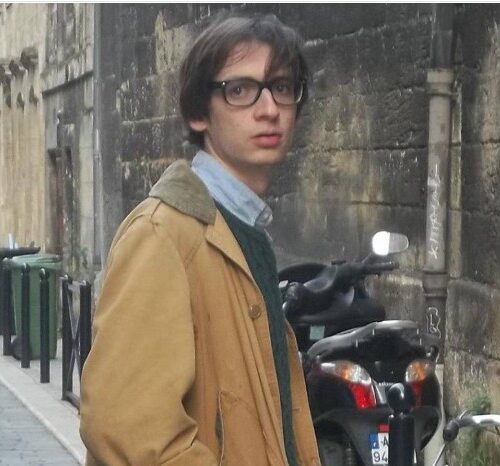
On February 18th 2026, the international oud scene and the music scene of Montreal lost an exceptional musician: Nazih Borish. Struck down suddenly, he was still in his early forties. The artist of Syrian origin, born in 1982, had arrived in Quebec in the wake of the civil war in his country and the reception of tens of thousands of refugees here. We remember that some fools who operate on social media had shouted about the risk of “bringing bombs here.” There was never any bomb, but rather people like Nazih Borish, who illuminated our winter country with human warmth and extraordinary creative talent. I spoke about Nazih Borish with Frédéric Léotar, co-founder and general director of the Centre des Musiciens du monde, who knew him well. He talks to us about Nazih’s art and the humble beauty of this man who spoke and expressed himself essentially in the silence of words and the emotion of music.
PanM360: Hello Frédéric. Thank you for being here. You knew Nazih Borish well, didn’t you? When did you first meet?
Frédéric Léotar: Somewhere in 2014. It was at the time when the creation of the Centre des Musiciens du Monde was in the air. Nazih was a very strong inspiration for this creation. Why? Because in 2014, Nazih had just arrived. He spoke neither French nor English. I was conversing with him through a translator. I had this magnificent artist in front of me, uprooted by war, an exceptional talent. He had no network, no way to connect with the local music community. And in fact, from that moment on, for me, the Centre des Musiciens du Monde is exactly for people like Nazih that we created it.
In each of my interventions during the creation process of the Centre, Nazih was there. I mean, in my mind and in the examples I was giving. He was the inspiration for our mission.
PanM360: He is recognised as one of the great oud players of his generation worldwide. The most extraordinary thing is that he was self-taught?
Frédéric Léotar: Yes, absolutely. Reaching such mastery without having followed the teachings of an experienced master is an exceptional rarity. I think that’s why he developed such a personal and unique style. He would switch from one style to another. From traditional maqams to flamenco, jazz, classical, etc. He had this crazy ability to switch from one to another effortlessly and fully master the desired spirit. And in Montreal, it allowed him to meet many musicians with whom he collaborated. Ultimately, he transcended a particular culture, even though, of course, Arab classical music remained the foundation from which he invented all his melodies.
PanM360: What has been its impact on the Montreal scene?
Frédéric Léotar: We had taken him under our wing a bit, for the reasons mentioned earlier. He played with the Montreal Symphony, at the Arab World Festival, at Upstairs Jazz Club, with plenty of artists from all genres. He was one of the great artists of the city. That said, he was still yet to be discovered by the general public. It was still a growing plant, despite his mastery.
PanM360: And he managed to live off his art and maintain a great international career…
Frédéric Léotar: Yes. He played all the time, all the time. Every day. He breathed music. He always walked around with his passport because he could receive a call at any moment and he wanted to be able to leave quickly. A real troubadour ready for travel, no matter the conditions. They would call him from a Gulf country and pay for his flight, hotel, everything and all. For a concert. He had tens of thousands of followers on his social media.
READ THE REVIEW OF NAZIH BORISH’S ALBUM ROOTS OF STRINGS
PanM360: A man of few words, too, if I understood correctly…
Frédéric Léotar: I remember some times when journalists wanted to interview him about the situation in Syria. He wasn’t very comfortable talking about all that. He was almost a taciturn, actually, Nazih. Indeed, he spoke little. His language was the oud. For me, Nazih, it felt like a friend with whom you don’t need to talk much. Nazih was a soul. We don’t really want to talk about material things with an artist of that calibre. When he played, everyone fell silent. The silence was good with Nazih. The silence between us was good, and the silence he caused when he played was good too.
PanM360: Beautiful memories?
Frédéric Léotar: I remember, once, we were on stage, it must have been in Saint-Jean-sur-Richelieu. During the rehearsal, when I walked in, he gave me a look and then started playing the Godfather music. He was open, and he knew so many things. He had a repertoire that one wouldn’t suspect upon seeing him.
PanM360: What will you miss the most about Nazih?
Frédéric Léotar: Nazih was a soul. We don’t really feel like talking about material things with an artist of that calibre. When he played, everyone fell silent. He had that aura. So, I would say that’s what we will miss the most. That’s what I’m going to miss the most.
He was also of immense humility. He didn’t claim anything at all. He never showcased his knowledge. If he played with someone who played louder than him, he let it be. And then he would leave afterwards, quietly, without making a fuss.
PanM360: How do you plan to preserve Nazih’s memory at the Center?
Frédéric Léotar: We have tonnes and tonnes of videos, photos. We have plenty of them from the beginning. We see him change over the years, like us, like the Center. I don’t know how we will manage to keep this trace, this heritage, this soul, both so subtle and important in the center. We’ll see.
PanM360: In the meantime, he still leaves several beautiful marks in the form of an album…
Frédéric Léotar: Yes, the album Roots of Strings, under the Analekta label in collaboration with the Centre des Musiciens du Monde. And we were preparing the sequel, Andalusyria, his project with Gabriel Evangelista. But we didn’t have the time. That said, a live recording at the Center is available on the web. That’s at least something.
PanM360: We will pay tribute to him, and PanM360, along with all those who knew him, of course, offers their most sincere condolences to his family, a wife and two young children, among others…
Frédéric Léotar: Yes, we are thinking about them a lot.